
01Summary
In a paragraph
If you only have 30 seconds.
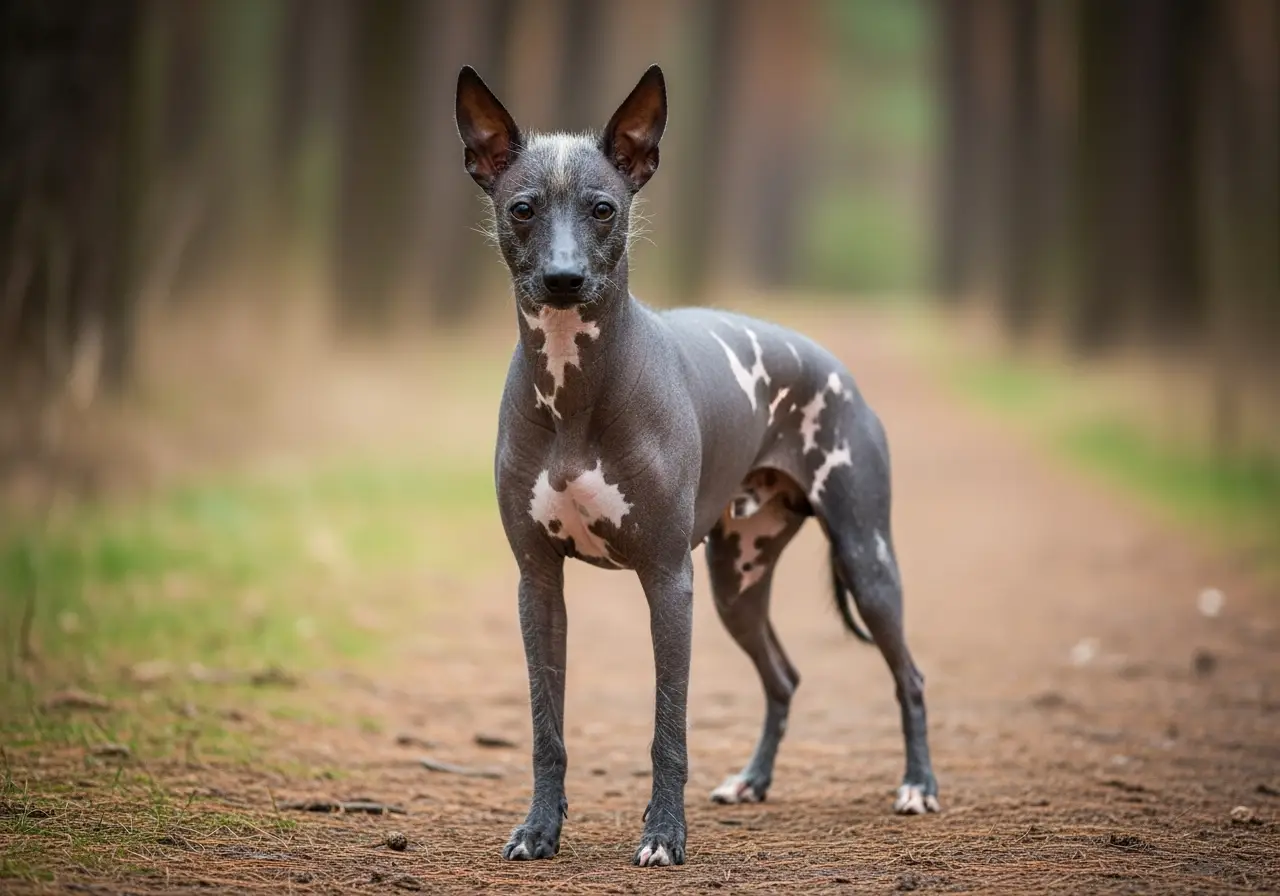
The Peruvian Hairless Dog is one of the oldest documented dog breeds in the world. Its hairless skin, frequently incomplete dentition and pronounced bond with humans make it a companion with specific requirements. Anyone who provides closeness, structure and daily skin care will find an alert, sensitive dog with a long history. Anyone looking for a robust all-weather dog is mistaken here.
02Introduction
What makes the Peruvian Hairless Dog special
Peruvian Hairless Dog: one of the oldest hairless dog breeds worldwide, sensitively alert and available in three sizes
03Profile
Key facts and suitability
- Origin
- Peru
- Original purpose
- Companion and guard dog
- FCI
- No. 310 · Group 5 · Sektion 6: Hunde vom Urtyp, ohne Arbeitsprüfung
- height at the withers
- 25–65 cm
- Weight
- 4–25 kg
- Life expectancy
- 11–14 Years
- Coat type
- hairless dog
- Minimum exercise
- 60 min/day
- Puppy price
- 1'500–3'000 CHF
- Waiting period
- 5 months
- Sports
- Lure Coursing Agility
04Temperament
How the Peruvian Hairless Dog shows up in everyday life
When you come home, the Peruvian Inca Orchid shows what a high need for social contact means in everyday life: It immediately registers your return, seeks physical contact and follows you through the apartment. This intensity of bonding is no coincidence; it is genetically anchored and reflects the original function as a close companion dog.
At the same time, the same dog reacts to an unknown visitor with clear reserve. It positions itself observantly, keeps its distance and only drops its reserve after its own assessment. Need for social contact with the family and openness towards strangers are two clearly separated behavioural levels in this breed; anyone who confuses them will be surprised by the reaction.
In everyday life, the Peruvian Inca Orchid registers subtle mood changes in its environment. Loud arguments, hectic routines or unpredictable situations noticeably stress it. A calm, structured household forms the basis for its well-being.
On a walk, it shows attentiveness and curiosity without pulling or rushing excessively. It is not a high-performance athlete but requires sufficient daily exercise and mental enrichment to remain balanced. Nose work and calm search games suit its nature better than intensive endurance sports.
Another everyday factor that is often underestimated: temperature management. In cold, rain or intense sunlight, the dog needs active protection, clothing in winter, sunscreen on exposed skin areas in summer. This is not optional comfort but daily responsibility.
05Needs
What this breed needs daily
The Peruvian Inca Orchid requires 60 to 90 minutes of exercise at a moderate pace daily. Intensive endurance exertion does not suit its nature; it is designed for companionship, not high performance. Walks with the opportunity for free exploration, combined with short training sessions, adequately cover its need for movement.
Mentally, it requires regular enrichment at a moderate level. Nose work, simple search tasks and consistent basic training with positive reinforcement keep it mentally stimulated. Monotony and lack of structure manifest in this breed as restlessness or increased attention-seeking.
The need for social contact is high. The Peruvian Hairless Dog relies on a close bond with humans and does not tolerate long periods of being left alone well. A maximum of four hours alone is considered a guideline, and even this should be built up slowly and systematically. Anyone who is regularly away from home for long periods needs a reliable care solution.
Skin care is a daily part of keeping the dog. The hairless skin is sensitive to UV radiation, cold, moisture and mechanical irritation. In summer, the dog needs sun protection on exposed areas of skin; in winter, suitable clothing is required at temperatures below approximately ten degrees Celsius. Regular checks for skin changes, dryness or inflammation are part of basic care.
Training succeeds with calm consistency and clear communication. The dog reacts sensitively to pressure and overstimulation; positive reinforcement and reliable routines are more effective than corrections. Attending a dog training school during the puppy phase supports socialisation towards strangers and other dogs.
Exercise
Medium
mental work
Medium
Social needs
High
training
Medium
07Quick Check
08Suitability
Who this breed is suitable for – and who it isn't
✓Matches
The Peruvian Hairless Dog suits owners looking for a close, people-oriented companion dog and who are prepared to accept daily skin care as an integral part of ownership. Specifically: people with a flexible daily routine who can keep the dog in their vicinity for large parts of the day and plan for a maximum of four hours alone.
Suitable for calm to moderately active households with a structured daily routine. Families with children from around eight years of age who are experienced in dealing with sensitive dogs may be suitable, provided the dog is not exposed to loud noises or unpredictable movements.
Owners who already have experience with sensitive or reserved breeds will find a willing-to-learn, attentive dog in it. First-time owners are not fundamentally excluded either; however, they require support from a dog training school from the start and the willingness to engage intensively with socialisation and skin care.
Keeping the dog in an apartment is possible if sufficient exercise and mental stimulation are ensured. A garden is not essential, but the owner must actively provide protection against cold and moisture, even in an urban environment.
×Doesn't match
The Peruvian Hairless Dog does not suit owners looking for a robust, weather-resistant dog that requires no special care. Anyone who interprets hairlessness as a low-maintenance characteristic significantly underestimates the actual care effort involved.
Not suitable for households where the dog regularly spends more than four hours alone without a reliable alternative care arrangement. The high need for social contact of this breed is not a trait that can be fully compensated for through training.
Anyone who views reserve towards strangers as a problem and expects a naturally open, friendly-towards-everyone dog will not be happy with this breed. Reserve towards unknown people is typical of the breed and not a training error; it requires consistent, long-term socialisation.
The Peruvian Hairless Dog is also not the right choice for very active owners who wish to engage in intensive endurance sports with their dog. Nor is it suitable for households with very young children where loud noises and unpredictable interactions are part of everyday life. Anyone who has previously known dogs exclusively as uncomplicated companions should not underestimate the specific requirements of this breed.
10Line reality
Show line, working line, breeder market
The Peruvian Inca Orchid is bred in three size variants: Large (withers height 50–65 cm), Medium (40–50 cm) and Small (25–40 cm). This size classification is enshrined in the FCI standard and influences breeding planning, but not fundamental character traits.
A pronounced differentiation between working lines and show lines, as known with other breeds, does not exist for the Peruvian Inca Orchid in a comparable form. The breed is bred exclusively as a companion dog; a working test is not provided for in the FCI standard.
Within breeding, however, the distinction between the hairless and the coated variety is relevant. Both occur in the same litter, as the gene for hairlessness is inherited heterozygously. The coated variety received its own FCI recognition in 2012 but may only be mated with hairless specimens. Mating two coated animals is not permitted.
In Europe, the breed is very rare. Breeding is concentrated among a few specialised breeders, mainly in Spain, Italy and occasionally in the German-speaking region. The Swiss Club for Latin American Hairless Dogs (SCLN) is the responsible breeding organisation in Switzerland. Anyone looking for a puppy must expect long waiting times and should use this waiting period to prepare thoroughly for the specific housing requirements.
11Health · Reality
What you need to plan for medically with your Peruvian Hairless Dog
The life expectancy of the Peruvian Hairless Dog is approximately 11 to 13 years, although well-kept animals can reach 14 to 15 years. Systematic population-wide health studies on the breed are hardly available due to its low prevalence in Europe.
The genetically determined incomplete dentition is the most well-known breed-specific trait: the pleiotropy gene that causes hairlessness simultaneously results in the absence of individual or multiple teeth. This is not a breeding defect, but a documented genetic characteristic (FCI Standard No. 310, 2012). Regular dental check-ups at the vet are nevertheless recommended, as missing teeth can increase the chewing load on remaining teeth.
The skin represents the second central health issue. Without fur protection, it is susceptible to UV-related damage, contact irritations, and fungal infections. Sunburn can occur within a few hours of unprotected exposure. Owners should watch for skin changes such as redness, thickening, or pustules and have them checked by a vet.
Hip and elbow dysplasia (HD/ED) are less prominently documented in this breed than in large working dog breeds, but not excluded. Breed-specific HD statistics for the Peruvian Inca Orchid are currently not available in sufficient quantity (status: 2024).
Preventive examinations include: annual dental check-up, regular skin inspection, age-appropriate blood count checks from the seventh year of life onwards, and eye examinations if abnormalities are detected. Overweight is a real risk in this breed, as the slender body constitution makes weight gain quickly visible, while simultaneously placing disproportionate stress on the joints.
12Structured data
Health by the numbers
Prone to diseases
Sunburn Skin inflammation Dental problems
Recommended health tests
Skin examination Dental check
13Myths ↔ Reality
What is often said incorrectly about this breed
Five myths, five realities, five sources.
"The Peruvian Hairless Dog is hypoallergenic and therefore unrestrictedly suitable for allergy sufferers.
Hairlessness reduces the amount of dog hair in the environment but does not eliminate allergens. Dog allergens such as Can f 1 are found in saliva, urine and skin flakes, not exclusively in the coat. Allergy sufferers react to these proteins regardless of the dog's coat. An individual allergological assessment before getting a dog remains essential.
“Bare skin means little maintenance effort because no fur needs to be brushed.
The opposite is true. The unprotected skin of the Peruvian Inca Orchid requires regular cleaning, moisturising and consistent sun protection. With strong UV radiation, sunburn and long-term skin damage are a risk. In winter, the lack of insulation does not protect against hypothermia; suitable clothing is not an optional accessory but part of basic care.
“The incomplete dentition is a breeding error and a sign of poor breeding.
The frequently incomplete dentition is genetically directly linked to the factor that causes congenital hairlessness. It is a pleiotropic genetic trait, not a consequence of inadequate breeding selection. The FCI standard describes this connection explicitly. Reputable breeders inform interested parties about this; the absence of individual teeth is typical for the breed and not an exclusion criterion.
“Because of its rarity, the Peruvian Inca Orchid is particularly exclusive and therefore a status symbol.
The rarity of the breed in Europe makes finding a puppy considerably more difficult and increases the risk of encountering unscrupulous providers. Those who choose the breed for its exotic factor often underestimate the specific maintenance effort and the sensitivity of the dog. The low prevalence also means that specialised veterinary experience with the breed is hardly available in many regions.
“Because he is so people-oriented, the Peruvian Inca Orchid gets along easily with every stranger.
A high need for social contact with one's own family and reserve towards strangers are two different behavioural axes that should not be confused. The Peruvian Inca Orchid typically shows restraint to vigilance towards unknown people. This characteristic is typical for the breed and not a training error, but it requires consistent socialisation from puppyhood.
14animal welfare
The animal welfare perspective
Breeder market, designer versions, animal shelter reality — what no one writes in the puppy ad.
The Peruvian Inca Orchid counts among the very rare breeds in Europe. This rarity protects it from mass demand on the one hand, but creates a market on the other where unscrupulous providers specifically advertise with exoticism and scarcity. Anyone looking for a hairless dog encounters offers online that use terms such as "rare", "unique" or "imported directly from Peru". Such formulations are not a quality indicator.
Reputable breeders in Europe work with breeding associations, provide health certificates and are transparent about the genetic peculiarities of the breed, particularly the incomplete dentition and skin sensitivity. Anyone who does not provide a health certificate and does not allow contact with the dam should not be considered as a source.
A specific animal welfare problem with this breed arises from misjudging the keeping requirements. Owners who acquire the dog because of its appearance, without engaging with skin care, cold protection and need for social contact, overwhelm themselves and the dog. Skin problems due to lack of sun protection, hypothermia in winter or behavioural problems due to insufficient bonding work are real consequences. These dogs rarely end up in animal welfare organisations, but when they do, it is usually due to owner overload.
Placement via animal welfare organisations is a realistic, albeit rare, option for this breed. Individual animals find their way into new hands via international animal welfare networks or breed club placements. Anyone who is flexible and does not necessarily need a puppy should actively consider this possibility; the SCLN and comparable clubs occasionally facilitate placement contacts. An adult dog from reputable placement has the advantage that temperament and health status are already known.
15Costs · Transparency
What this breed realistically costs
A puppy from a reputable breeder costs between 1,500 and 3,000 EUR in Europe, depending on line, size variant and availability. Offers significantly below this often come from non-reputable sources; with such a rare breed, caution is particularly advised.
Annual living costs range between 1,200 and 2,500 EUR depending on the size variant. This includes: food (300–600 EUR/year depending on size), skin care products and sun protection (approx. 100–200 EUR/year), clothing for cold periods (initial equipment 100–300 EUR), as well as regular vet costs for preventive examinations and vaccinations (200–400 EUR/year).
Additional costs arise from the breed-specific peculiarities: dental treatments due to the incomplete dentition can cost 200–800 EUR depending on the findings. Skin diseases that develop without consistent care incur treatment costs of 150–500 EUR per incident.
Dog health insurance is recommended for this breed. Monthly premiums range between 40 and 90 EUR depending on the provider and scope of cover. Anyone who foregoes insurance should plan for a reserve of at least 3,000 EUR for unforeseen vet costs. The total costs over the dog's lifespan (approx. 12 years) realistically amount to 20,000 to 35,000 EUR.
16Puppy search
What you need to consider when choosing a breeder
- Anyone looking for a Peruvian Hairless Dog must expect long waiting times.
- The breed is very rare in Europe, and reputable breeders have correspondingly few litters per year.
- Long waiting lists are a sign of responsible breeding, not a problem.
- Criteria for reputable breeders: membership in a recognised breed club (e.g.
- SCLN in Switzerland or a VDH member association), presentation of health certificates for both parent animals, the opportunity to visit the litter and contact with the mother dog, transparent information about the genetic characteristics of the breed (teeth, skin).
- A reputable breeder also asks questions in return; they want to know whether the living conditions are suitable.
- Warning signs: offers without club membership, puppies under eight weeks old, missing vaccination and deworming documentation, sales via animal exchanges or without personal contact.
- The rehoming of adult dogs through breed clubs or specialised animal welfare organisations is an equally valid alternative.
- Adult animals have the advantage that their temperament and health status can already be assessed.
- The SCLN can serve as a first point of contact for rehoming inquiries.
- No named recommendations for individual breeders are made on this platform; research via official club directories is the more reliable approach.
FAQ
Frequently asked questions about the Peruvian Hairless Dog
Is Peruvian Hairless Dog a family dog?
Peruvian Hairless Dog is considered suitable for families with good socialisation and species-appropriate care.
How much exercise does Peruvian Hairless Dog need?
At least around 60 minutes of exercise per day.
Does Peruvian Hairless Dog suit an apartment?
With enough exercise and enrichment, Peruvian Hairless Dog can also be kept in an apartment.
What is the size and weight of Peruvian Hairless Dog?
Fully grown, Peruvian Hairless Dog reaches about 25–65 cm at the withers and weighs around 4–25 kg.
What is the life expectancy of Peruvian Hairless Dog?
The life expectancy of Peruvian Hairless Dog is approximately 11–14 years.
Which diseases are common in Peruvian Hairless Dog?
Sunburn Skin inflammation Dental problems
17Breed clubs
Official breed clubs in DACH
19Related
Similar breeds – and their differences
You might also be interested in
Participate
Do you have a good photo of your Peruvian Hairless Dog?
We are looking for expressive images for our breed profiles. Submit yours; the editorial team reviews every submission before publication.
Does this breed suit you?
Hairless breed requires consistent sun protection – warming dog coat recommended in winter