
01Summary
In a paragraph
If you only have 30 seconds.
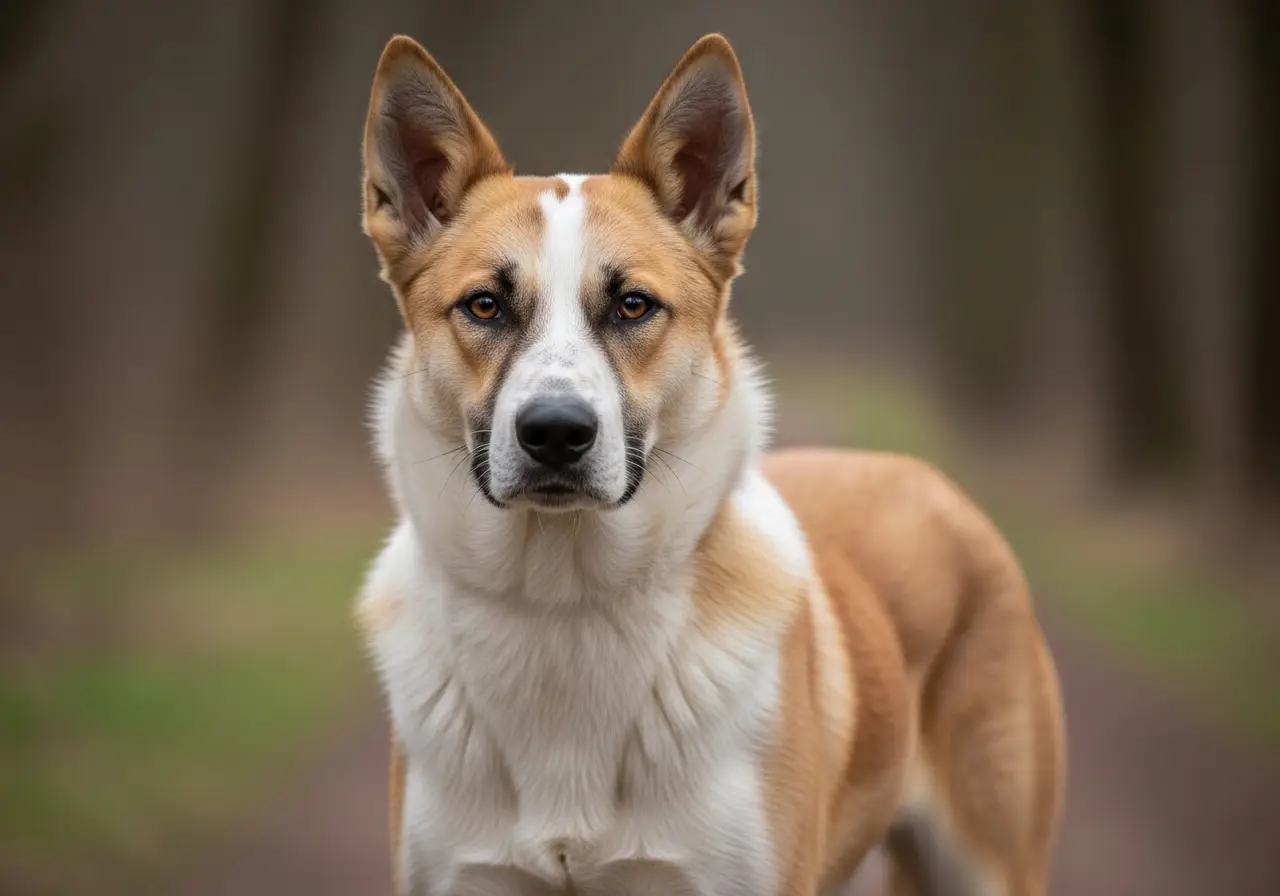
The Canaan Dog is one of the oldest dog breeds in the world, not a breeding product but a survivor. Its distrust of strangers, its pronounced guarding instinct and its independence are not training errors but genetically anchored traits. Anyone keeping this breed needs experience with primitive dogs, clear structures and the willingness to invest daily in mental and physical stimulation and socialisation.
02Introduction
What makes the Canaan Dog special
The Canaan Dog is the national breed of Israel, FCI Group 5, one of the oldest dogs in the world, heat-tolerant, withers height 50–60 cm.
03Profile
Key facts and suitability
- Origin
- Israel
- Original purpose
- Herding and guarding with Bedouins and Israelites
- FCI
- No. 273 · Group 5 · Sektion 6: Urtyp
- height at the withers
- 50–60 cm
- Weight
- 18–25 kg
- Life expectancy
- 12–15 Years
- Coat type
- Short-haired
- Minimum exercise
- 60 min/day
- Puppy price
- 1'000–2'000 CHF
- Waiting period
- 12 months
- Sports
- Agility · Obedience · Scent work
04Temperament
How the Canaan Dog shows up in everyday life
When you come home, the Canaan Dog shows genuine joy towards its primary caregiver, greets familiar people warmly and seeks closeness. However, if a stranger enters, its behaviour changes immediately: the dog positions itself, observes and alerts. This reaction is not a sign of poor training, but its core task.
This is where the decisive separation between the internal and external axis lies: The need for social contact with one's own family is high; the Canaan Dog requires close integration into daily life, seeks contact and reacts sensitively to exclusion or being ignored. At the same time, its friendliness towards strangers remains permanently low. These two poles must not be confused: a dog that is deeply bonded to its family is therefore not open to every visitor.
In its daily routine, it shows attentiveness and sensitivity to its environment. On the walk, it registers every change, a new vehicle, an unknown dog in the distance, an unfamiliar source of noise. It assesses independently and decides whether a situation requires alerting. This behaviour can be guided, but not switched off.
It behaves selectively towards conspecifics. Dogs from its own household it generally accepts, provided the settling-in period was structured. It meets unknown dogs with caution and occasionally with distancing behaviour. Its guarding instinct is pronounced; it actively guards territory and primary caregivers.
Mental stimulation is not a bonus, but a basic requirement. A Canaan Dog that is only physically exercised daily, without receiving mental tasks, develops restlessness and excessive vigilance.
05Needs
What this breed needs daily
The Canaan Dog requires at least 90 minutes of active exercise daily, divided into several sessions, not as a single outing. Pure walks are not sufficient. Off-leash runs in terrain, nose work, search games and structured training sessions cover its need for movement and mental work together.
Mental stimulation carries particular weight with this breed. The need for mental work is high; the Canaan Dog requires tasks that correspond to its original behavioural repertoire: tracking, mantrailing, controlled guarding exercises or obedience training at an advanced level. Simple fetch games do not satisfy it permanently.
It tolerates being left alone in its familiar territory for up to about five hours, provided it is sufficiently stimulated and accustomed to rest phases. In unfamiliar surroundings, this tolerance drops significantly; it needs its familiar territory as a safety anchor.
A securely fenced outdoor area is not a comfort option, but a prerequisite for keeping the dog. Its territorial behaviour and vigilance make uncontrolled off-leash running in open or urban areas risky. The fence protects both it and its surroundings equally.
Social integration into the family is necessary daily. The Canaan Dog does not tolerate isolation or permanent kennel keeping without human contact. It requires a clear primary caregiver with calm, consistent body language; uncertainty or changing rules cause stress in it and intensify reactive behaviour.
Early and continuous socialisation from the eighth week of life is not a recommendation, but mandatory. Without it, its genetically predisposed mistrust develops into difficult-to-correct shyness or overreaction.
Exercise
High
mental work
A lot
Social needs
Medium
training
Demanding
06Sport & Mental and Physical Stimulation
What sports the Canaan Dog is suited for
Realistic in terms of physiology and genetics – not every breed suits every sport.
Structurally and physiologically suitable: CaniCross / bikejoring possible.
07Quick Check
08Suitability
Who this breed is suitable for – and who it isn't
✓Matches
The Canaan Dog suits owners with proven experience in dealing with independent, primitive dogs. Anyone who has already handled a dog with a pronounced guarding instinct or high need for mental work brings the necessary foundation.
A structured daily routine with fixed routines is a prerequisite: at least 90 minutes of active stimulation daily, supplemented by mental enrichment. Owners who work mostly from home during the day or have flexible working hours can better meet its need for social contact than those with long absences.
A house with a secured garden or access to extensive terrain corresponds to its territorial needs. Locations on the outskirts of cities or rural environments with low stimulus density are preferable to urban high-rise locations.
Families with children from about ten years of age come into consideration if the children are experienced in dealing with dogs and consistently adhere to clear rules. Toddlers and the Canaan Dog require permanent supervision; its guarding instinct and sensitivity to stimuli do not rule out spontaneous overreactions.
Owners who practise dog sports at an intermediate to advanced level (tracking, mantrailing, obedience) will find a capable partner in it, which approaches tasks with seriousness.
×Doesn't match
The Canaan Dog does not suit owners who are keeping a dog for the first time. Its independence, mistrust and guarding instinct require a foundation of experience that cannot be replaced by good will alone.
Anyone who plans their dog as a social all-rounder (open to visitors, relaxed in the dog training school, problem-free in the café) will be permanently overwhelmed with the Canaan Dog. Its low friendliness value towards strangers is not a temporary stage of development, but a stable character trait.
Households with very small children under six years of age, frequently changing visitors or high social stimulus density are unsuitable. Its guarding instinct and vigilance intensify in unstructured environments.
Owners who are away from home for eight hours daily and cannot organise reliable dog care fall short of its need for social contact. Kennel keeping without daily integration into family life is incompatible with its nature.
Anyone who cites the rarity of the breed as the main motive or seeks an "exotic" dog without engaging with primitive behaviour should reconsider their decision. The Canaan Dog demands substantive engagement, not aesthetic interest.
10Line reality
Show line, working line, breeder market
The Canaan Dog does not exhibit the classic working line/show line differentiation known, for example, in the German Shepherd or Labrador Retriever. The breeding population is too small worldwide to establish pronounced line divergences.
Nevertheless, regional differences exist: Israeli breeding lines, bred closer to free-living pariah dog populations of the Negev Desert, are considered more typical in behaviour and more primitive in their reactions. European breeding lines (particularly from Germany, the Netherlands and Scandinavia) have been selected over generations for suitability in everyday life and social compatibility, without altering the fundamental nature.
In Israel, a programme still exists today to record and control the integration of free-living pariah dogs into breeding to maintain genetic diversity. These dogs differ significantly in their shyness and reactivity from breeding dogs raised in households.
For interested parties in the DACH region, this means: The dog from a European breeding is generally more socialised for everyday life, but retains its primitive nature. A direct import from Israel or from lines with a high wild blood content requires even more experience and a more intensive settling-in phase. The question regarding the origin line should be explicitly raised during the breeder consultation.
11Health · Reality
What you need to plan for medically with your Canaan Dog
The Canaan Dog is considered a robust breed with comparatively few breed-specific hereditary diseases, a legacy of its natural selection over millennia. The life expectancy is between 12 and 15 years, with well-kept dogs regularly reaching the upper end of this range.
Hip dysplasia (HD) occurs in the breed but is less common than in many other medium-sized breeds. Reputable breeders have parent animals radiologically examined for HD and document the results. Eye diseases — including Progressive Retinal Atrophy (PRA) and forms of cataract — are known risks; eye examinations by a specialist vet before breeding are standard practice among responsible breeders.
Thyroid disorders (hypothyroidism) have been described in the breed and should be investigated by a vet in cases of unclear behavioural changes or weight gain.
As the breeding population is small worldwide, there is a risk of genetic bottlenecks. Inbreeding coefficients should be actively requested from the breeder; a value below 6.25% serves as a guideline for acceptable genetic diversity.
Preventive examinations include: annual eye examination, HD screening before breeding, thyroid values in case of clinical abnormalities and regular dental check-ups, as tartar is common in this breed. Overweight is rare in sufficiently exercised Canaan Dogs but can occur with lack of exercise and energy-dense feeding; their metabolism is designed for efficiency.
12Structured data
Health by the numbers
Prone to diseases
No known breed-specific hereditary diseases, very robust primitive breed
Recommended health tests
No specific mandatory examinations
13Myths ↔ Reality
What is often said incorrectly about this breed
Five myths, five realities, five sources.
„The Canaan Dog is like a wolf, untamable and not really domesticable.
The Canaan Dog is fully domesticated and trainable. The FCI standard explicitly describes it as easy to train and extraordinarily devoted to its owner. Its independence is not a sign of lacking domestication, but an expression of a primitive behavioural repertoire that requires consistent, calm leadership, not submission.
„Mistrust towards strangers can be completely trained away through early socialisation.
Early and broad socialisation reduces reactive behaviour and significantly raises the tolerance threshold. However, the genetically anchored mistrust towards strangers remains a characteristic trait of the breed; it is explicitly listed as a character trait in the FCI standard. Anyone expecting an amiable all-round dog is choosing the wrong breed.
„As a desert dog, it requires little exercise and is undemanding.
According to the FCI standard, the Canaan Dog possesses remarkable agility and endurance. Its exercise requirement is at least 90 minutes of active stimulation daily, supplemented by mental enrichment. Pure apartment keeping without structured stimulation leads to behavioural problems such as excessive barking, destructiveness or overstimulation.
„The Canaan Dog is an exotic designer breed with rarity value.
The Canaan Dog is not a designer breed, but one of the oldest naturally occurring dog breeds in the world. Its rarity in Europe is not a marketing feature, but a consequence of small breeding populations and deliberately restrained reproduction by committed breeders. Anyone keeping it as a status symbol considerably underestimates its demands.
„Because it is so rare, it must be particularly healthy.
Small breeding populations can create genetic bottlenecks that increase, not decrease, the risk of hereditary diseases. Reputable breeders conduct health tests for hip dysplasia, eye diseases and other breed-specific risks. Rarity alone is no proof of health.
14animal welfare
The animal welfare perspective
Breeder market, designer versions, animal shelter reality — what no one writes in the puppy ad.
The Canaan Dog ranks among the rarest dog breeds in Germany and Switzerland. This rarity has a downside: the market for puppies is limited, demand regularly exceeds the supply from reputable breeders. Backyard breeders exploit precisely this imbalance.
Anyone finding Canaan Dog puppies online on platforms such as eBay Kleinanzeigen or similar portals at prices below 800 euros should be sceptical. Reputable breeding of this breed (with health tests, small litters, long socialisation phase and advice) is costly. Puppies without documentation of HD screening and eye examinations of the parent animals are a warning sign.
Designer versions or deliberate crossbreeds with the Canaan Dog hardly exist on the market; its rarity protects it from the trend hype to which other breeds are exposed. This does not, however, mean that all offered dogs come from reputable sources.
Keeping-related problems with the Canaan Dog arise mainly from underestimating its primitive nature. Owners who regard its guarding instinct and distrust as a temporary training task often rehome it after one to two years. These dogs rarely end up in a traditional animal shelter; they are rehomed through breed rescue organisations or directly via breeder networks.
Adopting an adult Canaan Dog from such a source is an equally valid option to searching for a puppy. Adult dogs show their character openly; guarding instinct, social behaviour and reactivity can be assessed. An experienced rehoming organisation supports the settling-in period and ensures that the dog and owner are a good match. Anyone with the necessary experience will find in a rehomed Canaan Dog a partner with a known profile.
15Costs · Transparency
What this breed realistically costs
A puppy from reputable breeding costs between 1,200 and 2,000 euros in the DACH region. Due to the small breeding population, waiting times of one to several years are not exceptional. Prices significantly below 1,000 euros without proof of kennel club membership and health documentation of the parent animals are a warning sign.
Annual living costs range from 1,500 to 2,500 euros depending on the form of keeping. This includes high-quality food (approx. 600–900 euros/year for a 20 kg dog), basic equipment, grooming needs and regular vet visits. The Canaan Dog does not require extensive grooming; its coat is easy to care for, which reduces grooming costs compared to long-haired breeds.
Veterinary costs for preventive care, vaccinations and annual check-ups amount to approx. EUR 300–500/year. In the event of illnesses or operations, individual costs can quickly exceed EUR 1,500–3,000. Pet health insurance with surgical cover costs approx. EUR 40–80/month for this size category and represents a sensible calculation for a breed with a life expectancy of 12–15 years.
Dog training school and training are not optional additional costs for this breed; they are part of basic care. Group training from the first week of life as well as accompanying individual training cost EUR 50–120 per session depending on the region.
16Puppy search
What you need to consider when choosing a breeder
- Reputable breeders of the Canaan Dog are rare in the DACH region.
- The first point of contact is the respective national kennel club (in Switzerland the SKG, in Germany the VDH) as well as specialised breed club directories.
- Breeders with club membership are subject to breeding regulations that define minimum standards for health tests and litter size.
- When making initial contact with a breeder, the following documentation should be requested: HD X-ray results for both parent animals, current eye examination, pedigree and vaccination record of the puppy.
- A reputable breeder asks questions in return; they want to know whether the interested party is suitable for the breed, not just whether they can pay.
- On-site visits are mandatory.
- A puppy that cannot be viewed in its litter environment is a warning sign.
- The mother of the litter should be present and her behaviour observable.
- Adopting an adult Canaan Dog through breed rescue organisations is an equally valid alternative.
- Adult dogs show their character openly, which makes it easier to assess whether the dog and household are a good match.
- Breed rescue networks work carefully and actively support the settling-in period.
- Offers on general classifieds platforms without club membership and without health documentation should generally be scrutinised critically.
FAQ
Frequently asked questions about the Canaan Dog
Is Canaan Dog a family dog?
Canaan Dog is considered suitable for families with good socialisation and species-appropriate care.
How much exercise does Canaan Dog need?
At least around 60 minutes of exercise per day. As an active breed, more so — plus mental stimulation.
What is the size and weight of Canaan Dog?
Fully grown, Canaan Dog reaches about 50–60 cm at the withers and weighs around 18–25 kg.
What is the life expectancy of Canaan Dog?
The life expectancy of Canaan Dog is approximately 12–15 years.
Which diseases are common in Canaan Dog?
No known breed-specific hereditary diseases, very robust primitive breed
17Breed clubs
Official breed clubs in DACH
19Related
Similar breeds – and their differences
You might also be interested in



Participate
Do you have a good photo of your Canaan Dog?
We are looking for expressive images for our breed profiles. Submit yours; the editorial team reviews every submission before publication.
Does this breed suit you?
Israeli national breed. One of the oldest domesticated dogs in existence. Independent, alert, rare in Europe.