

01Summary
In a paragraph
If you only have 30 seconds.
The Maltipoo is a non-FCI-recognised crossbreed between a Maltese and a Toy Poodle. It combines a high need for social contact with pronounced willingness to learn, varying greatly depending on the parent animals. Anyone who takes this dog does not get a low-maintenance trend dog, but a sensitive companion that requires daily structure, regular grooming, and consistent guidance.
02Introduction
What makes the Maltipoo special
The Maltipoo is a non-FCI recognised crossbreed of Maltese and Toy Poodle, allergy-friendly and suitable for city living, with a withers height of 20–35 cm.
03Profile
Key facts and suitability
- Origin
- USA
- Original purpose
- Companion dog (Maltese × Toy Poodle)
- height at the withers
- 20–35 cm
- Weight
- 2–9 kg
- Life expectancy
- 12–16 Years
- Coat type
- Gelockt
- Minimum exercise
- 20 min/day
- Puppy price
- 1'200–3'000 CHF
- Waiting period
- 6 months
- Sports
- Agility · Obedience · Tricks
04Temperament
How the Maltipoo shows up in everyday life
When you come home, a Maltipoo reacts with an intense greeting; it follows its primary caregiver through the flat, seeks physical contact and clearly signals that it has registered your absence. This high need for social contact (internal axis) is genetically anchored: both parent breeds were bred as companion dogs over centuries.
The Maltipoo usually reacts openly and curiously to external stimuli. It generally shows itself to be sociable towards strangers (external axis: friendliness towards strangers, value 5 out of 5). However, this openness is not a given; it presupposes consistent socialisation in the first weeks of life. A Maltipoo that knows few external stimuli can tend towards excessive barking or insecurity despite its basic friendliness.
On a walk, it shows interest in environmental stimuli but rarely pulls hard. It does not need long distances, but reacts to monotony; doing the same round every day without variation leads to disinterest. Nose work, short search games or fetch exercises activate the Poodle component and keep the mind occupied.
At home, it seeks closeness without being intrusive, provided its basic needs are met. A Maltipoo that receives sufficient exercise, mental work and social contact appears balanced and calm. If one of these components is missing, this manifests as restlessness, barking or destructive behaviour.
The sensitivity of the Maltipoo, particularly in Poodle-emphasised lines, means: it registers moods in its environment precisely. Conflicts in the household, irregular daily routines or inconsistent rules burden it noticeably.
05Needs
What this breed needs daily
The Maltipoo requires 45 to 60 minutes of active exercise daily, divided into two to three sessions. Pure walks are not sufficient here; the Poodle component demands mental activation. Suitable activities include nose work, simple trick training units, fetching or structured search games. This combination of physical and mental stimulation prevents under-stimulation, which quickly manifests as restlessness or barking in this dog.
The need for social contact is high (value 4 out of 5). The Maltipoo requires regular, active contact with its primary caregiver, not just passive presence. Joint activities, training and interaction are part of its daily basic care. Being left alone is limited to a maximum of three hours; longer phases without companionship lead to stress and can promote separation anxiety.
Grooming represents a separate time commitment: brushing several times a week is mandatory to avoid matting. Every six to eight weeks, the coat requires a professional trim. The eye and ear areas require special attention, as moisture and dirt can accumulate there.
Training requires consistency. The Maltipoo learns quickly and reacts sensitively to tone of voice and consistency. Clear, calm communication and a structured daily routine are not optional extras; they are a prerequisite. A supporting dog training school in the first months of life supports socialisation and provides the owner with tools for everyday life.
Exercise
Low
mental work
Medium
Social needs
High
training
Easy
07Quick Check
08Suitability
Who this breed is suitable for – and who it isn't
✓Matches
The Maltipoo suits owners who work from home predominantly or can regularly take their dog with them, and who are prepared to invest at least 60 minutes daily in active exercise and training. People with experience in dog training benefit from the quick learning ability of the Poodle component; first-time owners are welcome, provided they plan for a supporting dog training school from the start.
Households with children from around eight years of age are suitable if the interaction with the dog is respectful and calm. The Maltipoo does not tolerate a hectic, noisy environment well on a permanent basis. Quiet families or individuals who value closeness and companionship in everyday life meet its need for social contact.
Those living in an apartment can keep this dog without problems, provided that sufficient structure, regular mental and physical stimulation, and short periods of being left alone are ensured. Owners who enjoy grooming or are willing to visit a dog groomer regularly bring an important prerequisite with them. Those who are also open to visitors and actively socialise the dog benefit from its natural openness towards strangers.
×Doesn't match
The Maltipoo is not suitable for owners who are away from home for more than three hours a day and cannot organise care for the dog. Its high need for social contact is not a character trait that disappears through habituation; it is genetically anchored.
Anyone looking for a dog that requires little care will be permanently overwhelmed by a Maltipoo. The coat mats quickly without regular care; neglected care leads to skin problems and is relevant to animal welfare.
Households with very young children under six years of age are critical to assess: the Maltipoo is a small, sensitive dog that can be injured by unintentional rough handling and reacts to stress by withdrawing or showing defensive reactions.
Anyone who equates the Maltipoo’s openness towards strangers with a low need for social contact misunderstands the dual-axis logic: a dog can be friendly towards strangers and at the same time require an intense bond with its primary caregiver. These two characteristics do not exclude each other, but anyone who ignores the internal axis and believes that the dog gets by with little attention will provoke behavioural problems.
People who choose a dog primarily because of the trend or its appearance, without engaging with grooming, training effort, and health risks, should postpone their decision.
10Line reality
Show line, working line, breeder market
The Maltipoo has no officially recognised breeding lines in the sense of working line, show line or field trial line. As a crossbreed not recognised by the FCI, the institutional basis for such differentiation is lacking.
Nevertheless, relevant differences exist in practice that the owner should be aware of. The generational depth of the cross influences appearance and character considerably: An F1 cross (direct Maltese × Toy Poodle) shows the greatest variance in coat, size and character. An F1b backcross (Maltipoo × Poodle) tends towards curlier fur and stronger Poodle influence, which increases learning motivation but also raises sensitivity. F2 crosses (Maltipoo × Maltipoo) are even less predictable in their characteristics.
Furthermore, animals differ depending on the Poodle type in their pedigree: Miniature Poodle proportions generally lead to somewhat more robust, active dogs; Toy Poodle proportions to even smaller, finer-boned animals with increased care requirements. These differences are relevant for the decision on keeping conditions but are rarely communicated transparently by breeders.
11Health · Reality
What you need to plan for medically with your Maltipoo
Based on available experience, the life expectancy of the Maltipoo is between 12 and 15 years, comparable to the parent breeds Maltese (12–15 years) and Toy Poodle (12–15 years).
As no uniform breeding standard exists, no breed-wide HD/ED statistics are available. However, the known hereditary diseases of both parent breeds are relevant. In Poodles, progressive retinal atrophy (PRA), epilepsy, and sebaceous adenitis count among the documented risks. In Maltese, heart problems (mitral valve insufficiency), eye anomalies (tear stains due to epiphora), and kneecap problems (patellar luxation) are known. A Maltipoo can inherit hereditary diseases from both lines; without health tests of the parent animals, the individual risk cannot be assessed.
Patellar luxation occurs more frequently in small breeds in general. According to a study by the University of California, Davis (Witsberger et al., 2008, JAVMA), the prevalence in small dog breeds is up to 7 %. Eye problems, particularly epiphora and cataracts, are above-average frequent in Maltese crosses.
Recommended preventive examinations: annual eye examination, heart auscultation from the 5th year of life, kneecap palpation in the puppy. Overweight poses an increased risk, as small dogs are often overfed; already 500 g of excess weight corresponds to over 12 % of body weight in a 4-kg dog and measurably burdens joints and the cardiovascular system.
12Structured data
Health by the numbers
Prone to diseases
Patellar luxation, heart problems, eye problems
Recommended health tests
Patella screening, eye examination
13Myths ↔ Reality
What is often said incorrectly about this breed
Five myths, five realities, five sources.
"The Maltipoo is hypoallergenic and suitable for all allergy sufferers."
No dog is completely low-allergen. Allergic reactions are primarily caused by the protein Can f 1 in saliva and skin flakes, not by the coat itself. In F1 crosses, coat structure varies greatly; some animals shed little, others significantly more. An individual reaction can only be tested through direct contact with the specific animal, not by the breed name.
"Crossbreeds are automatically healthier than purebred dogs."
The so-called heterosis effect (hybrid vigour) does not occur automatically. A Maltipoo can inherit both the hereditary diseases of the Maltese (e.g. heart problems, eye anomalies) and those of the Poodle (e.g. progressive retinal atrophy, epilepsy). Without health tests of the parent dogs, the cross offers no guarantee of better health.
"The Maltipoo is a low-maintenance dog for busy people."
The Maltipoo has a high need for social contact (internal axis: value 4 out of 5) and tolerates being left alone only to a limited extent, usually for a maximum of three hours. Its coat requires brushing several times a week and regular professional grooming every six to eight weeks. Anyone who invests little time risks behavioural problems and matted fur.
"Small dogs do not require consistent training."
A dog's size has no influence on its training needs. A Maltipoo without clear rules often develops jumping up, excessive barking or resource guarding. The Poodle component brings pronounced learning ability; this capacity requires active use, otherwise the dog will find its own enrichment.
"A Maltipoo from abroad is cheaper and just as reputable."
Offers from Eastern European countries or via intermediary platforms without personal contact with the breeder are frequently associated with puppy trading. Missing vaccination records, too early separation (under eight weeks) and untested parent animals significantly increase the risk of behavioural problems and hereditary diseases. The lower cost of getting a dog is often offset by higher veterinary costs in the first year of life.
14animal welfare
The animal welfare perspective
Breeder market, designer versions, animal shelter reality — what no one writes in the puppy ad.
The Maltipoo belongs to the most sought-after designer dogs in the German-speaking region. This demand has created a market ranging from reputable hobby owners to commercial backyard breeders, with considerable differences in quality.
Backyard breeder market: As no breeding association prescribes minimum standards, institutional control is lacking. Puppies are often given away without health tests of the parent animals, without sufficient socialisation, and too early. The price alone is not a quality indicator; both very cheap and very expensive offers can originate from problematic keeping conditions.
Designer versions: Terms such as "Teacup Maltipoo" or "Mini Maltipoo" are not recognised categories, but marketing terms. Extremely small animals are produced by selectively breeding the smallest litters, which increases the risk of heart problems, bone fractures and hypoglycaemia. Anyone looking for a particularly small animal should be aware of these risks.
Breeding and keeping-related problems: Neglected grooming leads to matting that reaches under the skin and causes inflammation. Separation anxiety due to a lack of habituation to being alone is a common reason for surrendering the dog. Overweight conditions caused by overfeeding with treats are widespread in this breed and relevant to animal welfare.
Adoption as an equal option: Maltipoos are increasingly ending up in animal welfare organisations, often because the care and training effort was underestimated or the owner's lifestyle has changed. An adult dog from a shelter is easier to assess in terms of temperament and health status than a puppy of unknown origin. Choosing a rescue dog is not a compromise solution, but an informed choice.
15Costs · Transparency
What this breed realistically costs
The acquisition costs for a Maltipoo vary considerably. Reputable breeders who carry out health tests on the parent animals usually charge between 1,200 and 2,500 EUR. Offers under 800 EUR are a warning sign; they often indicate a lack of preventive examinations or problematic living conditions.
Annual maintenance costs average between 1,500 and 2,500 EUR. This includes food (approx. 300–500 EUR/year for high-quality wet or dry food), grooming at a dog groomer (approx. 400–700 EUR/year for six to eight appointments), as well as basic equipment, toys and accessories.
Veterinary costs average 300–600 EUR/year for routine care (vaccinations, parasite prevention, annual check-up). In the event of illness (particularly patellar luxation, eye surgery or dental treatment), individual costs can range from 800 to over 2,000 EUR.
Dog health insurance for a Maltipoo costs between 40 and 90 EUR/month depending on the provider and scope of cover. Given the possible hereditary diseases of both parent breeds, insurance is recommended. In Switzerland, comparable policies cost between 50 and 120 CHF/month.
16Puppy search
What you need to consider when choosing a breeder
- As the Maltipoo is not an FCI-recognised breed, there is no overarching breeding association with binding health standards.
- This increases the risk of ending up with unscrupulous backyard breeders who are focused on profit rather than animal welfare.
- Reputable providers allow a visit to the litter, including viewing the mother dog in her familiar environment.
- They provide health certificates for both parent animals (eye examination, heart examination, and possibly DNA tests for progressive retinal atrophy).
- The puppy stays with the mother for at least eight weeks.
- A vaccination record, microchip, and initial veterinary examination are a matter of course.
- Warning signs: offers without personal contact, handover at a neutral location, missing documentation of parent animals, very low prices, or immediate availability without a waiting period.
- Adoption through animal welfare organisations represents an equally valid option.
- Maltipoos are increasingly ending up in rescue centres when the care and training effort have been underestimated.
- An adult dog from adoption has the advantage that its temperament and health status are already known.
- Platforms such as Tierschutz-Schweiz, Tasso or the German Animal Welfare Federation regularly facilitate the rehoming of small mixed-breed dogs of this type.
FAQ
Frequently asked questions about the Maltipoo
Is Maltipoo suitable for beginners?
Maltipoo is considered suitable for first-time dog owners.
Is Maltipoo a family dog?
Maltipoo is considered suitable for families with good socialisation and species-appropriate care.
How much exercise does Maltipoo need?
At least around 20 minutes of exercise per day.
Does Maltipoo suit an apartment?
With enough exercise and enrichment, Maltipoo can also be kept in an apartment.
What is the size and weight of Maltipoo?
Fully grown, Maltipoo reaches about 20–35 cm at the withers and weighs around 2–9 kg.
What is the life expectancy of Maltipoo?
The life expectancy of Maltipoo is approximately 12–16 years.
Is Maltipoo suitable for allergy sufferers?
Maltipoo is considered relatively hypoallergenic. There’s never a guarantee — test direct contact beforehand.
Which diseases are common in Maltipoo?
Patellar luxation, heart problems, eye problems
17Breed clubs
Official breed clubs in DACH
19Related
Similar breeds – and their differences
You might also be interested in
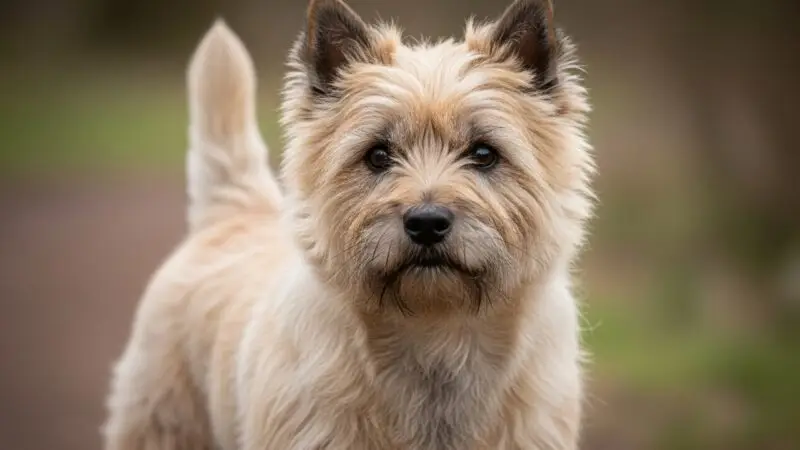


Participate
Do you have a good photo of your Maltipoo?
We are looking for expressive images for our breed profiles. Submit yours; the editorial team reviews every submission before publication.
Does this breed suit you?
Gentle, allergy-friendly tiny dog. One of the most popular mini designer dogs.