
01Summary
In a paragraph
If you only have 30 seconds.
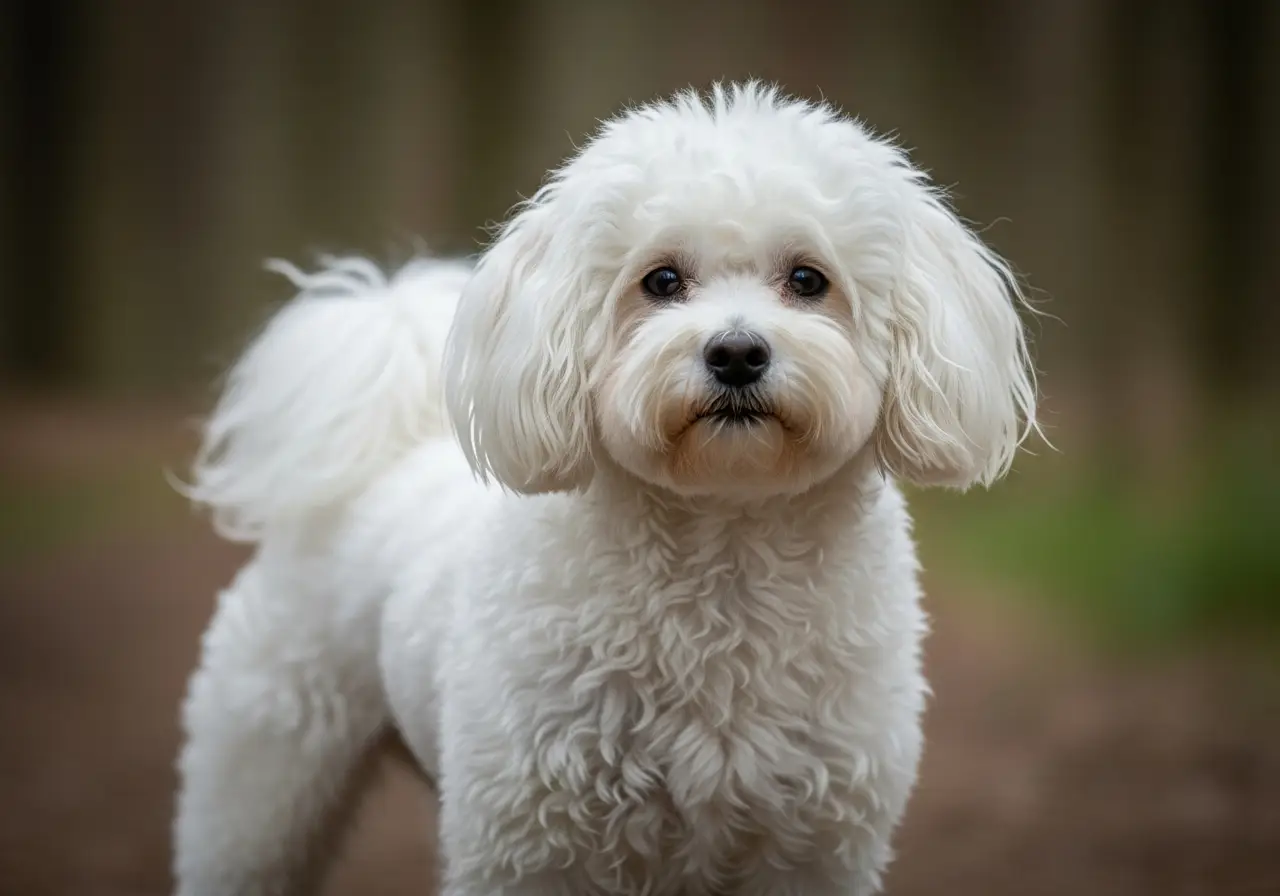
The Bolognese is a small, white companion dog from Northern Italy with a centuries-old history as a society dog of the nobility. Its calm temperament and moderate exercise needs mask what it truly demands: constant human closeness. If you plan for long absences or underestimate grooming requirements, choosing this breed is a mistake, regardless of your experience or living situation.
02Introduction
What makes the Bolognese special
The Bolognese is a small Italian companion dog from Bologna, FCI Group 9, with white curly coat and quiet character, shoulder height 25–30 cm.
03Profile
Key facts and suitability
- Origin
- Italien
- Original purpose
- Companion dog, lap dog
- FCI
- No. 196 · Group 9 · Section 1
- height at the withers
- 25–30 cm
- Weight
- 2–4 kg
- Life expectancy
- 12–14 Years
- Coat type
- Gelockt
- Minimum exercise
- 20 min/day
- Puppy price
- 1'200–2'200 CHF
- Waiting period
- 12 months
- Sports
- Obedience · Tricks
04Temperament
How the Bolognese shows up in everyday life
When you come home, the owner expects a dog that registers and demands their return, not loudly but clearly. The Bologneser positions itself close by, seeks physical contact, and attentively observes its primary caregiver. This intensity of bonding is no coincidence; it is the result of centuries of selection for close human association.
Internal axis – what the dog needs: The need for social contact is at the highest level. The dog requires not only physical proximity but also reliability in its daily routine. It perceives changes in everyday life (new people, moves, altered routines) and reacts with heightened attention or short-term uncertainty. The need for mental stimulation is moderate; short training sessions with positive reinforcement or search games are sufficient to keep it mentally occupied. Its exercise requirement is 45 to 60 minutes daily, divided into two to three calm walks.
External axis – how the dog reacts: The Bologneser shows reserve towards strangers. It observes first before allowing contact. This reservedness is not a sign of aggression but typical breed behaviour. With familiar conspecifics, it is compatible given good socialisation; its hunting or guarding instinct is only slightly pronounced.
These two axes diverge: A dog with a very high need for social contact towards its primary caregiver is not automatically open to every visitor. Confusing this and overloading the dog in social situations creates stress rather than sociability. In everyday life, this means: The Bologneser is a quiet, present companion, not an all-round contact dog.
05Needs
What this breed needs daily
The Bologneser requires 45 to 60 minutes of exercise daily, divided into two to three walks at a moderate pace. Intense physical exertion is neither necessary nor typical for the breed; the FCI standard explicitly describes it as "not very active overall". Long hikes or jogging accompaniment do not fit its profile.
Mentally, it needs regular, short sessions with clear structure. Nose games, simple trick training, or search tasks in the apartment are sufficient to keep it occupied. Long, intense training sequences are more likely to overwhelm it than benefit it.
The decisive factor is time for closeness. The dog needs a primary caregiver who is predominantly present. Alone phases of more than three hours should remain the exception. Anyone regularly away from home for eight hours must organise reliable care, such as a dog sitter, day care, or a second primary caregiver in the household.
Grooming represents another time commitment: weekly brushing is mandatory, and a professional grooming appointment every six to eight weeks is recommended. Underestimating this risks matting that can only be remedied by complete shaving.
Training requires consistency and calmness. The dog reacts sensitively to inconsistency; giving in too much encourages barking and insecurity, while too much pressure causes withdrawal. Attending a dog training school during the puppy phase is recommended to establish basic structures early on.
Exercise
Low
mental work
Something
Social needs
Very high
training
Easy
07Quick Check
08Suitability
Who this breed is suitable for – and who it isn't
✓Matches
The Bologneser suits individuals or households that are predominantly at home, whether working from home, retired, or with flexible working hours. It is essential that daily presence is secured and alone phases remain rare and short.
Suitable are calm individuals or couples seeking an attentive companion with moderate exercise needs and willing to invest time in grooming and consistent training. Seniors with a stable daily routine benefit from its calm temperament, provided physical care is ensured.
Families with older children from about eight years of age are suitable if interaction is respectful and calm and the dog has a retreat space. The dog needs clear structures, not a hectic environment.
First-time owners are suitable if they are willing to attend a dog training school and engage with the breed's bonding needs. The breed forgives beginner mistakes less through robustness than through its cooperative nature, provided leadership remains calm and reliable.
Keeping it in an apartment is possible as long as sufficient walks take place. A garden is not essential, but a quiet living environment without constant noise levels suits the dog well.
×Doesn't match
The Bologneser does not suit individuals who are regularly away from home for more than three to four hours daily without organising reliable care. Its intensity of bonding is not a trait that can be compensated for by occasional attention.
The breed is not suitable for owners seeking a robust, independent dog that fits in effortlessly in changing social situations. Anyone confusing the high need for social contact towards their primary caregiver with general friendliness will experience a dog that remains reserved around strangers and reacts insecurely in unstructured situations.
Families with very young children or a very loud, restless household should critically consider this breed. The dog needs opportunities to retreat and reacts to prolonged stress with behavioural issues.
Individuals unwilling to perform regular grooming are also unsuitable; without care, the coat mats, leading to skin problems. Anyone viewing care as an optional effort makes a wrong decision with this breed.
Active sportspeople seeking a running or hiking companion will not find the right profile in the Bologneser. Its exercise need is moderate; intense physical exertion corresponds neither to its physique nor its temperament.
10Line reality
Show line, working line, breeder market
The Bolognese does not exhibit a pronounced differentiation between working and show lines; the breed was historically bred exclusively as a companion dog and has no working test in the FCI standard. A division into performance and exhibition lines, as relevant for retrievers or herding dogs, does not exist for the Bolognese in a comparable form.
Nevertheless, there are differences within show breeding: breeders who consistently breed for FCI standard conformity place value on coat structure, body build and pigmentation. Dogs from this breeding direction are regularly presented at shows and selected accordingly.
Regional differences exist in the breeding population: In Italy, its country of origin, the breed is somewhat more widespread than in the German-speaking area. The total population in the DACH region is small, which limits the choice of breeders and increases the importance of association-affiliated breeding.
Anyone looking for a Bolognese should pay less attention to line differences and more to the health examinations of the parent animals and the socialisation conditions during rearing; these factors influence the later character more strongly than line affiliation.
11Health · Reality
What you need to plan for medically with your Bolognese
Compared to other small dogs, the Bolognese is considered a relatively healthy breed. According to the Association of German Small Dog Breeders, life expectancy is between 12 and 15 years, a range influenced by keeping conditions, nutrition, and genetic predisposition.
Patellar luxation is the most frequently documented orthopaedic condition in small dogs. According to a study by the University of Veterinary Medicine Hannover (2012), up to 25% of all small dogs under 10 kg are affected by patellar luxation, with the degree of severity varying greatly. Breeding precautions through X-ray examination of the parent dogs reduce the risk but do not eliminate it.
Dental problems occur structurally more frequently in small dogs: the small jaw offers little space for a full set of teeth, which promotes misalignment and tartar buildup. Regular dental checks with the vet, at least once a year, and active dental care at home are recommended.
Eye problems such as epiphora (tearing) do occur and should be monitored, as they may indicate irritation or anatomical peculiarities.
Overweight is a real risk for this breed: moderate exercise needs combined with incorrectly dosed food lead quickly to weight gain, which strains joints and heart function. Weight should be checked regularly.
Preventive examinations: annual general check-up, dental check, weight check, orthopaedic assessment in case of lameness.
12Structured data
Health by the numbers
Prone to diseases
Patellar luxation, eye problems, hip dysplasia
Recommended health tests
Patella screening, eye examination
13Myths ↔ Reality
What is often said incorrectly about this breed
Five myths, five realities, five sources.
"The Bolognese is a low-maintenance lap dog that copes well when left to its own devices.
The Bolognese has a highly pronounced need for social contact. The breed was bred for close human contact over centuries, and periods of solitude lasting more than three hours are considered problematic. Anyone who regularly leaves the dog alone for long periods risks separation anxiety and associated behavioural problems such as excessive barking or destructive behaviour.
"The Bolognese's white curly coat cares for itself because it hardly sheds.
The Bolognese does indeed shed little, but the dense, fluffy coat mats considerably without regular care. Weekly brushing and regular professional trimming or clipping are necessary to avoid matting and skin problems. The care effort is higher than for many short-haired breeds.
"Small dogs like the Bolognese require hardly any training.
The Bolognese reacts sensitively to inconsistency and quickly develops undesirable behaviours in the absence of structure, including excessive barking and insecurity towards strangers. Positive, consistent guidance is not an option, but a prerequisite. Small dogs are often underestimated in practice, leading to entrenched problems.
"The Bolognese is open and friendly towards all people.
The FCI standard describes the Bolognese as very loyal to its master and primary caregivers, not as generally sociable. It behaves reservedly to neutrally towards strangers. A high need for social contact with the primary caregiver does not automatically mean openness towards strangers. Distinguishing between these two axes is crucial for realistic expectations.
"The Bolognese is a robust breed without significant health risks.
Although the Bolognese is considered relatively healthy compared to other small dogs, patellar luxation and dental problems, due to the small jaw, occur frequently. Regular veterinary check-ups, particularly of the teeth and knee joints, are recommended for the breed. General robustness cannot be substantiated.
14animal welfare
The animal welfare perspective
Breeder market, designer versions, animal shelter reality — what no one writes in the puppy ad.
The Bolognese is rare in German-speaking animal welfare; the market for this breed is limited, which brings both risks and opportunities.
Backyard breeder market: Particularly with small, visually attractive dogs with a calm temperament, there is a grey market that responds to demand without breeding oversight. Puppies from non-association-affiliated breeding are often given up without health checks of the parent dogs, without sufficient socialisation, and at too early an age. The result: behavioural issues and health problems that only become apparent months after purchase. If you use price as the sole criterion, you will often pay more later in vet costs and training effort.
Designer versions: The trend towards so-called “teddy dogs” or deliberately kept-small variants also affects the Bichon breeds. Extremely small specimens, often marketed as “teacup”, are not a recognised breeding direction but the result of targeted selection for undersize, which is associated with increased health risks. The FCI standard defines clear measurements; dogs significantly below these do not meet any recognised standard.
Breeding and keeping-related problems: The Bolognese is not a breed of questionable breeding in the strict sense. Nevertheless, its strong bond-orientation fosters a specific keeping problem: overprotection. Owners who never leave the dog alone, keep it away from social contacts, or immediately compensate for every insecurity promote separation anxiety and uncertainty—the opposite of what the dog needs.
Adoption as an equally valid option: If you are looking for a Bolognese, you should actively consider adoption. Breed-specific organisations and animal shelters occasionally place dogs that have been given up due to underestimated bonding needs. For many owners, an adult dog with a known character and completed socialisation is the more suitable choice than a puppy, without this representing a compromise.
15Costs · Transparency
What this breed realistically costs
A puppy from reputable, association-affiliated breeding costs between 1,200 and 2,000 euros or CHF in Germany and Switzerland. Offers significantly below this usually come from uncontrolled breeding; the risk of follow-up costs increases accordingly.
The annual living costs consist of: food (high-quality, suitable for small dogs) approx. 300–500 EUR/year; professional grooming every six to eight weeks approx. 50–80 EUR per session (600–960 EUR/year); basic equipment (lead, collar, transport box, sleeping area) one-off approx. 150–300 EUR.
Basic veterinary costs include an annual check-up, vaccination boosters and parasite prevention, realistically 200–400 EUR/year. For orthopaedic investigations (patellar luxation) or dental treatments, individual costs of 300–1,500 EUR may arise.
Dog health insurance for a small dog in this category costs between 30 and 80 EUR/month (360–960 EUR/year) depending on the provider and scope of cover. Whether it is worthwhile depends on the individual risk profile; for breeds with known orthopaedic weaknesses, it is worth serious consideration.
16Puppy search
What you need to consider when choosing a breeder
- A reputable breeder will not let puppies go before eight weeks of age, shows both parent dogs or at least the mother on site, and documents health checks in writing.
- For the Bolognese, evidence regarding patellar luxation and the dental status of the parent dogs are relevant criteria.
- A breeder who does not provide documentation or sells puppies without a personal conversation is not a reliable contact.
- The Association of German Small Dog Breeders e.V.
- (www.kleinhunde.de) and the Small Dog Club Switzerland KCS (www.kleinhundeclub.ch) maintain breeder lists that serve as a starting point for your search.
- Platforms without affiliation to a breeding association do not offer comparable oversight.
- Adoption is an equally valid option.
- The Bolognese is rare in German-speaking animal welfare, but not non-existent.
- Dogs are occasionally given up because owners have underestimated the intensity of the bond.
- Breed-specific rescue organisations and general animal shelters are worth contacting; an adult dog with a known character reduces some of the uncertainty associated with the puppy phase.
- Caution is advised for offers significantly below the market price, for puppies without a vaccination passport, and for breeders who offer several breeds simultaneously without demonstrating specialisation.
- Reputable breeding is labour-intensive, and the price reflects this.
FAQ
Frequently asked questions about the Bolognese
Is Bolognese suitable for beginners?
Bolognese is considered suitable for first-time dog owners.
Is Bolognese a family dog?
Bolognese is considered suitable for families with good socialisation and species-appropriate care.
How much exercise does Bolognese need?
At least around 20 minutes of exercise per day.
Does Bolognese suit an apartment?
With enough exercise and enrichment, Bolognese can also be kept in an apartment.
What is the size and weight of Bolognese?
Fully grown, Bolognese reaches about 25–30 cm at the withers and weighs around 2–4 kg.
What is the life expectancy of Bolognese?
The life expectancy of Bolognese is approximately 12–14 years.
Is Bolognese suitable for allergy sufferers?
Bolognese is considered relatively hypoallergenic. There’s never a guarantee — test direct contact beforehand.
Which diseases are common in Bolognese?
Patellar luxation, eye problems, hip dysplasia
17Breed clubs
Official breed clubs in DACH
19Related
Similar breeds – and their differences
You might also be interested in
Participate
Do you have a good photo of your Bolognese?
We are looking for expressive images for our breed profiles. Submit yours; the editorial team reviews every submission before publication.
Does this breed suit you?
Rare and people-oriented. Calm companion dog for city life and seniors. Far less well-known than related Bichon breeds.