
01Summary
In a paragraph
If you only have 30 seconds.
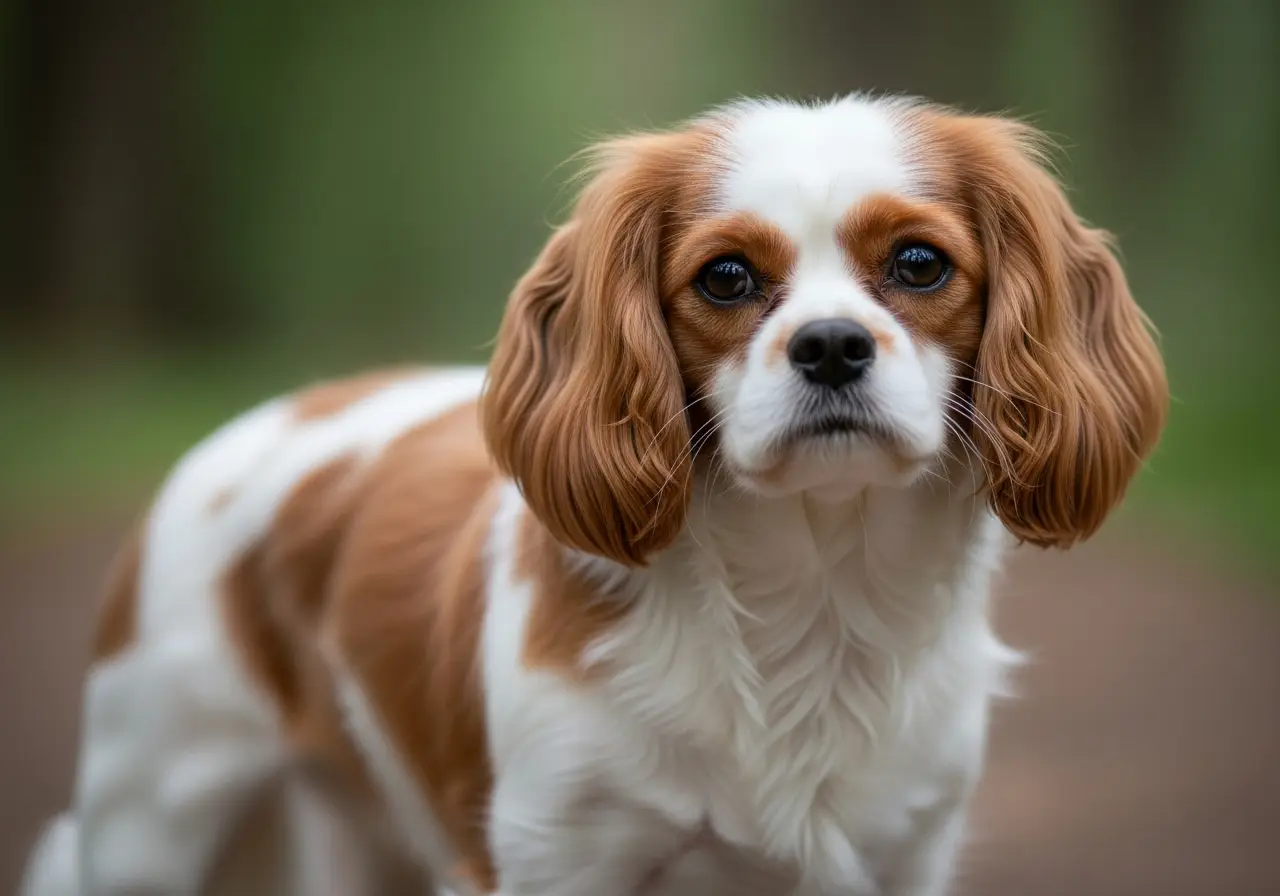
The Cavachon is an FCI-unrecognised cross between Cavalier King Charles Spaniel and Bichon Frisé. Temperament, coat type and health risks vary considerably depending on which parent line dominates. Anyone looking for predictability will not find it here. Anyone looking for a people-oriented, adaptable companion dog with moderate exercise needs and who is prepared to practice health prevention consistently will find a reliable everyday partner in the Cavachon.
02Introduction
What makes the Cavachon special
The Cavachon is a crossbreed of Cavalier King Charles Spaniel and Bichon Frisé not recognised by the FCI, suitable for city living, withers height 30–33 cm.
03Profile
Key facts and suitability
- Origin
- USA
- Original purpose
- Companion dog (crossbreed Cavalier King Charles Spaniel × Bichon Frisé)
- height at the withers
- 30–33 cm
- Weight
- 5–8 kg
- Life expectancy
- 10–15 Years
- Coat type
- Gelockt
- Minimum exercise
- 30 min/day
- Puppy price
- 1'200–2'500 CHF
- Waiting period
- 6 months
- Sports
- Obedience · Tricks
04Temperament
How the Cavachon shows up in everyday life
When you come home, a Cavachon reacts with clear joy of greeting, not with brief tail wagging but with active body engagement and vocalisations. This intensity reflects its high need for social contact: the dog is strongly oriented towards its key people and seeks physical closeness throughout the day.
Internal, what the dog needs: The need for social contact is high (internal axis: value 4 out of 5). The Cavachon requires several contact phases daily, not just evening cuddle time. Mental work is moderately required (value 2 out of 5); short training sessions with nose work or trick training are sufficient to keep it occupied. The exercise requirement is also moderate: 45 to 60 minutes daily in two sessions cover the basic need.
External, how the dog reacts to stimuli: Towards strangers, the Cavachon shows pronounced openness (external axis: friendliness towards strangers, value 5 out of 5). A visitor in the apartment is rarely greeted with scepticism, but frequently with an attempt at contact. This external openness must not be confused with a low need for social contact; the dog is open to many people but relies on its key reference persons.
In everyday life, this means that anyone who leaves the Cavachon to its own devices for several hours a day risks separation stress, even if the dog appears balanced outwardly. Inconsistency in the daily structure (sometimes lots of attention, sometimes hours-long absence) creates uncertainty. A reliable daily rhythm stabilises behaviour significantly more than intensive enrichment on individual days.
05Needs
What this breed needs daily
The Cavachon requires 45 to 60 minutes of active exercise daily, divided into at least two sessions. Simple walks without stimuli are not sufficient; sniffing phases, varying routes and occasional encounters with other dogs promote mental balance.
Moderate mental stimulation is required. Short training sessions of five to ten minutes using positive reinforcement, nose games or simple search tasks meet the need for mental work. Demanding dog sports are not essential, but they do no harm if the owner has an interest in them.
The need for social contact is the decisive factor in keeping the dog. The Cavachon requires regular periods of contact with its key people throughout the day. A dog that receives one hour of attention each morning and evening but is consistently left alone during the day will very likely develop separation stress. A maximum of three hours of alone time serves as a guideline; this figure presupposes a structured approach.
Depending on its coat type (smooth to curly), the coat requires brushing two to three times a week and a trim every six to eight weeks. If you do not wish to handle this yourself, factor in regular visits to a dog grooming salon.
Keeping the dog in an apartment is perfectly feasible, provided that the daily exercise sessions are consistently maintained. A garden is no substitute for active enrichment; it complements but does not replace guided sessions.
Exercise
Low
mental work
Something
Social needs
High
training
Easy
07Quick Check
08Suitability
Who this breed is suitable for – and who it isn't
✓Matches
The Cavachon suits individuals or families who are mostly at home or can integrate a dog into their working day, for example through working from home or taking the dog to work. Daily presence of at least six to eight hours should be realistically planned.
Families with children from around seven years of age who are guided in handling small dogs get along well with the Cavachon. The dog tolerates lively households but requires opportunities to retreat.
Active seniors or couples with a structured routine who can plan 45 to 60 minutes of exercise daily meet the requirements profile. The moderate exercise needs make the Cavachon manageable for people with limited mobility, provided that grooming and vet visits can be organised.
People who already have experience with human-oriented dogs and know how to prevent separation stress benefit from an uncomplicated start. First-time owners are not excluded but must be prepared to consistently pursue dog training school attendance and preventive healthcare from the outset.
As the Cavachon reacts openly towards strangers, it also fits into households with frequent visitors or in social professional environments where the dog is taken along.
×Doesn't match
The Cavachon is not suitable for people who are regularly away from home for eight hours or more and cannot arrange dog care. Its high need for social contact is not a character trait that can be completely overcome through habituation.
Anyone looking for a dog that occupies itself and demands little attention will find the Cavachon permanently overwhelming, despite its calm appearance.
Households that cannot plan time or budget for regular grooming underestimate the care effort. Especially with curly coats, lack of care leads to matting, which may require vet intervention.
Anyone expecting predictability in temperament, size and health profile is better off with a recognised breed with a binding breeding standard. The Cavachon is not a uniform type; two puppies from the same litter can differ considerably in coat structure, body build and behaviour.
People who choose the Cavachon primarily because of its appearance and consider health tests of the parent dogs optional risk high follow-up costs due to heart disease, patellar luxation or eye problems. The dog's external openness towards strangers must not be interpreted as a sign of low care requirements.
10Line reality
Show line, working line, breeder market
The Cavachon has no binding breeding standard and no officially recognised lines in the sense of working, show or field trial lines. A differentiation such as that found with FCI-recognised breeds does not exist.
In practice, however, two informal types can still be observed: litters in which the Cavalier proportion dominates often show a slightly calmer temperament, a silky to slightly wavy coat and a more pronounced intensity of bonding. Litters with a stronger Bichon influence stand out due to a curlier, denser coat and a slightly livelier play behaviour.
As there is no obligation to register in a studbook, the selection of parent dogs is left to the respective breeder. Reputable providers document heart examinations, eye examinations and patella assessments for both parent dogs. Irresponsible backyard breeders dispense with these tests entirely.
F1 crosses (direct pairing of Cavalier × Bichon Frisé parents) are considered by hybrid dog breeders to be genetically more heterogeneous than backcrosses (F1b) or multi-generation crosses. Without pedigree documentation, it is hardly possible for the buyer to determine which type is present.
11Health · Reality
What you need to plan for medically with your Cavachon
The Cavachon inherits the health risks of both parent breeds. This means two risk profiles that can add up.
In the Cavalier King Charles Spaniel, mitral valve disease (MVD) is considered the most common cause of death: According to a Swedish insurance study (Egenvall et al., 2000), over 50% of Cavaliers are affected by heart murmurs at the age of five; almost all animals over ten years old show findings. Syringomyelia, a painful malformation of the hindbrain, affects up to 70% of Cavaliers according to MRI studies (Rusbridge et al., 2006), even if not all become clinically apparent.
In the Bichon Frisé, patellar luxation, cataracts and allergies are the most common findings. Patellar luxation grade I–II occurs in about 5–8% of examined Bichons according to OFA database (Orthopedic Foundation for Animals, as of 2023).
There are no population studies for the Cavachon itself. The life expectancy is estimated at 12 to 15 years, based on the parent breeds.
Recommended preventive examinations: annual heart auscultation from the second year of life, eye examination by a specialist vet, patella assessment in puppyhood. In case of heart murmurs: echocardiography for staging.
Overweight poses an increased risk as it exacerbates heart strain and joint problems. Regular weight checks at the vet are advisable.
12Structured data
Health by the numbers
Prone to diseases
Heart problems (from Cavalier line), eye problems, patellar luxation
Recommended health tests
Heart examination of both parents (MRI Cavalier), eye examination, patella screening
13Myths ↔ Reality
What is often said incorrectly about this breed
Five myths, five realities, five sources.
“The Cavachon is hypoallergenic and does not trigger allergies.
No dog is completely allergen-free. Allergic reactions are primarily caused by the protein Can f 1 in saliva and skin flakes, not solely by hair. The Bichon component does reduce the volume of hair in the room, but does not eliminate allergens. Anyone who reacts to dog allergens should have an allergy test carried out before getting a dog.
“As a mixed-breed dog, the Cavachon is automatically healthier than its parent breeds.
The so-called heterosis effect does not occur reliably in deliberate two-breed crossbreeds. The Cavachon inherits the genetic risks of both parent breeds, including mitral valve disease (Cavalier), syringomyelia (Cavalier) and patellar luxation and cataracts (both breeds). Without health tests of the parent animals, the risk profile of a puppy cannot be assessed.
“The Cavachon is so small that it hardly needs exercise.
Body size and exercise needs do not correlate directly. The Cavachon is an active companion dog that needs 45 to 60 minutes of moderate exercise and mental enrichment daily. Insufficient stimulation manifests itself in restlessness, excessive barking or destructive behaviour.
“Cavachons are easy to leave alone because they are so balanced.
Both original breeds are strongly people-oriented. The Cavachon frequently develops separation stress if being left alone is not built up sufficiently. A maximum of three hours of alone time serves as a guideline; a structured build-up over weeks is mandatory, not optional.
“Because the Cavachon is not an FCI dog, there are no reputable breeders.
Lack of FCI recognition does not automatically mean irresponsible breeding. Reputable Cavachon breeders carry out heart examinations (auscultation, echocardiography), eye examinations and patella assessments on the parent dogs and issue corresponding certificates. However, the absence of a kennel club stamp does not replace an independent review of the health documents.
14animal welfare
The animal welfare perspective
Breeder market, designer versions, animal shelter reality — what no one writes in the puppy ad.
The Cavachon is one of the best-selling hybrid dogs in the German-speaking area. This popularity has created a market that ranges from reputable hobby breeding to commercial multiplication, with considerable differences in quality.
Backyard breeder market: As there is no obligation to keep a stud book and no association membership is required, anyone can produce and sell Cavalier-Bichon cross puppies. Platforms such as classifieds portals regularly list Cavachon puppies without any health documentation of the parent dogs. Prices between 800 and over 2,500 euros say nothing about the quality of the breeding.
Designer versions and trends: The term "teddy look" is frequently used in marketing for Cavachons. This trend promotes selection for particularly curly, dense coats, which increases the care effort and can lead to skin problems if care is lacking. Selection for health and temperament takes a back seat.
Breeding and husbandry-related problems: The Cavalier's mitral valve disease is polygenetically determined and cannot be controlled without consistent heart examinations of the parent dogs. Breeders who do not provide heart protocols consciously accept this risk. Buyers bear the follow-up costs, and the dog bears the consequences.
Adoption as an equally valid option: Animal welfare organisations and rescue centres regularly take in Cavachons, often because owners have underestimated the care requirements or separation stress issues. Anyone who takes on an adult Cavachon from a shelter already knows its coat type, temperament, and health status, providing a level of planning security that a puppy does not offer.
15Costs · Transparency
What this breed realistically costs
The acquisition costs for a Cavachon puppy from a reputable breeder in Germany and Austria range between 1,200 and 2,500 euros. Offers under 800 euros on classifieds platforms often come from backyard breeding without health tests.
Ongoing costs per year (guideline values for Germany):
Food: 400 to 700 euros depending on quality and body weight. Grooming (dog salon, every 6–8 weeks): 400 to 800 euros. Basic vet care (vaccinations, parasite prevention, annual check-up): 200 to 400 euros. Heart examination (auscultation): 60 to 120 euros per appointment.
In case of illness: An echocardiogram costs between 150 and 350 euros. A patella operation ranges from 800 to 2,500 euros per joint depending on severity. Anyone who does not take out pet insurance for the dog should plan for a reserve fund of at least 3,000 euros.
Pet insurance for small dogs costs between 30 and 80 euros monthly in the DACH region, depending on coverage and age at entry. Early enrolment is worthwhile, as pre-existing conditions are often excluded.
16Puppy search
What you need to consider when choosing a breeder
- A reputable Cavachon breeder voluntarily provides heart examination protocols for both parent dogs, for the Cavalier parent at least according to the MVD Breeding Protocol (auscultation by cardiologists, dog at least 2.5 years old).
- Eye examinations and patella assessments complement the minimum profile.
- On-site visits to the breeder are not optional.
- Anyone who sells puppies without a visit to see the mother and the rearing environment, or hands over puppies at meeting points, does not meet any reputable criteria.
- Questions that should be asked on first contact: How old is the mother dog?
- How many litters has she already had?
- Which health tests were carried out and when?
- How long do the puppies stay with the mother (minimum: eight weeks)?
- Placement via animal welfare organisations is an equally valid alternative.
- Adult Cavachons from rehoming come with a known temperament and health profile.
- Organisations such as the German Animal Welfare Federation or regional animal shelters regularly place small mixed-breed and hybrid dogs.
- Beware of very low prices under 800 euros and of adverts without photos of the parent dogs or the rearing environment.
- A high price alone is not a quality feature.
FAQ
Frequently asked questions about the Cavachon
Is Cavachon suitable for beginners?
Cavachon is considered suitable for first-time dog owners.
Is Cavachon a family dog?
Cavachon is considered suitable for families with good socialisation and species-appropriate care.
How much exercise does Cavachon need?
At least around 30 minutes of exercise per day.
Does Cavachon suit an apartment?
With enough exercise and enrichment, Cavachon can also be kept in an apartment.
What is the size and weight of Cavachon?
Fully grown, Cavachon reaches about 30–33 cm at the withers and weighs around 5–8 kg.
What is the life expectancy of Cavachon?
The life expectancy of Cavachon is approximately 10–15 years.
Is Cavachon suitable for allergy sufferers?
Cavachon is considered relatively hypoallergenic. There’s never a guarantee — test direct contact beforehand.
Which diseases are common in Cavachon?
Heart problems (from Cavalier line), eye problems, patellar luxation
17Breed clubs
Official breed clubs in DACH
19Related
Similar breeds – and their differences
You might also be interested in
Participate
Do you have a good photo of your Cavachon?
We are looking for expressive images for our breed profiles. Submit yours; the editorial team reviews every submission before publication.
Does this breed suit you?
Gentle, city-suitable companion dog. Definitely request heart screening of the Cavalier parent line.