
01Summary
In a paragraph
If you only have 30 seconds.
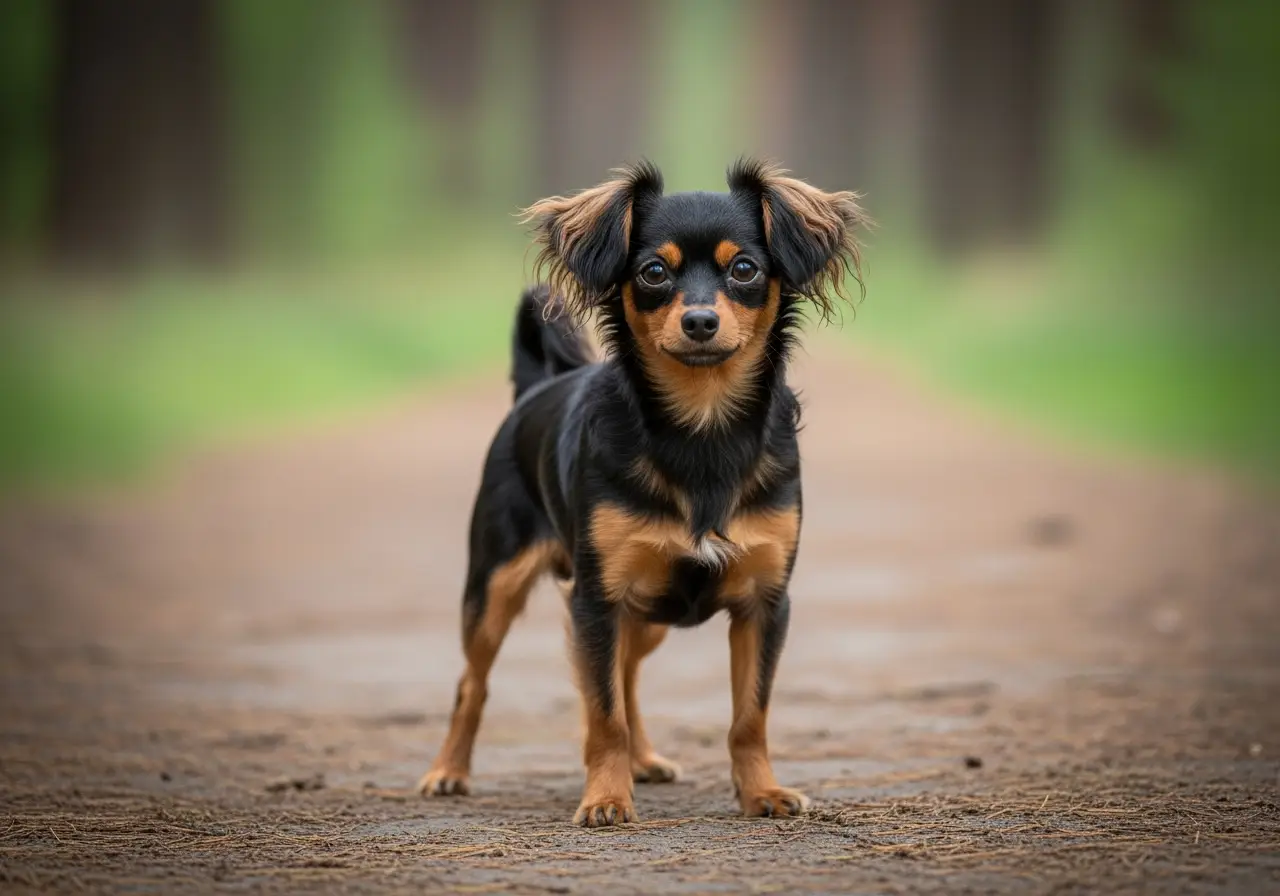
The Bolonka Zwetna is a small, long-haired companion dog from Russia with a strong bond to humans and an alert temperament. Whoever takes one on assumes daily grooming, a dog with low potential for being left alone and an attentive character that demands clear leadership. Not purely a lap dog, but a cooperative companion with its own mind.
02Introduction
What makes the Bolonka special
The Bolonka (Franzusska Bolonka) is a small Russian companion dog, hypoallergenic and suitable for city living, with a withers height of 18–26 cm.
03Profile
Key facts and suitability
- Origin
- Russland
- Original purpose
- Companion dog
- height at the withers
- 18–26 cm
- Weight
- 1–4 kg
- Life expectancy
- 12–16 Years
- Coat type
- Gelockt
- Minimum exercise
- 20 min/day
- Puppy price
- 1'200–2'500 CHF
- Waiting period
- 9 months
- Sports
- Obedience · Tricks
04Temperament
How the Bolonka shows up in everyday life
When you come home, the Bolonka greets you actively and attentively; it is not a quiet wait, but a dog that registers your return and demands attention. This intensity of bonding runs through everyday life.
Internally, what the dog needs: The need for social contact is high (axis value 4 out of 5). The Bolonka consistently orients itself towards its primary caregiver, seeks physical closeness and follows movements in the household. Periods alone lasting more than three hours are stressful for most dogs of this breed without targeted preparation. Mental work in the form of search games or short training sessions is part of the daily routine, not as an option, but as a balance to the low need for physical exercise.
Externally (how the dog reacts): The Bolonka initially approaches strangers attentively and cautiously. The axis value for friendliness towards strangers is 4 out of 5, which describes a basic openness, but not immediate intrusiveness. Well-socialised dogs warm up after a short observation phase. Without sufficient socialisation during the puppy phase, guarding behaviour can turn into pronounced barking.
In everyday life with children, the Bolonka shows patience if the interaction is respectful. Its small size makes it susceptible to unintentional injuries by young children. With other dogs, it is compatible with good socialisation; hunting or guarding instincts are hardly pronounced.
Important: A high need for social contact does not automatically mean openness towards every person. A Bolonka can be closely bonded to its family and yet remain reserved towards strangers; do not confuse these two poles.
05Needs
What this breed needs daily
The Bolonka needs 45 to 60 minutes of active exercise daily. Two to three walks with the opportunity for free exploration cover the basic physical need. Intensive endurance exertion is neither necessary nor typical for the breed; the Bolonka is not a jogging companion.
Mental stimulation has high priority for this breed. Short training sessions of five to ten minutes, nose work, search games or simple trick training correspond to the cooperative nature of the Bolonka and prevent boredom. A dog without mental work compensates by barking or exhibiting control behaviour; both can be avoided through structured enrichment.
The need for social contact is the decisive factor in everyday life. The Bolonka needs reliable human presence. Being left alone for more than three hours requires a systematically built-up habituation process that must start early, ideally already during the puppy phase. Spontaneous long absences are not compatible with this breed.
Grooming is not an optional extra effort, but an integral part of keeping the dog. The curly to wavy coat requires daily brushing and professional grooming every six to eight weeks. Neglected care leads to painful matting, which can only be remedied by complete shaving.
Training with clear, consistent structure and positive reinforcement is necessary from the start. The Bolonka learns quickly; this applies to desired behaviour just as much as to undesired behaviour. Boundaries that are not enforced once become established behavioural patterns.
Exercise
Low
mental work
Medium
Social needs
High
training
Easy
07Quick Check
08Suitability
Who this breed is suitable for – and who it isn't
✓Matches
The Bolonka suits people or households who spend a large part of the day at home or can regularly integrate the dog into everyday life, whether through working from home, flexible working hours or a reliable care solution. A maximum of three hours alone per day is realistically planable.
Suitable for individuals or couples with a calm to moderately active lifestyle who plan 45 to 60 minutes of exercise daily and enjoy short training sessions or nose work. A garden is not a must, but it makes everyday life easier.
Families with children from about eight years old, who are sensitised to handling small dogs and provide the dog with retreat options, are also suitable. The Bolonka gets along well with other dogs if well socialised; multi-dog households are possible if the introduction is structured.
Owners who are willing to plan regular grooming (daily brushing, visiting a groomer every six to eight weeks) and approach training consistently, even though the dog is small and appears "harmless" at first glance. First-time owners are suitable if they have informed themselves beforehand about the intensity of bonding and the care effort required and use a supportive dog training school.
×Doesn't match
The Bolonka does not suit people who are away from home for eight or more hours daily and cannot organise reliable care. The intensity of bonding in this breed is not a marketing promise; it is a real care requirement that, if unmet, leads to separation anxiety and behavioural problems.
Not suitable for households that regard grooming as negligible effort. Anyone who is not willing to brush daily and regularly visit a groomer does the dog no favours; matted fur causes pain and skin problems.
If you are looking for a calm, independent dog that can occupy itself for hours at a time, you will not be happy with the Bolonka. The high need for social contact (internal, axis value 4 out of 5) means active inclusion in daily life, not a passive existence in the dog basket.
Households with very young children under five years of age, where consistent handling of the dog cannot be guaranteed, are also to be viewed critically. The small body size makes the Bolonka susceptible to injury.
If you mistake the reserved reaction towards strangers for a lack of friendliness and therefore dispense with socialisation, you risk a dog that establishes barking as its main means of communication. Friendliness towards strangers (external, axis value 4 out of 5) only develops with consistent socialisation; it is not automatic.
10Line reality
Show line, working line, breeder market
The Bolonka Zwetna does not show pronounced line differentiation in the sense of working and show lines, as is known for example with Retriever breeds. As a pure companion dog without a working task, there is no selection for performance traits such as retrieving drive or endurance.
Nevertheless, there are breeding differences that are relevant for prospective owners. Breeders who work according to the standard of the Russian Dog Breeds Association (RRH) place value on health checks and temperament tests. Outside these structures, in so-called hobby breeding or with breeders not affiliated with an association, the quality of selection varies considerably.
Regionally, differences in coat type become apparent: some lines produce more curly coats, others more wavy. This affects the care effort required, but it is not an officially differentiated line characteristic.
Anyone looking for a Bolonka should pay less attention to line designations and more to the concrete breeding conditions: Are health checks documented? Are the parent dogs on site? How is the social behaviour of the puppies? These questions are more informative than any line assignment.
11Health · Reality
What you need to plan for medically with your Bolonka
The Bolonka Zwetna is considered a comparatively robust small dog breed with a life expectancy of 12 to 15 years. Reliable breed-specific health statistics exist only to a limited extent due to the small population size and lack of FCI recognition.
Patellar luxation is the most frequently documented orthopaedic disease in small dog breeds. According to a study by the University of Veterinary Medicine Hannover (2019), the prevalence in small dog breeds ranges between 5 and 25 percent depending on the breed. There are no own surveys for the Bolonka; breeders affiliated with clubs examine breeding dogs for patellar luxation (OFA scheme or comparable).
Dental problems (crowded teeth, delayed tooth change) occur more frequently in small dog breeds than in large ones. Regular dental checks at the vet from the first year of life are recommended.
The coat requires special attention: matting leads to skin irritation and can favour parasitic infestation. Ears should be checked regularly for inflammation, as the curly fur covers the ear canal.
Overweight is an underestimated risk in small dogs. Already 200 to 300 grams above ideal weight puts disproportionate strain on joints and intervertebral discs. Portion control and avoiding table feeding are concrete preventive measures.
Preventive examinations: annual vet visit, dental check, patella check for the puppy, eye examination recommended.
12Structured data
Health by the numbers
Prone to diseases
Patellar luxation, eye problems
Recommended health tests
Patella screening, eye examination
13Myths ↔ Reality
What is often said incorrectly about this breed
Five myths, five realities, five sources.
"The Bolonka is hypoallergenic and does not trigger allergies.
No dog is completely allergy-free. Allergic reactions are primarily caused by the protein Can f 1 in saliva and skin flakes, not by the coat itself. The Bolonka's low-shedding coat can reduce allergen load in the apartment, but no guarantee exists. Allergy sufferers should consult an allergist before buying and seek test contact with the specific dog.
"Small dogs require little training.
The Bolonka reacts sensitively to inconsistency and quickly develops undesirable behaviours such as excessive barking or controlling behaviour towards visitors if structure is lacking. Consistent, positive training from the first day is just as necessary as for large breeds. The small body size tempts owners not to enforce boundaries; this is the most common training error with this breed.
"The Bolonka is a low-maintenance beginner dog.
The curly to wavy coat grows continuously and mats within weeks without regular care. Professional grooming every 6 to 8 weeks and daily brushing are realistic efforts. Added to this is the high need for social contact: anyone planning long absences significantly underestimates the bonding intensity of this breed.
"A Bolonka manages well alone because it is so calm.
The Bolonka has a high need for social contact (axis value 4 out of 5). Being left alone for more than three hours is not stress-free for most representatives of this breed without systematic training and gradual conditioning. Separation anxiety is one of the most common reasons for rehoming small companion dogs with this level of bonding intensity.
"The Bolonka is suitable for any living situation due to its size.
Keeping in an apartment is possible, but requires daily activity time and mental stimulation. Small body size does not automatically mean low care requirements. A Bolonka in an apartment without sufficient enrichment and social interaction will develop behavioural issues, regardless of the available square metres.
14animal welfare
The animal welfare perspective
Breeder market, designer versions, animal shelter reality — what no one writes in the puppy ad.
The Bolonka Zwetna is still a comparatively rare breed in the German-speaking region. This means: it rarely appears in animal welfare; whoever looks for it will hardly find it in an animal shelter. At the same time, demand is growing, which brings backyard breeders to the fore who rely on quick turnover.
The backyard breeder market for small, trendy companion dogs follows a known pattern: low investment in health checks, early separation from the mother, sale via classifieds portals without questions. Bolonka puppies from such sources often cost less than 500 euros and frequently cause significantly higher vet costs in the first years of life due to patellar luxation, dental problems or behavioural issues resulting from inadequate socialisation.
A specific breeding for harmful traits problem as seen with brachycephalic breeds does not exist for the Bolonka. The main problems are related to keeping conditions: underestimated grooming effort and the intensity of bonding, which leads to separation anxiety during long absences. Both are the most common reasons for surrender in small companion dogs of this category.
Designer variants (crossbreeds with other small breeds marketed under fantasy names) promise hypoallergenic properties or special colours. These promises are rarely substantiated and the health checks of the parent dogs are often not traceable.
Adopting an adult Bolonka via animal welfare organisations or breed breeding clubs is a factually equivalent alternative to buying a puppy. Adult dogs already show their character, their compatibility with other animals and their care needs, which considerably reduces surprises. Whoever is open to this option simultaneously supports responsible adoption structures.
15Costs · Transparency
What this breed realistically costs
A Bolonka Zwetna from reputable, club-affiliated breeding costs between 1,200 and 2,000 euros in Germany and Switzerland. Prices below this indicate missing health checks or poor rearing conditions, not a good deal.
The annual living costs consist of: food (quality dry food or wet food) approx. 300 to 500 euros, professional grooming every 6 to 8 weeks approx. 400 to 700 euros per year, basic equipment (leash, harness, basket, toys) in the first year approx. 200 to 400 euros.
Veterinary costs: routine examinations, vaccinations and parasite prevention cost approx. 200 to 400 euros annually. Dental cleanings under anaesthesia, which are more frequently necessary in small dogs, cost 300 to 600 euros per procedure. A patellar luxation operation costs between 800 and 2,500 euros depending on the severity.
Dog health insurance for a Bolonka costs approx. 30 to 80 euros per month (360 to 960 euros/year) depending on the provider and scope of benefits. Given the potential surgical costs, an operation insurance is a sensible consideration for this breed. Realistic total costs in the first year: 3,000 to 5,000 euros including getting a dog.
16Puppy search
What you need to consider when choosing a breeder
- A reputable Bolonka breeder will not part with puppies until they are eight weeks old, shows both parent dogs on site and documents health checks, at least patellar examination and eye check.
- Puppy mills and intermediaries without insight into the rearing conditions are a clear warning sign.
- Ask about the breeding club: In Germany, the Breed Breeding Club for Russian Dog Breeds (RRH) provides contacts to tested breeders.
- Reputable breeders ask counter-questions; they want to know whether the dog suits the prospective owner's life situation.
- Whoever asks no questions is selling.
- Purchase prices under 800 euros for a Bolonka Zwetna from traceable breeding are unrealistic.
- Very low prices often indicate missing health checks or poor rearing conditions.
- Adopting an adult Bolonka from animal welfare organisations or breed rescue groups is an equally valid option.
- Adult dogs already show their character; surprises regarding temperament are rarer than with puppies.
- Reasons for surrender such as grooming effort or changed life circumstances say nothing about the quality of the dog.
- Animal welfare organisations and breed breeding clubs can support the adoption process.
FAQ
Frequently asked questions about the Bolonka
Is Bolonka suitable for beginners?
Bolonka is considered suitable for first-time dog owners.
Is Bolonka a family dog?
Bolonka is considered suitable for families with good socialisation and species-appropriate care.
How much exercise does Bolonka need?
At least around 20 minutes of exercise per day.
Does Bolonka suit an apartment?
With enough exercise and enrichment, Bolonka can also be kept in an apartment.
What is the size and weight of Bolonka?
Fully grown, Bolonka reaches about 18–26 cm at the withers and weighs around 1–4 kg.
What is the life expectancy of Bolonka?
The life expectancy of Bolonka is approximately 12–16 years.
Is Bolonka suitable for allergy sufferers?
Bolonka is considered relatively hypoallergenic. There’s never a guarantee — test direct contact beforehand.
Which diseases are common in Bolonka?
Patellar luxation, eye problems
17Breed clubs
Official breed clubs in DACH
19Related
Similar breeds – and their differences
You might also be interested in
Participate
Do you have a good photo of your Bolonka?
We are looking for expressive images for our breed profiles. Submit yours; the editorial team reviews every submission before publication.
Does this breed suit you?
Small Russian Bichon type. Friendly, amenable, hypoallergenic. Ideal for city living and seniors.