
01Summary
In a paragraph
If you only have 30 seconds.
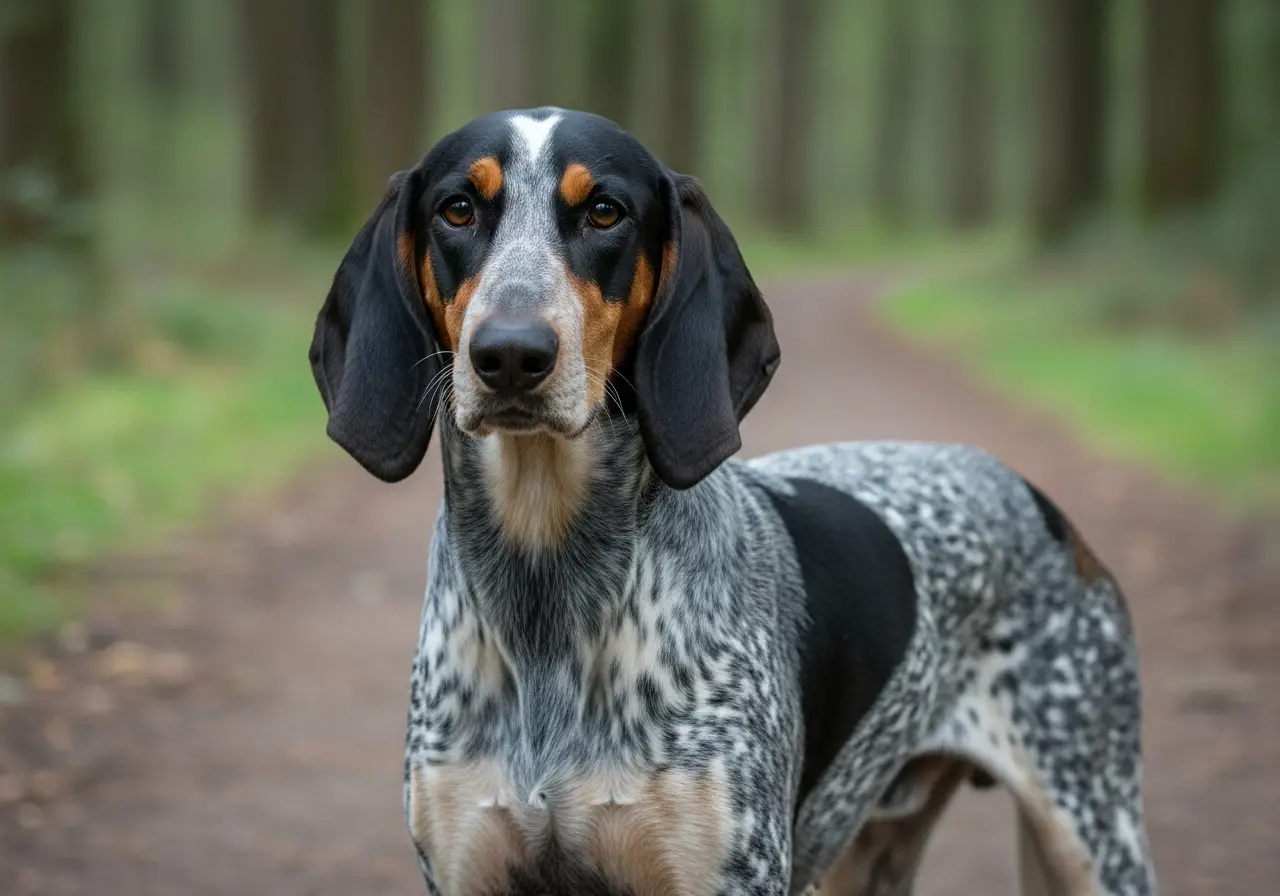
The Lucerne Hound is one of the four varieties of the Swiss Hound, tri-coloured, enduring and genetically geared towards independent hunting work. Anyone keeping this dog takes on a specialist: strong prey drive, high exercise needs and a nose that has the final say in the terrain. Without an understanding of hunting and a structured daily routine, a dog emerges that defines its own task.
02Introduction
What makes the Lucerne Hound special
The Lucerne Hound is a Swiss hunting hound, FCI Group 6, tricoloured and enduring, withers height 44–57 cm.
03Profile
Key facts and suitability
- Origin
- Schweiz
- Original purpose
- Hunting hare and fox in Central Switzerland
- FCI
- No. 59 · Group 6 · Section 1.2
- height at the withers
- 47–59 cm
- Weight
- 15–22 kg
- Life expectancy
- 12–14 Years
- Coat type
- Short-haired
- Minimum exercise
- 90 min/day
- Puppy price
- 800–1'400 CHF
- Waiting period
- 9 months
- Sports
- Hunting · Tracking · Mantrailing
04Temperament
How the Lucerne Hound shows up in everyday life
During the morning run in the forest, the Lucerne Hound switches to another mode within seconds: the nose goes to the ground, the body stiffens and contact with the owner recedes into the background. This is not disobedience; this is the behaviour for which this breed has been selected over generations.
In everyday domestic life, a different picture emerges. The dog seeks closeness to its primary caregiver, behaves calmly and is uncomplicated in dealing with the family. This contrast between indoors and outdoors is characteristic and must not be misunderstood as a contradiction.
The dual-axis model applies here: the internal need for social contact is moderate to high; the dog needs bonding, structure and human presence. The external reaction to strangers, on the other hand, is neutral to reserved. A Lucerne Hound that appears relaxed within the family circle does not have to be open towards unknown people. Keeping these two poles apart is crucial for everyday planning.
Towards other dogs, the breed is generally tolerant; historically it was kept in hunting packs, which has favoured a certain social tolerance. Nevertheless, the following applies: under wild game stimulus in the field, the dog’s attention is focused entirely on the track, not on conspecifics or the owner.
Mental work in the form of nose work, mantrailing or controlled tracking work noticeably relieves the dog. A Lucerne Hound that receives 30 minutes of targeted nose work daily shows significantly more calmness in the evening than a dog that has been walked on a leash for two hours.
05Needs
What this breed needs daily
The Lucerne Hound needs at least 90 to 120 minutes of active exercise daily, with a considerable proportion in the form of nose work or controlled field work. Pure loose-leash walking on asphalt does not meet this need.
Forms of exercise that correspond to the profile: tracking work in the field, mantrailing, tracking work according to SchH/IPO rules, hunting training or at least regular sniffing work within a structured framework. Off-leash running is only justifiable in secure terrain; the prey drive overrides any learned recall under wild game stimulus.
The need for mental work is high. A dog that is exclusively physically exercised without receiving mental demands will show restlessness and frustration behaviour in the medium term. Nose work demonstrably causes more fatigue than pure running load.
The Lucerne Hound tolerates being left alone for up to about four hours, provided it has been sufficiently exercised beforehand. Longer absences without prior exercise lead to vocalisation, a behaviour that creates considerable conflicts in multi-storey residential buildings or urban living environments.
A rural or at least suburban environment with access to green spaces and terrain is not a comfort option, but a basic prerequisite. Keeping the dog in a city apartment without daily access to terrain does not meet the needs of this breed.
Socially, the dog needs a clear primary caregiver with experience in dealing with high-drive, independently working dogs. Consistency in handling and a realistic picture of obedience under stimulus are indispensable.
Exercise
Very high
mental work
A lot
Social needs
Medium
training
Demanding
06Sport & Mental and Physical Stimulation
What sports the Lucerne Hound is suited for
Realistic in terms of physiology and genetics – not every breed suits every sport.
Structurally and physiologically suitable: Suitable for mantrailing, dummy work and tracking · CaniCross / bikejoring possible.
07Quick Check
08Suitability
Who this breed is suitable for – and who it isn't
✓Matches
The Lucerne Hound suits owners who can plan at least 90 to 120 minutes of active exercise in the field daily, not as an exception, but as part of their daily routine. Hunters or owners with a hunting background will find a reliable working partner in this breed, which can fully develop its drive profile.
Suitable are also sportily active owners with experience in dealing with high-drive dogs who are prepared to establish nose work, mantrailing or tracking work as fixed components of everyday life. A rural environment or at least regular access to terrain and green spaces is a prerequisite.
Families with children from about eight years of age are suitable if the adults take on the leadership role and ensure physical and mental stimulation. The dog tolerates a lively household environment, but needs clear structures.
Owners who have already gained experience with hounds, beagles or other scenthound breeds understand the behaviour under wild stimuli realistically and are better prepared for the challenges of recall training. Anyone who is familiar with the external reserve towards strangers and does not regard it as a problem but classifies it as typical of the breed will be satisfied with this dog in the long term.
×Doesn't match
The Lucerne Hound is not suitable for owners who are away from home for eight or more hours a day and cannot organise reliable care. The combination of high exercise needs and limited tolerance for being left alone leads to chronic under-stimulation in such households.
Anyone living in an apartment without daily access to open terrain should not choose this breed, regardless of personal commitment. The need for exercise cannot be structurally met in urban environments.
Owners looking for an amiable companion dog that is open to everyone will be disappointed by the external reserve towards strangers. Anyone who interprets the reserved reaction to unknown people as a training problem and tries to correct it through socialisation pressure misunderstands what is typical of the breed.
First-time owners without prior experience with hunting-motivated dogs face a considerable challenge: recall under wild stimuli requires consistent training over long periods and presupposes a realistic picture of the limits of obedience. Anyone who expects a dog with reliable off-leash freedom in forested areas without investing in this training risks accidents and frustration on both sides.
Households with very young children under six years of age, in which no adult person can ensure daily stimulation, are also not suitable for this breed.
10Line reality
Show line, working line, breeder market
The Lucerne Hound is today bred almost exclusively as a working dog. An independent show line, such as exists for other breeds, has not become established. Breeding is predominantly in the hands of hunters who are actively involved in hunting in Switzerland and who define the working type (tracking ability, vocal work, endurance) as the primary breeding goal.
This means for prospective owners: anyone who acquires a Lucerne Hound will generally receive a dog with an intact drive to work, regardless of whether they themselves are involved in hunting. A softening of the drive profile through selective breeding for companion dog suitability hardly occurs in this breed.
Regional differences within Switzerland exist, but are not documented in the form of clearly defined lines. Individual breeders place more emphasis on body build and exterior for shows, without completely abandoning the working type. These dogs differ hardly at all from the classic working type in everyday life.
For owners without a hunting background, this means: the drive is present in any case. The question is not whether the dog wants to track, but how this drive is channelled. Mantrailing, tracking work and structured nose work offer non-hunting owners a sensible alternative, but do not replace the basic understanding of the behaviour of an independently working hunting dog.
11Health · Reality
What you need to plan for medically with your Lucerne Hound
The Lucerne Hound is considered a robust working breed with a life expectancy of 12 to 14 years. Reliable breed-specific health statistics are only limitedly available due to the small population size outside Switzerland.
Hip dysplasia (HD) occurs in medium-sized scenthounds, but is less prominently documented in the breeding of the Lucerne Hound than in retriever breeds. Reputable breeders provide HD X-ray assessments of the parent animals; this is standard, not the exception, for this breed.
The greatest breed-typical health risk lies in ear health. The long, close-fitting ear flaps reduce ventilation of the ear canal. Studies on otitis externa in dogs (Vetsuisse Bern) show that drop-eared breeds are significantly more frequently affected than prick-eared breeds. Weekly ear checks and thorough drying after field work involving water contact are recommended by veterinary medicine.
Overweight is a real risk for this breed if the need for exercise is not met. A Lucerne Hound that is not sufficiently stimulated tends to gain weight, with corresponding consequences for joints and the cardiovascular system. The daily exercise unit is therefore not only behavioural but also preventive healthcare.
Preventive examinations recommended: annual weight check with body condition score, ear inspection by the vet at least once a year, HD screening of parent animals before purchase. In case of lameness, chronic ear itching or decreased performance in the terrain, veterinary investigation should be initiated promptly.
12Structured data
Health by the numbers
Prone to diseases
Hip dysplasia, ear problems
Recommended health tests
Hip X-ray
13Myths ↔ Reality
What is often said incorrectly about this breed
Five myths, five realities, five sources.
The Lucerne Hound is a well-behaved family dog that is content with a bit more exercise.
The Lucerne Hound was selected over centuries for independent tracking work. This drive is genetically anchored and cannot be compensated by longer walks. Without targeted nose work and hunting-related stimulation, behavioural problems such as excessive baying, escape attempts and restlessness in the house arise.
Hounds are easy to train due to their friendliness and suitable for dog beginners.
Friendliness and trainability are two different axes. The Lucerne Hound appears balanced and people-oriented in everyday life, but works highly independently under game scent. Recall under hunting stimulus requires consistent, experience-based training over months. For owners without prior experience with high-drive dogs, this presents a considerable challenge.
Floppy ears on hounds are purely aesthetic and require no special care.
The long, close-fitting ears of the Lucerne Hound significantly reduce air circulation in the ear canal. This increases the risk of otitis externa (ear canal inflammation), especially after field work with moisture. Regular ear checks, at least weekly, and drying after water contact are recommended by veterinarians.
A Lucerne Hound that is calm in the house does not need intensive stimulation.
Many hounds show a pronounced rest phase in the home environment; this is not a sign of contentment, but of exhaustion or resignation. Chronic under-stimulation often manifests with delay: through baying, destructive behaviour or escape attempts at the next opportunity. The internal drive strength remains independent of external calm behaviour.
All Swiss hounds are the same; the varieties only differ in colour.
The four varieties of the Swiss Hound (Bernese, Lucerne, Schwyz and Jura Hounds) have different regions of origin, histories of crossbreeding and slightly differing typologies. The Lucerne Hound has a specific coat structure and colouring due to the influence of the Bleu de Gascogne. Breeding differences in body build and working style exist between the varieties and are demonstrable.
14animal welfare
The animal welfare perspective
Breeder market, designer versions, animal shelter reality — what no one writes in the puppy ad.
The Lucerne Hound is a rare breed in Germany and Austria with few registered litters per year. The backyard breeder market is less pronounced in this segment than for popular breeds; nevertheless, offers without pedigree and without breeder affiliation exist, which primarily capitalise on the exotic factor of the breed.
The main problem lies not in breeding, but in misjudgement at the time of purchase. The Lucerne Hound appears accessible and uncomplicated as a puppy and in calm moments. Its pronounced prey drive only becomes apparent with increasing maturity, often between the eighth and twelfth month of life, surprising owners who had envisioned a companion dog with somewhat higher exercise needs. Typical reasons for relinquishment in Switzerland are underestimated prey drive, vocalisation in the apartment, and failed recall training.
Designer versions or hybrid breeds involving the Lucerne Hound are currently not widespread. The risk lies more in keeping under incorrect preconditions than in breeding-related developments.
Anyone who takes on an adult Lucerne Hound from a rescue organisation often receives a dog whose drive profile is already known. This is a genuine advantage over a puppy, whose development is still open. Swiss animal welfare organisations and occasionally German hound rescues place such dogs. The settling-in period requires patience and experience, but for suitable owners it is a fully worthwhile alternative to buying a puppy.
Education before purchase is the most effective form of animal welfare for this breed. Anyone who knows the drive profile makes an informed decision and is less likely to relinquish the dog again.
15Costs · Transparency
What this breed realistically costs
The purchase price for a Lucerne Hound with pedigree in Switzerland is between 1,200 and 1,800 CHF; in Germany it is between 900 and 1,400 EUR. Offers significantly below this without kennel club documentation are a warning sign.
Annual living costs consist of food (high-quality dry food or BARF for a 15–20 kg dog: approx. 600–900 EUR/year), basic grooming and ear cleaning (approx. 100–200 EUR/year), as well as dog tax (depending on the municipality, 50–150 EUR/year).
Basic veterinary costs (annual vaccination, parasite prevention, routine examination) amount to approx. 300–500 EUR/year. In addition, there are possible treatment costs for ear infections, which occur above-average frequently in this breed: Treatment for otitis externa costs 80–300 EUR per episode, depending on severity.
Dog liability insurance is mandatory in several German federal states and costs approx. 50–100 EUR/year. Pet health insurance for the dog is optional, but can be sensible for this breed; annual premiums start at approx. 400 EUR for medium-sized dogs.
Training costs for nose work, mantrailing or tracking (for this breed not an extra, but a necessity) should be estimated at 200–500 EUR/year for courses and training sessions. Total annual costs: realistically 1,800 to 2,800 EUR, depending on health history and training intensity.
16Puppy search
What you need to consider when choosing a breeder
- Reputable breeders of the Lucerne Hound are registered in Switzerland with the Swiss Kynological Association (SKV), in Germany with the VDH and the Association for French and Swiss Scenthounds e.V.
- A reputable breeder asks questions about the living situation, the hunting background and experience with high-drive dogs before handing over a puppy.
- The following points should be checked during the visit: both parent animals should be on site or at least viewable with documentation.
- Hip X-rays of the parents (HD assessment) should be available.
- The litter should have grown up in a stimulating, non-isolated environment.
- Early habituation to terrain, noises and people is particularly relevant for this breed.
- Caution is advised with offers without pedigree, at prices significantly below 800 euros or with breeders who offer several breeds simultaneously and show no discernible connection to hunting within the breed.
- Adoption through animal welfare organisations or breed rescue groups is an equally valid option.
- In Switzerland and occasionally in Germany, adult Lucerne Hounds are rehomed, often from households where the prey drive was underestimated.
- An adult dog has the advantage that character and drive profile can already be assessed.
FAQ
Frequently asked questions about the Lucerne Hound
Is Lucerne Hound a family dog?
Lucerne Hound is considered suitable for families with good socialisation and species-appropriate care.
How much exercise does Lucerne Hound need?
At least around 90 minutes of exercise per day. As an active breed, more so — plus mental stimulation.
What is the size and weight of Lucerne Hound?
Fully grown, Lucerne Hound reaches about 47–59 cm at the withers and weighs around 15–22 kg.
What is the life expectancy of Lucerne Hound?
The life expectancy of Lucerne Hound is approximately 12–14 years.
Which diseases are common in Lucerne Hound?
Hip dysplasia, ear problems
17Breed clubs
Official breed clubs in DACH
19Related
Similar breeds – and their differences
You might also be interested in
Participate
Do you have a good photo of your Lucerne Hound?
We are looking for expressive images for our breed profiles. Submit yours; the editorial team reviews every submission before publication.
Does this breed suit you?
Swiss hunting hound from Central Switzerland. Rare. Tricoloured coat. Almost exclusively kept for hunting.