
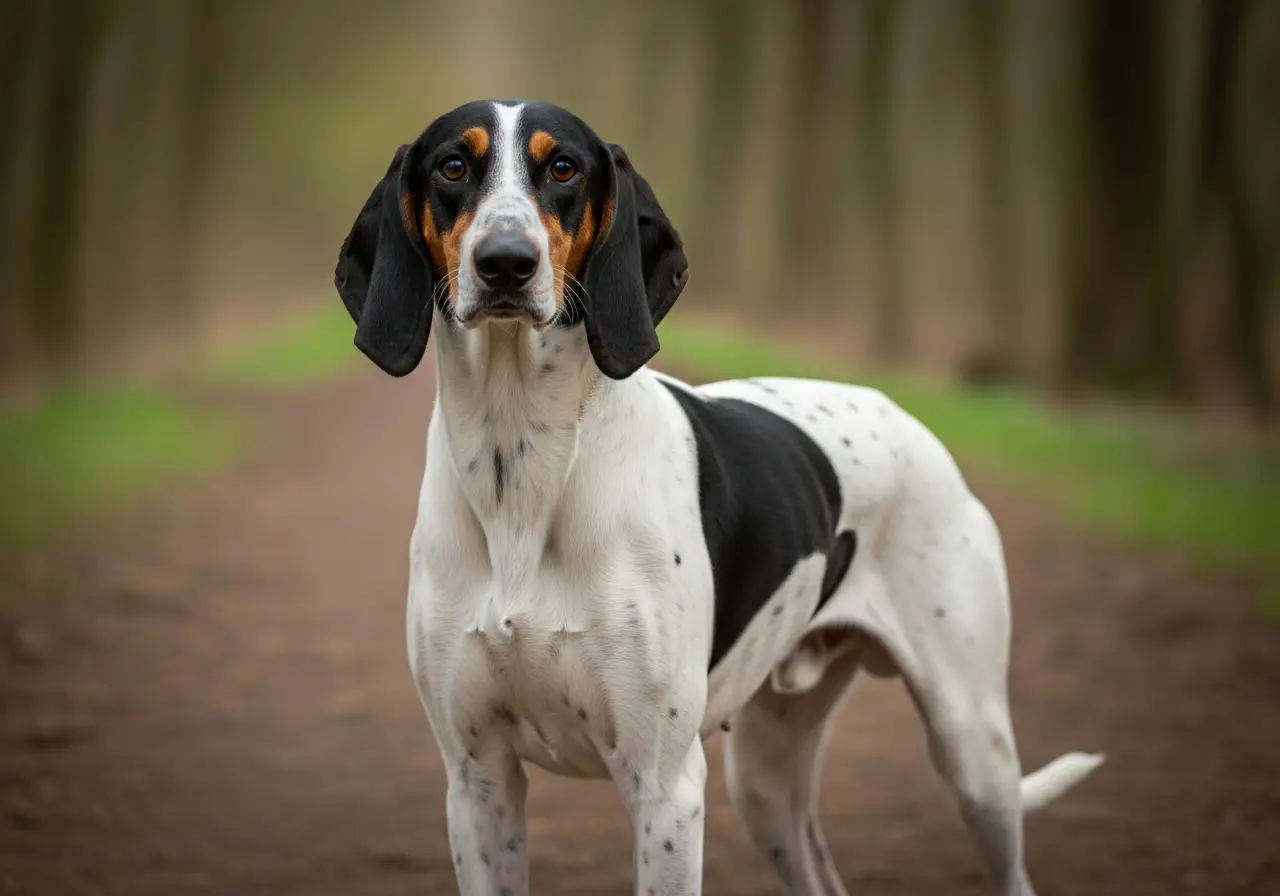
01Summary
In a paragraph
If you only have 30 seconds.
The Ariège Laufhund is a specialised French hound bred for pack hunting of hare and roe deer. Its prey drive is deeply rooted genetically, its need for exercise is high and its independence on the trail is pronounced. Anyone keeping this dog needs experience with hunting-motivated breeds, a rural environment and a consistent stimulation concept, daily, not occasionally.
02Introduction
What makes the Ariège Hound special
The Ariège Hound is a rare French pack hound, FCI Group 6, with tricolour coat and pronounced prey drive, shoulder height 50–58 cm.
03Profile
Key facts and suitability
- Origin
- Frankreich
- Original purpose
- Pack hunting of hare and roe deer
- FCI
- No. 20 · Group 6 · Sektion 1.2: Mittelgroße Laufhunde. Mit Arbeitsprüfung.
- height at the withers
- 50–58 cm
- Weight
- 25–30 kg
- Life expectancy
- 10–12 Years
- Coat type
- Short-haired
- Minimum exercise
- 120 min/day
- Puppy price
- 700–1'200 CHF
- Waiting period
- 12 months
- Sports
- Hunting · Tracking · Mantrailing
04Temperament
How the Ariège Hound shows up in everyday life
On the morning walk, the Ariège Laufhund shows what its genetics mean: the nose goes straight to the ground, the body follows the scent, and the rest of the world hardly exists for this moment. This is not disobedience, this is working drive that has been selected over centuries.
At home, a different picture emerges. After sufficient stimulation, the Ariège Laufhund is calm, friendly and easy to handle. Towards visitors, it usually shows open curiosity or relaxed neutrality; its friendliness score towards strangers is high. However, this openness must not be equated with low care requirements: internally, the dog needs intensive enrichment daily, while externally it appears significantly more accessible than many other hunting breeds.
This difference between internal need intensity and external friendliness is central to understanding the breed. An Ariège Laufhund that receives too little stimulation will not become aggressive or shy; it becomes restless, seeks its own enrichment and follows every scent stimulus available.
In the pack or with other dogs, it shows its social roots: it gets along well with conspecifics, squabbles are rare. It perceives children calmly as long as the basic need for movement and nose work is met. Being left alone is tolerated for up to about four hours, provided it has been physically and mentally challenged beforehand. Absence should regularly not be longer than this.
05Needs
What this breed needs daily
The Ariège Laufhund needs at least two hours of active exercise daily, not a walk at a walking pace but movement with content. Tracking work, mantrailing, structured nose games or hunting-related enrichment cover its need for mental work (score 4 out of 5) and its need for movement (score 5 out of 5) simultaneously.
A secured outdoor area is not a comfort solution but a safety necessity. On the scent, the dog largely ignores recall signals; an enclosed garden or a secured training area significantly reduces the risk of accidents.
Nose work should take place daily, not just at weekends. Short, intensive search sessions of 15 to 20 minutes several times a day are more effective than a single long session. The Ariège Laufhund works concentratedly and with endurance when the task corresponds to its predisposition.
Its need for social contact is moderately pronounced (score 3 out of 5). It needs contact with its primary caregiver and benefits from conspecifics, but it is not a dog that must constantly cling to humans. Being left alone for up to four hours is possible if stimulation has been consistently implemented before the absence.
A rural or at least suburban environment with access to forest and meadow best meets its needs. Keeping in an apartment is not fundamentally excluded but requires a very structured daily management that compensates for the lack of free-running areas through targeted enrichment.
Exercise
Very high
mental work
A lot
Social needs
Medium
training
Demanding
06Sport & Mental and Physical Stimulation
What sports the Ariège Hound is suited for
Realistic in terms of physiology and genetics – not every breed suits every sport.
Structurally and physiologically suitable: Suitable for mantrailing, dummy work and tracking · CaniCross / bikejoring possible.
07Quick Check
08Suitability
Who this breed is suitable for – and who it isn't
✓Matches
The Ariège Laufhund suits owners who can plan at least two hours for active stimulation daily, not as an occasional exception but as a fixed daily structure. People actively involved in hunting who use the dog on the trail or in the pack correspond most directly to its original profile.
They are also suitable for nature-oriented, sporty people with experience in keeping breeds motivated by hunting. Those who practise mantrailing, tracking work or similar nose-sport disciplines will find a motivated partner in the Ariège Laufhund. A rural environment with a securely enclosed yard is advantageous.
Families with children from around eight years of age are suitable, provided that the dog's need for exercise is consistently met and the children are supported in dealing with an independent, high-drive dog. Multi-dog households are possible, as pack genetics favour compatibility with conspecifics.
Owners who are prepared to accept safety measures permanently (secure garden, long lead in the yard, no uncontrolled off-leash running in areas rich in wildlife) and who understand the prey drive as a core part of the character rather than a problem to be eliminated will be satisfied with this dog in the long term.
×Doesn't match
The Ariège Laufhund is not suitable for owners who are regularly away from home for more than four hours a day and do not have a reliable dog care plan. Its maximum time for being left alone is around four hours, or even less if there is insufficient mental and physical stimulation beforehand.
Anyone looking for a dog that can be called off freely and reliably at any time will be permanently frustrated by this breed. The prey drive is not a training deficit, but a genetic basis; anyone who regards it as a temporary problem that can be solved with enough training fundamentally underestimates the breed.
City dwellers without access to forest, meadow and secure areas will quickly reach structural limits. Owners who regard nose work and hunting-related enrichment as optional leisure activities will also fail to meet the dog's need for mental work (score 4 out of 5).
People keeping a dog for the first time will be overwhelmed by the Ariège Laufhund, not because of its character, but because of the specific combination of high drive, independence on the trail and the management effort this requires permanently. Anyone who equates the dog's external friendliness towards strangers with low maintenance requirements makes a consequential misjudgement.
10Line reality
Show line, working line, breeder market
The Ariège Laufhund is still bred almost exclusively as a working dog for hunting today. A split into working and show lines, as observed in more popular breeds, has not occurred in this rare breed. The breeding population is small, and selection continues to be based on hunting performance: tracking ability, endurance, baying and suitability for rough terrain are in the foreground.
The FCI standard requires a working test, which institutionally anchors the hunting orientation of breeding. Dogs without proof of hunting suitability play a marginal role in the breeding of the breed.
There are no independent breeding lines in the German-speaking area. The few dogs kept here mostly come from French kennels with direct links to hunting associations. A regional differentiation within the breed, for example between mountain and lowland lines, is not documented but would be plausible due to the original terrain requirements in Ariège.
Anyone who acquires an Ariège Laufhund practically always receives a dog with a hunting background, regardless of whether they themselves are involved in hunting. This directly shapes drive structure, independence and the need for stimulation.
11Health · Reality
What you need to plan for medically with your Ariège Hound
There are no extensive, breed-specific health studies with large sample sizes for the Ariège Laufhund; the small population size outside France makes reliable statistics difficult. The life expectancy is given in specialist literature and by breeding associations as around 10 to 13 years, which corresponds to the average for medium-sized hounds.
Hip dysplasia (HD) and elbow dysplasia (ED) occur occasionally. Specific prevalence rates have not been published for this breed; in comparable medium-sized hound breeds, HD rates in breeding populations range between 5 and 15 % depending on selection pressure (source: OFA database, status 2023). Breeding managers should demand X-ray examinations of the hips and elbows before mating.
The long, floppy ear flaps predispose to ear inflammation, particularly in dogs with regular water contact or intensive use in undergrowth. Weekly ear checks and regular cleaning are sensible as prevention. In the case of recurring inflammation, a veterinary investigation for allergies or anatomical peculiarities is indicated.
Overweight rarely poses a problem for sufficiently exercised hunting dogs, but can occur with insufficient stimulation. Weight should be checked regularly; a visible ribcage without visible ribs serves as a guideline value.
Preventive examinations include: annual general check-up, dental check, ear inspection after every field use and HD/ED screening before breeding. Vaccination protection and parasite management depend on hunting use and the regional risk profile (ticks, fox tapeworm).
12Structured data
Health by the numbers
Prone to diseases
Hip dysplasia, ear problems, generally robust breed
Recommended health tests
Hip X-ray
13Myths ↔ Reality
What is often said incorrectly about this breed
Five myths, five realities, five sources.
The Ariège Hound is considered a gentle family dog that fits into any household without problems.
Although the Ariège Hound shows a friendly, tolerant nature towards people, its prey drive and exercise need of at least two hours of active stimulation daily make it a demanding dog. Households without hunting-related enrichment or structured nose work concept will quickly reach their limits. Friendliness towards people does not mean low keeping effort.
Hounds like the Ariège are poorly compatible with other dogs due to their pack past.
The opposite is true: The pack genetics of the Ariège Hound generally promote high compatibility with conspecifics. Territorial behaviour is low. The challenge lies not in social compatibility, but in the joint management of prey drive when several dogs are out together.
A hound with strong prey drive can be reliably recalled through consistent training.
Recall on the trail is one of the greatest challenges with scent hounds. As soon as an Ariège Laufhund picks up a scent, the outside world fades into the background; this is not a question of obedience but genetically ingrained working behaviour. A reliable recall in the wild without safety measures is not realistically achievable for this breed. Management through secured areas remains permanently necessary.
The Ariège Laufhund is particularly healthy and free from hereditary diseases due to its rarity.
The rarity of a breed does not automatically protect against hereditary diseases. In small breeding populations, there is rather the risk of a restricted gene pool. No extensive health studies are available for the Ariège Laufhund; hip dysplasia and ear problems occur occasionally. Careful selection of breeding stock and regular veterinary checks remain indispensable even for rare breeds.
Scent hounds primarily need physical exercise, while mental stimulation plays a subordinate role.
The Ariège Laufhund has a high need for mental work (score 4 out of 5). Nose work, tracking and structured search tasks are not an addition but a basic prerequisite for a balanced dog. Purely physical exercise without cognitive challenge leads to restlessness and frustration-related behaviour in the long term.
14animal welfare
The animal welfare perspective
Breeder market, designer versions, animal shelter reality — what no one writes in the puppy ad.
The Ariège Pointer is a rarity in the German-speaking region. On the one hand, this limits the risk of uncontrolled breeding by commercial providers, but on the other hand, it creates its own problems: The small breeding population increases the risk of inbreeding and limited genetic diversity. Anyone buying an Ariège Pointer should actively ask for breeding records that indicate conscious line breeding with health tests.
Puppies of this breed occasionally appear on platforms such as classifieds without any discernible breeding structure. Offers without proof of parentage, without evidence of working trials, and without membership in a recognised breeding club should be viewed with caution, not because every such provider acts maliciously, but because the breed-specific requirements for drive structure and health cannot be reliably met without targeted selection.
Designer versions or trend crosses involving the Ariège Pointer are currently unknown. This is an advantage: The breed has so far been spared from the dynamics that have led to health-problematic extreme types in more popular breeds.
Animal welfare rehoming of Ariège Pointers is very rare in the DACH region. If such a dog ends up in a rescue centre, it is almost always due to an underestimation of the effort involved in keeping them, insufficient exercise, insufficient nose work, or lack of secure terrain. Anyone taking an Ariège Pointer from animal welfare often receives a dog with hunting instincts and pent-up need for stimulation. This is not a worse option, but it requires an honest assessment of one’s own capacities and a structured settling-in period.
As a general rule: The rarity of the breed does not protect against inappropriate acquisitions. An Ariège Pointer that is not sufficiently stimulated through hunting or nose work does not suffer loudly; it becomes restless, finds its own tasks, and overwhelms its household in the process.
15Costs · Transparency
What this breed realistically costs
The acquisition costs for an Ariège Pointer from reputable breeding are approximately 800 to 1,500 EUR due to the rarity of the breed. Offers significantly below this without breeding records and working trial certificates for the parent dogs should be viewed with caution.
Annual living costs consist of food (depending on quality and body weight, approx. 600 to 1,000 EUR/year), care (ear cleaning, occasional trimming, approx. 100 to 200 EUR/year), as well as basic equipment and wear-and-tear items. Additional costs include hunting-related equipment or nose work materials if no hunting use is intended.
Basic veterinary costs cover annual preventive examinations, vaccinations, and parasite management: realistically 300 to 500 EUR/year. With hunting use, injuries from undergrowth, thorns, or contact with wildlife are more common than in pure companion dogs, increasing the risk of unplanned veterinary costs. Pet insurance with surgical coverage costs approx. 30 to 70 EUR/month for a medium-sized dog of this size class, depending on provider and deductible (as of 2024, DACH market).
Those who hunt with their dog should additionally budget for hunting licence costs, territory fees, and training expenses. Those focusing on nose work sports should calculate course fees of approx. 150 to 400 EUR/year.
16Puppy search
What you need to consider when choosing a breeder
- A reputable breeder of Ariège Laufhunds is a member of a recognised breeding association, such as the Verein für Französische und Schweizer Laufhunde e.V.
- in the German-speaking area, and breeds according to the guidelines of an FCI-recognised federation.
- The FCI standard requires a working test for this breed: reputable breeders can provide proof of the hunting suitability of the parent animals.
- Before purchase, both parent animals should be known personally or at least through documentation.
- Health checks for HD and ED as well as ear health of the parents are a minimum standard.
- Puppies should not be given away before eight weeks of age and should come with an initial veterinary examination and a vaccination passport.
- Offers without association membership, without proof of working tests and at very low prices should be scrutinised critically.
- The rarity of the breed makes it more difficult to find comparable offers, which increases the pressure to accept an available offer without sufficient checks.
- Placement via animal welfare organisations is an equally valid option.
- Ariège Laufhunds in animal welfare are rare, but not non-existent.
- Anyone who has the capacity for a hunting-oriented, high-stimulation dog can also provide a suitable home for a placed dog.
- No named breeder recommendation; the Verein für Französische und Schweizer Laufhunde e.V.
- facilitates contact with tested breeders.
FAQ
Frequently asked questions about the Ariège Hound
Is Ariège Hound a family dog?
Ariège Hound is considered suitable for families with good socialisation and species-appropriate care.
How much exercise does Ariège Hound need?
At least around 120 minutes of exercise per day. As an active breed, more so — plus mental stimulation.
What is the size and weight of Ariège Hound?
Fully grown, Ariège Hound reaches about 50–58 cm at the withers and weighs around 25–30 kg.
What is the life expectancy of Ariège Hound?
The life expectancy of Ariège Hound is approximately 10–12 years.
Which diseases are common in Ariège Hound?
Hip dysplasia, ear problems, generally robust breed
17Breed clubs
Official breed clubs in DACH
19Related
Similar breeds – and their differences
You might also be interested in
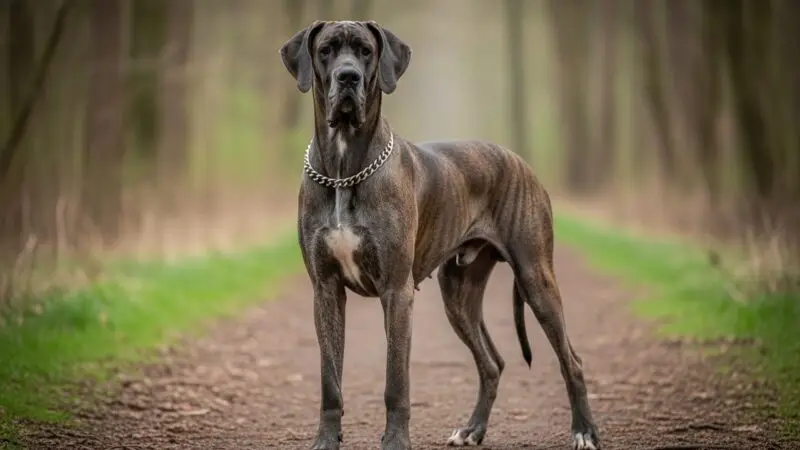
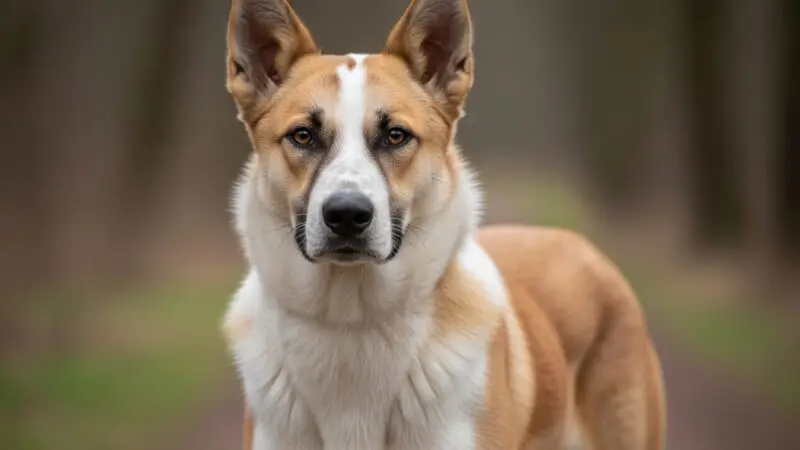
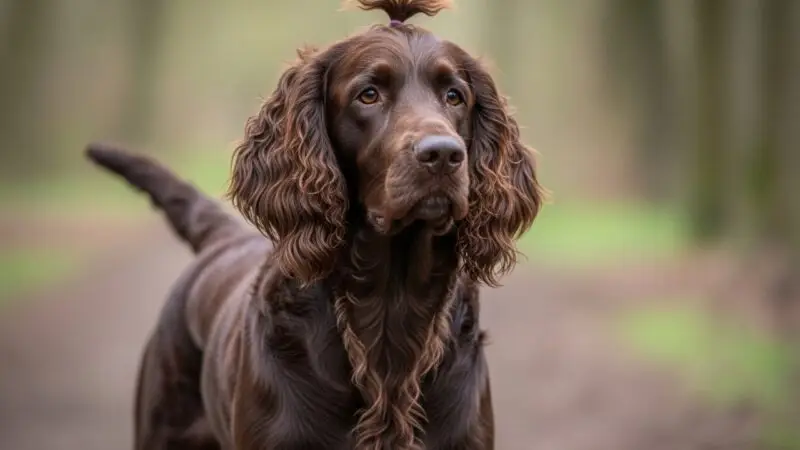
Participate
Do you have a good photo of your Ariège Hound?
We are looking for expressive images for our breed profiles. Submit yours; the editorial team reviews every submission before publication.
Does this breed suit you?
Rare French hound exclusively for hunters. Extremely loud hunting barker, hardly suitable as a pure companion dog.