
01Summary
In a paragraph
If you only have 30 seconds.
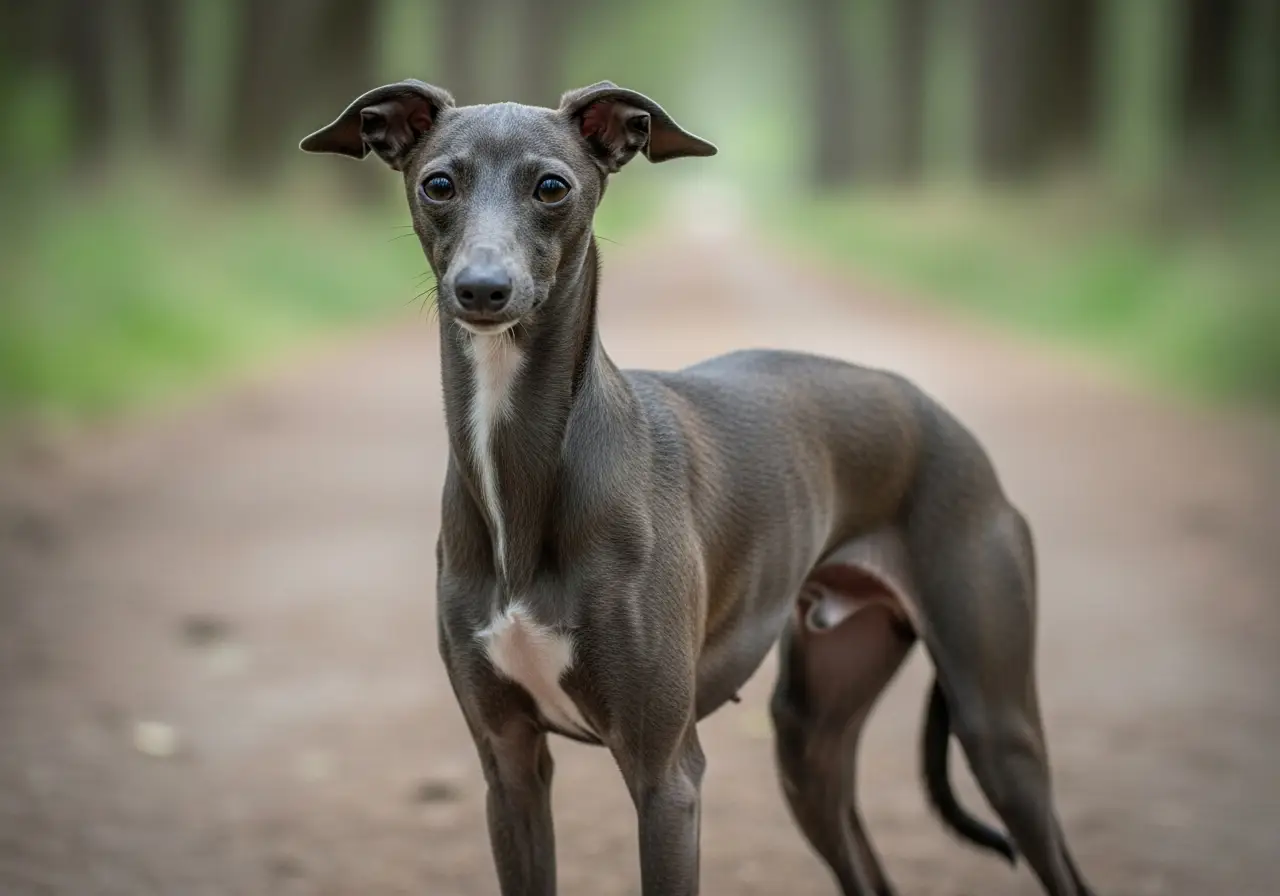
The Italian Greyhound is the smallest representative of the sighthounds, FCI Group 10, Section 3. Behind the elegant, almost fragile appearance lies a genetically programmed sight hound with a pronounced need for bonding. The breed requires protection from cold, fenced exercise areas, and calm, consistent handling. Anyone who underestimates these basic conditions will be surprised by the intensity of this dog.
02Introduction
What makes the Italian Greyhound special
The Italian Greyhound is the smallest sighthound, FCI Group 10, from Italy, sensitive to cold and fragile, withers height 32–38 cm.
03Profile
Key facts and suitability
- Origin
- Italien
- Original purpose
- Companion dog, coursing small game
- FCI
- No. 200 · Group 10 · Sektion 3: Kurzhaarige Windhunde. Ohne Arbeitsprüfung.
- height at the withers
- 32–38 cm
- Weight
- 3–5 kg
- Life expectancy
- 13–15 Years
- Coat type
- Short-haired
- Minimum exercise
- 45 min/day
- Puppy price
- 1'500–2'500 CHF
- Waiting period
- 9 months
- Sports
- Lure Coursing · Agility
04Temperament
How the Italian Greyhound shows up in everyday life
When you come home, the Italian Greyhound shows what a high need for social contact means concretely: the dog immediately seeks physical contact, pushes onto your lap or follows step by step through the apartment. This intense bond with the primary caregiver is no coincidence; it is genetically anchored and demands active attention daily.
The picture changes on the walk. As soon as a bird, a hare or a rolling ball comes into view, the dog switches to hunting mode. The prey drive is pronounced, the reaction speed high. An unsecured area becomes a trap: the animal is out of sight in seconds. This behaviour is not a training error, but sighthound genetics.
The Italian Greyhound behaves reservedly towards strangers. Anyone meeting the dog for the first time often encounters a restrained, observant animal, not the open-hearted greeting ritual that some expect from a small dog. This reserve (external axis: Friendliness-Strangers Score 3) stands in stark contrast to the intense bonding behaviour towards familiar people (internal axis: Need for social contact Score 5). Both poles belong to the breed; they must not be confused.
In the flat, the dog is calm as long as its need for movement and contact is met. It sleeps a lot, seeks warm spots and reacts sensitively to loud noises or a hectic atmosphere. A calm household climate is not a matter of comfort, but a basic prerequisite for the well-being of this breed.
05Needs
What this breed needs daily
The Italian Greyhound needs at least 60 minutes of active exercise daily. Part of this should take place on secured, fenced-in terrain where the dog can sprint freely. Public dog parks without a stable fence are not a suitable alternative; in such moments, the prey drive overrides any recall signal.
The need for movement is moderate compared to other sighthound breeds (CCT Score 3), but the quality of the movement counts: short walks on a lead are not enough. The dog needs opportunities to express its natural sprinting ability.
Mental work plays a subordinate role (CCT Score 2). Elaborate nose work or complex learning tasks are not the primary need of this breed. Nevertheless, the dog benefits from short, positive training sessions that convey structure and reliability.
The need for social contact is high (CCT Score 5). The animal needs several hours daily in close proximity to its primary caregiver. Being left alone should be built up early and systematically; a maximum of three hours serves as a guideline. Longer absences without preparation often lead to separation anxiety.
Cold protection is not an optional addition. At temperatures below 10 °C, the dog needs suitable protective clothing. In winter, short-term stays outdoors without clothing are not species-appropriate for this breed. Even in the flat, the animal seeks warm lying places; heating pads or thermal blankets are used actively.
Exercise
Medium
mental work
Something
Social needs
Very high
training
Medium
06Sport & Mental and Physical Stimulation
What sports the Italian Greyhound is suited for
Realistic in terms of physiology and genetics – not every breed suits every sport.
Structurally and physiologically suitable: Suitable for mantrailing, dummy work and tracking.
07Quick Check
08Suitability
Who this breed is suitable for – and who it isn't
✓Matches
The Italian Greyhound suits people who can plan several hours daily for close physical contact and active companionship. A household in which at least one person is mostly at home or can integrate the dog into their working day offers good prerequisites.
Suitable are calm, structured people with experience in dealing with sensitive dogs. Anyone who has already kept a dog and knows how consistent, pressure-free training works will find an attentive partner in this breed.
Households with children from about 8 years of age, who have learned to deal calmly and respectfully with animals, are suitable, provided the overall household climate is calm. Loud, hectic family dynamics overwhelm the dog.
Active individuals or couples with access to secured open land, their own garden with a stable fence or regular use of fenced-in dog parks meet a central basic requirement. Anyone willing to consistently plan for protective clothing in winter and take veterinary preventive care for the fine bone structure seriously is well prepared.
×Doesn't match
The Italian Greyhound does not suit people who are regularly away from home for 6 or more hours and cannot organise a dog sitter or day care. The high need for social contact is incompatible with long, unprepared periods of being left alone.
Households with very small children under 6 years of age or with a generally loud, restless daily structure are unsuitable. The dog reacts to emotional tensions and hectic environments with stress, which can manifest in behavioural problems.
Anyone looking for a dog that reliably runs off-lead in open terrain will not be happy with this breed. The prey drive cannot be trained away; it is part of the genetic profile.
Anyone who interprets the reserve towards strangers as a training problem and expects the dog to become an open-hearted greeter through consistent training misunderstands the external behavioural axis of this breed. Reserve towards unknown people is not a deficit, but breed character.
Also, people who consider protective clothing and increased veterinary costs (risk of fractures) to be excessive should not choose this breed. The physical delicacy of the dog is not an exaggeration; it is anatomical reality.
10Line reality
Show line, working line, breeder market
The Italian Greyhound is bred primarily as a companion dog today. A pronounced differentiation between working and show lines, such as exists in retrievers or herding dogs, is not established in this breed.
Differences can nevertheless be observed within breeding. Some breeders focus on the classic sighthound type: narrow, leggy, with pronounced athleticism and retained prey drive. Other lines emphasise compactness and companion dog characteristics, which occasionally leads to slightly deviating proportions.
In racing, the Italian Greyhound plays no significant role compared to the Greyhound or Whippet. Coursing events, in which the prey drive is directed at artificial prey, are, however, a sensible leisure activity for the breed and are offered by the German Sighthound Breeding and Racing Association (DWZRV).
Regional differences in breeding philosophy exist between Italian, German and Anglo-American lines. Italian breeders traditionally orient themselves closely to FCI Standard No. 200. In the USA and Great Britain, somewhat more robust types are occasionally found, which have been selected more strongly for companion traits.
Anyone looking for a dog with a pronounced sighthound type should specifically ask the breeder about the orientation of the line and ask to see the parent dogs.
11Health · Reality
What you need to plan for medically with your Italian Greyhound
The life expectancy of the Italian Greyhound is 12 to 15 years, a typical range for small dog breeds, which however depends heavily on living conditions and preventive care.
The most prominent health risk is susceptibility to fractures. The fine bone structure, particularly in the radius and ulna (forearm), makes breaks possible due to jumps from low heights or mislandings. Veterinary emergency treatments for fractures can cost between 800 and 3,000 euros depending on severity and the region of care. Anyone who is aware of this risk plans for it actively.
Patellar luxation (dislocation of the kneecap) occurs frequently in this breed. A study by the Orthopedic Foundation for Animals (OFA) lists small sighthound breeds among the more frequently affected groups. Regular orthopaedic check-ups from the second year of life are recommended.
Dental problems (tartar, early tooth loss, misalignments) belong to the documented breed-typical weaknesses. Regular dental care (daily brushing or suitable chew sticks) as well as annual dental check-ups at the vet reduce the risk.
Due to a lack of undercoat and minimal body fat reserves, the dog reacts sensitively to cold and anaesthetic agents. Before surgical procedures, the treating vet should be informed about the breed-typical sensitivity to anaesthesia, a point that many owners do not know.
Overweight is rarely a problem in this breed, as the slender body structure remains visible. Nevertheless, the following applies: ribs should be palpable but not visible. Any weight gain puts additional strain on the already fine bone structure.
12Structured data
Health by the numbers
Prone to diseases
Bone fractures (fragile bones), dental problems, epilepsy, skin sensitivity
Recommended health tests
Dental check, eye examination
13Myths ↔ Reality
What is often said incorrectly about this breed
Five myths, five realities, five sources.
„The Italian Greyhound is a lapdog and requires hardly any exercise.
The dog belongs to FCI Group 10 of sighthounds and is genetically designed for sight hunting and sprint performance. It needs at least 60 minutes of active exercise daily as well as secured off-lead areas for sprinting. Anyone who ignores this need risks behavioural issues such as excessive barking or destructive behaviour.
„The delicate appearance means that the dog does not require training.
The Italian Greyhound reacts sensitively to pressure, but it is not a dog that fits into everyday life by itself. Without clear, calm and consistent guidance, it quickly develops insecurities and bonding problems. In particular, recall training requires targeted building up, as visual stimuli strongly activate the prey drive.
„Italian Greyhounds are robust because they are so old as a breed.
The fine bone structure actually makes the breed susceptible to fractures, especially in the radius and ulna. Patellar luxation and dental problems belong to the documented breed-typical health risks. The advanced age of the breed does not protect against these structural weaknesses.
„The dog gets along with everyone, it is so affectionate.
Affection towards primary caregivers (high need for social contact, CCT Score 5) does not automatically mean openness towards strangers. The Italian Greyhound often shows reserve to reticence towards strangers (Friendliness-Strangers: Score 3). Keeping these two axes apart is crucial for realistic expectations.
„In winter, a dog jumper is sufficient for the walk.
The Italian Greyhound has no undercoat and minimal body fat reserves. At temperatures below 10 °C, it needs suitable protective clothing for the entire stay outdoors. Pure outdoor keeping is not species-appropriate for this breed and can lead to hypothermia.
14animal welfare
The animal welfare perspective
Breeder market, designer versions, animal shelter reality — what no one writes in the puppy ad.
The Italian Greyhound is one of the breeds that appear more frequently in animal welfare than its well-groomed image suggests. The reasons are usually the same: underestimated sensitivity to cold, unprepared periods alone, and unexpected vet costs after fractures.
Backyard breeder market
The demand for small, elegant dogs has also led to a backyard breeder market for the Italian Greyhound. Offers without pedigree, with release before the 8th week of life, or without the possibility to visit the mother dog are warning signs. Puppies from such sources are often less well socialised and show more pronounced behavioural problems later on, which further increases the surrender rate.
Designer versions
Crosses with other small breeds are occasionally marketed as "mini sighthound" or under similar names. These animals are not subject to any recognised standard and their health baseline is harder to assess. Anyone looking for a dog with a reliable breed character should choose a dog with an FCI pedigree from a member of a breeding association.
Breeding and keeping-related problems
The breed itself does not carry extreme breeding characteristics such as brachycephaly or excessive amounts of fur. The challenges lie in the keeping: protection from cold, secure outdoor areas, and the high need for social contact are often underestimated before purchase. In addition, there is the risk of fractures, which leads to overwhelm and surrender in unprepared owners.
Adoption as an equally valid option
Adult Italian Greyhounds from animal welfare have a decisive advantage: character and behaviour are known. Specialised sighthound animal welfare organisations and the DWZRV rehome dogs with a preliminary report. Anyone who is open to an adult dog will often find a well-suited companion there, without the uncertainties of puppy development.
15Costs · Transparency
What this breed realistically costs
A puppy from a reputable breeder with an FCI pedigree costs between 1,200 and 2,000 euros in Germany and Switzerland. Offers significantly below this often come from backyard breeding without appropriate health care.
The annual living costs are approximately 1,500 to 2,500 euros. This includes high-quality food (approx. 400–600 euros/year for a small breed), protective clothing (winter coats, fleece jackets: initial equipment approx. 100–200 euros, replacements ongoing), dog training school and training, as well as regular vet visits.
The biggest cost risk is the risk of fractures. Surgical treatment of a bone fracture costs between 800 and 3,000 euros depending on severity and clinic. Pet insurance with coverage for surgical costs is particularly recommended for this breed. Monthly premiums are between 30 and 70 euros depending on provider and scope of benefits (as of 2024, DACH market).
Dental treatments under anaesthesia occur more frequently in this breed than in other small dogs; plan for 200 to 600 euros per procedure. The breed's sensitivity to anaesthesia also requires an experienced vet, which should influence the choice of practice.
16Puppy search
What you need to consider when choosing a breeder
- A reputable breeder of Italian Greyhounds is a member of a recognised breeding association, in Germany for example the German Sighthound Breeding and Racing Association (DWZRV), in Switzerland the Whippet and Windspiel Club of Switzerland (WWCS).
- The puppies are handed over with an FCI pedigree, vaccination record and initial veterinary examination.
- Inspections at the breeder’s premises are standard.
- Anyone who does not allow a visit or shows puppies without the mother is a warning sign.
- Reputable breeders ask questions about the household, experience and living situation, and decline purchases if the prerequisites do not match.
- Early handover before the 8th week of life, lack of socialisation or noticeably low prices under 800 euros are indications of commercial breeding.
- Adoption through animal welfare organisations is an equally valid option.
- Italian Greyhounds often end up in animal welfare care because owners have underestimated their sensitivity to cold, need for social contact, or risk of fractures.
- Organisations such as the DWZRV or specialised sighthound animal welfare associations rehome adult dogs with a known character, which significantly reduces surprises.
FAQ
Frequently asked questions about the Italian Greyhound
Is Italian Greyhound suitable for beginners?
Italian Greyhound is considered suitable for first-time dog owners.
Is Italian Greyhound a family dog?
Italian Greyhound is considered suitable for families with good socialisation and species-appropriate care.
How much exercise does Italian Greyhound need?
At least around 45 minutes of exercise per day.
Does Italian Greyhound suit an apartment?
With enough exercise and enrichment, Italian Greyhound can also be kept in an apartment.
What is the size and weight of Italian Greyhound?
Fully grown, Italian Greyhound reaches about 32–38 cm at the withers and weighs around 3–5 kg.
What is the life expectancy of Italian Greyhound?
The life expectancy of Italian Greyhound is approximately 13–15 years.
Which diseases are common in Italian Greyhound?
Bone fractures (fragile bones), dental problems, epilepsy, skin sensitivity
17Breed clubs
Official breed clubs in DACH
19Related
Similar breeds – and their differences
You might also be interested in
Participate
Do you have a good photo of your Italian Greyhound?
We are looking for expressive images for our breed profiles. Submit yours; the editorial team reviews every submission before publication.
Does this breed suit you?
The most elegant of all small dogs. Extremely sensitive to cold – always needs winter clothing. Despite its delicate appearance, it is a true sighthound.