
01Summary
In a paragraph
If you only have 30 seconds.
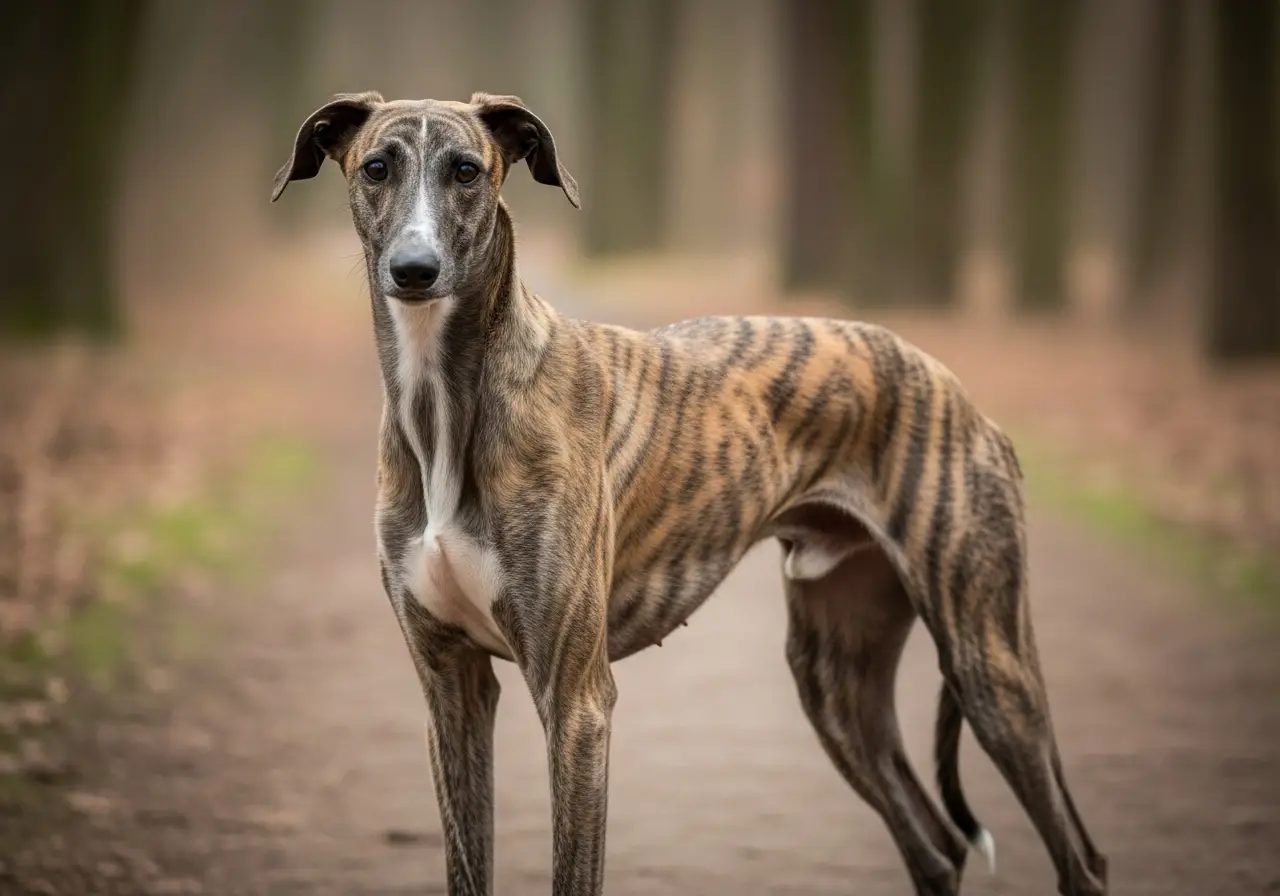
The Azawakh is a West African sighthound with a thousands-of-years-old tradition of hunting and guarding. Its body is extremely slender, its spirit independent, and its prey drive immediately available. Anyone keeping this breed needs experience with independent dogs, secure free-range land, and the willingness to engage with a dog that does not give away trust but builds it.
02Introduction
What makes the Azawakh special
The Azawakh is a West African sighthound of the Sahara nomads, FCI Group 10, extremely heat-tolerant and fast, withers height 60–74 cm.
03Profile
Key facts and suitability
- Origin
- Mali/Burkina Faso/Niger
- Original purpose
- Sighthound of the Tuareg, guard dog
- FCI
- No. 307 · Group 10 · Sektion 3: Kurzharige Windhunde
- height at the withers
- 60–74 cm
- Weight
- 15–25 kg
- Life expectancy
- 12–15 Years
- Coat type
- Short-haired
- Minimum exercise
- 90 min/day
- Puppy price
- 1'500–2'500 CHF
- Waiting period
- 12 months
- Sports
- Lure Coursing · Racing
04Temperament
How the Azawakh shows up in everyday life
When returning home, the Azawakh does not show an exuberant greeting. It first observes, registers the return, and then approaches in its own way and at its own pace. This reserve is not a lack of interest, but an expression of its genetically anchored independence.
In everyday life with its primary caregiver, the Azawakh is close and affectionate. It seeks physical closeness, follows through the apartment, and reacts sensitively to changes in mood. Pressure, loud corrections, or a hectic household atmosphere cause it to withdraw or become tense; this is not defiance, but sensitivity.
Here the central divergence of its two behavioural axes becomes apparent: Internally, its need for social contact is high; it requires a close bond, reliability, and the calm presence of its primary caregivers. Externally, however, it remains clearly reserved to rejecting towards strangers. These two poles must not be confused: An Azawakh that is gentle and affectionate towards its family will not automatically be open to visitors or strangers on a walk.
On a walk, a visual stimulus (a deer at the edge of the forest, a hare in the meadow) activates its prey drive immediately and completely. At this moment, no recall is possible. The Azawakh is then not disobedient, but in a genetically programmed state that temporarily overrides training.
With conspecifics, particularly other sighthounds, it is often socially compatible, especially if it grew up with them. Smaller animals in the household are critical to assess due to its pronounced prey drive and require careful introduction.
05Needs
What this breed needs daily
The Azawakh requires at least 90 minutes of active exercise daily. Quality is decisive here: free sprints in secure terrain are more important for it than long, monotonous walks on a lead. A securely fenced area (with a fence height of at least 1.80 m, as the Azawakh is an endurance jumper) counts among the fundamental requirements for keeping the dog.
Keeping in an apartment is possible if daily exercise is consistently ensured. In the house, the Azawakh is calm and needs rest; it sleeps a lot and requires a warm, draught-free retreat. Due to its low body fat content, it reacts sensitively to cold; a dog coat for autumn and winter walks is not an exaggeration, but sensible precaution.
Mentally, the Azawakh does not need classic obedience work in the sense of fetching exercises or agility courses. More sensible are activities that correspond to its original behavioural profile: lure coursing, controlled sight-hunting simulation, or scent work in a calm environment. Its need for mental work is moderate; it requires enrichment that suits its independence, not constant tasks.
The need for social contact is high: the Azawakh requires a close, reliable bond with its primary caregivers. Being left alone works with emotionally stable integration for up to about four hours; longer absences without a care solution are incompatible with its need for social contact. A second contact through a trusted person or dog care in a calm atmosphere should be planned for when working.
Exercise
High
mental work
Medium
Social needs
Medium
training
Demanding
06Sport & Mental and Physical Stimulation
What sports the Azawakh is suited for
Realistic in terms of physiology and genetics – not every breed suits every sport.
Structurally and physiologically suitable: Suitable for mantrailing, dummy work and tracking · CaniCross / bikejoring possible.
07Quick Check
08Suitability
Who this breed is suitable for – and who it isn't
✓Matches
The Azawakh suits owners with proven experience in handling independent or sighthound-typical dogs. Anyone who has already kept a sighthound and understands its behavioural logic brings an important prerequisite.
A calm, structured household with low visitor frequency corresponds to the Azawakh’s need profile. People with a nature-oriented lifestyle, access to secure open terrain, and at least 90 minutes of daily activity time create the framework conditions that this breed requires.
Owners who are prepared to understand relationship building as a long-term process without expecting quick results will be rewarded with a loyal, sensitive dog. Anyone who wants to actively practise lure coursing or similar sighthound sports will find a motivated partner in the Azawakh.
Families with older children from about twelve years of age, who handle animals calmly and respectfully, are basically suitable, provided the other keeping conditions are met. Single people or couples without small children often correspond better to the Azawakh’s need for quiet than large, lively households.
×Doesn't match
The Azawakh is not suitable for first-time owners without prior experience with dogs or for owners looking for an uncomplicated, socially open companion dog. Anyone who expects that reserve towards strangers will disappear completely through socialisation misunderstands the genetic profile of this breed.
Households with high visitor frequency, a loud atmosphere, or small children under ten years of age do not correspond to the Azawakh’s need for quiet. Anyone who wants to regularly take their dog into busy, uncontrolled environments will constantly encounter limits due to its pronounced prey drive and reserve towards strangers.
Anyone who does not have access to secure open terrain and relies on lead walks in the city cannot sufficiently meet the Azawakh’s exercise needs. Owners who are away from home for more than four hours daily and cannot organise a reliable care solution underestimate its need for social contact.
Anyone who keeps an Azawakh because of its exotic appearance without engaging with sighthound behaviour risks a form of keeping that does justice neither to the dog nor to the owner. Confusing affection towards trusted people with general social openness is a common mistake, and it should be explicitly named here.
10Line reality
Show line, working line, breeder market
The Azawakh does not show a pronounced differentiation into working and show lines, as is known with the German Shepherd Dog or the Labrador Retriever. Breeding in Europe is based on the FCI standard, which defines both exterior and temperament traits.
However, there are regional differences within European breeding: some breeders place particular emphasis on preserving the original temperament and function (i.e. prey drive, independence and heat resistance), while others are more focused on show success. These differences are not always transparently documented, which is why talking to the breeder about breeding goals and the origin of the parent animals is crucial.
Import lines from the region of origin (Mali, Niger, Burkina Faso) are rare but present in Europe. Dogs from these lines can differ significantly in temperament and appearance from European-bred animals and place even higher demands on experience and living conditions.
As the Azawakh is a rare breed in Germany and Switzerland, the breeding base is small. Interested parties should contact the Swiss Club for Oriental Sighthounds (SCOW) or comparable associations at an early stage to be able to assess the breeding objectives and lineage backgrounds of available litters.
11Health · Reality
What you need to plan for medically with your Azawakh
The Azawakh is considered a robust, functionally selected breed with a life expectancy of 12 to 14 years. Orthopaedic diseases such as hip dysplasia (HD) occur significantly less frequently than in heavy breeds, a direct result of thousands-of-years-old selection for mobility and endurance under extreme conditions.
Due to its extremely low body fat percentage and thin, dry skin, the Azawakh is sensitive to cold. Temperatures below 10 °C require a well-fitting dog coat, especially during longer stays outdoors. At the same time, it is one of the most heat-tolerant breeds among sighthounds; its physiology is designed for warmth.
Among the breed-typical health risks is Wobbler disease (cervical spondylomyelopathy), which occasionally occurs in sighthounds. Autoimmune diseases, including hypothyroidism and immune-mediated thrombocytopenia, are documented in the breed, although not frequently. Owners should promptly arrange veterinary examination for lameness, unexplained weight loss, or changes in gait.
Anaesthesia requires special attention: sighthounds metabolise barbiturates more slowly than other dog breeds because they lack the corresponding body fat as a buffer. An experienced vet with knowledge of sighthounds should be preferred for operations. This note applies to all dogs in FCI Group 10 and must be actively addressed before any procedure.
Preventive examinations should include annual blood tests and, if necessary, thyroid values. Overweight is rarely a problem in this breed; underweight, however, is frequently misdiagnosed by owners without breed knowledge, as the visible rib cage is typical for the breed.
12Structured data
Health by the numbers
Prone to diseases
Spondylosis, heart problems (cardiomyopathy), heatstroke sensitivity in cold, risk of hypothermia
Recommended health tests
Heart examination
13Myths ↔ Reality
What is often said incorrectly about this breed
Five myths, five realities, five sources.
"The Azawakh is a weak, sickly dog because of its slenderness.
The extreme slenderness of the Azawakh is not a sign of malnutrition or illness, but typical for the breed and functional. The skeletal structure and musculature remain visible under thin, dry skin, as explicitly described by the FCI standard. The Azawakh was bred for endurance and heat resistance and is considered a robust, functionally selected breed with a life expectancy of 12 to 14 years.
"As a sighthound, the Azawakh is satisfied with a short walk; it is exhausted after a sprint.
The Azawakh was bred for sight hunting over long distances in extreme heat. It needs at least 90 minutes of exercise daily, a substantial portion of which should be free sprinting in secure terrain. Short walks do not meet its exercise needs. Confusing calmness indoors with low exercise requirements is a common mistake in keeping.
"The Azawakh is a friendly, open dog; sighthounds are always gentle.
The FCI standard explicitly describes the Azawakh as very reserved towards strangers. This reserve is not a training deficit but genetically anchored; the dog was a guardian of the nomadic camp. It shows gentleness and affection exclusively in familiar, family environments. Anyone looking for a socially open companion dog will not be happy with an Azawakh.
"The strong prey drive can be reliably suppressed through consistent training.
The Azawakh's prey drive is deeply rooted due to millennia of functional selection. It is activated immediately by visual stimuli. A reliable recall in open terrain is realistically hardly achievable; management through secure terrain and leash requirement in uncontrolled environments is not a weakness in training but a necessary prerequisite for keeping.
"The Azawakh is suitable as an exotic dog for people looking for something special.
The rarity of the breed and its unusual appearance attract interest. However, anyone keeping an Azawakh primarily because of its appearance significantly underestimates its demands. The dog requires experienced owners with an understanding of independent sighthounds, clear structure and a willingness for consistent relationship building; exoticism does not replace competence.
14animal welfare
The animal welfare perspective
Breeder market, designer versions, animal shelter reality — what no one writes in the puppy ad.
In Switzerland, the Azawakh counts among the rare breeds. This means: the market for backyard breeding and unscrupulous providers is smaller than for popular breeds, but it exists. Anyone offering an Azawakh via classifieds portals or without studbook documentation cannot prove the health and character suitability of the parent dogs. The rarity of the breed does not automatically protect against poor breeding.
Designer versions or crosses with the Azawakh as a starting point are not yet a widespread phenomenon in Europe. The breed is too unknown to function as a trend dog; this is relative protection, but not permanent.
A keeping-related problem, however, is realistically documented: the Azawakh is occasionally chosen by owners who underestimate its exercise needs and prey drive due to its calm home atmosphere and slender appearance. A dog that appears calm in the house still needs daily free sprints in secure terrain. If this need is not met, behavioural problems arise, not from malice but from unfulfilled drive.
Animal welfare rehoming is rare for the Azawakh, but not excluded. Individual dogs end up in shelters or with sighthound rescue organisations when owners have underestimated the requirements. Anyone taking on an adult Azawakh from rehoming often receives a dog with a known character and avoids the uncertain puppy phase. The Schweizer Club orientalischer Windhunde (SCOW) as well as sighthound rescue organisations in the German-speaking region are first points of contact for rehoming inquiries. This option is equivalent to new breeding and deserves the same serious consideration.
15Costs · Transparency
What this breed realistically costs
An Azawakh puppy from reputable, studbook-registered breeding costs between 1,200 and 2,000 EUR in the DACH region. Offers significantly below this, particularly without breeding documentation, indicate missing health examinations of the parent dogs or backyard breeding.
Annual living costs range from 1,500 to 2,500 EUR depending on the form of keeping. This includes high-quality food (approx. 600–900 EUR/year for an adult Azawakh weighing approx. 20 kg), grooming needs (low, due to short coat), dog tax, liability insurance (approx. 50–100 EUR/year) and basic equipment.
Vet costs are difficult to estimate as a flat rate, as the Azawakh is considered a robust breed. Annual check-ups, including blood tests, should be budgeted at 150–300 EUR. For operations, an experienced vet with knowledge of sighthounds is necessary; anaesthesia costs may be higher than for other breeds due to the increased effort involved.
Pet health insurance is recommended: monthly premiums range from 40–80 EUR depending on the provider and scope of cover. If you do not have access to a secure enclosed area, you must also budget for fencing costs; a secure fence with a height of 1.80 m for a medium-sized plot costs 1,000–4,000 EUR one-off, depending on the design.
16Puppy search
What you need to consider when choosing a breeder
- A reputable Azawakh breeder is a member of a recognised breed club — in Switzerland, for example, the Schweizer Club orientalischer Windhunde (SCOW) — and breeds with an entry in the studbook of the national kennel club (SKG, VDH or ÖKV).
- Parent dogs should have been tested for breed-typical health characteristics; the breeder provides corresponding proof.
- Buying a puppy without inspecting the mother dog on site is a warning sign.
- Equally critical: litters that are available immediately without a waiting period, or offers via classifieds portals without breeding documentation.
- The Azawakh is rare; waiting periods of several months to over a year are normal with reputable breeders.
- A good breeder asks questions in return: they want to know whether there is free-range land, what experience the interested party brings with sighthounds, and how daily life is structured.
- Anyone who does not ask questions does not select.
- Rehoming an adult Azawakh from a rescue organisation or shelter is an equally valid alternative.
- Sighthound rescue organisations in the German-speaking region as well as the SCOW can assist in finding dogs for rehoming.
- An adult dog comes with a known character, which considerably facilitates assessing suitability.
FAQ
Frequently asked questions about the Azawakh
How much exercise does Azawakh need?
At least around 90 minutes of exercise per day. As an active breed, more so — plus mental stimulation.
What is the size and weight of Azawakh?
Fully grown, Azawakh reaches about 60–74 cm at the withers and weighs around 15–25 kg.
What is the life expectancy of Azawakh?
The life expectancy of Azawakh is approximately 12–15 years.
Which diseases are common in Azawakh?
Spondylosis, heart problems (cardiomyopathy), heatstroke sensitivity in cold, risk of hypothermia
17Breed clubs
Official breed clubs in DACH
19Related
Similar breeds – and their differences
You might also be interested in
Participate
Do you have a good photo of your Azawakh?
We are looking for expressive images for our breed profiles. Submit yours; the editorial team reviews every submission before publication.
Does this breed suit you?
One of the fastest dogs in the world. Extremely sensitive to cold, requires a warm climate or protective clothing. Distant towards strangers, very close to their primary caregiver.