
01Summary
In a paragraph
If you only have 30 seconds.
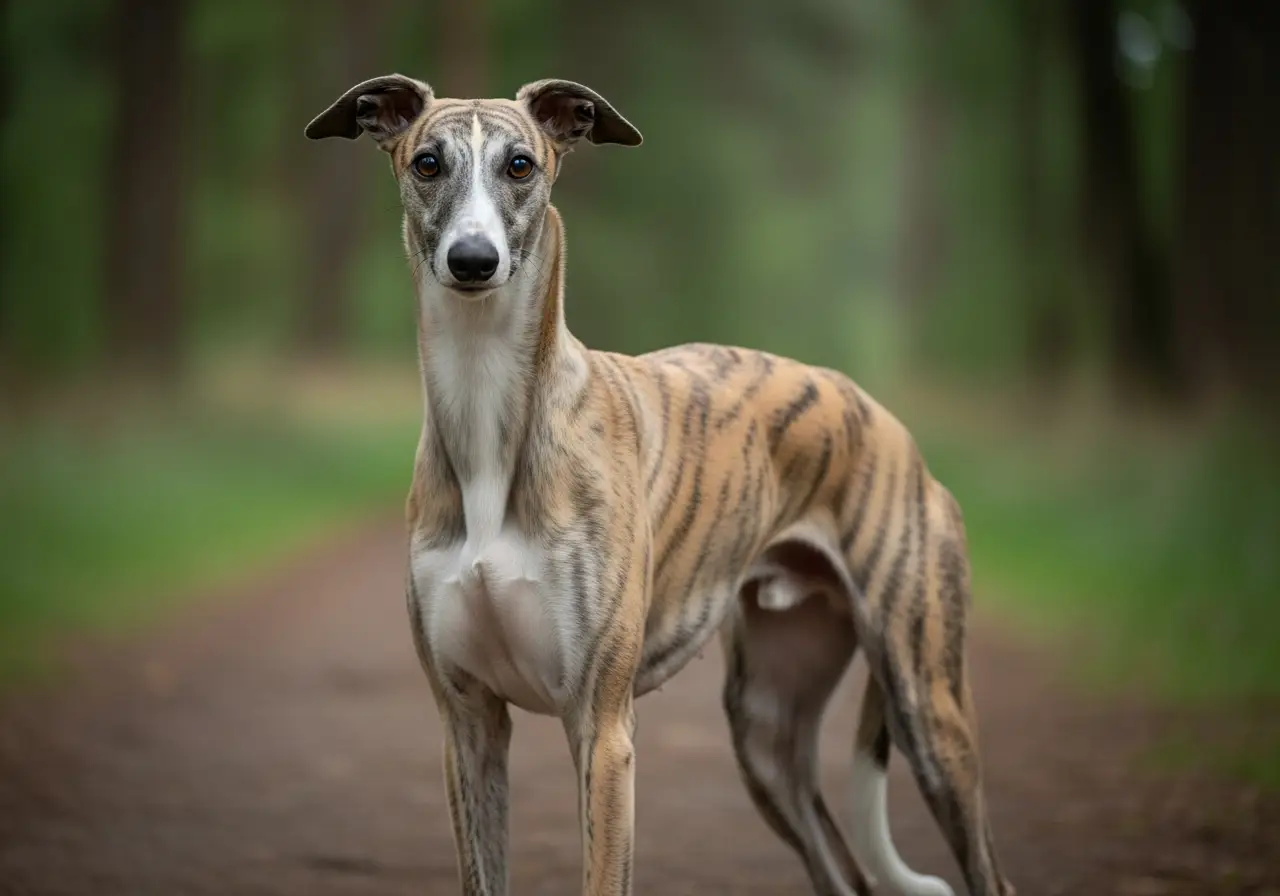
The Whippet is a British sighthound that appears surprisingly calm and people-oriented indoors, yet accelerates to full speed in fractions of a second on open ground. Keeping one requires fenced off-leash areas, an understanding of pronounced hunting reflexes, and sensitivity to its cold susceptibility. It is neither a sofa dog nor a high-performance athlete for every life situation, but a dog with clearly defined requirements.
02Introduction
What makes the Whippet special
Whippet: the most versatile sighthound, calm at home, unbeatable on the race track and of gentle, elegant character
03Profile
Key facts and suitability
- Origin
- Grossbritannien
- Original purpose
- Sight hunting Racing
- FCI
- No. 162 · Group 10 · Section 3
- height at the withers
- 47–51 cm
- Weight
- 12–15 kg
- Life expectancy
- 12–15 Years
- Coat type
- Short-haired
- Minimum exercise
- 60 min/day
- Puppy price
- 1'500–2'500 CHF
- Waiting period
- 4 months
- Sports
- Lure Coursing Agility
04Temperament
How the Whippet shows up in everyday life
When you come home, the Whippet is probably lying on the sofa and greets you with calm but clear joy. It seeks physical contact, cuddles up and follows its human around the apartment. This high need for social contact (internal axis) means that long periods alone are stressful for it. Four hours are considered a guideline; beyond that, it requires a reliable care solution.
On the walk, the picture changes abruptly. As soon as a hare bursts out of the bushes or a bicycle passes by, the prey drive activates with a reaction speed that is hardly interruptible. At this moment, the Whippet is not an “disobedient” dog; it follows a genetic programme that has been selected for sight hunting over centuries. This prey drive is not a training issue, but a characteristic trait.
Towards strangers, the Whippet behaves reservedly (external axis: friendliness towards strangers moderately pronounced). It observes before making contact. This is not mistrust in the problematic sense, but the typical selectivity of a sight hound. Anyone who expects the dog to greet every visitor joyfully will be disappointed.
With familiar conspecifics, it generally shows itself to be tolerant and playful. Its play style is rapid; it loves chase games and deliberately uses its sprinting ability. Smaller dogs may be overwhelmed by its speed.
In the house, after sufficient stimulation, the Whippet is a calm housemate. It sleeps a lot, requires soft resting surfaces and reacts sensitively to cold and draughts. Anyone who understands these two sides (sprint hound outside, calm companion inside) and serves them in a structured way will have an exceptionally adaptable dog.
05Needs
What this breed needs daily
The Whippet requires 60 to 90 minutes of active exercise daily. Part of this should consist of uncontrolled sprinting on secure, fenced terrain; a normal walk on a lead is not sufficient as the sole form of stimulation. Lure coursing, dog racing or off-lead exercise in a securely fenced dog area are suitable formats.
The fence must have a minimum height of 1.80 metres. Whippets are capable of overcoming surprising heights if a visual stimulus is strong enough. Lower fencing poses a safety risk.
Mentally, the Whippet requires moderate mental work. Its need for mental stimulation is in the mid-range; it is not a dog that becomes frustrated without intensive cognitive challenges. Nose work, simple search games, and structured leash training are sufficient to keep it mentally occupied. Overstimulation through overly intense training sessions is also possible and should be avoided.
The need for social contact is high. The Whippet is oriented towards a close bond with its primary caregiver and tolerates isolation poorly. Being left alone must be built up gradually and patiently. Four hours are considered a realistic maximum for a well-conditioned dog; regularly longer periods alone lead to stress symptoms in many individuals.
Cold protection is part of daily care: At temperatures below 10 °C, the Whippet needs a well-fitting coat. In the house, soft, thermally insulated resting surfaces are not a luxury but basic equipment. Drafts and cold stone floors should be consistently avoided.
Exercise
High
mental work
Something
Social needs
High
training
Medium
06Sport & Mental and Physical Stimulation
What sports the Whippet is suited for
Realistic in terms of physiology and genetics – not every breed suits every sport.
Structurally and physiologically suitable: Suitable for mantrailing, dummy work and tracking.
07Quick Check
08Suitability
Who this breed is suitable for – and who it isn't
✓Matches
The Whippet suits owners who can plan 60 to 90 minutes of active exercise daily and have access to secure off-leash areas with fencing of at least 1.80 metres, either in their own garden or via a nearby dog park.
Suitable are active individuals or couples who see lure coursing, racing sports, or structured off-leash sessions as part of their daily routine. Families with children from about 8 years old, looking for a calm, physically affectionate dog and realistically assessing the prey drive, will find a reliable companion in the Whippet.
Owners who already have experience with high-drive or sighthound-typical breeds benefit from understanding the sight-hunting instinct. First-time owners are not fundamentally excluded, but they require a dog training school with experience in keeping sighthounds and must consistently manage the prey drive from the start.
Those living in an apartment can keep a Whippet, provided sufficient exercise and off-leash time are organised. The dog behaves calmly indoors and does not require a large living space. It is important that the owner is absent for no more than four hours daily or has a reliable care solution in place.
×Doesn't match
The Whippet does not suit owners who plan off-leash activities in wildlife-rich areas without fencing or assume they can completely suppress the prey drive through training. Anyone expecting the dog to remain reliably recallable upon sighting a hare underestimates the genetic basis of this behaviour.
The Whippet is not suitable for households where the dog regularly spends more than four hours alone without a care solution being available. Its high need for social contact is incompatible with permanent isolation.
Anyone who interprets the reserved handling of strangers as fearfulness and expects the dog to become an open, friendly-to-all dog through more socialisation sets false expectations regarding the external behaviour axis. Reserve towards unknown people is a breed characteristic, not a training problem.
Households with small animals such as rabbits, guinea pigs, or free-flying birds pose an increased risk, as the prey drive can be transferred to these animals, regardless of socialisation. Owners who do not wish to or cannot provide cold protection for the dog are also not well suited for this breed. The Whippet consistently needs a coat in cool temperatures; this is not optional.
10Line reality
Show line, working line, breeder market
Two distinct lines exist side by side in the Whippet today, which differ noticeably in type and temperament.
The working line (racing and coursing line) is selected for speed, drive and reaction speed. Dogs of this line are built more slenderly, show a stronger prey drive and require more intensive stimulation through sport. Lure coursing, dog racing and structured off-lead exercise are not leisure options for these dogs, but basic needs. The DWZRV oversees sporting breeding and racing activities in Germany.
The show line is more strongly selected for exterior, proportions and the type described in the FCI standard. Dogs of this line are often somewhat calmer in their drive, but show the same genetically anchored prey drive. The difference lies in the degree of expression, not in the fundamental absence of the drive.
For prospective owners, the question of line affiliation is relevant: A dog from an active coursing line places higher demands on daily stimulation and off-lead management than a dog from pure show breeding. Breeders should be able to answer this question transparently. Anyone looking for a Whippet as a calm companion dog is better off with a dog from a moderate show line than with a dog from an active sporting line.
11Health · Reality
What you need to plan for medically with your Whippet
Compared to many other breeds, the Whippet is considered robust. According to figures from The Kennel Club UK and breeder associations, the life expectancy is 12 to 15 years, an above-average span for medium-sized dogs.
Hip dysplasia (HD) occurs less frequently in Whippets than in heavier breeds. Concrete prevalence studies specifically for the Whippet are limited; nevertheless, the DWZRV recommends an HD X-ray examination of breeding dogs before mating.
A breed-specific health issue is heart health: Mitral Valve Disease (MVD) and other heart conditions occur in the breed. A cardiological examination of the parent dogs is advisable. Furthermore, the Whippet occasionally does not exhibit Brachycephalic Obstructive Airway Syndrome (BOAS); it is mesocephal and is considered healthy in terms of breathing, which is a clear advantage over short-headed breeds.
Eye health should be checked regularly: Progressive Retinal Atrophy (PRA) is documented in the breed, although not frequently. Reputable breeders have parent dogs tested for PRA.
Due to low body fat and short fur, the Whippet is sensitive to cold and reacts more strongly to temperature fluctuations than hairy breeds. For anaesthesia, the veterinary team must be informed about the specific characteristics of sighthounds: Low body fat affects the metabolism of certain anaesthetic agents. This information should be actively communicated before every procedure.
12Structured data
Health by the numbers
Prone to diseases
Heart problems Eye problems Anaesthesia sensitivity
Recommended health tests
Heart examination Eye examination
13Myths ↔ Reality
What is often said incorrectly about this breed
Five myths, five realities, five sources.
"The Whippet is a sofa dog that requires little exercise.
The Whippet is indeed calm in the house and sleeps a lot, which masks its actual need for exercise. It requires 60 to 90 minutes of daily exercise as well as regular opportunities to sprint on secure terrain. Without this stimulation, many dogs develop restlessness or symptoms of frustration. Calmness in the house is the result of sufficient stimulation, not an indication of low needs.
“Whippets can easily run off-lead because they are so obedient.
The Whippet’s prey drive is deeply rooted in its genetics and is reliably triggered by fast-moving stimuli (hares, birds, bicycles). At this moment, recall is practically impossible. Whippets reach speeds of up to 56 km/h. Off-lead exercise without secure fencing poses a significant risk and is one of the most common reasons for surrendering dogs to animal welfare organisations.
“The short coat of the Whippet requires no care and is not a problem.
The short, close-fitting coat offers the Whippet little insulation against cold and wetness. At temperatures below 10 °C, many dogs of this breed require a well-fitting dog jacket. Even indoors, Whippets are sensitive to draughts and cold floors. The low body fat mass further increases sensitivity to cold.
“Whippets are shy, fearful dogs.
The FCI standard describes the Whippet as friendly, affectionate and even-tempered. Reserved behaviour towards strangers is not a sign of fear, but a breed-typical trait of the sight hound that forms selective bonds. With consistent, positive socialisation, Whippets develop a stable, resilient character. Fearfulness is not part of the breed standard, but an indication of insufficient socialisation or poor breeding.
“Whippets and cats generally do not get along.
Whether a Whippet lives with cats depends on individual socialisation and introduction management, not on a blanket breed rule. Many Whippets live without problems with cats if the settling-in period is structured and the cat has retreat options. The key is that the prey drive towards familiar pets is not transferred to them due to early, positive experiences.
14animal welfare
The animal welfare perspective
Breeder market, designer versions, animal shelter reality — what no one writes in the puppy ad.
The Whippet regularly ends up in animal welfare organisations and breed rescues, not because it is a difficult dog, but because expectations prior to getting a dog often do not match reality. The most common reasons for surrender are: uncontrollable running away when off-leash, difficulties with being left alone, and an underestimated prey drive. These problems are not character flaws of the dog, but consequences of a mismatch between the dog and its living conditions.
Backyard breeder market: The growing trend towards elegant, slim companion dogs has brought the Whippet into focus for dubious providers. Puppies from uncontrolled breeding are sold without health tests, without socialisation and without pedigree registration, often via classifieds portals. A noticeably low price is not a bargain, but a warning signal. The follow-up costs due to behavioural and health problems regularly exceed the savings.
Designer versions: Crosses with the Whippet — such as "Whipador" (Whippet × Labrador) or other hybrids — are occasionally marketed as a healthier alternative. For these animals, there are no standardised health tests, no stud books and no reliable statements about temperament or drive strength. The hybrid effect is not scientifically proven as clearly as marketers suggest.
Breeding and husbandry-related problems: In the Whippet, extreme breeding characteristics such as brachycephaly are not in the foreground. The main problem lies in keeping: Whippets that do not receive secure off-leash exercise develop frustration. Dogs that are left alone permanently show stress symptoms. These problems are avoidable if the living conditions are honestly assessed before getting a dog.
Adoption as an option: An adult Whippet from adoption comes with an already recognisable character. Breed-knowledgeable adoption agencies such as the DWZRV or specialised sighthound protection organisations accompany the settling-in period and know the history of the dogs. This option deserves the same serious consideration as searching for a puppy from a breeder.
15Costs · Transparency
What this breed realistically costs
A Whippet puppy from reputable, registered breeding costs between 1,200 and 1,800 euros in the DACH region. Prices significantly below this indicate missing health tests or unregistered breeding. Higher prices are possible for dogs from active coursing lines with proven performance tests of the parent dogs.
Annual living costs range from 1,500 to 2,500 euros depending on the form of keeping. Included are: high-quality food (approx. 600–900 euros/year), basic equipment with cold protection (coats, blankets, approx. 100–200 euros initially), dog training school and training (approx. 300–500 euros/year), as well as care (low, due to short fur).
Veterinary costs for basic operations (vaccinations, parasite prophylaxis, annual check-up) are approx. 300–500 euros/year. In case of illness or surgery, individual costs can quickly reach 1,000–3,000 euros. Important: Before anaesthesia, the veterinary team must be informed about the sighthound-specific sensitivity to anaesthesia; this is not a cost factor, but a safety factor.
Dog health insurance costs for a Whippet between 40 and 90 euros monthly depending on provider and scope of benefits (approx. 480–1,080 euros/year). Given possible heart examinations and eye checks, an insurance with a preventive care module can be sensible. A comparison of tariffs before conclusion is advisable.
16Puppy search
What you need to consider when choosing a breeder
- A reputable breeder has the parent dogs tested for breed-typical health traits, provides insight into the rearing conditions, and parts with the puppies no earlier than eight weeks of age.
- They ask questions about the living conditions and off-leash area, and refuse a sale if the conditions are not suitable.
- Warning signs are: puppies without the mother dog, multiple breeds available simultaneously, sales via intermediaries, no pedigree entry, pressure for a quick conclusion.
- A price significantly below 1,000 euros for a registered Whippet puppy is an indication of questionable origin.
- Official points of contact for finding breeders are the German Sighthound Breeding and Racing Association (DWZRV) and the Whippet and Windspiel Club of Switzerland (WWCS).
- Both associations maintain studbooks and list breeders working under club supervision.
- Adopting an adult Whippet from animal welfare organisations or breed rescue groups is an equally valid option.
- Adult dogs already show their character clearly, which facilitates assessing suitability.
- Common reasons for surrender (underestimated prey drive, lack of off-leash area) are known and can be specifically discussed prior to adoption.
- Breed-knowledgeable rehoming centres provide professional support during the settling-in period.
FAQ
Frequently asked questions about the Whippet
Is Whippet suitable for beginners?
Whippet is considered suitable for first-time dog owners.
Is Whippet a family dog?
Whippet is considered suitable for families with good socialisation and species-appropriate care.
How much exercise does Whippet need?
At least around 60 minutes of exercise per day. As an active breed, more so — plus mental stimulation.
Does Whippet suit an apartment?
With enough exercise and enrichment, Whippet can also be kept in an apartment.
What is the size and weight of Whippet?
Fully grown, Whippet reaches about 47–51 cm at the withers and weighs around 12–15 kg.
What is the life expectancy of Whippet?
The life expectancy of Whippet is approximately 12–15 years.
Is Whippet suitable for allergy sufferers?
Whippet is considered relatively hypoallergenic. There’s never a guarantee — test direct contact beforehand.
Which diseases are common in Whippet?
Heart problems Eye problems Anaesthesia sensitivity
17Breed clubs
Official breed clubs in DACH
19Related
Similar breeds – and their differences
You might also be interested in

Participate
Do you have a good photo of your Whippet?
We are looking for expressive images for our breed profiles. Submit yours; the editorial team reviews every submission before publication.
Does this breed suit you?
Anaesthesia sensitive – inform vet before procedures Off-leash only in secure areas