
01Summary
In a paragraph
If you only have 30 seconds.
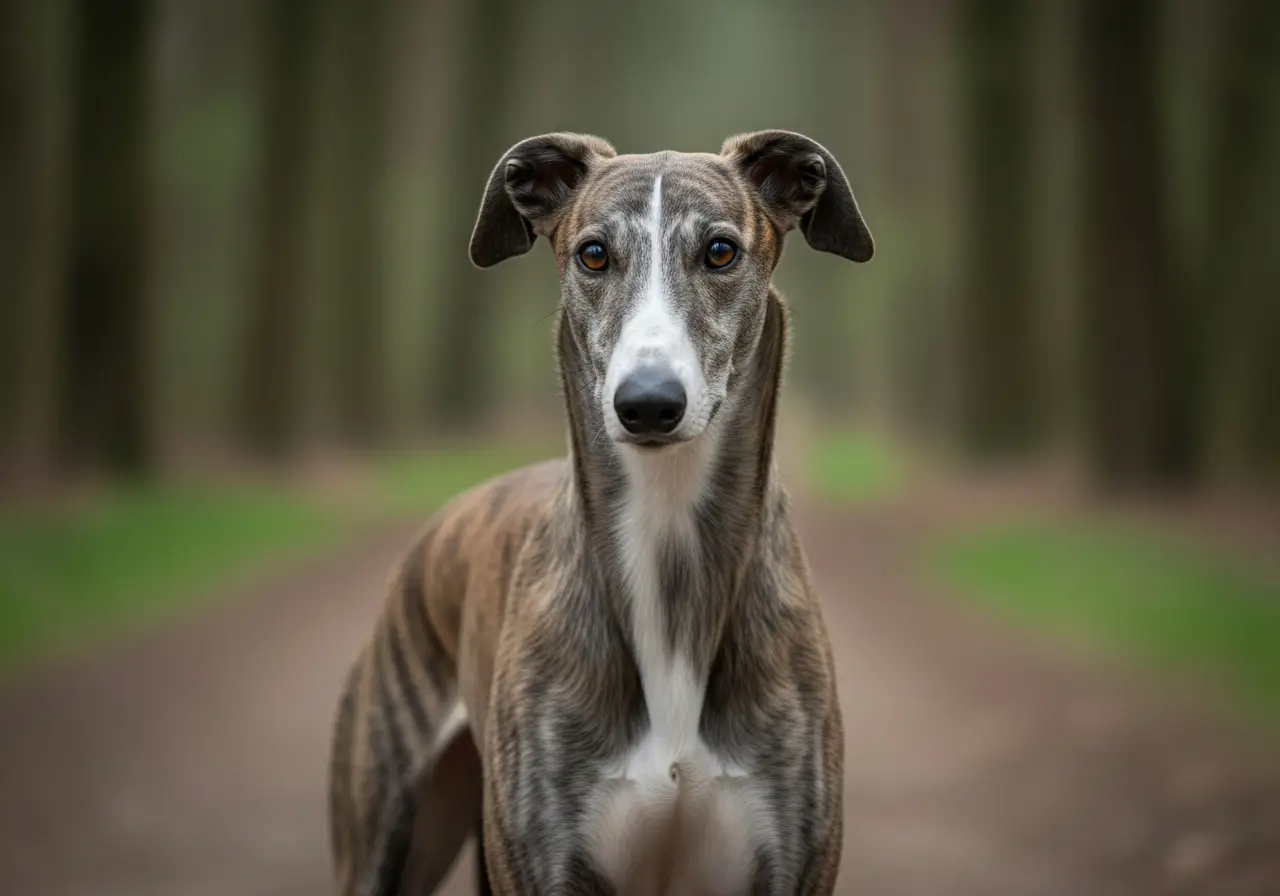
The Chart Polski is one of the most substantial sighthounds in Europe: large, muscular, with a prey drive that is genetically deeply rooted. In the house it shows itself calm and loyal, outdoors it reacts immediately and with full force to movement stimuli. Anyone keeping this breed requires secure exercise space, experience in handling dogs motivated by prey drive and realistic expectations regarding recallability in open areas.
02Introduction
What makes the Chart Polski (Polish Greyhound) special
The Chart Polski is a proud Polish sighthound, FCI Group 10, one of the largest sighthounds in Europe, with a withers height of 68–80 cm.
03Profile
Key facts and suitability
- Origin
- Polen
- Original purpose
- Sight hounding of hares and roe deer
- FCI
- No. 333 · Group 10 · Section 3
- height at the withers
- 68–80 cm
- Weight
- 20–32 kg
- Life expectancy
- 10–12 Years
- Coat type
- Short-haired
- Minimum exercise
- 90 min/day
- Puppy price
- 1'000–2'000 CHF
- Waiting period
- 12 months
- Sports
- Lure Coursing · Racing
04Temperament
How the Chart Polski (Polish Greyhound) shows up in everyday life
When you come home, the Chart Polski shows a calm, dignified greeting, no hectic jumping, no exuberant barking. It registers your arrival, approaches on its own initiative, and then retreats to its place again. This reserve is not disinterest, but an expression of its self-confident character.
Internally, the Chart Polski requires intensive exercise and secure sprinting opportunities daily. Its exercise need is at least 90 minutes of active stimulation per day. Mental stimulation through nose work or structured orientation exercises complements the programme sensibly, but does not replace physical exertion.
Externally, the Chart Polski behaves distinctly reservedly towards strangers. A visitor who seeks contact immediately is kept at a distance. The dog decides itself when and whether it allows closeness. This reserve towards unknown people stands in clear contrast to the close bond with its own family; those who do not know this difference misunderstand the behaviour as shyness or lack of socialisation.
It reacts immediately and with full physical strength to movement stimuli outdoors. A passing animal, a bicycle, a fleeing bird – the sight-hunting instinct kicks in without warning. On a lead, this means considerable pulling; in unsecured terrain, it means a real risk of loss.
With other dogs, it shows itself to be compatible with good socialisation, especially towards conspecifics of similar size. Small animals in the household (cats, small pets) are a permanent management issue that must be addressed structurally from the beginning.
05Needs
What this breed needs daily
The Chart Polski requires at least 90 minutes of active exercise daily, divided into several sessions. Just one long walk on a lead is not enough. Regular opportunities for free sprinting on secure terrain are decisive, such as an enclosed field, a sighthound racing track, or a securely fenced property with sufficient running distance.
The fence must be stable and high enough: At least 1.80 metres is considered a guideline, as the Chart Polski is an efficient jumper. Gaps or unstable spots will be explored and used.
Mental and physical stimulation complements physical exercise. Nose work, search games and structured orientation exercises engage its mind without overwhelming it. Classic obedience exercises quickly reach their limits with this dog; its need for mental work is moderate, but its independence is pronounced. Exercises that focus on cooperation rather than submission yield better results.
The Chart Polski’s need for social contact is primarily directed towards its key persons. It requires daily, calm contact with the family and can cope with being left alone for up to around five hours, provided there is a stable bond and sufficient mental and physical stimulation. Longer absences without preparation and habituation are problematic.
A rural or at least suburban environment with direct access to a secure exercise area is not a matter of comfort, but a prerequisite for keeping the dog. Keeping it in an apartment in the city is possible if daily mental and physical stimulation is ensured consistently, but the logistical effort is considerable.
Exercise
High
mental work
Medium
Social needs
Medium
training
Demanding
06Sport & Mental and Physical Stimulation
What sports the Chart Polski (Polish Greyhound) is suited for
Realistic in terms of physiology and genetics – not every breed suits every sport.
Structurally and physiologically suitable: Suitable for mantrailing, dummy work and tracking · CaniCross / bikejoring possible.
07Quick Check
08Suitability
Who this breed is suitable for – and who it isn't
✓Matches
The Chart Polski suits owners with proven experience in handling dogs motivated by prey drive or independent dogs. Anyone who has successfully handled a sighthound, another sighthound breed or another strong-driven breed brings the necessary foundation.
Specific profiles: Individuals or couples with a rural residence and their own securely fenced property (min. 1.80 m fence height). Families with children from around ten years of age who are calm and respectful in their dealings with animals; the Chart Polski tolerates children but requires clear boundaries and no hectic environment. Active people with a daily time budget of at least two hours for exercise and mental and physical stimulation.
Those who have access to a sighthound racing track or a secure coursing area offer the Chart Polski a species-appropriate supplement to everyday life. Owners who enjoy a self-confident, independent dog and do not expect constant confirmation through obedience exercises get along well with its character.
On the external axis: Those who rarely receive visitors or can prepare visitors well have less management effort regarding the dog’s reserve towards strangers. A calm household without constantly changing people corresponds to its temperament.
×Doesn't match
The Chart Polski does not suit owners without prior experience with strong-driven or independent dogs. Anyone keeping a dog for the first time and expecting an obedient, easily recallable companion will be permanently overwhelmed by this breed.
The breed is not suitable for households without secure exercise space within walking distance. Anyone living in a city apartment without access to fenced areas and wanting to cover the need for movement exclusively through walks on a lead fundamentally underestimates the requirements.
Anyone who interprets the Chart Polski’s calmness indoors as a sign of low demands (and concludes from this that the dog is also relaxed and controllable outdoors) makes a dangerous misjudgement. Internal calmness and external reactivity to movement stimuli are two different axes that must not be confused.
Families with very young children under six years of age who do not yet show calm behaviour towards animals should carefully weigh up the decision. The Chart Polski is not a dog that tolerates restlessness and haste in everyday life.
Households where small animals such as rabbits, guinea pigs or cats are kept without consistent introduction management face permanent conflicts. The prey drive cannot be switched off depending on the situation.
10Line reality
Show line, working line, breeder market
The Chart Polski does not have a pronounced separation between show and working lines in the sense of other breeds such as Labrador or Golden Retriever. Breeding has remained strongly functionally oriented to this day; appearance and utility are assessed together.
However, regional differences exist within the breed: Polish breeders who traditionally breed the dog for coursing and sighthound hunting focus on sprinting ability, endurance, and prey drive. Breeders who primarily breed for shows orient themselves more strongly towards the FCI standard regarding proportions and appearance, without completely abandoning the functional constitution.
In practice, this means: A Chart Polski from an active coursing line generally has a more pronounced prey drive and higher urge to move than a dog from pure show breeding. Anyone looking for a Chart Polski as a companion dog without coursing ambitions should specifically ask about the origin of the litter and question the breeder about the use of the parent dogs.
Since the total population worldwide is very small, line differences are less sharply pronounced than in widespread breeds. The selection of breeders in the German-speaking area is limited; imports from Poland are common. Knowledge of the breeding line remains a relevant criterion when selecting a puppy.
11Health · Reality
What you need to plan for medically with your Chart Polski (Polish Greyhound)
The Chart Polski is considered a robust, functionally bred breed with a life expectancy of around 10 to 14 years. Reliable breed-specific health statistics are limitedly available due to the very small world population.
As with large dogs in general, there is an increased risk of hip dysplasia (HD). Breeders who work seriously have parent animals examined radiologically and provide evidence of results. Buyers should demand HD findings for both parent animals.
A breed-typical characteristic is pronounced sensitivity to cold and wetness, due to the short coat and low body fat content. At temperatures below five degrees Celsius, the Chart Polski requires a well-fitting dog jacket for longer stays outdoors.
Sighthounds are generally more sensitive to certain anaesthetic agents, particularly barbiturates. The attending vet must be informed of the breed affiliation before every operation. This point is medically relevant and should be noted in the vaccination booklet or an emergency card.
The risk of injury due to high speed should not be underestimated: muscle strains, ligament tears and bruises after sprints on uneven terrain occur in actively used sighthounds. A structured warm-up programme before intense exercise reduces this risk.
Regular preventive check-ups at the vet, at least once a year, as well as dental care and weight control are part of basic care. Overweight is rare in this breed due to its high need for movement; however, it can occur with inactive keeping and places disproportionate stress on the joints.
12Structured data
Health by the numbers
Prone to diseases
Hip dysplasia, heart problems, gastric torsion (bloat)
Recommended health tests
Hip X-ray, cardiac examination
13Myths ↔ Reality
What is often said incorrectly about this breed
Five myths, five realities, five sources.
Due to its calm demeanour in the home, the Chart Polski is a low-maintenance dog for inexperienced owners.
The calmness in the home masks the high management effort required. Outdoors, the Chart Polski reacts to movement stimuli with immediate, hardly interruptible pursuit. Experience in handling dogs strongly motivated by hunting instincts is a prerequisite, not an option.
Sighthounds require little exercise because they sleep a lot in the house.
The Chart Polski requires at least 90 minutes of active exercise daily, as well as secure areas for free sprinting. Calmness in the home is not a sign of low exercise needs, but rather recovery after sufficient stimulation. If this is lacking, behavioural issues arise.
The Chart Polski originates from a cross between Greyhound and Barzoi.
This theory by the Russian author Sabaniejew is considered refuted. The Chart Polski has been documented in Poland since the 13th century, whereas the Barzoi was not widespread in Russia before the 16th century. The more likely lineage traces back to Asian sighthounds of the Saluki type.
A strong prey drive can be completely eliminated through consistent training.
The sight-hunting instinct of the Chart Polski is genetically ingrained and cannot be eliminated through training. Impulse control and orientation training can improve management, but they do not replace a secure exercise area. Off-lead exercise in unsecured terrain remains a permanent risk.
Due to its size, the Chart Polski is an outdoor dog that should be kept in a kennel.
The Chart Polski is a pronounced family dog with a close bond to its key people. Kennel keeping without social contact contradicts its need for social contact and leads to behavioural problems. It requires contact within the home and integration into daily family life.
As a rare breed, the Chart Polski is particularly healthy and free from hereditary diseases.
Rarity does not protect against breed-typical health risks. In large dogs with a slender build, there are risks of joint problems as well as increased sensitivity to cold and anaesthetic agents. Regular veterinary preventive care remains necessary.
14animal welfare
The animal welfare perspective
Breeder market, designer versions, animal shelter reality — what no one writes in the puppy ad.
The Chart Polski is one of the rarest dog breeds in the German-speaking region. This rarity has a direct consequence: the market for breeder breeding and quick sales is less pronounced for this breed than for trend breeds, but it is not non-existent.
Those searching online for Chart Polski puppies occasionally come across offers without affiliation to a breeding association, without health certificates for the parent animals and with unclear origins. Precisely because the breed appears exotic and interested parties often bring little comparative knowledge, there is a risk of falling into the hands of dubious providers. Missing HD findings for the parent animals, no evidence of coursing or show results and sale without personal acquaintance are concrete warning signs.
Designer versions or targeted crosses with the Chart Polski are currently not a widespread phenomenon. The breed is too rare and too little anchored in mainstream awareness to generate trend crosses. This may change if the breed gains more visibility through social media.
A keeping-related animal welfare problem arises when the Chart Polski ends up in households that underestimate its need for movement and prey drive. A permanently under-stimulated sighthound with a strong sight-hunting instinct develops behavioural abnormalities, not out of malice, but out of unfulfilled genetic basic needs. These dogs then end up being given away.
Placement via animal welfare organisations is rare for the Chart Polski, but not excluded. Specialised sighthound rescue stations in Poland and Germany occasionally place dogs of this breed. Those who are flexible and consider an adult dog often receive a dog with a known character and completed socialisation there, an equivalent option to raising a puppy.
15Costs · Transparency
What this breed realistically costs
A Chart Polski puppy from a reputable breeder affiliated with a breeding association costs between 1,500 and 2,500 euros in the German-speaking region. Imports from Poland are often in the lower range of this span, but can increase due to transport and import costs. Offers significantly below 1,000 euros without health certificates for the parent animals are a warning sign.
The annual living costs consist of: food for a large dog (approx. 600–1,000 euros/year depending on food quality), care (low for short-haired coat, approx. 100–200 euros/year), basic vet care including vaccinations and annual check-up (approx. 300–500 euros/year) as well as unforeseen treatments.
Operations or emergency treatments for a large dog can quickly cost 1,500 to 4,000 euros. A dog health insurance with surgical cover costs between 50 and 120 euros monthly for this size class, depending on provider, excess and scope of benefits.
In addition, there are costs for equipment (leash, collar, muzzle for public transport, dog coat for winter), dog training school and ongoing training sessions as well as day care in case of absence. The total effort realistically lies at 2,000 to 3,500 euros per year.
16Puppy search
What you need to consider when choosing a breeder
- Starting the search for a puppy of the Chart Polski leads via the responsible breeding association.
- In Germany, the Verband für das Deutsche Hundewesen (VDH) is the overarching organisation; specialised sighthound clubs maintain breeder lists with affiliated breeding facilities.
- In Switzerland, the SKG is responsible.
- Reputable breeders provide HD findings for both parent animals, allow a visit to the litter before handing over and ask questions about the living situation.
- They hand over puppies no earlier than eight weeks of age and provide them with a vaccination passport, microchip and pedigree.
- Anyone who does not allow visits or insists on advance payment without personal contact is not a reputable contact.
- Due to the rarity of the breed, waiting times of six to twelve months are normal.
- Anyone who can buy a puppy immediately should check the origin particularly carefully.
- Placement via specialised sighthound rescue stations in Poland and Germany is an equivalent alternative.
- Adult dogs come with a known character and completed socialisation, which makes it easier to assess whether the dog suits your own life situation.
- rundum.dog links to verified placement agencies in the entry area.
FAQ
Frequently asked questions about the Chart Polski (Polish Greyhound)
How much exercise does Chart Polski (Polish Greyhound) need?
At least around 90 minutes of exercise per day. As an active breed, more so — plus mental stimulation.
What is the size and weight of Chart Polski (Polish Greyhound)?
Fully grown, Chart Polski (Polish Greyhound) reaches about 68–80 cm at the withers and weighs around 20–32 kg.
What is the life expectancy of Chart Polski (Polish Greyhound)?
The life expectancy of Chart Polski (Polish Greyhound) is approximately 10–12 years.
Which diseases are common in Chart Polski (Polish Greyhound)?
Hip dysplasia, heart problems, gastric torsion (bloat)
17Breed clubs
Official breed clubs in DACH
19Related
Similar breeds – and their differences
You might also be interested in
Participate
Do you have a good photo of your Chart Polski (Polish Greyhound)?
We are looking for expressive images for our breed profiles. Submit yours; the editorial team reviews every submission before publication.
Does this breed suit you?
Proud, reserved Polish sighthound. Rare outside Poland. For experienced sighthound owners.