
01Summary
In a paragraph
If you only have 30 seconds.
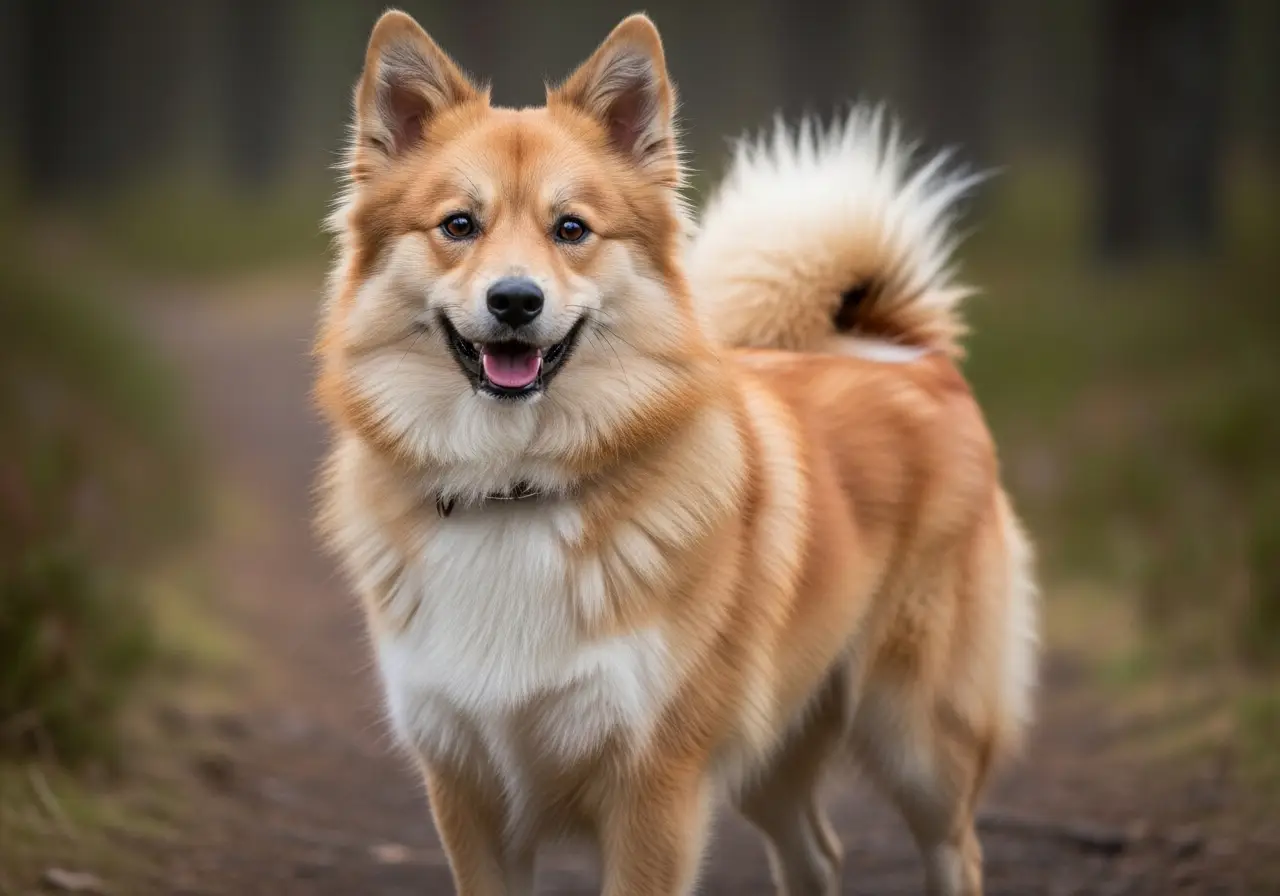
The Icelandic Sheepdog is the only dog breed of Iceland, a Nordic herding Spitz that has been driving sheep, alerting to terrain and working closely with its humans for over a thousand years. Anyone who keeps it as a calm companion dog without a task greatly underestimates its genetic predisposition. Daily exercise, mental stimulation and consistent training are not options, but basic conditions.
02Introduction
What makes the Icelandic Sheepdog special
The Icelandic Sheepdog is the only dog breed from Iceland, FCI Group 5, extremely friendly and cold-resistant, withers height 42–46 cm.
03Profile
Key facts and suitability
- Origin
- Island
- Original purpose
- Driving sheep and leading horses
- FCI
- No. 289 · Group 5 · Sektion 3: Nordische Wachhunde und Hirtenhunde
- height at the withers
- 42–46 cm
- Weight
- 9–14 kg
- Life expectancy
- 11–14 Years
- Coat type
- Doppel
- Minimum exercise
- 60 min/day
- Puppy price
- 1'500–2'500 CHF
- Waiting period
- 12 months
- Sports
- Agility · Obedience · Herding work
04Temperament
How the Icelandic Sheepdog shows up in everyday life
On the morning walk, the Icelandic Sheepdog shows what its everyday life demands: it scans the terrain, registers every bird, every jogger, every movement on the horizon, and alerts. This behaviour is not a mistake, but millennia-old working logic.
**Internal axis, what the dog needs:** The need for social contact is high. The Icelandic Sheepdog constantly orients itself towards its primary caregiver, seeks eye contact and reacts sensitively to mood changes in the household. At the same time, it demands mental stimulation: nose work, herding sports or structured obedience training fulfil this need. A garden without a task is not enough; the dog then occupies itself, which is rarely in the owner’s interest.
**External axis, how the dog reacts:** Towards strangers, the Icelandic Sheepdog behaves remarkably openly. It actively greets visitors, without shyness or aggression. This distinguishes it from many other herding dogs that remain reserved towards strangers. However, this openness does not mean that it remains quiet; it loudly alerts to the arrival before greeting friendly.
With other dogs, it is generally compatible and playful. The herding instinct can be activated in interaction with children or smaller animals; circling, nudging and driving are typical behaviours that occur uncontrolled without training.
In the evening on the sofa, it is an attentive companion that enjoys physical contact, provided the day has been sufficiently stimulating. An under-stimulated Icelandic Sheepdog finds its own outlet: through barking, chewing or restlessly pacing around.
05Needs
What this breed needs daily
The Icelandic Sheepdog requires at least 90 minutes of active exercise daily, and not just walks on a lead, but activities with a task-oriented character. Free running in secure areas, fetch training, cross-country runs or bikejoring meet its endurance needs.
Forms of movement with added value: Herding sports correspond most directly to its genetic predisposition. Agility, mantrailing and nose work are also well suited, as they challenge both mind and body simultaneously. Pure endurance runs without a mental component are not sufficient.
Mental stimulation: The need for mental work is high. Daily training sessions of 15–20 minutes, divided into two sessions, are more sensible than one long session. The Icelandic Sheepdog learns quickly and cooperatively, but loses interest just as quickly if exercises become monotonous. Variety in training is not a luxury, but a prerequisite for sustainable learning progress.
Social contact: The dog requires several hours daily in close proximity to its primary caregivers. Being alone for more than four hours should remain the exception. Anyone who is regularly absent for longer periods needs a reliable care solution, such as a dog daycare, help from neighbours or a second caregiver in the household.
Rest phases: Active breeds require structured rest phases just as much as exercise. A fixed sleeping place, a clear daily structure and quiet retreat options help the Icelandic Sheepdog switch between activity and relaxation, which is not self-evident without training.
Exercise
High
mental work
A lot
Social needs
High
training
Easy
06Sport & Mental and Physical Stimulation
What sports the Icelandic Sheepdog is suited for
Realistic in terms of physiology and genetics – not every breed suits every sport.
Structurally and physiologically suitable: Suitable for herding work, treibball and coursing · CaniCross / bikejoring possible.
07Quick Check
08Suitability
Who this breed is suitable for – and who it isn't
✓Matches
The Icelandic Sheepdog suits owners who can plan at least 90 minutes of active exercise with the dog daily, not as an occasional exception, but as a fixed daily routine. It is suitable for active individuals or families with children from about eight years old, who are familiar with and can assess the dog's herding instinct.
Those who enjoy dog sports (herding, agility, nose work) will find a motivated partner in the Icelandic Sheepdog. A garden is helpful, but does not replace structured enrichment. Keeping it in an apartment works if exercise and training are implemented consistently.
Its high friendliness towards strangers makes the Icelandic Sheepdog suitable for everyday life in social environments: cafés, markets and visitors in the household pose no problem. Anyone who keeps several dogs benefits from its good compatibility with other dogs.
Owners with experience in handling independently working dogs or Spitz-type breeds have an advantage. First-time owners are not fundamentally excluded, but they need a supporting dog training school with experience in Nordic breeds from the start and should realistically assess the tendency to bark. Households with a flexible work routine or part-time home office meet the dog's high need for social contact.
×Doesn't match
The Icelandic Sheepdog does not suit owners who are regularly away from home for more than four hours daily without organising a reliable care solution. Its high need for social contact is incompatible with permanent isolation; the consequences are barking episodes and behavioural problems, not an adjustment phase.
Anyone who mistakes the friendliness of the Icelandic Sheepdog for contentment underestimates its internal needs: An open, people-friendly dog can still be permanently under-stimulated and unbalanced if exercise and mental work are lacking.
Households in multi-unit buildings without a willingness for active barking management should not choose this breed. The alert behaviour is genetically anchored and can be trained, but not eliminated.
Owners looking for a calm, independent companion dog that is content with little enrichment will not be happy with the Icelandic Sheepdog. The breed is also unsuitable for people who are physically unable to offer extensive activities daily. Anyone who does not tolerate herding behaviour (circling, driving, nudging) towards children or small animals, or cannot provide training support for it, should choose a different breed.
10Line reality
Show line, working line, breeder market
The Icelandic Sheepdog is today kept predominantly as a companion dog; a pronounced separation into working and show lines, such as exists for example with the Border Collie or German Shepherd Dog, is not established in this breed.
Breeding in the DACH region is based on FCI Standard No. 289 and places value on type preservation, health and temperament stability. A separate working line with a focus on herding sports does not exist in formalised form; individual breeders and owners engage in herding with their dogs, without this leading to a separate breeding line.
Regionally, slight differences are visible between Icelandic breeds, which remain closer to the original working type, and continental European breeds, which select more strongly for suitability as companion dogs. These differences are subtle and concern above all the intensity of the herding instinct and the tendency to bark, not the external appearance.
Anyone looking for an Icelandic Sheepdog with a particularly pronounced herding instinct for dog sports should specifically ask the breeder about the working suitability of the parent animals and inform themselves about the herding activities in the respective breeding operation. For most owners in the DACH region, this differentiation is less relevant than the question of health certificates and socialisation.
11Health · Reality
What you need to plan for medically with your Icelandic Sheepdog
The Icelandic Sheepdog is considered a robust breed with a life expectancy of 12 to 15 years, a typical value for medium-sized Nordic dogs. Despite a long history of selection under isolation conditions, there are breed-specific health risks that should be known before purchase.
Hip dysplasia (HD): HD occurs in the Icelandic Sheepdog; precise population-wide prevalence studies for the breed are limited. The Icelandic Sheepdog Club Switzerland IHCS requires HD X-rays of both parent dogs as a breeding prerequisite. Puppies without HD certification of the parents carry an increased risk.
Eye diseases: Hereditary eye diseases are documented in the breed. The ECVO eye examination (European College of Veterinary Ophthalmologists) is part of the minimum standard for reputable breeding. Owners should have their dog's eyes checked annually, especially from the fifth year of life onwards.
Overweight: The Icelandic Sheepdog tends to become overweight with insufficient exercise and overly generous feeding. Overweight puts strain on joints and demonstrably shortens life expectancy. Weight-controlled feeding with regular body condition assessment (Body Condition Score) is recommended.
Preventive examinations: Annual vet checks, dental status, weight control, and vaccination boosters according to the current STIKO veterinary medicine plan (as of 2024) are standard. The dense double coat requires regular checks for ectoparasites, especially after stays in tick areas.
12Structured data
Health by the numbers
Prone to diseases
Hip dysplasia, progressive retinal atrophy, thyroid problems
Recommended health tests
Hip X-ray, eye examination, thyroid screening
13Myths ↔ Reality
What is often said incorrectly about this breed
Five myths, five realities, five sources.
“The Icelandic Sheepdog is so friendly that it can be left alone without problems.
High friendliness towards strangers says nothing about tolerance for being left alone. The Icelandic Sheepdog has a pronounced need for social contact and is oriented towards close human proximity. Longer periods without contact often lead to barking or destructive behaviour. The maximum guideline for being left alone is approximately four hours, with gradual conditioning.
“The dense coat of the Icelandic Sheepdog makes it high-maintenance and therefore unsuitable for normal households.
The double coat of the Icelandic Sheepdog is weatherproof and self-cleaning, requiring no elaborate professional care. During the seasonal moult, which occurs intensively twice a year, daily brushing is advisable. Outside these phases, weekly combing through is sufficient. Regular bathing is not necessary and can impair the natural coat structure.
“Icelandic Sheepdogs only bark when there is real danger.
The alerting behaviour is a genetically anchored working trait of this breed, not situational behaviour. The FCI standard explicitly states that the Icelandic Sheepdog barks at things, which makes it useful for herding. In everyday keeping, this means: the dog consistently alerts to visitors, noises and movements. Without targeted impulse control training, this can become a burden in multi-storey buildings.
“As an old working dog, the Icelandic Sheepdog is robust and requires no health checks.
Even primitive breeds with a long selection history are not free from hereditary diseases. In the Icelandic Sheepdog, hip dysplasia (HD) and hereditary eye diseases occur. Serious breeding includes HD X-rays of both parent animals as well as eye examinations according to ECVO standards. A puppy without these certificates comes from a breeding operation that does not meet minimum standards.
“Due to its friendliness, the Icelandic Sheepdog is an uncomplicated beginner’s dog.
Friendliness towards people and dogs facilitates socialisation, but does not replace structured training. The herding instinct, tendency to bark and high need for exercise demand clear consistency from the owner, experience in dealing with independently working dogs and sufficient time. Anyone who underestimates these prerequisites risks a permanently overwhelmed dog.
14animal welfare
The animal welfare perspective
Breeder market, designer versions, animal shelter reality — what no one writes in the puppy ad.
The Icelandic Sheepdog is a rarity in Germany, Austria, and Switzerland. This rarity protects the breed from the worst effect of the dog trend: the mass market through backyard breeders. Nevertheless, even for rare breeds, there are providers who sell puppies without health certificates, without club membership, and without a socialisation concept, often via classifieds portals with attractive photos and low prices.
Backyard breeder market: Anyone offered an Icelandic Sheepdog puppy for under 1,000 euros without VDH/FCI papers should consistently question the origin. Missing HD certificates of the parents, no club affiliation of the breeder, and no opportunity to experience the mother in everyday life are clear warning signs, regardless of how sympathetic the provider appears.
Designer versions: Crosses with the Icelandic Sheepdog as a "designer dog" are not currently widespread. This may change if the breed gains popularity through social media presence. The herding instinct and barking tendency make the Icelandic Sheepdog unpredictable in crosses, traits that can become problematic in a family dog context without corresponding experience.
Breeding and keeping-related problems: The Icelandic Sheepdog does not carry brachycephalic features or extreme body proportions, which is a clear advantage over many trend breeds. The main risk lies not in breeding, but in keeping: underestimated exercise needs, ignored herding instinct, and lack of consistency in training lead to dogs being surrendered to shelters, not because the breed is difficult, but because expectations did not match reality.
Adoption as an equal option: Adult Icelandic Sheepdogs from rescue are rare but available. European animal welfare organisations and breed-specific rescue centres occasionally offer dogs whose background is known. An adult dog with a documented character allows for a more realistic assessment of suitability and gives an animal a second chance. This option deserves the same serious consideration as searching for a puppy from a breeder.
15Costs · Transparency
What this breed realistically costs
Getting a dog: An Icelandic Sheepdog puppy from reputable, club-affiliated breeding costs between 1,200 and 1,800 euros in the DACH region. Offers significantly below this without VDH/FCI papers and without health certificates of the parents signal missing breeding standards. An adult dog from rescue is cheaper; protection fees are usually between 200 and 500 euros.
Running costs per year: Food (quality-conscious dry food or BARF) amounts to 600 to 1,000 euros annually, depending on body weight and food quality. Grooming accessories and occasional professional grooming during coat change cost an additional 100 to 200 euros per year.
Vet: Routine costs for vaccinations, parasite prevention, and annual examinations are 200 to 400 euros annually. Unforeseen treatments (lameness, eye problems, dental treatment) can quickly reach 500 to 2,000 euros per incident.
Insurance: A dog health insurance costs for an Icelandic Sheepdog between 40 and 100 euros monthly depending on provider and scope of benefits. A dog liability insurance is mandatory in several federal states and costs 50 to 150 euros annually. Total costs per year realistically: 1,500 to 3,000 euros, excluding extraordinary vet costs.
16Puppy search
What you need to consider when choosing a breeder
- Reputable Icelandic Sheepdog breeders in the DACH region are members of the German Club for Nordic Dogs e.V.
- (DCNH) or the Icelandic Sheepdog Club Switzerland (IHCS).
- These associations stipulate minimum requirements for health examinations, including hip dysplasia X-rays of both parent animals and eye examinations according to ECVO standards.
- A puppy without these certificates comes from breeding that does not meet minimum standards.
- Reputable breeders allow several visits before handing over the puppy, show the mother in everyday life and ask questions about the planned keeping.
- Waiting times of a year or longer are normal for this rare breed; anyone who receives a puppy immediately should critically examine its origin.
- Placement via animal welfare organisations is rare for the Icelandic Sheepdog, but not excluded.
- European animal welfare associations and breed-specific placement centres can occasionally offer adult dogs; an adult dog with a known character is often the more reliable choice for experienced owners than a puppy.
- Purchase prices below 1,000 euros for a purebred puppy with papers are a warning signal.
- No named breeder recommendation is made at this point; current litter lists are published by the associations on their official websites.
FAQ
Frequently asked questions about the Icelandic Sheepdog
Is Icelandic Sheepdog suitable for beginners?
Icelandic Sheepdog is considered suitable for first-time dog owners.
Is Icelandic Sheepdog a family dog?
Icelandic Sheepdog is considered suitable for families with good socialisation and species-appropriate care.
How much exercise does Icelandic Sheepdog need?
At least around 60 minutes of exercise per day.
Does Icelandic Sheepdog suit an apartment?
With enough exercise and enrichment, Icelandic Sheepdog can also be kept in an apartment.
What is the size and weight of Icelandic Sheepdog?
Fully grown, Icelandic Sheepdog reaches about 42–46 cm at the withers and weighs around 9–14 kg.
What is the life expectancy of Icelandic Sheepdog?
The life expectancy of Icelandic Sheepdog is approximately 11–14 years.
Which diseases are common in Icelandic Sheepdog?
Hip dysplasia, progressive retinal atrophy, thyroid problems
17Breed clubs
Official breed clubs in DACH
19Related
Similar breeds – and their differences
You might also be interested in
Participate
Do you have a good photo of your Icelandic Sheepdog?
We are looking for expressive images for our breed profiles. Submit yours; the editorial team reviews every submission before publication.
Does this breed suit you?
Only dog breed from Iceland. Friendliest dog in the world. But barks a lot. Rare in D-A-CH.