
01Summary
In a paragraph
If you only have 30 seconds.
The Norwegian Buhund is a classic Scandinavian herding and farm dog with pronounced willingness to work and close family bonds. It demands daily structured exercise, mental stimulation and a reliable primary caregiver. Anyone who meets these conditions receives a robust, keen-to-learn companion. Anyone who underestimates them gets a dog that finds its own entertainment, loudly and enduringly.
02Introduction
What makes the Norwegian Buhund special
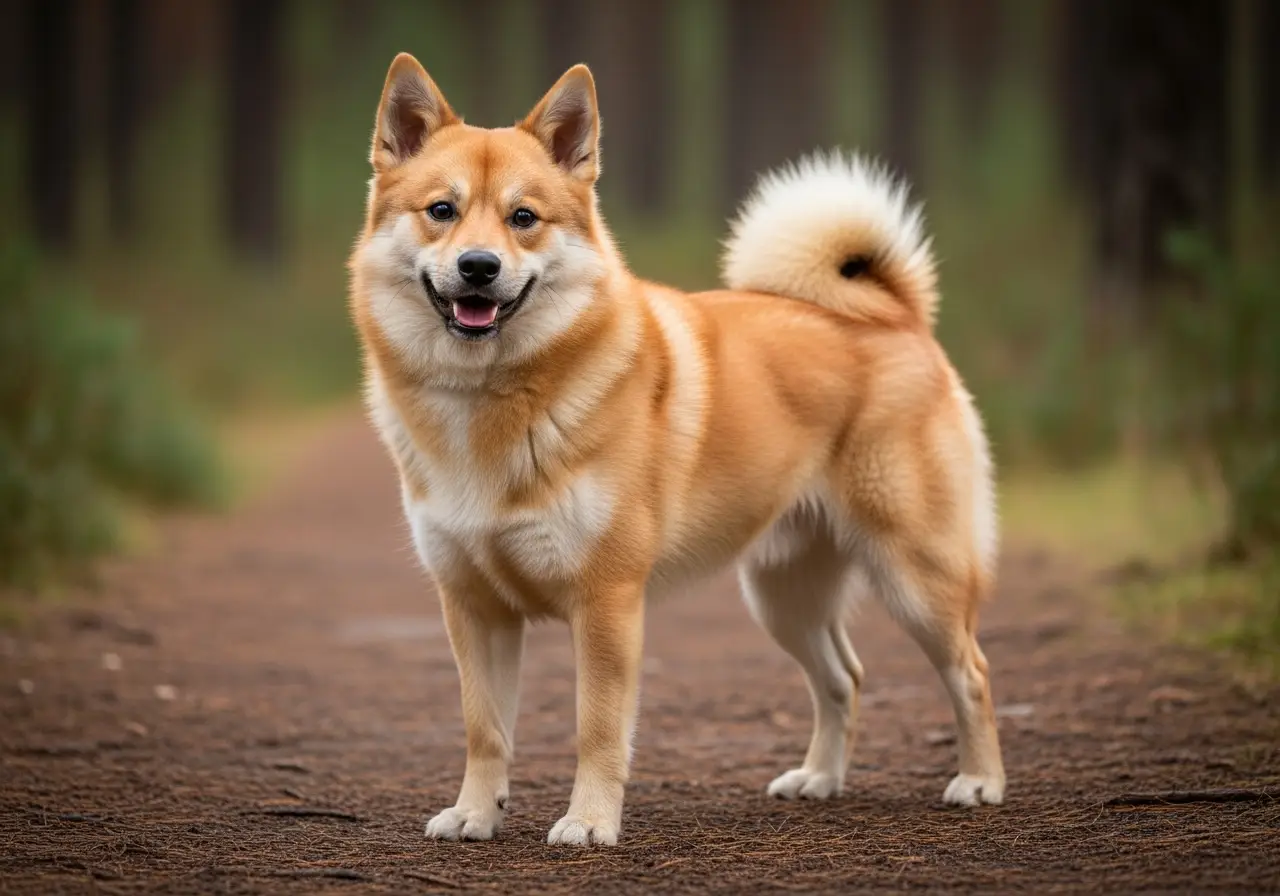
Norwegian Buhund: classic Scandinavian herding spitz, energetic, vigilant and with a strong bond to its family
03Profile
Key facts and suitability
- Origin
- Norwegen
- Original purpose
- Livestock herding Hunting companion
- FCI
- No. 237 · Group 5 · Section 3
- height at the withers
- 41–45 cm
- Weight
- 12–18 kg
- Life expectancy
- 13–15 Years
- Coat type
- Doppel
- Minimum exercise
- 60 min/day
- Puppy price
- 1'200–2'000 CHF
- Waiting period
- 5 months
- Sports
- Agility Herding work Obedience
04Temperament
How the Norwegian Buhund shows up in everyday life
When you come home, the Buhund announces itself reliably, not hysterically but distinctly. It registers every change in its surroundings and passes on this information. This is not a mistake, but centuries-old selection as a farm guardian.
On the internal axis, the Buhund shows a high need for social contact: It actively seeks closeness to its primary caregiver, wants to be included in activities and reacts to isolation with restlessness. Being left alone for more than four hours represents a burden for most individuals and should be trained gradually.
On the external axis, i.e. in dealing with strangers, it behaves significantly more reservedly. Unknown persons are initially observed and assessed. A Buhund that keeps its distance on the first visit is not showing incorrect behaviour. It is crucial to distinguish between these two axes: A high need for social contact towards the family does not automatically mean openness towards strangers.
In everyday life with children, the Buhund works well if clear rules exist and the children respect the dog. Its herding instinct can manifest in it „herding" children together while playing, a breed-typical behaviour that parents should be aware of.
It is compatible with other dogs if socialised early. Its drive for movement makes it a good companion for jogging, cycling or on extended hikes. Pure apartment keeping without structured stimulation regularly leads to problems.
05Needs
What this breed needs daily
The Norwegian Buhund needs at least 90 minutes of active exercise daily, distributed over several sessions. Pure walks on constant routes are not sufficient. The dog benefits from changing environments, terrain runs and activities that challenge its body.
Mental stimulation is at least as important. The need for mental work lies at 4 on a scale of 1–5. Nose work, search games, trick training and structured obedience training cover this need. Dog sports such as agility, obedience or rally-obedience are well suited for this breed and are actively practised by many Buhund owners.
Being left alone should be systematically built up from the start. The tolerance threshold is around four hours for most individuals. Anyone who is regularly away from home for longer than that needs a reliable care solution, whether through dog sitters, day care or a second person in the household.
The herding instinct is genetically anchored and cannot be trained out. However, it can be channelled: dog sports that simulate control tasks provide this drive with a meaningful outlet. Without an outlet, it manifests itself in barking, circling or attempts to "direct" family members.
A garden is helpful but does not replace structured enrichment. The Buhund needs a primary caregiver who enjoys joint activity and is willing to invest time daily in training and exercise.
Exercise
High
mental work
A lot
Social needs
High
training
Easy
06Sport & Mental and Physical Stimulation
What sports the Norwegian Buhund is suited for
Realistic in terms of physiology and genetics – not every breed suits every sport.
Structurally and physiologically suitable: Suitable for herding work, treibball and coursing · CaniCross / bikejoring possible.
07Quick Check
08Suitability
Who this breed is suitable for – and who it isn't
✓Matches
The Buhund suits active individuals or families who can plan at least 90 minutes of exercise daily and additional time for mental enrichment. Specifically: owners who jog, hike or do dog sports and want to include the dog in these activities.
Families with children from around 8 years old are suitable if the children are trained in handling dogs and the Buhund's herding instinct is known. A garden is an advantage but not a requirement; daily stimulation outside the property is decisive.
Owners who already have experience with Nordic dogs or herding dogs will find a keen-to-learn partner in the Buhund. First-time owners are also suitable, provided they use a supportive dog training school from the start and are willing to work consistently and patiently.
People who work from home or have flexible working hours benefit from this, as the Buhund actively seeks proximity to its primary caregiver. Anyone who rarely receives visitors or gets them used to the dog early on will cope well with its reserved attitude towards strangers.
×Doesn't match
The Buhund is not suitable for owners who are regularly away from home for more than four hours a day without having a care solution for the dog. Its high need for social contact and low tolerance for long periods alone reliably lead to behavioural problems in such situations.
Anyone looking for a calm, low-demand companion that occupies itself is making the wrong choice with the Buhund. Its need for mental work and exercise is high; this is not a matter of training but of genetics.
Anyone who equates the Buhund's high need for social contact with openness towards strangers will be surprised by its reserve towards visitors. This confusion of the two axes leads to misjudgements in keeping. Anyone who frequently has changing people in the household and expects a dog that accepts everyone immediately should consider another breed.
This breed is also unsuitable for people unwilling to engage in consistent, calm training. The Buhund reacts sensitively to inconsistency and harshness; both reinforce unwanted behaviour, particularly excessive barking.
10Line reality
Show line, working line, breeder market
In the DACH region, the Norwegian Buhund is bred exclusively as a working dog and companion dog; a pronounced separation into show and working lines, as exists for example with the Border Collie or German Shepherd Dog, is not established for this breed.
The low number of litters in the German-speaking region and the close affiliation of active breeders with the German Club for Nordic Dogs (DCNH) and the Swiss Club for Nordic Dogs (SKNH) ensure that the standard is interpreted largely uniformly. Both clubs are based on FCI Standard No. 237.
In Norway and Great Britain, where the breed is more widespread, breeding lines exist with different focuses on show success versus working traits. British lines are partly considered somewhat calmer in temperament, while Scandinavian lines emphasise the original willingness to work more strongly. However, these differences are gradual, not fundamental.
Anyone importing a Buhund from abroad should specifically ask the breeder about the origin line and request health certificates and working tests. A line differentiation in the sense of field trial lines does not exist for this breed.
11Health · Reality
What you need to plan for medically with your Norwegian Buhund
The Norwegian Buhund is considered a robust breed with a life expectancy of 12 to 15 years. Severe breed-typical hereditary diseases, which occur frequently in more popular breeds, are less documented in the Buhund, which is also due to the small population size and limited data availability.
Hip dysplasia (HD) occurs in the breed. Reputable breeders have parent dogs examined radiologically and openly share the results. Buyers should request HD findings for both parent dogs. Elbow dysplasia (ED) is less frequently documented but should also be clarified.
Eye diseases, particularly progressive retinal atrophy (PRA), are known in the breed. The DCNH recommends an ophthalmological examination of breeding dogs before use in breeding. Buyers should ask for current eye test results.
The breed tends towards overweight with insufficient stimulation and incorrect feeding. Since the Buhund has a high need for exercise, obesity is rarer in actively kept dogs but a real risk with lack of exercise. Vets recommend regular weight checks, particularly from the sixth year of life.
Preventive examinations: HD X-ray (recommended from 12 months), eye examination (annual for breeding dogs), dental treatment if needed. Annual preventive check-ups at the vet including blood tests are sensible from the eighth year of life.
12Structured data
Health by the numbers
Prone to diseases
Hip dysplasia Eye problems
Recommended health tests
Hip X-ray Eye examination
13Myths ↔ Reality
What is often said incorrectly about this breed
Five myths, five realities, five sources.
„The Buhund is like all Spitz breeds, independent and difficult to train.
Although the Norwegian Buhund shows the typical initiative of Nordic dogs, it is significantly more cooperative than many other Spitz breeds. It is strongly oriented towards its primary caregiver and works motivatedly in training, provided the methods are clear and consistent. Excessive harshness is counterproductive; positive reinforcement with a clear structure demonstrably achieves better results.
„Because it is small and Nordic, a short walk a day is sufficient.
The FCI standard describes the Buhund as an energetic, versatile working and herding dog. The actual exercise requirement is at least 90 minutes of active stimulation daily, plus mental enrichment. A short walk does not cover this need anywhere near enough. Under-stimulation regularly manifests in excessive barking, destructive behaviour or restlessness.
„The Buhund is a family dog that warms up to everyone immediately.
The Buhund shows pronounced watchfulness towards strangers, which corresponds to its origin as a farm guardian. The FCI axis for friendliness towards strangers lies in the middle range. It builds trust with new people gradually and is not a dog that greets every visitor immediately. This characteristic is typical of the breed and not a training error.
„The dense coat of the Buhund requires extensive daily care.
The topcoat of the Buhund is hard, dense and naturally dirt-repellent. Weekly brushing is sufficient in everyday life. During the moulting season, twice a year, the care effort increases significantly as the dense undercoat sheds intensively. Daily care is not necessary outside these phases.
„Because the Buhund is so rare, it must come from a breeder abroad.
Serious breeders exist in the DACH region who are affiliated with the VDH, DCNH or SKNH. The waiting times are long, often one to two years, but placement through recognised clubs is possible. Imports from uncontrolled sources abroad significantly increase the risk of health and behaviour-related problems.
14animal welfare
The animal welfare perspective
Breeder market, designer versions, animal shelter reality — what no one writes in the puppy ad.
The Norwegian Buhund is an exceptionally rare breed in the DACH region. Annual litter numbers range from single digits to low double digits. This rarity has a direct consequence: the backyard breeder market is hardly relevant for this breed; anyone looking to buy a Buhund will quickly encounter the limits of available supply.
However, this very scarcity carries another risk: those who are impatient or respond to dubious offers on the internet may end up with breeders who have no affiliation with a club, conduct no health tests, and have no socialisation concept. Cheap offers from Eastern European countries or from private individuals without documentation should be scrutinised critically. The absence of hip dysplasia and eye examination results for the parent animals is a clear warning sign.
Designer versions of the Buhund (such as crosses with other Nordic breeds marketed under fantasy names) exist in isolated cases. They offer no health advantages over purebred dogs from reputable breeding and are generally neither better documented in terms of health nor behaviour.
Since the Buhund practically does not appear in animal welfare contexts, rehoming as an alternative to new breeding is rarely possible for this specific breed. However, those open to a Nordic dog of a similar type may occasionally find second-hand dogs through animal welfare organisations and breed club rehoming services, for example after a change of owner or animals rehomed from abroad. The DCNH and the SKNH maintain rehoming lists that serve as a first point of contact.
The long waiting times with reputable breeders, often one to two years, are not a disadvantage but a quality feature. They reflect the deliberately limited number of litters and careful breeding planning.
15Costs · Transparency
What this breed realistically costs
A puppy from a reputable breeder affiliated with the VDH or SKNH costs between 1,200 and 1,800 EUR or CHF in the DACH region. Offers significantly below this, particularly without health documentation, indicate a lack of breeding standards.
Annual living costs amount to approximately 1,500 to 2,500 EUR, depending on food choice, grooming needs, and activity level. High-quality dry food or fresh meat diet for a dog of this size costs between 60 and 120 EUR per month. The coat change requires increased grooming effort twice a year; professional grooming is optional but recommended due to the dense undercoat (approx. 40–80 EUR per session).
Veterinary costs for basic care (vaccinations, parasite prevention, annual check-ups) amount to 300 to 500 EUR annually. In the event of illness or surgery, individual costs can quickly rise into the four-digit range. Pet insurance for this breed and size class costs between 40 and 90 EUR per month, depending on the provider and scope of coverage. Dog sports and training costs (dog training school, courses) should be budgeted at 200 to 500 EUR annually.
16Puppy search
What you need to consider when choosing a breeder
- Reputable Buhund breeders in the DACH region are affiliated with the German Club for Nordic Dogs (DCNH) or the Swiss Club for Nordic Dogs (SKNH).
- Both clubs maintain breeder lists and provide contacts on request.
- Affiliation with an association is a first, but not sufficient, quality indicator.
- Specific criteria for reputable breeding: HD and eye test results for both parent dogs are available in writing.
- The breeder allows visits to the litter and shows the mother with the puppies.
- The puppies grow up in a home environment and are accustomed to everyday noises.
- The breeder asks questions about the planned daily routine and rejects buyers who do not suit the dog.
- Warning signs: No proof of health tests, several litters available simultaneously, no personal conversation before purchase, handover under eight weeks of age.
- Placement through breed club placement offices is an equally valid option.
- Older dogs from second-hand sources are often already socialised and health-assessed.
- Anyone who is flexible should actively inquire about this possibility.
FAQ
Frequently asked questions about the Norwegian Buhund
Is Norwegian Buhund suitable for beginners?
Norwegian Buhund is considered suitable for first-time dog owners.
Is Norwegian Buhund a family dog?
Norwegian Buhund is considered suitable for families with good socialisation and species-appropriate care.
How much exercise does Norwegian Buhund need?
At least around 60 minutes of exercise per day.
Does Norwegian Buhund suit an apartment?
With enough exercise and enrichment, Norwegian Buhund can also be kept in an apartment.
What is the size and weight of Norwegian Buhund?
Fully grown, Norwegian Buhund reaches about 41–45 cm at the withers and weighs around 12–18 kg.
What is the life expectancy of Norwegian Buhund?
The life expectancy of Norwegian Buhund is approximately 13–15 years.
Which diseases are common in Norwegian Buhund?
Hip dysplasia Eye problems
17Breed clubs
Official breed clubs in DACH
19Related
Similar breeds – and their differences
You might also be interested in
Participate
Do you have a good photo of your Norwegian Buhund?
We are looking for expressive images for our breed profiles. Submit yours; the editorial team reviews every submission before publication.
Does this breed suit you?
Lively Nordic spitz – little common in Switzerland but good for active families