
01Summary
In a paragraph
If you only have 30 seconds.
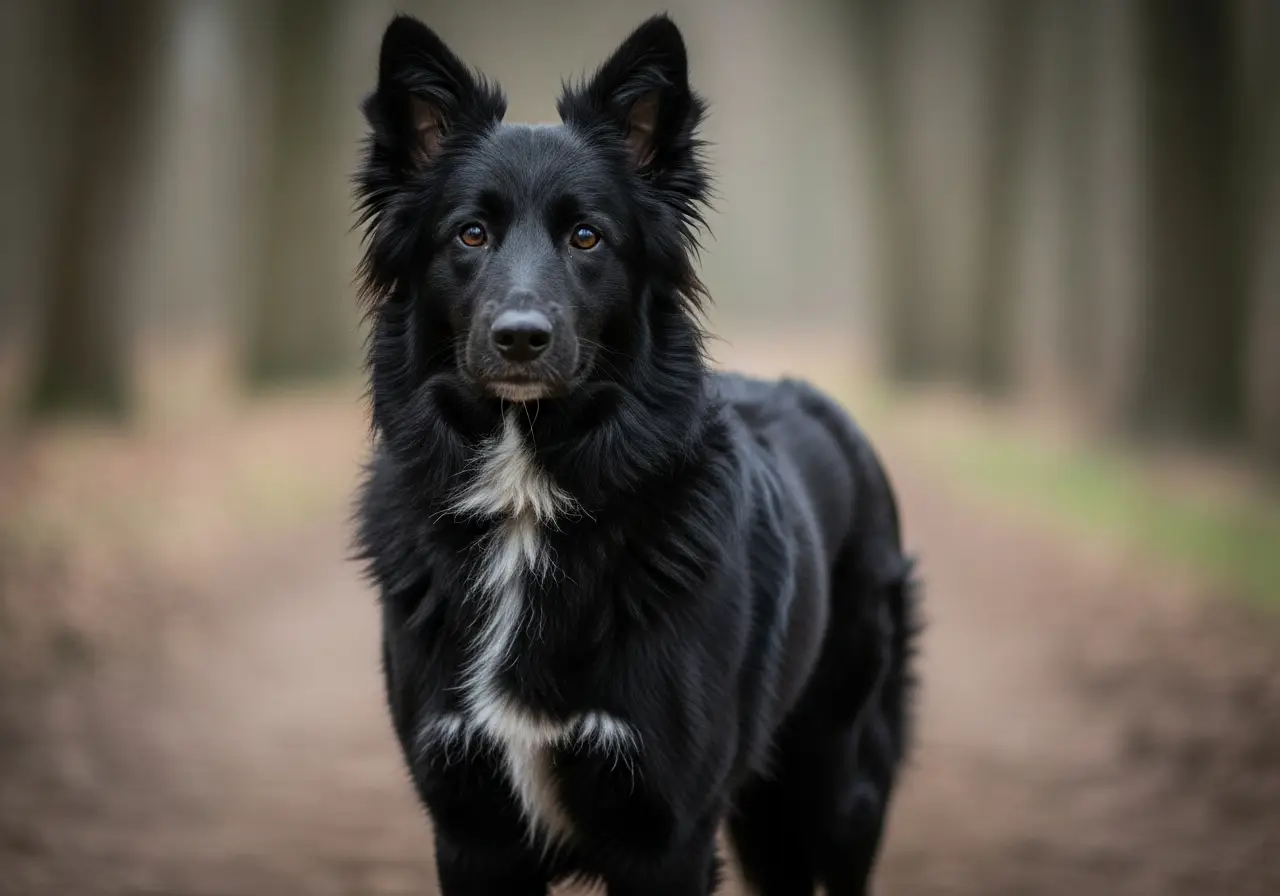
The Croatian Sheepdog is a rare, black working dog from Eastern Slavonia with centuries-old herding traditions. Its exercise requirement is at least 90 to 120 minutes daily, plus structured mental work. Anyone expecting it to be a calm companion dog significantly underestimates its genetic profile. The breed demands training experience, clear daily structure, and genuine willingness for daily collaboration.
02Introduction
What makes the Croatian Sheepdog special
The Croatian Sheepdog is a rare Croatian herding dog, FCI Group 1, with characteristic black coat and a withers height of 40–50 cm.
03Profile
Key facts and suitability
- Origin
- Kroatien
- Original purpose
- Herding sheep and cattle in Croatia
- FCI
- No. 277 · Group 1 · Sektion 1: Schäferhunde. Ohne Arbeitsprüfung.
- height at the withers
- 40–50 cm
- Weight
- 13–20 kg
- Life expectancy
- 12–14 Years
- Coat type
- Long-haired
- Minimum exercise
- 90 min/day
- Puppy price
- 800–1'500 CHF
- Waiting period
- 9 months
- Sports
- Agility · Obedience · Herding work · Scent work
04Temperament
How the Croatian Sheepdog shows up in everyday life
The morning run shows what distinguishes the Croatian Shepherd Dog from a leisure dog: it does not simply run alongside you, but observes, anticipates and reacts to every change in movement. This behaviour is no coincidence; it is the result of centuries of selection for herding work.
Internally, the dog needs intensive exercise and structured mental work daily. An evening without a task is not an evening of relaxation for it, but a deficit that manifests itself in restlessness, controlling behaviour or barking. Anyone who comes home in the evening and expects the dog to occupy itself will experience the downside of its working potential.
Externally, the Croatian Shepherd Dog behaves reservedly to watchfully towards strangers. This reserve is not a sign of insecurity, but a breed-typical trait. When unknown people visit the apartment, it needs time and clear signals from the owner before allowing contact. These two axes, high internal need for social contact with the primary caregiver and simultaneous distance towards strangers, must not be confused.
In family life with a clear structure, it shows itself as a reliable, attentive companion. It follows the owner through the day, registers changes in the environment and reports anything unusual. It accepts children well if they handle it calmly and respectfully, but hectic, unpredictable movements activate its controlling instinct. Dog sports, nose work or herding exercises with sheep correspond most closely to its genetic profile.
05Needs
What this breed needs daily
The Croatian Shepherd Dog needs at least 90 to 120 minutes of active exercise daily, not as a relaxed walk, but as structured activity with changes of direction, tasks and interaction. Running, cycling or hiking meet the physical need, but do not replace mental stimulation.
Mental work is no optional addition for this breed. Its need for mental work is at the highest level on the scale. Suitable forms of enrichment are herding work with sheep or cattle, dog sports such as agility, obedience or protection dog sports, as well as structured nose work and search tasks. Without regular cognitive challenge, the dog develops substitute activities, usually at the expense of the furnishings or the owner's nerves.
Being left alone should be built up gradually and consistently. More than four hours daily without a primary caregiver or structured enrichment permanently overloads this dog. A dog sitter or day care is not a comfort solution during longer absences, but a necessity.
The dog also requires a clear leader with training experience. Inconsistent or unclear signals will unsettle it and lead to independent decision-making, which can become problematic in a dog with pronounced herding and control behaviour. Attending a dog training school with experience in working dog breeds is particularly recommended during the first two years of life.
Exercise
Very high
mental work
A lot
Social needs
High
training
Demanding
06Sport & Mental and Physical Stimulation
What sports the Croatian Sheepdog is suited for
Realistic in terms of physiology and genetics – not every breed suits every sport.
Structurally and physiologically suitable: Suitable for herding work, treibball and coursing · CaniCross / bikejoring possible.
07Quick Check
08Suitability
Who this breed is suitable for – and who it isn't
✓Matches
The Croatian Sheepdog suits owners who can plan at least two hours of active enrichment daily and enjoy structured training. Experience with working dog breeds is a realistic prerequisite, not merely a recommendation.
Specific profiles: Active individuals or couples with access to dog sports, herding work, or field trials. Families with children from around eight years old, where all household members know and respect how to handle a vigilant, quick-reacting dog. Owners in rural areas or near cities with regular access to open terrain. People who are willing to attend a dog training school with expertise in working dogs.
Those who understand the external axis (i.e., know that reserve towards strangers is not a training error but a breed standard trait) and cater to the internal axis will receive an exceptionally loyal and capable dog. Important: The dog needs a fixed primary caregiver who is present daily and provides clear orientation.
×Doesn't match
The Croatian Sheepdog does not suit owners who are regularly away from home for more than four hours a day without having a reliable care solution. Anyone who limits exercise to two short walks a day structurally underestimates the needs of this breed.
The breed is not suitable for first-time owners without training experience and without the willingness to attend a dog training school with working dog expertise. Anyone who views reserve towards strangers as a problem that will "sort itself out" will be permanently frustrated; this trait is genetically anchored, not situational.
Households with very young children under six years old should realistically assess the dog's pronounced quick reactions and control behaviour. Anyone looking for a calm, adaptable companion dog for urban daily life will not find the right profile in this breed. Anyone who equates the high need for social contact with the primary caregiver with general openness towards people will be surprised by the breed's reserve towards strangers; confusing these two behavioural axes is a common mistake when choosing this breed.
10Line reality
Show line, working line, breeder market
The Croatian Shepherd Dog is still primarily bred as a working dog today. A pronounced differentiation between show and working lines, as known for example in the Border Collie or the German Shepherd Dog, hardly exists in this breed; the population size does not yet allow such a split.
Breeding focuses on workability in the country of origin, Croatia: herding and driving ability, endurance, nerve strength and trainability are in the foreground. The Croatian breed club (Hrvatski Kinološki Savez) is based on the FCI standard, which explicitly mentions herding, guarding and accompanying as purposes.
In the German-speaking area, the breed is extremely rare. The few breeders active here usually work in close coordination with Croatian or Eastern European breeding associations. Anyone looking for a puppy will encounter long waiting times and should carefully check the origin of the parent animals, in particular their working use and health examinations.
Regional differences within Croatia are documented: dogs from eastern Slavonia, the breed's area of origin, are considered particularly typical with regard to body structure and working behaviour. A formalised field trial line does not exist, but individual dogs successfully participate in herding competitions and versatility tests.
11Health · Reality
What you need to plan for medically with your Croatian Sheepdog
The Croatian Sheepdog is considered a robust working dog breed with a life expectancy of 12 to 14 years. Reliable breed-specific health statistics are limited in availability due to the small population size in the DACH region.
Hip dysplasia (HD) is a known issue in medium-sized working dogs. The Swedish Kennel Club (SKK) documents HD prevalences of 10 to 20 percent for related herding breeds, depending on the breeding line and examination rate (SKK Hälsodata, as of 2023). No published HD rates exist specifically for the Croatian Sheepdog; however, reputable breeders have parent animals X-rayed for HD and ED and disclose the results.
Elbow dysplasia (ED) occurs less frequently than HD in working dog breeds but should also be checked as part of breeding approval. Eye examinations (CAER) are not standard for this breed but are recommended by responsible breeders.
The short to medium-length, dense coat requires regular brushing during shedding periods (twice a year) but is generally lower maintenance than that of long-haired herding dogs. Overweight is rarely a problem in well-exercised individuals, but it can develop quickly with insufficient exercise and place additional strain on the joints.
Preventive examinations: HD/ED X-rays of parent animals before breeding, annual dental and general check-ups, parasite prevention according to the area of residence.
12Structured data
Health by the numbers
Prone to diseases
No known breed-specific hereditary diseases, very robust
Recommended health tests
No specific mandatory examinations
13Myths ↔ Reality
What is often said incorrectly about this breed
Five myths, five realities, five sources.
"The Croatian Sheepdog is a low-maintenance everyday dog that is satisfied with normal walks.
The FCI standard describes the breed as a working dog with a pronounced herding instinct, endurance and liveliness. A daily exercise quota of less than 90 minutes regularly leads to nervous or controlling behaviour in this dog. Pure walks without mental stimulation do not meet its needs.
“Because he is so rare, he must be particularly easy to handle.
The rarity of a breed says nothing about the effort required to keep it. The Croatian Shepherd Dog was bred over centuries for working performance, not for adaptability to urban lifestyles. Its high need for mental work and its herding instinct remain regardless of the breed's prevalence.
“The dog is friendly towards strangers because it can be used as a companion dog.
Although the FCI standard mentions suitability as a companion dog, it simultaneously describes the character as watchful and devoted to its owner. The breed typically shows reserve towards strangers. Openness towards unknown people is not a breed standard trait and only arises through consistent socialisation.
“As a herding dog, he is automatically compatible with other animals.
Herding instinct means control and steering of movement, not social compatibility. The Croatian Shepherd Dog can put conspecifics and other pets under pressure through its driving and controlling behaviour. Compatibility arises through early, structured socialisation, not through the breed alone.
“Since the breed is robust, it requires little veterinary preventive care.
Robustness in the sense of weather resistance and endurance is no substitute for regular health checks. As with other medium-sized working dogs, hip dysplasia and elbow problems can occur. X-ray examinations before breeding and regular preventive examinations are also professional standard for this breed.
14animal welfare
The animal welfare perspective
Breeder market, designer versions, animal shelter reality — what no one writes in the puppy ad.
The Croatian Sheepdog is one of the rarest herding breeds in the German-speaking area. This rarity has so far protected the breed from mass market pressure but carries its own risks.
Backyard breeder market and import issues
Because reputable breeders hardly exist in the DACH region and waiting times are long, some interested parties resort to imports from Eastern Europe or offers without pedigree documentation. Dogs from such sources often lack documented health examinations of the parent animals and verifiable socialisation. The risk of acquiring a dog with an unknown health status or insufficient early training is considerable.
No established designer versions yet
To date, there are no established designer crosses involving the Croatian Sheepdog. Given the growing interest in rare breeds, this situation should be actively monitored. Anyone offered an animal of unclear origin as a "Croatian Sheepdog" should demand FCI papers and proof of lineage.
Problems related to keeping
The major animal welfare issue with this breed arises not from breeding errors, but from mismatching: A Croatian Sheepdog that is insufficiently stimulated daily will develop behavioural problems leading to surrender. As the breed rarely appears in animal welfare organisations, such dogs often end up in foster homes without breed-specific experience.
Adoption as an equivalent option
Anyone taking in an adult Croatian Sheepdog from rehoming receives a dog with a known character and assessable behaviour. Specialised herding dog rehoming organisations and the Club for Foreign Herding Dogs (KAH/CBE) can assist with the search. This option is equivalent to buying a puppy, and for a breed with so few breeders in the DACH region, it is often the more realistic choice.
15Costs · Transparency
What this breed realistically costs
A puppy from a reputable breeder with FCI papers costs between 1,200 and 2,000 EUR in the DACH region based on experience. Offers significantly below this without papers and health records of the parent animals should be scrutinised critically.
The annual living costs for a medium-sized working dog are approximately 1,500 to 2,500 EUR, depending on food quality, grooming needs and activity level. High-quality dry food or BARF for a dog weighing 15 to 20 kg costs between 60 and 120 EUR monthly.
Veterinary costs vary considerably: basic care (vaccinations, parasite prevention, annual check-up) amounts to 200 to 400 EUR annually. In case of illness or injury, individual treatments can quickly reach 500 to 2,000 EUR. Pet insurance for this breed costs between 40 and 100 EUR monthly depending on the provider and scope of benefits, and is a sensible safeguard for a working dog with a high activity level.
Dog sports, training groups and courses at a specialised dog training school are not optional expenses for this breed; they are part of species-appropriate keeping and should be budgeted at 300 to 600 EUR annually.
16Puppy search
What you need to consider when choosing a breeder
- Reputable breeders of the Croatian Sheepdog disclose X-ray findings (HD/ED) for both parent animals, allow a visit to the litter before handover, and do not release puppies earlier than eight weeks of age.
- A pedigree certificate from the Hrvatski Kinološki Savez (HKS) or an FCI-recognised association is a minimum standard.
- As the breed is extremely rare in the DACH region, interested parties should expect waiting times of one year or more.
- Offers without papers, with very short waiting times, or at suspiciously low prices should be questioned critically.
- The Club for Foreign Herding Dogs (KAH/CBE, https://www.hirtenhunde.ch) is a reputable contact point for breeding information and contacts in the German-speaking area.
- Direct contact with Croatian breeding associations is also possible.
- Adopting an adult dog is an equally valid alternative.
- Specialised foster homes for herding dogs understand the breed's behaviour and can provide a well-founded assessment.
- No reputable breeder or adoption agency exerts purchase pressure or waives a preliminary discussion about keeping conditions.
FAQ
Frequently asked questions about the Croatian Sheepdog
Is Croatian Sheepdog suitable for beginners?
Croatian Sheepdog is considered suitable for first-time dog owners.
Is Croatian Sheepdog a family dog?
Croatian Sheepdog is considered suitable for families with good socialisation and species-appropriate care.
How much exercise does Croatian Sheepdog need?
At least around 90 minutes of exercise per day. As an active breed, more so — plus mental stimulation.
What is the size and weight of Croatian Sheepdog?
Fully grown, Croatian Sheepdog reaches about 40–50 cm at the withers and weighs around 13–20 kg.
What is the life expectancy of Croatian Sheepdog?
The life expectancy of Croatian Sheepdog is approximately 12–14 years.
Which diseases are common in Croatian Sheepdog?
No known breed-specific hereditary diseases, very robust
17Breed clubs
Official breed clubs in DACH
19Related
Similar breeds – and their differences
You might also be interested in
Participate
Do you have a good photo of your Croatian Sheepdog?
We are looking for expressive images for our breed profiles. Submit yours; the editorial team reviews every submission before publication.
Does this breed suit you?
Rare Croatian herding dog with black coat. Rare in D-A-CH. Robust and eager to learn.