
01Summary
In a paragraph
If you only have 30 seconds.
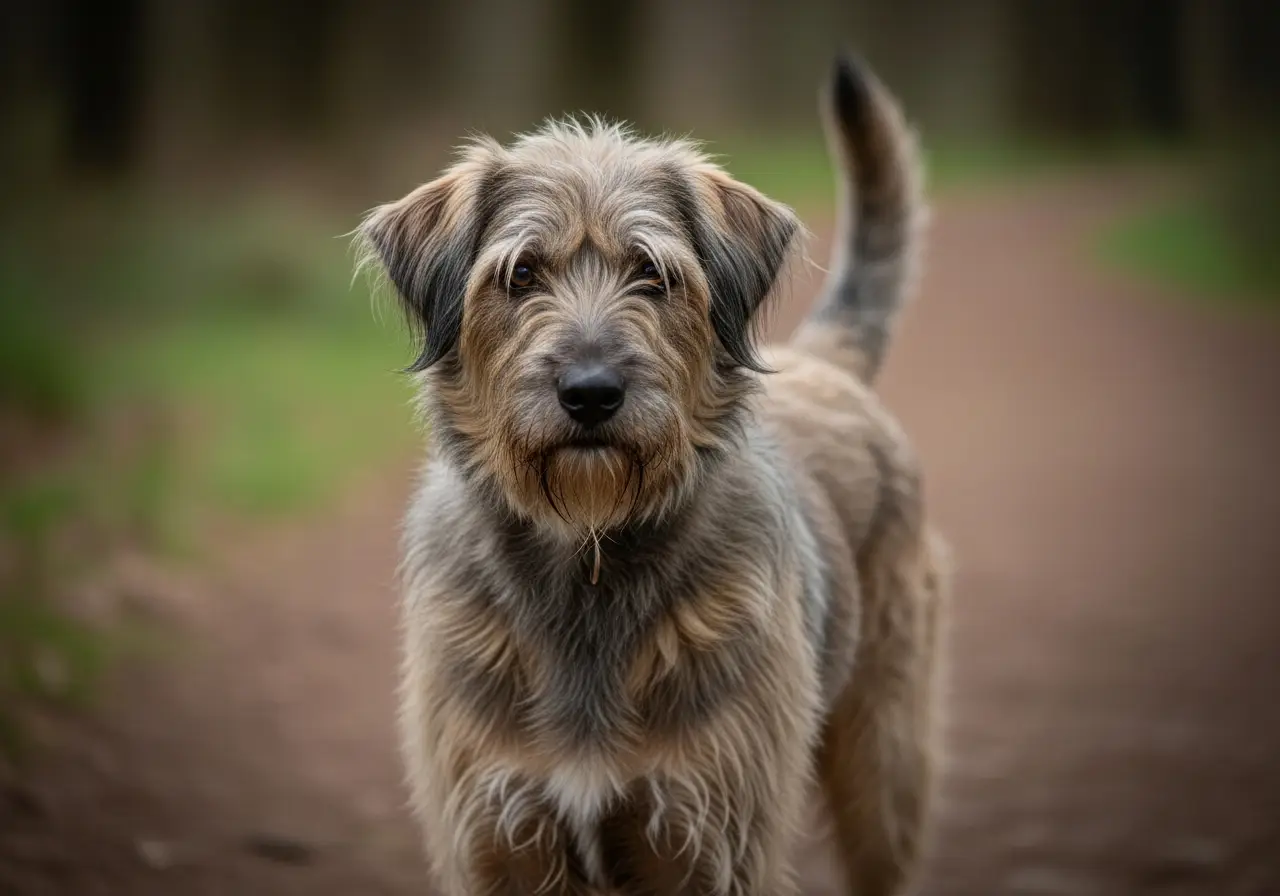
The Catalan Sheepdog (Gos d'Atura Català) is a robust herding dog from the Catalan Pyrenees, selected for independent decision-making under harsh conditions. This genetics shapes its everyday life to this day: those who keep it take responsibility for a dog with pronounced willingness to work, high need for social contact towards the primary caregiver, and marked reserve towards strangers. A dog for experienced people, not for occasional active owners.
02Introduction
What makes the Catalan Sheepdog special
The Catalan Sheepdog (Gos d'Atura Català) is a Spanish Pyrenean herding dog, FCI Group 1, adaptable and long-lived, withers height 45–55 cm.
03Profile
Key facts and suitability
- Origin
- Spanien (Katalonien)
- Original purpose
- Herding sheep and cattle in the Pyrenees
- FCI
- No. 87 · Group 1 · Sektion 1: Schäferhunde
- height at the withers
- 45–55 cm
- Weight
- 17–25 kg
- Life expectancy
- 12–14 Years
- Coat type
- Long-haired
- Minimum exercise
- 90 min/day
- Puppy price
- 1'000–1'800 CHF
- Waiting period
- 9 months
- Sports
- Agility · Obedience · Herding work · Scent work
04Temperament
How the Catalan Sheepdog shows up in everyday life
The morning run shows what makes the Gos d'Atura special: It does not simply run alongside you, but observes, anticipates and reacts to changes of direction before you announce them. This dog thinks along, constantly.
**Internal axis (what the dog needs):** The need for social contact with the primary caregiver is high. The Catalan Sheepdog closely orients itself to its main reference person and follows their movements in the house. Being left alone for several hours without prior gradual preparation leads to restlessness. The need for mental work is at the same level as the need for movement; both are pronounced. A walk without a mental task is not sufficient.
**External axis (how the dog reacts):** It behaves reservedly towards strangers. When visitors come, it initially withdraws or observes from a distance. It does not bark without reason, but it clearly signals that it is assessing the situation. This reserve is not a sign of insecurity; it is breed character. Anyone who sees this as a problem has the wrong expectations for this breed.
In everyday life with children, the pronounced herding instinct can manifest as controlling behaviour; circling children while playing is a classic example. This is not an attack, but it requires clear rules and consistent training from the start.
With known conspecifics, it is compatible with good socialisation. It approaches unknown dogs with caution initially. The herding instinct can be activated in encounters with small, fast-moving animals.
05Needs
What this breed needs daily
The Catalan Sheepdog requires at least 90 to 120 minutes of active movement daily, not as a relaxed walk, but as structured stimulation with varying demands. Cross-country runs, cycling with the dog or hikes in mountainous terrain correspond better to its original conditioning than city rounds on asphalt.
Mental stimulation is at least equally important. The Gos d'Atura was selected for independent problem-solving. This need for mental work can be met through herding work (also in courses without one’s own flock), basic protection work, nose work, obedience or agility. Simple obedience exercises in the living room are not sufficient.
The need for social contact with the primary caregiver is high. The dog requires genuine interaction, not just physical presence. Anyone who is away from home for eight hours must organise reliable care. Being left alone can be trained, but the upper limit is about four hours for a well-conditioned adult.
A rural or at least suburban environment with access to open spaces is advantageous. Keeping the dog in an apartment is possible but requires that daily exercise and stimulation take place consistently and entirely outside the apartment.
The coat requires regular care: weekly brushing prevents matting, and daily grooming is necessary during moulting periods. This is not an effort that can be reduced to occasional visits to a dog groomer.
Exercise
High
mental work
A lot
Social needs
High
training
Medium
06Sport & Mental and Physical Stimulation
What sports the Catalan Sheepdog is suited for
Realistic in terms of physiology and genetics – not every breed suits every sport.
Structurally and physiologically suitable: Suitable for herding work, treibball and coursing · CaniCross / bikejoring possible.
07Quick Check
08Suitability
Who this breed is suitable for – and who it isn't
✓Matches
The Catalan Sheepdog suits owners who plan at least two hours of active time with the dog every day, not as a chore but out of genuine interest in working together. Experience with independently thinking herding dogs is a clear advantage.
Specific profiles for whom keeping this breed works: Active individuals or couples with a flexible daily routine and access to open spaces or terrain. Families with children from around eight years old, in whom all family members understand the herding instinct and handle the dog consistently. Owners who actively participate in dog sports (agility, obedience, herding work, or nose work) and thereby offer the dog a meaningful task.
Those who live in the countryside or on the outskirts of town and allow the dog regular runs through terrain or hikes create good prerequisites. Owners who enjoy continuous training and are willing to respect the dog’s independence rather than suppress it get along well with this dog.
Important for the external axis: Those who rarely receive visitors or whose guests can cope with reserved behaviour towards dogs experience the reserve towards strangers as unproblematic.
×Doesn't match
The Catalan Sheepdog does not suit owners who can or want to devote less than 90 minutes daily to active exercise and stimulation. Those who are regularly away from home for eight hours or more and cannot organise reliable dog care underestimate the need for social contact of this breed.
First-time owners without prior experience with independently thinking dogs face a steep learning curve. The Gos d'Atura tests boundaries not out of stubbornness, but because its genetics presuppose independent decision-making. Those who interpret this as disobedience and react with pressure worsen the situation.
Households with very young children, in whom consistent management of herding behaviour is not possible, are also to be viewed critically. Circling and controlling quickly moving children is a real everyday scenario, not a theoretical risk.
Those who have frequently changing visitor frequencies and expect the dog to react openly and friendly towards strangers will be disappointed. The reserve towards unknown people is not a training error but breed character. Those who confuse this external axis with the high need for social contact towards the primary caregiver (i.e., assume that a socially needy dog is automatically approachable by everyone) make a wrong decision.
10Line reality
Show line, working line, breeder market
The Catalan Sheepdog does not show a pronounced split into working and show lines, as is known, for example, in the Border Collie or German Shepherd. The population is too small for distinct lines with their own stud book to have become established.
However, differences in weighting exist within breeding: Some breeders focus on show successes and exterior conformity with the FCI standard, while others prioritise working characteristics and test their dogs in herding work or dog sports. These differences are not formally documented but are recognisable when talking to breeders.
Anyone looking for a dog for active herding work or demanding dog sports should specifically ask for breeders who use and test their dogs in these areas. Anyone looking for a companion dog with a more moderate working drive may find more suitable dogs with show-oriented breeders, without this being a question of quality.
Regional differences between Spanish origin breeds and the small German-speaking populations can also play a role. Spanish working breeds tend to have stronger drives. A direct comparison is difficult due to the lack of systematic surveys, but asking about the lineage is worthwhile in conversations with breeders.
11Health · Reality
What you need to plan for medically with your Catalan Sheepdog
According to breed clubs, the life expectancy of the Catalan Sheepdog is 12 to 14 years, a typical value for medium-sized herding dogs. Reliable breed-specific mortality studies do not exist due to the small population.
Hip dysplasia (HD) is a known issue in herding dogs of FCI Group 1. For the Gos d'Atura, no published HD prevalence studies are available that prove an exact percentage. Reputable breeders have both parent dogs radiologically examined for HD and document the results. When buying a puppy, the HD status of both parents should be presented.
Eye diseases are mentioned as a possible predisposition in the breed description. An ophthalmological certificate of the parent dogs by a recognised veterinary ophthalmologist is a sensible quality feature when choosing a breeder.
The medium-length, shaggy coat requires regular checking for matting, ticks, and skin irritations, especially after use in terrain. Neglected grooming can lead to skin problems that require veterinary treatment.
Overweight is rare in well-exercised individuals, but can occur with insufficient exercise and incorrect feeding. Regular weight checks at the vet, at least once a year, are recommended. Annual check-ups, booster vaccinations according to the vaccination booklet, and dental checks from the fifth year of age onwards are part of the standard programme.
12Structured data
Health by the numbers
Prone to diseases
Hip dysplasia, generally robust
Recommended health tests
Hip X-ray
13Myths ↔ Reality
What is often said incorrectly about this breed
Five myths, five realities, five sources.
"The Gos d'Atura is a cosy family dog without great demands due to its shaggy coat.
The appearance is misleading regarding the working disposition. The FCI standard describes it as lively, very watchful and devotedly loyal to the shepherd, not as a relaxed companion dog. Its need for movement and mental work lies significantly above the average of comparable size classes.
“Herding dogs are naturally friendly towards all people because they are accustomed to much social contact.
The Catalan Sheepdog is markedly reserved towards strangers. The FCI standard states it directly: It does not approach strangers, which occasionally makes it appear inaccessible. A high need for social contact with the primary caregiver does not mean openness towards unknown people; these two axes run counter to each other in this breed.
“A large garden replaces daily active stimulation.
Free exercise in the garden replaces neither the mental stimulation nor the structured movement that a herding dog requires. Without targeted tasks (herding work, dog sports, complex training units), dogs with a high need for mental work develop substitute activities, which owners generally perceive as problem behaviour.
“The breed is rare, so it must be healthy and free of burdens.
A small population size can limit genetic diversity and increase inbreeding coefficients. Serious breeding in a small stock requires active breeding management with health tests. The rarity of a breed is not proof of health; it makes careful breeder selection all the more important.
“Anyone who has already had a sheepdog knows the Gos d'Atura.
The Catalan Sheepdog differs from the German Shepherd in one central point: It was selected for independent decision-making without instructions from the shepherd. This independence makes it more demanding in training than breeds that are more oriented towards guidance. Experience with other herding dogs is helpful, but not directly transferable.
14animal welfare
The animal welfare perspective
Breeder market, designer versions, animal shelter reality — what no one writes in the puppy ad.
The Catalan Sheepdog is so rare in Germany and Switzerland that it hardly appears in organised animal welfare. This is initially good news: mass production by backyard breeders is not a widespread problem for this breed. The low demand protects the breed from the fate of popular herding dogs such as the Border Collie, which is significantly overrepresented in shelters.
Nevertheless, risks exist. Anyone who buys a Gos d'Atura via classified ads without club membership may be funding breeding without health tests and without selection for character. With rare breeds, the temptation is great to buy any available puppy, especially when waiting times with reputable breeders are long. This pressure leads to poor decisions.
Designer versions or crosses with the Gos d'Atura are not known in the German-speaking region and are not a relevant animal welfare issue. Unlike Bulldogs or Pug-like breeds, there are no breeding-related anatomical problems that systematically lead to suffering.
The actual animal welfare problem with this breed is related to keeping conditions: underestimated exercise needs, lack of mental stimulation, and the pronounced herding instinct, which can lead to controlling behaviour towards children or other animals in everyday life if there is no outlet. Surrenders of similar herding dogs often occur for exactly these reasons, not because the dog is "difficult", but because expectations at the time of purchase did not match reality.
Adopting an adult Gos d'Atura from animal welfare organisations is an equally valid alternative to buying a puppy. Adult dogs come with an assessable character and known socialisation. Specialised herding dog rehoming services and breed clubs can assist with the search.
15Costs · Transparency
What this breed realistically costs
A puppy from a reputable breeder with club membership, health tests, and FCI papers costs between 1,200 and 1,800 EUR or CHF in Germany and Switzerland. Offers significantly below this without documentation are a warning sign.
The annual living costs for an adult Catalan Sheepdog are typically between 1,500 and 2,500 EUR, depending on food quality, grooming, and dog sport activities. High-quality dry food or fresh food for a dog of this size costs between 60 and 120 EUR per month.
Grooming can be partially done yourself, but requires investment in suitable tools (brushes, de-tanglers). Professional grooming at a dog groomer costs between 60 and 100 EUR per session, depending on the region.
Veterinary costs on an annual average (check-ups, vaccinations, parasite prevention) are between 300 and 500 EUR without illnesses. Pet insurance with surgery cover costs between 40 and 80 EUR per month for this size class and is recommended for rare breeds with limited health data. Dog sport memberships and training costs are an additional expense that is not an optional luxury for this breed.
16Puppy search
What you need to consider when choosing a breeder
- The Catalan Sheepdog is a rare breed in Germany and Switzerland with low litter numbers.
- This means: waiting times of one year or more are realistic.
- Those who want a puppy immediately come under pressure, and pressure when searching for a puppy leads to poor decisions.
- Reputable breeders can be found via the Perro de Pastor Catalán e.V.
- (Germany) or the Schweizerischen Club für Gos d'Atura Català (SCGAC).
- Both clubs maintain stud books and require health tests.
- A reputable breeder shows you both parent dogs, provides health certificates, asks counter-questions about your living situation, and lets you visit the puppies in their home environment.
- Warning signs: puppies available without waiting time, sale via animal markets or advertisements without club affiliation, missing health documents of the parent dogs, no personal conversation before purchase.
- Adoption through animal welfare organisations is an equally valid option.
- Adult dogs from rehoming come with a known character, which facilitates assessing whether the dog suits your own living situation.
- Specialised herding dog rehoming services and the VDH-Tierheimführer are good starting points.
FAQ
Frequently asked questions about the Catalan Sheepdog
Is Catalan Sheepdog suitable for beginners?
Catalan Sheepdog is considered suitable for first-time dog owners.
Is Catalan Sheepdog a family dog?
Catalan Sheepdog is considered suitable for families with good socialisation and species-appropriate care.
How much exercise does Catalan Sheepdog need?
At least around 90 minutes of exercise per day. As an active breed, more so — plus mental stimulation.
What is the size and weight of Catalan Sheepdog?
Fully grown, Catalan Sheepdog reaches about 45–55 cm at the withers and weighs around 17–25 kg.
What is the life expectancy of Catalan Sheepdog?
The life expectancy of Catalan Sheepdog is approximately 12–14 years.
Which diseases are common in Catalan Sheepdog?
Hip dysplasia, generally robust
17Breed clubs
Official breed clubs in DACH
19Related
Similar breeds – and their differences
You might also be interested in
Participate
Do you have a good photo of your Catalan Sheepdog?
We are looking for expressive images for our breed profiles. Submit yours; the editorial team reviews every submission before publication.
Does this breed suit you?
Clever, adaptable Catalan herding talent. Rare outside Spain. Long-lived and robust.