
01Summary
In a paragraph
If you only have 30 seconds.
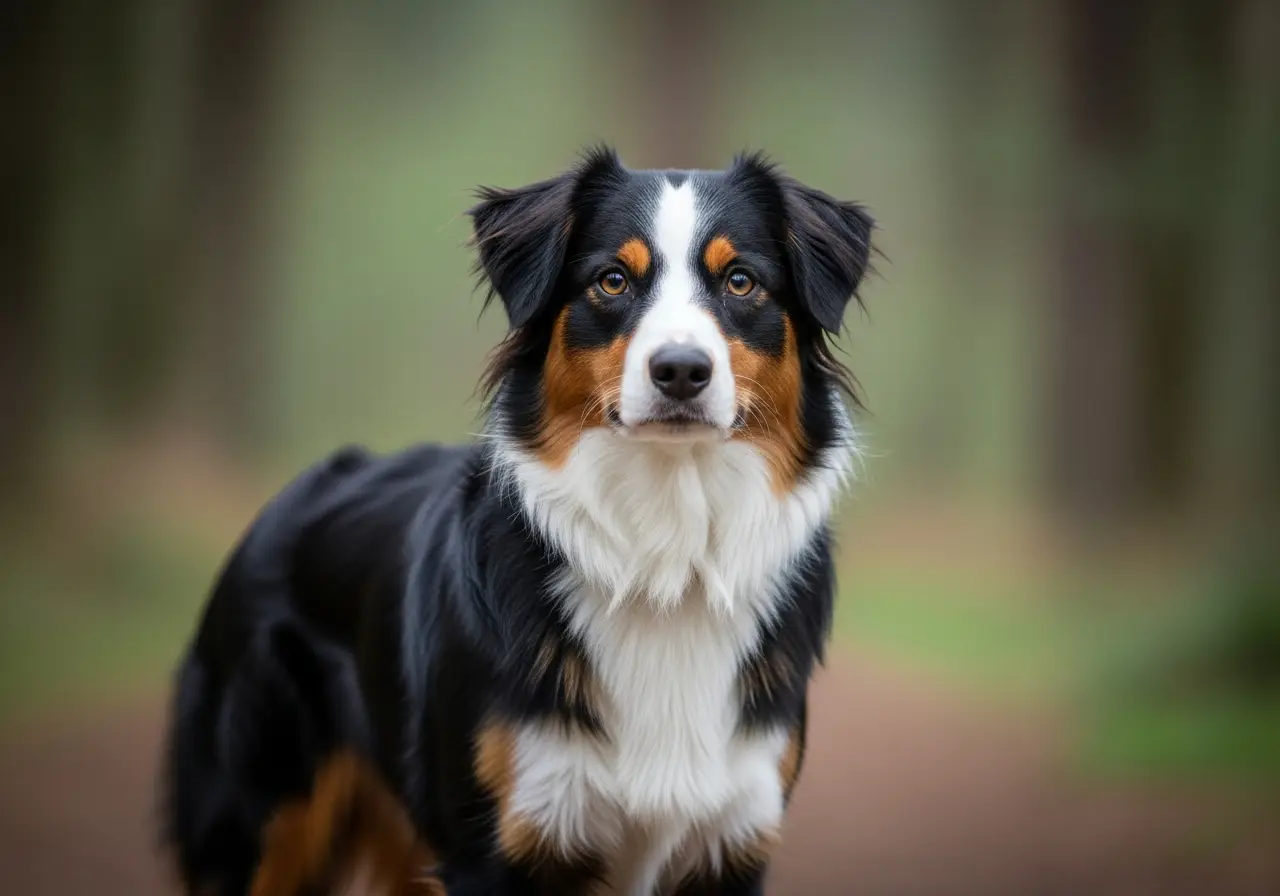
The Miniature American Shepherd is a full herding dog in a compact format, not the calm mini version of the Aussie as it is often sold. It requires two hours of exercise plus mental work daily, a consistent primary caregiver and a plan for its work motivation. It meets strangers with reserve and its own family with devotion. Anyone who brings dog sports, clear structure and enthusiasm for training will gain a reliable partner. Anyone who confuses the compact size with low demands will fail.
02Introduction
What makes the Miniature American Shepherd special
The Miniature American Shepherd (Mini Aussie) is a non-FCI-recognised miniature form of the Australian Shepherd, withers height 33–46 cm.
03Profile
Key facts and suitability
- Origin
- USA
- Original purpose
- Herding work and companion dog (Mini-Aussie)
- FCI
- No. 367 · Group 1 · Sektion 1: Schäferhunde
- height at the withers
- 33–46 cm
- Weight
- 11–18 kg
- Life expectancy
- 12–15 Years
- Coat type
- Long-haired
- Minimum exercise
- 90 min/day
- Puppy price
- 1'200–2'500 CHF
- Waiting period
- 6 months
- Sports
- Agility · Obedience · Herding work · Frisbee
04Temperament
How the Miniature American Shepherd shows up in everyday life
The Miniature American Shepherd combines two traits that the owner must clearly distinguish. On the internal axis, regarding what the dog needs, there is a high need for social contact with its own humans, lots of mental work, and daily exercise. On the external axis, regarding how the dog reacts, it often shows itself reserved to distant towards strangers. An intense bond with the family does not mean being open to everyone here.
When coming home, this means concretely: a short, intensive greeting, then the dog looks for tasks. If nothing is available, it begins to occupy itself, often by observing movement. Passing bicycles, running children, or a fluttering curtain trigger the herding instinct. Anyone who ignores these stimuli will get a nervous dog that constantly checks over time.
On the walk, it works along. It actively asks for eye contact, checks direction changes, and reacts to subtle signals. In encounters with strange dogs, it is tolerant with good socialisation; with strange people, it is often only accessible after several minutes.
At home, it switches off if it has learned that not every movement is a task. This calmness is a matter of training, not a natural state. With visitors, it will alert, then observe. It accepts children in its own household with clear structure; however, herding running children remains a lifelong theme.
05Needs
What this breed needs daily
The daily need for exercise is at least 90 to 120 minutes of active movement. Pure walks at a walking pace do not cover this need. The dog requires changes between running speed, directional work, and tempo stops, typical herding dog requirements that can be well mapped through structured training at a distance or fetch sequences.
Mental stimulation is equivalent to physical exercise. About 20 to 30 minutes of targeted mental work per day are realistic: nose work, trick dog, target training, impulse control. Anyone who relies solely on jogging or cycling breeds an athletically over-excited dog without a switch-off mode.
Agility, obedience, treibball, disc dog, dog frisbee and dog dance are suitable sports. Herding work on the trial grounds remains the most breed-typical form of stimulation, but is difficult to access in the DACH region. Important: sporting activity does not replace rest phases. A Mini Aussie that runs at maximum intensity for two hours daily but has not learned to switch off will tip into chronic stress.
Being left alone works for up to approximately four hours, provided it was built up gradually. Eight-hour days in home office are feasible; eight-hour days at the office without care are not. Socialisation during the first twelve months determines how the dog later reacts to strangers, other dogs, noises and urban stimuli. Rearing in a stimulus-poor environment leads to insecurity and barking behaviour later on.
Exercise
High
mental work
A lot
Social needs
High
training
Medium
06Sport & Mental and Physical Stimulation
What sports the Miniature American Shepherd is suited for
Realistic in terms of physiology and genetics – not every breed suits every sport.
Structurally and physiologically suitable: Suitable for herding work, treibball and coursing · CaniCross / bikejoring possible.
07Quick Check
08Suitability
Who this breed is suitable for – and who it isn't
✓Matches
The Miniature American Shepherd suits active adults or families with children from about eight years old who can invest at least two hours per day in exercise and training. Specifically: an owner who is already familiar with dog sports or wants to get seriously involved, for example in agility, obedience, treibball or herding work on the trial grounds.
The place of residence plays a lesser role than the daily structure. A city apartment with a stimulation plan works better than a garden without a programme. A household with a maximum of four hours of being left alone at a time and a second adult caregiver as backup is sensible. Anyone who has some home office work and brings enthusiasm for training covers the profile well.
On the external axis, the breed suits owners who can live with a reserved dog that does not immediately hug visitors. Anyone who accepts this distance as a personality trait rather than trying to train it away will gain a reliable partner with a clear bond to their own family.
×Doesn't match
The Mini Aussie is not suitable for owners with an eight-hour office day without a care solution, for people without training experience and without the willingness to acquire it, as well as for households looking for a calm companion dog for leisurely walks. The compact size tempts one into the mistaken assumption that the effort is less than with the Australian Shepherd; it is not.
Anyone who constantly has visitors and wants a dog that greets every guest openly misunderstands the external axis of this breed. Reserve towards strangers is part of the herding dog profile, not a training error. Families with small, fast-running children under six years old also often reach limits because herding running movements is genetically anchored.
Owners who choose a dog as a status symbol or because of its appearance are also unsuitable, as are senior households without an active lifestyle and first-time owners without an experienced dog training school behind them.
10Line reality
Show line, working line, breeder market
Within the breed, three line trends exist that differ significantly in everyday life. First, the North American working and stockdog lines: here selection is based on herding instinct, drive strength, and trial suitability. These dogs have the highest need for stimulation and suit almost exclusively owners with a genuine herding dog background or ambitious dog sports.
Secondly, the show lines, shown in the AKC standard and at European exhibitions. Here the focus is on exterior, movement, and standard conformity. The drive is usually more moderate, but the need for exercise remains high. This line suits sport-oriented owners who do not necessarily seek herding work.
Thirdly, and critically to be viewed, the backyard breeder and toy lines. Here selection is based on extreme miniaturisation, unusual coat colours (merle-on-merle pairings), or trend aesthetics, often without health tests. Toy or Teacup Aussies under 30 cm are not an official FCI variety, but marketing terms. The result is patellar luxation, skeletal problems, and eye and ear defects in double merles.
In the DACH region, show lines and sport-oriented breeding programmes dominate. Anyone buying a puppy should explicitly ask about the line of the litter; parents from herding trials, agility sports, or pure family breeding result in three different dogs with the same breed standard.
11Health · Reality
What you need to plan for medically with your Miniature American Shepherd
The life expectancy is 12 to 15 years, with individual ranges of 11 to 17 years. Three complexes are relevant for the breed.
Firstly, the MDR1 gene defect: Approximately 20 to 30 percent of the Australian Shepherd population, and thus also of Mini Aussies, carry the defect according to data from Vetmeduni Vienna (2014). Affected dogs react life-threateningly to active ingredients such as ivermectin, loperamide or certain chemotherapeutics. A genetic test of the parent animals is standard with a reputable breeder.
Secondly, eye diseases: Collie Eye Anomaly (CEA), Progressive Retinal Atrophy (PRA), cataracts and iris colobomas occur frequently in the breed. An annual ophthalmological examination of breeding animals by a DOK vet is mandatory preventive care. Double merle puppies from merle x merle pairings are born with severe eye and ear defects in 25 percent of cases statistically, a pairing prohibited by the VDH and FCI but occurring in the backyard breeder market.
Thirdly, hip dysplasia (HD) and elbow dysplasia (ED): The HD rate is around 6 to 8 percent of examined animals according to OFA data. X-ray findings of the parents from the 12th month of life at the earliest are standard.
Overweight is the underestimated risk in everyday life. The Mini Aussie often looks fuller due to its dense coat, but it is a light, athletic dog. Owners often overfeed because they misjudge the size. Check the Body Condition Score (BCS) regularly; the ribs should be easily palpable.
12Structured data
Health by the numbers
Prone to diseases
MDR1 mutation, Collie Eye Anomaly, hip dysplasia, epilepsy
Recommended health tests
DNA test for MDR1 and CEA, hip X-rays, eye examination
13Myths ↔ Reality
What is often said incorrectly about this breed
Five myths, five realities, five sources.
The Mini Aussie is a small family dog variant of the Australian Shepherd, without its working demands.
Genetically and in terms of behaviour, the Mini Aussie is a fully-fledged herding dog. Its need for exercise and mental work is close to that of the large Aussie; only the format is smaller. Anyone looking for a calm companion will find a working dog in pocket size here.
Mini Aussies are well suited to apartment living because they are small.
Body size says nothing about the need for stimulation. With 90 to 120 minutes of active exercise plus mental work per day, this breed only fits into apartments whose owners can realistically meet the effort. Under-stimulation regularly leads to herding joggers, cyclists, or children.
Toy Aussies or Teacup Mini Aussies under 30 cm are an official variant.
The FCI only recognises the Miniature American Shepherd with a height at the withers of 33 to 46 cm. Dogs below this limit usually come from backyard breeder programmes that select for extreme miniaturisation. This leads to an accumulation of skeletal problems, patellar luxation, and risks of hydrocephalus.
The MDR1 defect is only an issue with the Australian Shepherd, not with the Mini.
The MDR1 gene defect occurs in the Miniature American Shepherd with similar frequency as in the Australian Shepherd, since both breeds share the same gene pool. Affected dogs react life-threateningly to certain active ingredients such as ivermectin. A genetic test at the breeder is standard, not a bonus.
Mini Aussies are uncomplicated beginner dogs due to their eagerness to learn.
The quick comprehension is at the same time the problem for inexperienced owners. The dog learns unwanted behaviour just as quickly as desired behaviour and reacts sensitively to inconsistent handling. Without structured training, herding behaviour towards family members and stress reactions arise.
14animal welfare
The animal welfare perspective
Breeder market, designer versions, animal shelter reality — what no one writes in the puppy ad.
The Miniature American Shepherd has been very much in vogue in the DACH region since around 2015, with the typical consequences for a fashion breed. Backyard breeders and hobby breeders without club affiliation produce litters without MDR1 testing, without eye examinations, and without HD results. The puppies often cost almost as much as those from club breeders but come with considerable health risks. Buyers rarely recognise the difference before purchase, but only at the first vet visit or at the latest when the first eye or skeletal problem occurs.
A particularly critical development is the so-called Toy or Teacup Aussies under 30 cm in height at the withers. These do not exist in the FCI standard but are deliberately marketed. The extreme reduction in size is accompanied by patellar luxation, risks of hydrocephalus and skeletal instability. Designer versions such as the Aussiedoodle (Mini Aussie x Poodle) also belong to this market, usually without genetic tests for both parents and without litter assessment.
Due to living conditions, Mini Aussies are increasingly ending up in animal shelters and with breed-specific emergency rehoming services. The most common reason for surrender is being overwhelmed: owners have oriented themselves on the compact size and underestimated the need for work. Typical are dogs aged between 8 and 18 months that develop undesirable herding behaviour during puberty because mental stimulation is lacking. Secondary stress symptoms, barking behaviour and aggression towards joggers or cyclists arise.
Rehoming via reputable animal welfare associations or breed-specific emergency platforms is a fully-fledged alternative to buying a puppy. Adult dogs from foster homes often come with a clear behaviour report and can be assessed realistically, unlike a puppy whose genetic predispositions only become apparent after 12 to 18 months. Anyone looking for a Mini Aussie should check both routes in parallel: club breeders with health tests and rehoming. Both routes are equally valid; the decision depends on your own profile, not on the source.
15Costs · Transparency
What this breed realistically costs
Getting a dog from a reputable club breeder (VDH, SKG, ÖKV) costs around 1800 to 2800 Euro/CHF in the DACH region. Included are MDR1 genetic test, eye examination, HD/ED evaluation of the parent animals, litter inspection, vaccinations, microchip and papers. Backyard breeder puppies often cost 1200 to 2000 Euro/CHF, seemingly cheaper, without health tests and with significantly higher follow-up risk.
Realistic annual living costs: food (dry or BARF mixed variant) 600 to 900 Euro/CHF, dog training school and sports training 400 to 800 Euro/CHF in the first year, then 200 to 400 Euro/CHF. Care (brushing yourself, occasional professional trim) 100 to 200 Euro/CHF. Vet routine (vaccination, parasite prophylaxis, check-up) 200 to 400 Euro/CHF. Dog tax depending on municipality 80 to 200 Euro/CHF.
Surgery insurance costs around 25 to 50 Euro/CHF per month, comprehensive insurance 60 to 110 Euro/CHF. For breed-typical risks (eye surgery, patellar luxation, cruciate ligament), individual procedures can reach 2000 to 5000 Euro/CHF. Realistic total annual costs: 1500 to 2500 Euro/CHF.
16Puppy search
What you need to consider when choosing a breeder
- A reputable breeder shows MDR1 genetic test results, HD and ED evaluations and an ophthalmological eye examination (CEA, PRA, cataract) of the parent animals before the puppy purchase, without being asked.
- Puppies are given away no earlier than at eight to ten weeks of age, are microchipped, vaccinated and dewormed.
- The litter grows up in a home environment, not in a separate facility, and has contact with everyday stimuli in the first weeks.
- Warning signs: several litters at the same time, handover on car parks, puppies under eight weeks, toy or teacup promises, missing health papers, no contract, no right of return.
- Statements such as all puppies are reserved or only one left often signal high-pressure sales.
- Placement via animal welfare organisations is an equally valid route.
- Mini Aussies and mixes increasingly end up in rescue stations when owners have underestimated the effort.
- Young dogs with a clear behaviour report from the foster home are often a more realistic option than a puppy from the backyard breeder market.
- Your own club breeder in the SKG, ÖKV or VDH is the most transparent source when buying puppies.
FAQ
Frequently asked questions about the Miniature American Shepherd
Is Miniature American Shepherd suitable for beginners?
Miniature American Shepherd is considered suitable for first-time dog owners.
Is Miniature American Shepherd a family dog?
Miniature American Shepherd is considered suitable for families with good socialisation and species-appropriate care.
How much exercise does Miniature American Shepherd need?
At least around 90 minutes of exercise per day. As an active breed, more so — plus mental stimulation.
Does Miniature American Shepherd suit an apartment?
With enough exercise and enrichment, Miniature American Shepherd can also be kept in an apartment.
What is the size and weight of Miniature American Shepherd?
Fully grown, Miniature American Shepherd reaches about 33–46 cm at the withers and weighs around 11–18 kg.
What is the life expectancy of Miniature American Shepherd?
The life expectancy of Miniature American Shepherd is approximately 12–15 years.
Which diseases are common in Miniature American Shepherd?
MDR1 mutation, Collie Eye Anomaly, hip dysplasia, epilepsy
17Breed clubs
Official breed clubs in DACH
19Related
Similar breeds – and their differences
You might also be interested in
Participate
Do you have a good photo of your Miniature American Shepherd?
We are looking for expressive images for our breed profiles. Submit yours; the editorial team reviews every submission before publication.
Does this breed suit you?
Miniaturised Aussie Shepherd. Energetic despite small stature. Demand MDR1 test before purchase.