4 sourcesUpdated September 11, 2026Responsible editor: Roger KleinText: Redaktion rundum.dog
01Summary
In a paragraph
If you only have 30 seconds.
The Eurasier is a medium-sized spitz with a calm temperament, dense coat and strong bond with its family. It was specifically bred as a socially stable companion dog, not as a working or sports dog. Its strength lies in emotional reliability, its requirement in the same reliability from the owner. If you provide structure, closeness and calm leadership, you get an attentive, balanced dog.
02Introduction
What makes the Eurasier special
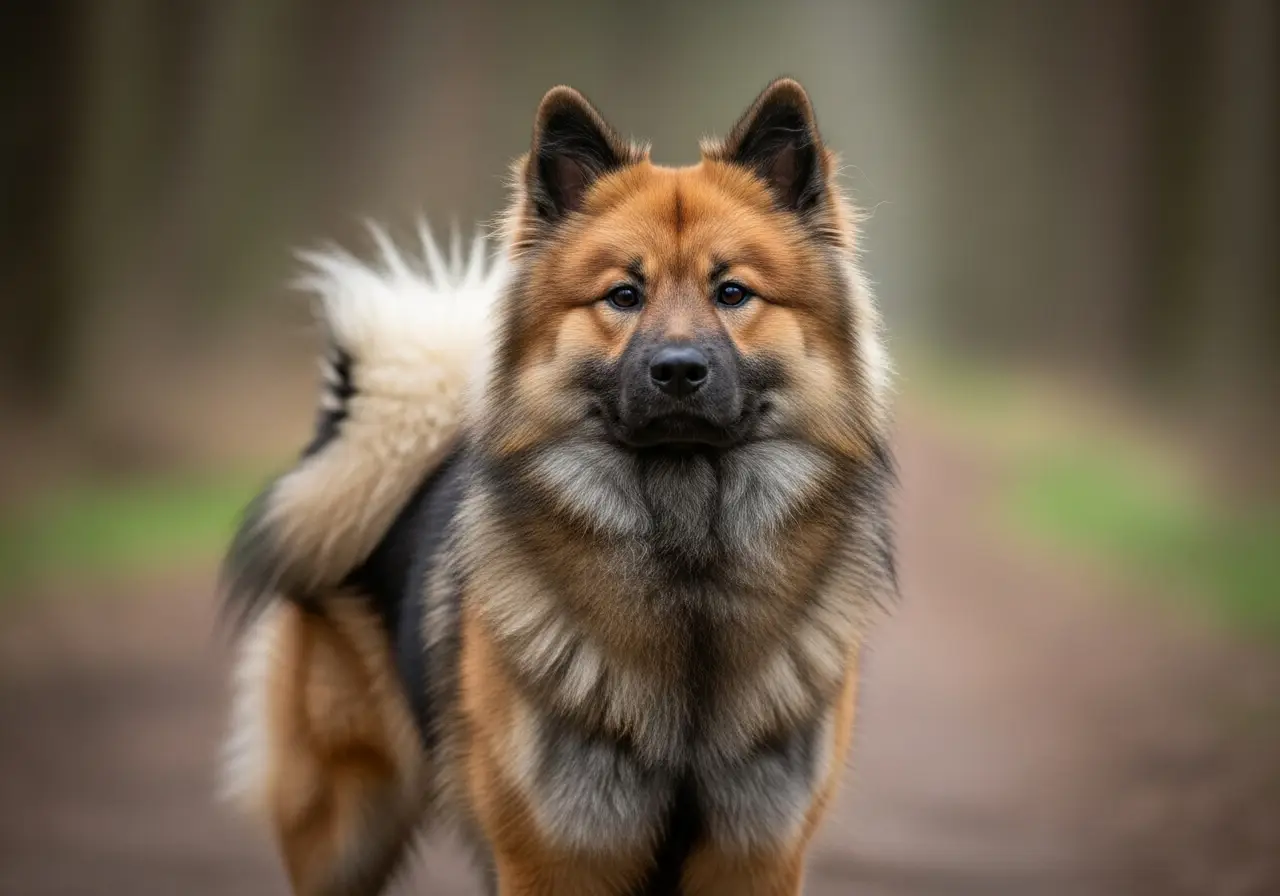
The Eurasier is a German Spitz crossbreed, FCI Group 5, calm and family-oriented, reserved towards strangers, withers height 48–60 cm.
03Profile
Key facts and suitability
- Origin
- Deutschland
- Original purpose
- Companion dog (from German Spitz, Chow Chow, Samoyed)
- FCI
- No. 291 · Group 5 · Section 5
- height at the withers
- 48–60 cm
- Weight
- 18–32 kg
- Life expectancy
- 12–14 Years
- Coat type
- Long-haired
- Minimum exercise
- 60 min/day
- Puppy price
- 1'200–2'200 CHF
- Waiting period
- 9 months
- Sports
- Agility · Obedience · Therapy dog
04Temperament
How the Eurasier shows up in everyday life
When visitors ring the doorbell, an Eurasier typically withdraws initially and observes. It barks briefly to announce their presence but does not push forward. After a few minutes, it approaches on its own initiative, or not at all. This behaviour is not a sign of fear, but an expression of its breed-typical reserve towards strangers. Anyone who treats this as a problem and pressures the dog to make contact creates stress.
In daily family life, the Eurasier behaves differently: it actively seeks closeness with its key people, follows them through the apartment and positions itself so that it can oversee what is happening. Its need for social contact is high: it requires genuine integration into daily family life, not just physical presence. It tolerates hours-long isolation poorly, even if there was sufficient exercise beforehand.
On a walk, it shows itself attentive and curious without rushing. It registers environmental stimuli precisely but rarely reacts excessively. Its prey drive is moderately pronounced; a recall works reliably with consistent training. Extreme sporting exertion is not to its liking; it prefers even, varied activity.
In training, the Eurasier reacts sensitively to pressure and unfairness. It refuses unclear or inconsistent leadership, not out of stubbornness, but because it relies on reliability. Calm, clear communication and stable daily structures are not optional, but a basic requirement. Anyone who provides this receives an attentive, cooperative dog.
05Needs
What this breed needs daily
The Eurasier requires 60 to 90 minutes of active exercise daily. This is not about sporting peak performance, but rather even, varied activity: walks in changing environments, occasional sniffing and exploring, calm accompaniment on everyday routes. Monotonous laps on the same route are not sufficient in the long term.
The Eurasier requires mental and physical stimulation to a moderate extent. Its need for mental work is in the middle range: nose work, simple search games or structured training of everyday behaviour are sufficient. High-intensity sports such as agility at competition level do not correspond to its profile; it appreciates tasks that require concentration without overexciting it.
The most important need of the Eurasier is social in nature: it requires close, daily contact with its family. This need cannot be compensated for by exercise. An Eurasier that receives sufficient exercise but spends most of the day alone develops stress symptoms. The maximum time alone is around four hours, and even this presupposes a gentle, early-started build-up.
Grooming requires regular effort: the dense double coat of the Eurasier needs thorough brushing several times a week, daily during the moulting phase. Anyone who does not plan time for this significantly underestimates the care requirements of this breed.
The Eurasier requires presence, structure and reliability: not high-performance sport, but also no passive keeping.
Exercise
Medium
mental work
Medium
Social needs
High
training
Medium
06Quick Check
07Suitability
Who this breed suits and who it doesn't
✓Matches
The Eurasier suits people or families who spend a large part of the day at home or can regularly integrate the dog into daily life. Specifically: owners with some home office work, self-employed people, retirees or families where at least one person is predominantly at home. A structured, calm daily routine with reliable routines suits the Eurasier.
Families with children from about eight years old are suitable if the children are instructed in dealing with dogs and the dog has opportunities to withdraw. The Eurasier does not tolerate uncontrolled bustle. It requires quiet zones that are respected.
Owners who already have experience with sensitive or independent dogs find a cooperative partner in the Eurasier. First-time owners are not fundamentally excluded, but must be prepared to engage intensively with dog behaviour, training basics and the specific communication needs of this breed. Accompanying dog training school from the puppy phase is not optional here, but a sensible investment.
If you value a dog that closely accompanies the family without being intrusive and reacts calmly rather than exuberantly towards strangers, choosing an Eurasier is a sound decision, provided that the requirements for closeness and structure are taken seriously.
×Doesn't match
The Eurasier does not suit people who are regularly away from home for eight hours or longer and do not have a reliable dog care plan. Its high need for social contact is incompatible with permanent isolation, even if exercise and feeding are ensured.
If you are looking for an open, sociable dog that runs joyfully towards visitors and quickly gets used to new people, you will be disappointed by the Eurasier. Its reserve towards strangers is typical of the breed and not a training issue. If you judge this behaviour as a fault and try to correct it through pressure, you create stress and loss of trust.
Very active owners looking for a sports dog for endurance disciplines will not find the right partner in the Eurasier. It is happy to accompany, but it is not a high-performance dog.
Households with very small children under five years of age, where no quiet retreat space for the dog can be guaranteed, represent an overwhelming situation. The Eurasier needs rest zones that are consistently respected.
If you confuse consistency with harshness or rely on emotional inconsistency (sometimes strict, sometimes lenient), you will find that the Eurasier reacts to such leadership with withdrawal and refusal. Pressure-oriented training methods are incompatible with this character profile.
08Related
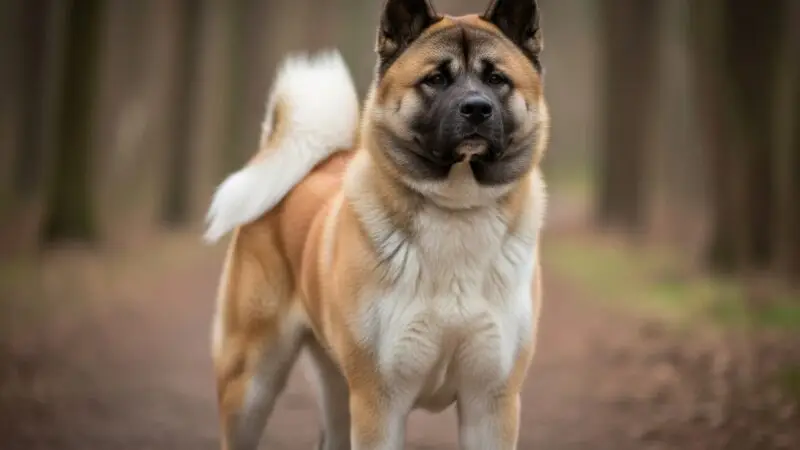
Similar breeds and how they differ


09Line reality
Show line, working line, breeder market
The Eurasier does not have a classic split into working and show lines, as is common with breeds that have a utility dog background. The breed was bred from the outset as a companion dog, without working tests and without field-suitable selection criteria. The FCI classification without a working test reflects this.
Within the breed, there are nevertheless breeding differences that mainly manifest in coat structure, body build and nuances of temperament. Some lines emphasise a somewhat more compact, sturdy build, others a slimmer, more elegant appearance. These differences arise from the focus of individual breeding associations and breeders, not from a systematic separation of lines.
Regional differences between German, Austrian and Swiss breeding are present but moderate. The breeding associations in the DACH region, Eurasier-Klub e.V. Weinheim, Eurasier Club Austria and Schweizer Eurasier Club, work according to comparable breeding goals and align themselves with the FCI standard.
Anyone looking for an Eurasier should pay less attention to line labels and more to the concrete health certificates of the parent animals and the breeder's socialisation concept. Since no working line exists, the question that matters with other breeds (whether a show or working dog is better suited to your own daily life) does not arise.
10Health · Reality
What you need to plan for medically with your Eurasier
The life expectancy of the Eurasier is 12 to 14 years, a solid value for a medium-sized dog of this weight class.
Breed-typically relevant health problems include hip dysplasia (HD) and elbow dysplasia (ED). The Eurasier-Klub e.V. recommends an HD/ED X-ray examination for breeding animals before approval for breeding. According to stud book evaluations by the Eurasier-Klub e.V., HD findings are detected in a significant proportion of examined animals; exact current quotas can be obtained directly from the breeding association (eurasier-klub.de).
Thyroid diseases (hypothyroidism) occur more frequently in the Eurasier than in the breed average. A thyroid examination of parent animals before mating is considered standard in reputable breeding. Symptoms such as lack of drive, weight gain and coat changes should be clarified by a vet.
Patellar luxation occurs, but is less dominant in the Eurasier than in smaller breeds. Eye examinations (for hereditary eye diseases) are recommended by some breeding associations.
Overweight represents a real risk: The Eurasier tends to gain weight with too high calorie intake and too little exercise, which additionally strains joints and the thyroid. Regular weight checks at the vet, at least once a year, are advisable.
Preventive examinations: HD/ED screening of parent animals, ask for thyroid values before purchase, annual veterinary check-up including weight and teeth.
11Structured data
Health by the numbers
Prone to diseases
hip dysplasia, hypothyroidism, exocrine pancreatic insufficiency
Recommended health tests
hip X-ray, thyroid screening
12Myths ↔ Reality
What is often said incorrectly about this breed
Five myths, five realities, five sources.
"The Eurasier is an uncomplicated family dog that adapts by itself.
The Eurasier requires constant, close domestic contact with its family as well as consistent, understanding training, and the FCI standard states this explicitly. Without clear structure and emotional stability in the household, it shows insecurities that can manifest as withdrawal or refusal. A passive approach is insufficient.
"Because the Eurasier is calm, it hardly needs exercise.
The calm basic disposition of the Eurasier describes its temperament, not its exercise needs. An adult Eurasier requires at least 60 to 90 minutes of active exercise plus mental enrichment daily. Persistent lack of exercise leads to restlessness, overweight and behavioural problems.
"The Eurasier is friendly and open towards all people.
The FCI standard explicitly describes the Eurasier as 'calm and unobtrusive' towards strangers, not as sociable or affectionate. Low friendliness towards strangers is typical for the breed and not a training error. Anyone expecting openness towards visitors misunderstands the character profile of this breed.
"The Eurasier gets along easily with all dogs.
With good and early socialisation, the Eurasier shows solid dog social competence. However, this is not automatically present. Without consistent socialisation during the puppy phase, it can react reservedly or selectively towards unknown dogs. Regular contact with other dogs from the puppy phase onwards is necessary.
"The Eurasier is suitable for kennel keeping, as long as it gets exercise.
The Eurasier relies on close family contact; this is a central breeding goal of the breed. Kennel housing or permanent spatial separation from the family fundamentally contradicts this need and leads to significant stress. The FCI standard emphasises constant domestic contact as a prerequisite for the development of breed-typical characteristics.
13animal welfare
The animal welfare perspective
Breeder market, designer versions, animal shelter reality: what no one writes in the puppy ad.
The Eurasier is not a trend breed, and this protects it to a certain extent from the worst backyard breeder pressure. Nevertheless, a grey market exists: Eurasier puppies regularly appear on classifieds platforms, offered without stud book entry, without health certificates of the parent animals and at suspiciously low prices. If you buy there, you finance structures that actively undermine the breeding goal of the breed: stable nerves, health, family bond.
A specific problem with the Eurasier lies in the underestimation of its emotional needs. The calm, unobtrusive appearance tempts one to assess it as a low-maintenance dog. In practice, this leads to surrenders: Owners who have not planned for the high need for social contact and sensitivity to isolation give up the dog after months or years. For the Eurasier, such a surrender is particularly burdensome: its close family bond makes settling into a new home time-consuming and emotionally demanding.
Designer versions of the Eurasier, such as crosses with other Spitz breeds marketed under similar names, exist on the fringes of the market. They offer no breeding reliability and no health guarantees.
Adoption through breed protection organisations or animal welfare associations is an equally valid option for the Eurasier. Eurasiers available for adoption are rare, but they do exist: usually dogs whose previous owners underestimated the emotional demands. Such a dog needs time, patience and an experienced environment, but can form a stable bond with the right owner. Anyone interested in adopting a dog can find contacts through the breed associations in the DACH region.
14Costs · Transparency
What this breed realistically costs
The acquisition costs for an Eurasier puppy from reputable breeding typically range between 1,500 and 2,200 EUR or CHF in the DACH region. Offers significantly below this range often come from non-association-affiliated breeding without health records, and the risk of subsequent vet costs increases accordingly.
Annual maintenance costs consist of: food (high-quality dry food or fresh meat) approx. 600–1,000 EUR/year depending on product choice and the dog's weight; grooming (brushing, occasional trim salon visits) approx. 100–300 EUR/year; basic equipment (leash, collar, transport box, sleeping area) one-off approx. 200–400 EUR.
Average vet costs: Annual routine check-up including vaccination boosters approx. 100–200 EUR. For breed-typical diseases such as hypothyroidism, ongoing medication costs amount to approx. 200–500 EUR/year. HD treatment can cost several thousand euros depending on severity.
Dog liability insurance is mandatory in Switzerland and some German federal states; annual premiums range between 50 and 150 EUR/CHF depending on provider and coverage. Pet health insurance for the dog is optional, but a worthwhile safeguard for a breed with known thyroid and HD risks (approx. 400–900 EUR/year depending on tariff).
15Puppy search
What you need to consider when choosing a breeder
- A reputable Eurasier breeder is a member of a recognised breeding association.
- In the German-speaking area, these are the Eurasier-Klub e.V.
- Weinheim, the Eurasier Club Austria or the Swiss Eurasier Club.
- These associations maintain stud books, mandate health examinations of parent animals and support breeders with dog shows and advice.
- Specific criteria for reputable breeders: The parent animals have hip/elbow dysplasia (HD/ED) X-ray reports and thyroid examinations.
- The breeder allows several visits to the litter, shows the mother in a home environment and asks questions about your own living situation.
- Puppies leave the litter no earlier than eight weeks of age, are vaccinated, dewormed and documented with a pedigree.
- Warning signs: No stud book entry, no health certificates, sale via intermediaries, puppies without mother on site, suspiciously low prices.
- Placement through animal welfare organisations or breed associations represents an equally valid alternative.
- Eurasiers available for placement are rare.
- Those who bring time and patience will occasionally find hints about dogs available for placement via the breed associations.
- No named breeder recommendations by rundum.dog: the breed associations maintain current breeder lists.
FAQ
Frequently asked questions about the Eurasier
Is Eurasier suitable for beginners?
Eurasier is considered suitable for first-time dog owners.
Is Eurasier a family dog?
Eurasier is considered suitable for families with good socialisation and species-appropriate care.
How much exercise does Eurasier need?
At least around 60 minutes of exercise per day.
What is the size and weight of Eurasier?
Fully grown, Eurasier reaches about 48–60 cm at the withers and weighs around 18–32 kg.
What is the life expectancy of Eurasier?
The life expectancy of Eurasier is approximately 12–14 years.
Which diseases are common in Eurasier?
hip dysplasia, hypothyroidism, exocrine pancreatic insufficiency
Participate
Do you have a good photo of your Eurasier?
We are looking for expressive images for our breed profiles. Submit yours; the editorial team reviews every submission before publication.
Does this breed suit you?
Family-oriented, calm companion dog. Reserved towards strangers, but not aggressive. Well-suited for quiet households.