
01Summary
In a paragraph
If you only have 30 seconds.
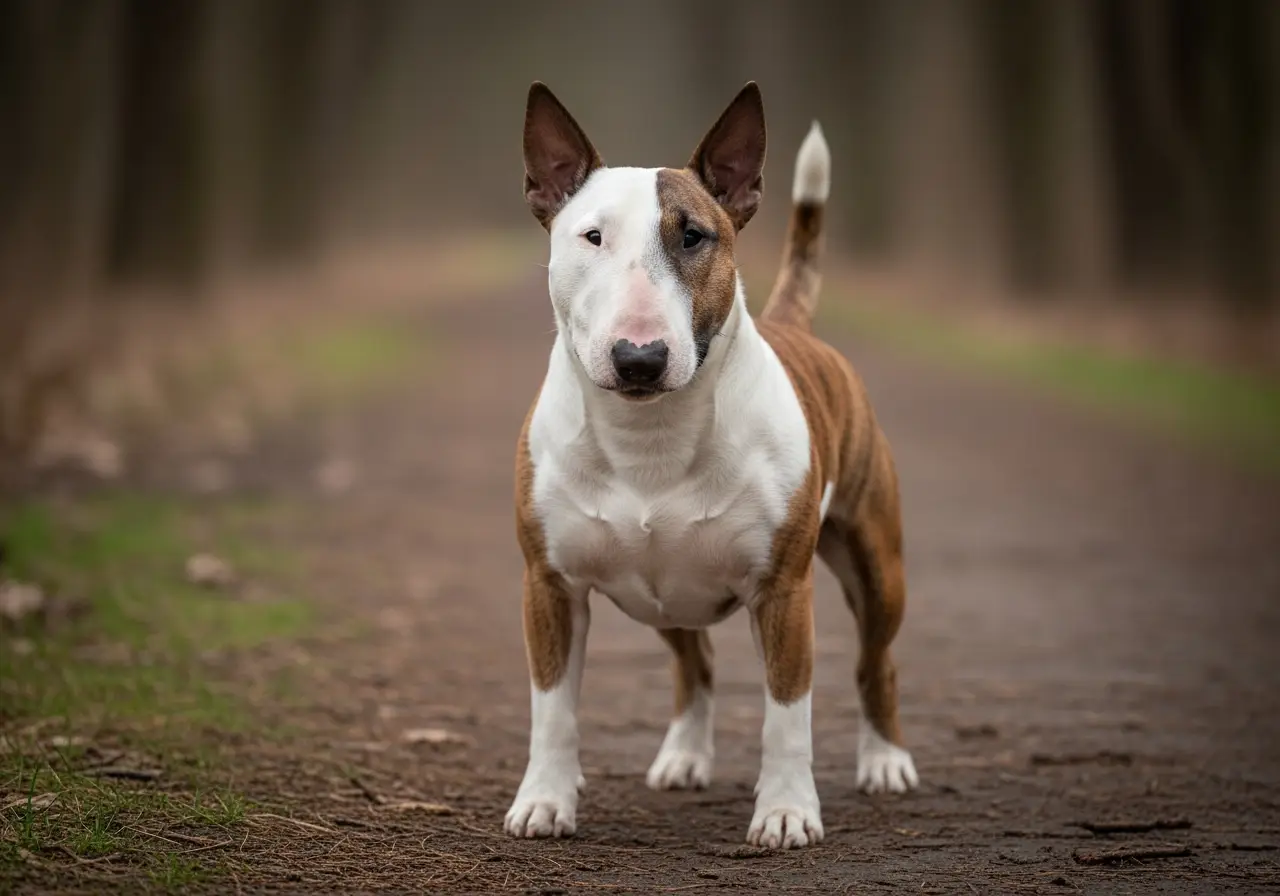
The Bull Terrier is a British terrier breed with an unmistakable egg-shaped head, pronounced independence and high assertiveness. It needs at least 90 minutes of active exercise daily, consistent leadership and clear everyday structure. Breed-typical health risks, including deafness in white lines and kidney disease, require targeted pre-examinations. In several German federal states it is classified as a restricted breed.
02Introduction
What makes the Bull Terrier special
The Bull Terrier is a British terrier, FCI Group 3, unmistakable due to its egg-shaped head, playful and stubborn, withers height 53–56 cm.
03Profile
Key facts and suitability
- Origin
- Grossbritannien
- Original purpose
- Dog fighting (historical), companion dog
- FCI
- No. 11 · Group 3 · Sektion 3: Bullterrier-artige Terrier
- height at the withers
- 53–56 cm
- Weight
- 22–32 kg
- Life expectancy
- 11–14 Years
- Coat type
- Short-haired
- Minimum exercise
- 60 min/day
- Puppy price
- 1'500–3'000 CHF
- Waiting period
- 9 months
- Sports
- Agility · Obedience · Weight Pulling
04Temperament
How the Bull Terrier shows up in everyday life
Morning sport shows what makes the Bull Terrier special: it does not simply run alongside you. It tests pace, pulls in directions that interest it, and reacts to every dog on the roadside with alert attention. This is not a mistake; this is its profile.
**Internal axis, what the dog needs:** The Bull Terrier has a high need for social contact with its key persons. It seeks closeness, wants to be included in everyday routines and reacts to isolation with frustration behaviour. At the same time, it demands daily mental stimulation: training sessions, search games or structured tasks. Anyone who believes that a long walk replaces mental work will experience a dog in the evening that finds its own enrichment, rarely to the delight of the household.
**External axis, how the dog reacts:** Towards known people, the Bull Terrier often shows a pronounced, almost clownish affinity. It usually meets strangers neutrally to openly, but without the spontaneous enthusiasm of some retriever breeds. Towards conspecifics, especially males, it can react with conflict sensitivity. This reactivity is genetically anchored and can be managed through socialisation, not eliminated.
**Important distinction:** A high need for social contact with the family does not automatically mean openness towards strangers or compatibility with other dogs. Anyone who confuses these two levels significantly underestimates the management effort in everyday life.
In a household with children, the Bull Terrier needs clear rules and firm key persons. Its physical strength and impulsiveness make it difficult to calculate in unstructured situations with toddlers.
05Needs
What this breed needs daily
The Bull Terrier needs at least 90 minutes of active exercise daily, divided into several sessions, not as a single march. Walks alone are not sufficient. Running sessions, fetching exercises or controlled play in the dog park complement the programme sensibly.
Mental stimulation is equivalent to physical exercise. Training sessions with clear tasks, nose work, impulse control exercises or structured enrichment games are part of it every day. A Bull Terrier that is physically exercised but mentally under-stimulated develops behavioural patterns that burden everyday life: destructiveness, excessive barking or stubbornness in asserting its own interests.
Social inclusion is also high in demand. The Bull Terrier does not tolerate long periods of being alone without a previous, gradually built-up habituation process. Four hours alone are manageable for a well-conditioned dog; more should remain the exception and be covered by dog care.
Training effort: The Bull Terrier consistently tests boundaries. This requires a primary caregiver who acts calmly, clearly and consistently in the long term. Short training sessions of 10–15 minutes with a high frequency of repetition throughout the day yield better results than long sessions. Physical corrections destabilise the relationship and increase reactivity.
Living environment: Keeping the dog in an apartment is possible if exercise and structure are ensured. A garden is no substitute for guided activity, but is valuable as a retreat space. Low-stimulus rest zones in the household help the dog to regulate itself.
Exercise
High
mental work
A lot
Social needs
High
training
Demanding
06Sport & Mental and Physical Stimulation
What sports the Bull Terrier is suited for
Realistic in terms of physiology and genetics – not every breed suits every sport.
Structurally and physiologically suitable: CaniCross / bikejoring possible.
07Quick Check
08Suitability
Who this breed is suitable for – and who it isn't
✓Matches
The Bull Terrier suits owners with proven dog experience who have already handled a dominant or reactive breed. Specifically suitable are people who can plan at least 90 minutes of active exercise plus structured training sessions daily.
A stable daily routine is a prerequisite: the dog needs predictable routines, clear rules and a primary caregiver with calm, consistent body language. Anyone who enjoys dog sports, nose work or constructive obedience training will find a willing partner in the Bull Terrier, provided the leadership is correct.
Families with children from about ten years of age are suitable if all household members are trained in dealing with the dog and implement clear rules consistently. Households without other dogs or with compatible, well-socialised conspecifics are preferable.
Owners who live in federal states without restricted breed regulations or are willing to fulfil the proof of competence and any possible requirements are on the safe side legally. The willingness to check the current restricted breed status with the competent veterinary office is part of the preparation.
×Doesn't match
The Bull Terrier is unsuitable for first-time dog owners without accompanying dog training school attendance and experience with independent breeds. Anyone looking for a dog that regulates itself and requires little leadership effort will be overwhelmed by the independence of the Bull Terrier.
Households where no one is present for more than four hours daily and no dog care can be organised do not provide a suitable basis for keeping the dog. Equally unsuitable are living situations with very small children under six years of age, in which consistent supervision and clear structures cannot be ensured.
Anyone who equates the high need for social contact of the Bull Terrier with friendliness towards strangers or compatibility with any dogs underestimates the management effort. The internal bonding intensity to the family does not automatically translate into relaxed behaviour in public spaces.
Owners who do not have the time or willingness for regular training and mental stimulation, as well as people who rely on physical corrections as a training method, should not choose this breed. Anyone who does not want to research and fulfil the restricted breed regulations in their own federal state is better advised with another breed.
10Line reality
Show line, working line, breeder market
The Bull Terrier does not have a classic working line-show line division, as is known, for example, with retrievers or herding dogs. The FCI standard does not provide for a working test, and an independent field line does not exist.
Nevertheless, two breeding directions can be observed in practice: on the one hand, there are breeders who select strongly for the distinctive appearance, in particular the pronounced downface and body substance. On the other hand, there are breeders who place greater emphasis on temperament, health and trainability.
Dogs from lines that focus strongly on exterior can bring a more pronounced stubbornness and higher stimulus reactivity. Dogs from health- and character-oriented breeding often show better impulse control and trainability, without losing the breed-typical character.
This distinction is relevant for interested parties: a conversation with the breeder about the selection of the parent animals, their temperament tests and health examinations provides more insight than the mere appearance of the puppies. Reputable breeders place value on BAER tests in white lines, kidney screenings and heart examinations, regardless of whether the focus is on show success or suitability for everyday life.
11Health · Reality
What you need to plan for medically with your Bull Terrier
The Bull Terrier reaches a life expectancy of an average of 10 to 13 years. Breed-typical health risks are known and require targeted pre-examinations.
Deafness: White and partially white Bull Terriers carry an increased risk of congenital deafness, which is attributed to the absence of pigment cells in the inner ear. The BAER test (Brainstem Auditory Evoked Response) is mandatory for white dogs in reputable breeding programmes. Studies on the prevalence of deafness in white Bull Terriers show affected rates of up to 20 % (unilateral and bilateral combined; source: Strain, G.M., Louisiana State University, 2012).
Kidney disease: Hereditary nephropathy (hereditary kidney disease) is a known problem in the breed. Reputable breeders carry out kidney screenings and exclude affected animals from breeding. A urine protein-creatinine ratio (UPC) should be regularly monitored in breeding animals.
Heart disease: Mitral valve dysplasia and other heart defects occur in the breed. A cardiological examination of the parent animals before breeding is recommended.
Skin problems: Allergic skin conditions and demodicosis occur. Regular skin checks and a protein-rich, balanced diet support skin health.
Preventive care: Annual vet check-ups, kidney parameters in blood tests from the fifth year of life, and a BAER test for white dogs before purchase are recommended measures. Overweight puts strain on joints and the cardiovascular system; the Bull Terrier tends to gain weight with insufficient exercise.
12Structured data
Health by the numbers
Prone to diseases
Heart problems (mitral valve disease), deafness (especially in whites), kidney problems, skin allergies
Recommended health tests
Heart examination, BAER test (hearing), kidney values
13Myths ↔ Reality
What is often said incorrectly about this breed
Five myths, five realities, five sources.
"The Bull Terrier is naturally aggressive towards people.
The FCI standard explicitly describes the Bull Terrier as balanced, disciplined and particularly affectionate towards people. Aggressive behaviour towards people is considered a serious fault in the standard. Problematic behaviour usually arises from lack of socialisation, inconsistent leadership or incorrect living conditions, not from breed-specific predisposition.
"White Bull Terriers are healthier than coloured ones.
The opposite is more likely to be true: white Bull Terriers carry a statistically increased risk of congenital deafness, which is attributed to the absence of pigment cells in the inner ear. The BAER test (Brainstem Auditory Evoked Response) is mandatory for white and partially white dogs before breeding. Coloured Bull Terriers are less frequently affected by this specific risk.
“The Bull Terrier gets along without problems with other dogs.
In particular, males show increased conflict sensitivity towards conspecifics, which is rooted in terrier and bulldog genetics. Dog socialisation must be established early, consistently and permanently. A safe coexistence with other dogs is possible, but requires targeted management and should not be taken for granted.
“As a restricted breed, the Bull Terrier is banned throughout Germany.
There is no nationwide ban. Breed list regulations are a matter for the individual states and differ considerably: in some federal states, the Bull Terrier is classified as a dog with a particular presumption of danger and is subject to requirements such as leash requirement, muzzle requirement or proof of expertise. In other federal states, there are no special restrictions. The current status should always be enquired about from the responsible veterinary office.
“The Bull Terrier requires hardly any mental stimulation; exercise is sufficient.
The Bull Terrier has a high need for mental work. Pure physical exercise without mental enrichment often leads to frustration behaviour, destructiveness or excessive barking. Structured training, nose work or impulse control exercises are an integral part of species-appropriate keeping, not an optional addition.
14animal welfare
The animal welfare perspective
Breeder market, designer versions, animal shelter reality — what no one writes in the puppy ad.
Backyard breeder market and demand dynamics
The Bull Terrier experiences sustained demand in certain circles, partly due to its distinctive appearance and partly due to an image that has little to do with the actual effort involved in keeping it. This demand attracts unscrupulous backyard breeders who do not carry out BAER tests or kidney screenings and hand over puppies without socialisation or health documentation. The result is dogs entering new households with avoidable illnesses or behavioural problems.
Surrenders due to keeping conditions
Bull Terriers belong to the breeds that are surrendered disproportionately often due to owners being overwhelmed. The combination of a high need for social contact, independence, and sensitivity to conflict with conspecifics regularly exceeds the expectations of owners who were guided by the dog's appearance. Animal welfare organisations and breed club rescue centres report dogs that have changed households multiple times; each change makes stabilising the dog more difficult.
Restricted breed status and consequences
In several German federal states, the Bull Terrier is subject to keeping regulations. Owners who do not inform themselves in advance face legal problems or have to surrender the dog. Education before purchase is not a luxury here, but animal welfare.
Adoption as an equally valid option
Adult Bull Terriers from animal welfare organisations or breed club rehoming are a serious alternative to buying a puppy. Their character is already assessable, health problems are known, and experienced rehoming agents accompany the handover. The German Club for Bull Terriers (DCBT) as well as the clubs in Austria and Switzerland have rehoming contacts. A dog from rehoming needs time to settle in; this is not a disadvantage but a calculable factor.
15Costs · Transparency
What this breed realistically costs
Getting a dog: A puppy from reputable breeding with complete health documentation costs between 1,200 and 2,000 EUR in the DACH region. Offers significantly below this often come from backyard breeders without health screenings; follow-up costs through treatment of avoidable illnesses regularly exceed the apparent savings.
Running costs per year: High-quality food for an adult Bull Terrier amounts to 600–1,000 EUR annually, depending on body weight and type of food. Basic care (claws, ears, coat) is 100–200 EUR annually.
Vet: Routine examinations, vaccinations, and parasite prevention cost an average of 300–500 EUR per year. Kidney parameter checks from the fifth year of life as well as BAER tests (one-off approx. 80–150 EUR) are added. For breed-typical illnesses such as kidney failure or heart problems, treatment costs can quickly reach 2,000–5,000 EUR per case of illness.
Insurance: Pet health insurance for a Bull Terrier costs 50–120 EUR monthly depending on the provider and scope of benefits. Given the breed-typical health risks, coverage is recommended. Dog liability insurance is legally mandatory in several federal states for restricted breeds; cost: 60–150 EUR annually.
16Puppy search
What you need to consider when choosing a breeder
- A reputable Bull Terrier breeder demonstrably carries out BAER tests on white or partially white parent animals before breeding, documents kidney screenings (UPC ratio) and can present cardiological examination results.
- Puppies leave the litter no earlier than eight weeks of age, are chipped, vaccinated and dewormed.
- Viewings take place at the breeder’s, never in a car park or without the mother dog.
- A breeder who evades questions about health examinations or cannot prove membership of an association is a warning sign.
- Membership of a recognised breed club (DCBT, BTKS, Austrian Bull Terrier Club) is not a quality feature per se, but increases the probability that breeding conditions are controlled.
- The rehoming of adult Bull Terriers via breed club rescue centres or animal welfare organisations is an equally valid option.
- Adult dogs come with an assessable temperament, and experienced rescuers support with settling in.
- Before purchase, the current restricted breed status in your own federal state must be checked with the competent veterinary office; this can entail keeping requirements, proof of competence or compulsory insurance.
FAQ
Frequently asked questions about the Bull Terrier
Is Bull Terrier a family dog?
Bull Terrier is considered suitable for families with good socialisation and species-appropriate care.
How much exercise does Bull Terrier need?
At least around 60 minutes of exercise per day. As an active breed, more so — plus mental stimulation.
Does Bull Terrier suit an apartment?
With enough exercise and enrichment, Bull Terrier can also be kept in an apartment.
What is the size and weight of Bull Terrier?
Fully grown, Bull Terrier reaches about 53–56 cm at the withers and weighs around 22–32 kg.
What is the life expectancy of Bull Terrier?
The life expectancy of Bull Terrier is approximately 11–14 years.
Which diseases are common in Bull Terrier?
Heart problems (mitral valve disease), deafness (especially in whites), kidney problems, skin allergies
17Breed clubs
Official breed clubs in DACH
19Related
Similar breeds – and their differences
You might also be interested in


Participate
Do you have a good photo of your Bull Terrier?
We are looking for expressive images for our breed profiles. Submit yours; the editorial team reviews every submission before publication.
Does this breed suit you?
Willful and playful. Needs consistent leadership. White Bull Terriers have a higher risk of deafness – demand a BAER test.