
01Summary
In a paragraph
If you only have 30 seconds.
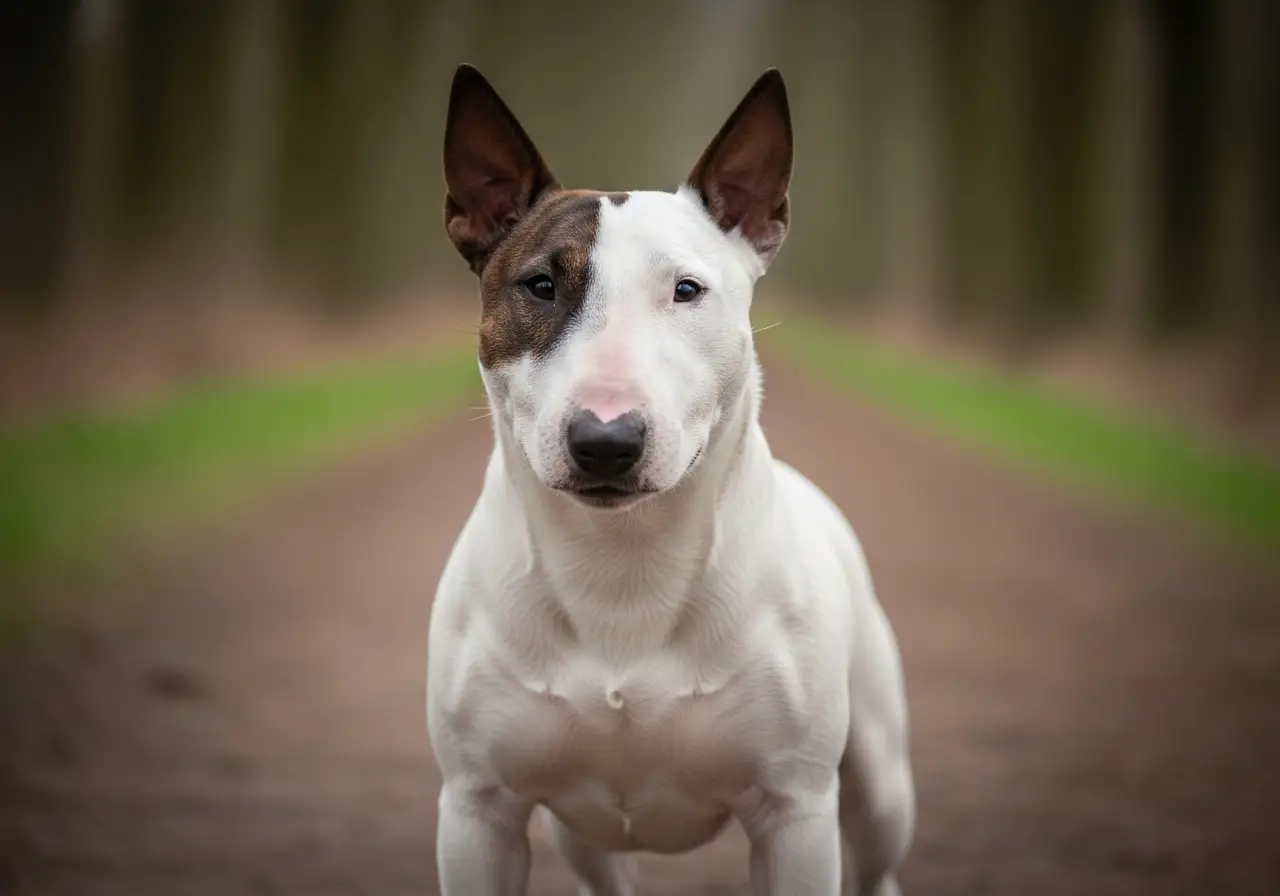
The Miniature Bull Terrier is not a miniature version of a Bull Terrier to be petted; it is a full-fledged terrier with pronounced stubbornness, a high need for social contact and a temperament that demands consistent leadership. Anyone who treats it fairly receives a loyal, lively companion with a life expectancy of 11 to 14 years. Anyone who underestimates it quickly experiences how it sets its own rules.
02Introduction
What makes the Miniature Bull Terrier special
The Miniature Bull Terrier is the miniature variant of the Bull Terrier, FCI Group 3, with a specific risk of kidney disease and a height at the withers of 25–35 cm.
03Profile
Key facts and suitability
- Origin
- Grossbritannien
- Original purpose
- Companion dog (miniaturised Bull Terrier)
- FCI
- No. 359 · Group 3 · Sektion 3: Bullterrier-artige Terrier
- height at the withers
- 25–35 cm
- Weight
- 11–15 kg
- Life expectancy
- 11–14 Years
- Coat type
- Short-haired
- Minimum exercise
- 45 min/day
- Puppy price
- 1'500–3'000 CHF
- Waiting period
- 12 months
- Sports
- Agility · Obedience
04Temperament
How the Miniature Bull Terrier shows up in everyday life
When returning home, the Miniature Bull Terrier greets its primary caregiver with full body engagement; it jumps, spins, and seeks physical contact. This intense bond is no coincidence: the need for social contact of this breed is high; it requires genuine presence and not merely physical proximity.
At the same time, it shows a distinctly more reserved attitude towards strangers. Anyone who confuses the high need for social contact with general openness will experience surprises on the first visit. The dog bonds strongly to its core group; strangers must first earn this trust. These two poles, intense family bonding and restrained reaction to unknown individuals, are typical for the breed and should be understood not as a contradiction but as a profile.
In everyday life, its stubbornness becomes particularly apparent when rules are not consistently upheld. A Miniature Bull Terrier actively tests boundaries, not out of malice, but because it is a thinking dog. Whoever gives in once will repeat this situation. Whoever remains clear and calm obtains a dog that cooperates reliably.
On the walk, it reacts attentively and briskly to stimuli. Loose-leash walking requires consistent training, as the dog naturally pushes forward. Caution is advised at the dog park with unknown conspecifics, particularly in same-sex encounters.
At home, it seeks closeness but tolerates no neglect. Boredom manifests in destructive behaviour or stereotypic patterns such as tail chasing. Structure and enrichment are not options; they are a basic requirement for balanced cohabitation.
05Needs
What this breed needs daily
The Miniature Bull Terrier requires 60 to 90 minutes of active exercise daily in the form of running, playing or structured training. Walks alone are not enough; the dog needs phases where it can really exhaust itself.
Mental stimulation is just as important as physical activity. Nose work, search games, obedience training and trick training keep its mind occupied and reduce the risk of stereotypies. At least 15 to 20 minutes of structured mental work per day are recommended.
The need for social contact is high: the dog requires several hours of genuine contact with its primary caregiver daily. Being left alone is possible, but should be built up gradually and not permanently exceed four hours per day. Anyone who is regularly absent for longer periods needs a reliable care solution.
Training and education require consistency without harshness. Positive reinforcement works well as long as the rules remain clear and uniform. Inconsistency is immediately registered and exploited by this breed. A dog training school with experienced trainers is particularly useful during the puppy phase.
Socialisation with people, dogs and various environmental stimuli should take place early and systematically. The dog also needs clear daily structures: fixed feeding times, predictable routines and clear rules in the household. Spontaneous changes to rules confuse it and encourage testing behaviour.
Exercise
Medium
mental work
Medium
Social needs
High
training
Demanding
07Quick Check
08Suitability
Who this breed is suitable for – and who it isn't
✓Matches
The Miniature Bull Terrier suits owners with dog experience who are familiar with handling independent, self-confident breeds. Anyone who has already handled a terrier or a similarly structured breed brings the necessary foundation.
Suitable are active individuals or couples who can plan 60 to 90 minutes for exercise daily and additionally have time for structured enrichment. A garden is helpful, but no substitute for active stimulation.
Families with children from about eight years of age are suitable if the children are experienced in handling dogs and clear rules apply in the household. The dog needs opportunities to retreat and should not be treated as a toy permanently.
Owners who enjoy training and dog school and are prepared to consistently uphold rules in the long term experience the Miniature Bull Terrier as a willing-to-learn partner. The breed is also suitable for dog sports such as obedience or agility if the build-up is structured.
Anyone who knows and accepts the reserved attitude towards strangers, and who prepares visits accordingly, gets along well with the temperament of this breed.
×Doesn't match
The Miniature Bull Terrier does not suit owners keeping a dog for the first time and who do not wish to use accompanying professional support. Its stubbornness and testing behaviour quickly overwhelm households without a clear leadership structure.
Anyone who is away from home for more than four hours daily and has no reliable care solution should not choose this breed. The high need for social contact is incompatible with permanent isolation.
Households looking for an uncomplicated, stranger-friendly dog for frequent visits or busy environments will be disappointed by the reserved reaction to strangers. Anyone who equates the high need for social contact with general sociability misunderstands the profile of this breed.
Multi-dog households with several dogs of the same sex carry an increased risk of conflict. Anyone without experience in managing dog conflicts should avoid this context.
Owners who rely on physical correction or dominance training will not build a sustainable relationship with this breed. The Miniature Bull Terrier reacts to pressure with counter-pressure; consistent, positive leadership is not a matter of style but a functional necessity.
10Line reality
Show line, working line, breeder market
The Miniature Bull Terrier is not divided into classic working and show lines, as is customary for retriever breeds, for example. The breeding base is comparatively narrow worldwide, which makes line differentiation in the strict sense difficult.
However, differences can be observed within breeding between breeders who select more strongly for show success and those who prioritise health parameters, particularly kidney health and heart function. These differences are more relevant to buyers than formal line designations.
In Great Britain, the country of origin of the breed, one of the oldest breeding organisations exists with the Miniature Bull Terrier Club. Its breeding guidelines and health programmes are considered reference standards. In Switzerland, the Miniature Bull Terrier Club Schweiz (MBTCS) implements comparable standards.
Anyone looking for a Miniature Bull Terrier should ask less about line designations and more about concrete health examinations of the parent animals, particularly for hereditary nephropathy, aortic stenosis and patellar luxation. These questions separate reputable breeding from pure type breeding more reliably than any line assignment.
11Health · Reality
What you need to plan for medically with your Miniature Bull Terrier
The Miniature Bull Terrier has breed-specific health risks that should be known before purchase. According to breeder associations, the life expectancy is 11 to 14 years, a range that depends heavily on breeding quality and living conditions.
Hereditary nephropathy (hereditary kidney disease) is the most serious breed-specific condition. It can occur in early adulthood and leads to kidney failure if left untreated. Reputable breeders test parent dogs for the known defect using DNA tests. Buyers should request proof of this testing.
Aortic stenosis (heart defect) occurs with increased frequency in this breed. A cardiological examination of parent dogs before breeding is standard in responsible breeding. Affected dogs often show clinical symptoms only late on.
Patellar luxation (dislocation of the kneecap) is common in compact breeds. The severity varies; mild cases require no surgery, while severe cases may necessitate surgical intervention. Veterinary assessment should be initiated promptly in case of lameness.
Stereotypical behaviour, particularly tail chasing, occurs in dogs that are insufficiently stimulated and can become self-sustaining. This is not solely a training issue but also involves a genetic predisposition exacerbated by under-stimulation.
Preventive examinations: Annual veterinary check-up, monitoring of kidney values from the third year of life, cardiological screening if there is suspicion of exercise intolerance.
12Structured data
Health by the numbers
Prone to diseases
Heart problems (mitral valve disease), deafness (BAER), kidney problem (polycystic kidney disease)
Recommended health tests
Heart examination, BAER test, kidney values/DNA test PKD
13Myths ↔ Reality
What is often said incorrectly about this breed
Five myths, five realities, five sources.
„The Miniature Bull Terrier is a low-maintenance city dog for beginners because it is so compact.
Body size says nothing about the effort required for training. The Miniature Bull Terrier possesses pronounced independence and actively questions inconsistent rules. Without clear structure and experience in dealing with self-assured dogs, behavioural problems arise quickly. Specialist associations and breeder clubs explicitly do not recommend the breed for first-time owners without accompanying dog training school attendance.
„Miniature Bull Terriers are aggressive because they originate from dog fighting sports.
The FCI standard describes the character as brave, lively and playful, with a balanced temperament and particular affinity for people. Aggressiveness towards people does not correspond to the breed standard. Self-assured behaviour may occur towards conspecifics, which however can be managed through early socialisation and consistent guidance.
„The egg-shaped head is purely aesthetic and has no health relevance.
The characteristic downface skull is associated with an increased risk of kidney disease (hereditary nephropathy) and heart defects (aortic stenosis), which are documented in the breed. Reputable breeders have parent animals tested for these diseases. Buyers should request corresponding health certificates before purchase.
„Because it is small, a short walk around the block daily is sufficient.
The Miniature Bull Terrier requires 60 to 90 minutes of active exercise per day, supplemented by mental stimulation. Under-stimulation manifests as over-excited, destructive or obsessive behaviour, such as tail chasing, which is known as stereotypic behaviour in the breed. Physical exercise alone is not sufficient; structured enrichment is equally necessary.
„Miniature Bull Terriers get along with other dogs without problems because they are so playful.
The breed frequently shows self-assured to dominant behaviour towards same-sex dogs. Early and broad socialisation reduces conflicts, but does not eliminate the risk entirely. In multi-dog households, careful introduction and permanent management are required. General compatibility cannot be assumed.
14animal welfare
The animal welfare perspective
Breeder market, designer versions, animal shelter reality — what no one writes in the puppy ad.
The Miniature Bull Terrier is a breed with a comparatively narrow breeding base. This increases the risk that mass breeding—i.e., breeding without health tests and without selection for temperament—will place a long-term strain on the genetic health of the breed. Anyone buying a puppy via unverified platforms is funding this system, often without realising it.
Designer variants of the Miniature Bull Terrier exist on the market: animals marketed as “Mini-Mini” or “Teacup Bull Terrier” do not correspond to any recognised standard. Extreme miniaturisation is often associated with exacerbated health problems, particularly regarding kidney health and skeletal development. No breed club recognises these designations.
A specific animal welfare issue for this breed is the surrender rate due to owners feeling overwhelmed. Miniature Bull Terriers frequently end up in rehoming because their temperament and stubbornness have been underestimated. Owners who expected a “small, uncomplicated dog” encounter a dog that demands leadership, time, and experience. This discrepancy between expectation and reality is avoidable through honest information prior to purchase.
Rehoming an adult Miniature Bull Terrier via animal welfare organisations or breed-specific rescues is a fully valid alternative to buying a puppy. Adult dogs already show their temperament, health issues are often known, and the dog still requires structured settling-in. For experienced owners who know what they are letting themselves in for, a rehomed dog can be the more conscious choice.
Obesity is an underestimated risk in this breed. The compact build makes it easy not to notice overweight immediately. Overweight places strain on joints, worsens heart health, and measurably shortens life expectancy. Regular weight checks at the vet are recommended.
15Costs · Transparency
What this breed realistically costs
The purchase price for a Miniature Bull Terrier from a reputable breeder with club membership and health certificates typically lies between 1,800 and 2,800 euros in the DACH region. Prices significantly below this without health certificates indicate mass breeding.
Annual living costs consist of food (high-quality dry food or fresh meat diet: approx. 600 to 1,000 CHF/EUR per year), grooming needs (low for short coat: approx. 100 to 200 CHF/EUR), as well as basic equipment, accessories and dog training school in the first year (approx. 500 to 800 CHF/EUR).
Veterinary costs vary considerably: routine examinations, vaccinations and parasite prevention cost approx. 300 to 500 CHF/EUR annually. In addition, possible treatment costs for breed-specific conditions apply; a kidney disease or heart operation can cost several thousand francs or euros.
A dog health insurance is recommended for this breed due to the known health risks. Monthly premiums range between 60 and 120 CHF/EUR depending on provider and coverage. The policy should be taken out before the first vet visit, as pre-existing conditions may otherwise be excluded.
Total costs over the lifespan (12 years, calculated conservatively): 25,000 to 45,000 CHF/EUR, depending on health trajectory, insurance and care effort.
16Puppy search
What you need to consider when choosing a breeder
- Reputable breeders have both parent dogs tested for hereditary nephropathy, aortic stenosis and patellar luxation before breeding and provide corresponding certificates.
- Anyone who does not present these documents or evades questions is not a reliable contact.
- A reputable breeder asks questions about experience, daily life, living situation and expectations.
- Anyone who sells a puppy without asking questions does not select for suitable owners.
- Waiting lists are common with responsible breeders and no disadvantage.
- The Miniature Bull Terrier Club Switzerland (MBTCS) and comparable associations in Germany and Austria maintain breeder lists with members who adhere to breeding guidelines.
- These lists are a sensible starting point.
- Adoption through animal welfare organisations or breed rescues is an equally valid option.
- Miniature Bull Terriers are often given up due to underestimated temperament; a rehomed dog with a known history can be a good choice for experienced owners.
- Purchase prices under 1,500 euros from unknown providers without association membership and without health records are a warning sign.
- Platforms such as classifieds portals without verification offer no protection against puppy farming.
FAQ
Frequently asked questions about the Miniature Bull Terrier
Is Miniature Bull Terrier a family dog?
Miniature Bull Terrier is considered suitable for families with good socialisation and species-appropriate care.
How much exercise does Miniature Bull Terrier need?
At least around 45 minutes of exercise per day.
Does Miniature Bull Terrier suit an apartment?
With enough exercise and enrichment, Miniature Bull Terrier can also be kept in an apartment.
What is the size and weight of Miniature Bull Terrier?
Fully grown, Miniature Bull Terrier reaches about 25–35 cm at the withers and weighs around 11–15 kg.
What is the life expectancy of Miniature Bull Terrier?
The life expectancy of Miniature Bull Terrier is approximately 11–14 years.
Which diseases are common in Miniature Bull Terrier?
Heart problems (mitral valve disease), deafness (BAER), kidney problem (polycystic kidney disease)
17Breed clubs
Official breed clubs in DACH
19Related
Similar breeds – and their differences
You might also be interested in



Participate
Do you have a good photo of your Miniature Bull Terrier?
We are looking for expressive images for our breed profiles. Submit yours; the editorial team reviews every submission before publication.
Does this breed suit you?
Compact Bull Terrier in miniature. Health screening even more important than with the large Bull Terrier.