
01Summary
In a paragraph
If you only have 30 seconds.
The Norwich Terrier is one of the smallest hunting terriers from England and among those with the strongest character. Its compact body is deceptive: behind the friendly face lies a confident working dog with genuine prey drive and pronounced independence. Anyone expecting a low-maintenance lapdog will be surprised. Those who plan for clear guidance, daily mental and physical stimulation, and typical terrier temperament receive a robust, long-lived companion with character.
02Introduction
What makes the Norwich Terrier special
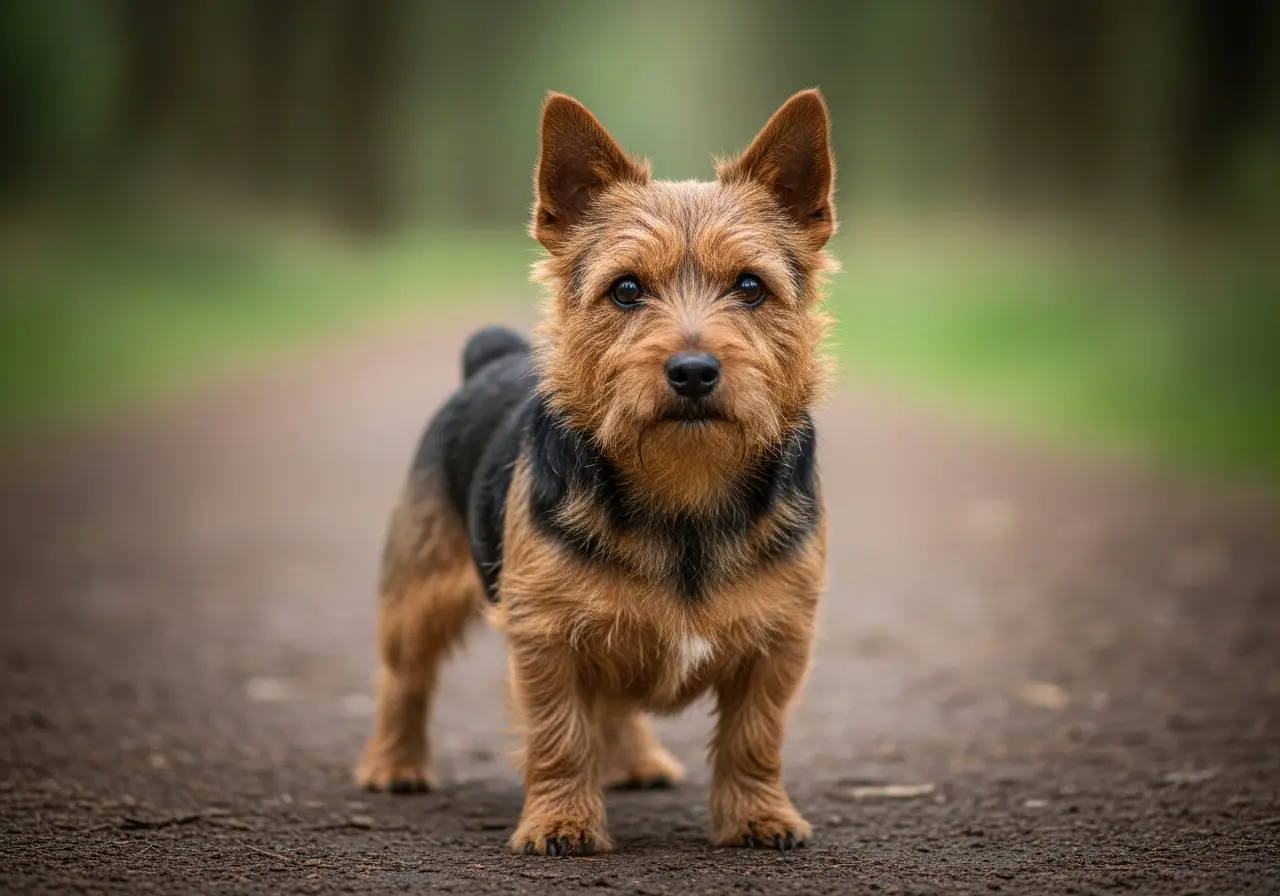
Norwich Terrier: one of the smallest terriers with upright ears from England, lively, compact and keen to hunt
03Profile
Key facts and suitability
- Origin
- Grossbritannien
- Original purpose
- Rat and fox hunting
- FCI
- No. 72 · Group 3 · Section 2
- height at the withers
- 24–26 cm
- Weight
- 4–6 kg
- Life expectancy
- 12–15 Years
- Coat type
- Wire-haired
- Minimum exercise
- 60 min/day
- Puppy price
- 2'000–3'000 CHF
- Waiting period
- 4 months
- Sports
- Agility Earthdog trials
04Temperament
How the Norwich Terrier shows up in everyday life
On the morning walk, the Norwich Terrier demonstrates what its genetics mean: the nose is constantly working, every mouse hole in the bushes is inspected, and a rabbit at the field edge triggers an immediate hunting impulse. This is not misbehaviour; this is the breed in its original function.
Internally, the Norwich Terrier requires daily mental stimulation (mental work requirement: medium-high) and physical activity (exercise requirement: medium-high). A need for social contact of medium means: the dog seeks closeness to its primary caregiver and wants to be involved in everyday activities, not as a spectator but as a participant. Being left alone works if it is built up gradually; four hours are considered a realistic maximum.
Externally, the Norwich Terrier behaves neutrally to openly towards strangers; it is not suspicious, but nor is it an uncritical greeter. With other dogs, it shows tolerance with good socialisation, but can appear assertively in a terrier-typical manner, especially towards same-sex conspecifics. Small animals in the household are a risk factor due to prey drive and should not be underestimated.
At home, the Norwich Terrier is attentive and present. It observes what is happening in the household and reports anything unusual by barking. Those who value silence should plan for this. Those looking for a dog that thinks along, accompanies them and understands clear instructions will find a reliable everyday companion in it, provided that rules are applied consistently and daily.
05Needs
What this breed needs daily
The Norwich Terrier requires 60 to 90 minutes of active exercise daily, divided into several sessions, not as a single walk. Pure lead rounds are not sufficient. Sniffing work, search games and retrieving exercises on secure terrain meaningfully supplement the need for exercise.
Mental stimulation is equal in importance to physical activity. Nose work, mantrailing, dummy training or simple learning games with food searches occupy the mind and reduce frustration in everyday life. A Norwich Terrier that is mentally under-stimulated will seek its own tasks, such as digging in the garden, barking or destroying objects.
Training requires consistency without harshness. Clear, calm rules that are adhered to daily are more effective than occasional correction attempts. The dog actively questions inconsistency, not out of malice, but because it has learned independent thinking as a working dog. A supplementary dog training school with terrier experience is recommended, particularly in the first months.
Social connection to the primary caregiver is important. The Norwich Terrier wants to be there during cooking, working and walking. Isolation or prolonged being left alone overwhelms it emotionally. A maximum of four hours of alone time is considered acceptable if the dog has been accustomed to it.
The coat requires professional stripping two to three times a year. Clipping is not an equivalent alternative as it permanently alters the coat structure.
Exercise
Medium
mental work
Medium
Social needs
Medium
training
Medium
07Quick Check
08Suitability
Who this breed is suitable for – and who it isn't
✓Matches
The Norwich Terrier suits active individuals or families who can plan 60 to 90 minutes for exercise daily and additionally allocate time for mental enrichment. A garden is helpful but does not replace joint activities.
Families with children from around 8 years of age who are already familiar with respectful handling of dogs may be suitable owners, provided that clear rules apply equally to all family members.
Owners with prior experience in terrier training or with comparable independent breeds benefit from the temperament of the Norwich Terrier. First-time owners are not fundamentally excluded but require a dog training school with terrier expertise and the willingness to work consistently.
Those who engage in dog sports (agility, mantrailing, nosework) will find a motivated partner in the Norwich Terrier. The breed is suitable for both city and country living if mental and physical stimulation and structure are ensured. Owners who keep small animals in the household should realistically assess the breed's prey drive beforehand and take appropriate safety precautions.
×Doesn't match
The Norwich Terrier is not suitable for owners looking for a calm, self-entertaining dog that can easily cope with long periods of solitude. Anyone who is regularly away from home for more than four hours a day and does not have a reliable care solution should not choose this breed.
Anyone who equates the dog's small size with low effort underestimates the typical terrier temperament. The Norwich Terrier requires the same consistency in training as a medium-sized working dog; its size does not change this.
Households with small animals such as rabbits, guinea pigs, or hamsters face a real risk if permanently secure cohabitation cannot be guaranteed.
Owners who rely on silence in the household or consider barking unacceptable will have difficulties with this breed. Anyone expecting the dog to integrate into daily life without clear guidance will find that the Norwich Terrier develops its own solutions, rarely in the owner's interest. Consistency is not a recommendation but a basic requirement.
10Line reality
Show line, working line, breeder market
The Norwich Terrier is today predominantly bred for show type. A pronounced working line in the classical sense, with active selection for hunting performance, no longer exists systematically in DACH countries. The breed is listed without a working test in FCI nomenclature (Group 3, Section 2).
Nevertheless, individual differences in temperament are evident within show-type breeding: some lines emphasise a calmer, more people-oriented character, while others show greater independence and a stronger prey drive. These differences are not systematically documented by breeders but are noticeable in practice.
Anyone looking for a Norwich Terrier with particularly high work drive or, conversely, preferring a calmer representative of the breed should specifically ask the breeder about the temperament of the parent dogs and, if possible, observe both parents in everyday life. The pedigree alone does not provide reliable information on this. Breed experts from KfT or SCFT can assist with assessment.
11Health · Reality
What you need to plan for medically with your Norwich Terrier
The Norwich Terrier is considered a robust breed with a life expectancy of 12 to 15 years. This places it among the longer-lived dog breeds in its size class.
Patellar luxation occurs disproportionately frequently in small terriers. A 2014 study by the Kennel Club UK (Breed Health Survey) identified patellar luxation as one of the most common orthopaedic conditions in Norwich Terriers. Breeders registered with the VDH or KfT breeding books should have parent dogs tested for patellar luxation (using the OFA rating scale or comparable).
Upper airway diseases (BOAS-like symptoms) were also documented in Norwich Terriers in a 2019 study by the Royal Veterinary College London; although the breed is not brachycephalic, it shows narrowing in the upper airways in certain lines. Symptoms include snoring, exercise intolerance, and sleep disturbances. A respiratory assessment of the parent dogs is recommended before purchase.
Eye examinations (PRA, Progressive Retinal Atrophy) are regularly carried out by reputable breeders. DNA testing for PRA is possible and should be documented for breeding animals.
Overweight is a real risk for the breed: the Norwich Terrier gains weight quickly with excessive calorie intake and insufficient exercise. Overweight puts strain on joints and worsens breathing problems. Regular weight checks by the vet, at least once a year, are advisable.
12Structured data
Health by the numbers
Prone to diseases
Eye diseases Tracheal problems
Recommended health tests
Eye examination Trachea check
13Myths ↔ Reality
What is often said incorrectly about this breed
Five myths, five realities, five sources.
"The Norwich Terrier is a calm apartment dog due to its size, requiring little stimulation.
A dog's body size does not correlate with its energy level. The Norwich Terrier was bred for enduring hunting work and needs 60–90 minutes of active exercise and mental enrichment daily. Lack of stimulation manifests in digging, barking or destructive behaviour, regardless of apartment size.
“Small terriers are easier to train than large dogs.
The Norwich Terrier thinks independently and actively questions inconsistent rules. Its working dog heritage means that it makes decisions situationally on its own, a trait that was useful in hunting but makes training demanding. Consistency and clear communication are not optional, but a basic prerequisite.
“Norwich Terriers and Norfolk Terriers are the same breed with different names.
Both breeds were officially separated by the British Kennel Club in 1964 and have since been independent FCI breeds. The only external distinguishing feature is ear carriage: the Norwich Terrier has erect ears, the Norfolk Terrier drop ears. Temperament and body structure are closely related but genetically separate.
“The prey drive of such a small terrier is negligible.
The Norwich Terrier’s prey drive is pronounced in a breed-typical manner and has been selectively reinforced over generations. Off-leash activity without a secure environment carries a real risk. Small animals in the household (rabbits, guinea pigs, hamsters) are potentially at risk. Reliable recall training is mandatory.
“The Norwich Terrier’s wiry coat is easy to care for and requires little attention.
The Norwich Terrier’s wire hair requires regular hand-stripping, not clipping. Clipping permanently alters the coat structure and impairs the natural weather resistance of the hair. Professional stripping should be carried out two to three times a year by an experienced dog groomer or by the owner themselves.
14animal welfare
The animal welfare perspective
Breeder market, designer versions, animal shelter reality — what no one writes in the puppy ad.
In Switzerland, the Norwich Terrier is one of the numerically small breeds. This means that the supply of puppies is limited and waiting times with reputable breeders are common. This scarcity creates a market for backyard breeders who produce and sell puppies without breeder support, health examinations, or breed knowledge.
Typical warning signs in the backyard breeder market: puppies without pedigrees, sales via classifieds portals without visiting the breeder, parent dogs not visible, several breeds offered simultaneously, handover before eight weeks. Price alone is not a quality indicator; inexpensive puppies from dubious origins often incur higher subsequent costs due to health problems.
Designer versions of the Norwich Terrier, crosses with other small breeds under fantasy names, occasionally circulate online. These dogs are not recognised breeds, their health examinations are not standardised, and their temperament is difficult to predict.
Breeding and keeping-related problems mainly concern the underestimated terrier temperament: according to animal welfare organisations, the most common reason for surrendering a dog is not aggression, but a lack of consistency in training and unmet expectations. Anyone expecting a small, calm companion dog and receiving an independent hunting terrier will feel overwhelmed, even though the dog itself has no issues.
Adoption through terrier rescues or the KfT placement service is a fully valid alternative to buying a puppy. Rehomed Norwich Terriers are often already socialised and their personality can be assessed. The SCFT and the KfT can provide specific assistance in finding dogs available for adoption.
15Costs · Transparency
What this breed realistically costs
A puppy from reputable VDH or SKG breeding costs between 1,500 and 2,500 EUR/CHF in DACH countries. Prices below this range indicate missing health checks or breeding without association support, which increases rather than reduces subsequent costs.
Annual living costs amount to approximately 1,500 to 2,500 EUR/CHF, depending on food choice, grooming and veterinary needs. High-quality dry food or BARF for a dog of this size costs between 40 and 80 EUR/CHF per month. Professional trimming (two to three times a year) adds 60 to 120 EUR/CHF per session.
Average veterinary costs: annual preventive examination with vaccination booster 80 to 150 EUR/CHF. In case of patellar luxation (grade III–IV), surgical interventions can cost between 1,500 and 3,500 EUR/CHF. Dog health insurance or a health savings plan is recommended; monthly premiums for small dogs range from 30 to 70 EUR/CHF depending on the provider and scope of coverage.
Dog training school (basic course): 150 to 300 EUR/CHF. For terriers with a pronounced independent streak, advanced courses are advisable, either as a one-off or ongoing support.
16Puppy search
What you need to consider when choosing a breeder
- Reputable breeders of the Norwich Terrier are members of a recognised breed club, in Germany the Klub für Terrier e.V.
- (KfT), and in Switzerland the Schweizer Club für Terrier (SCFT).
- Both associations have breeding supervisors who accompany litters and enforce minimum standards for health examinations.
- Characteristics of reputable breeding: The breeder allows puppies to leave no earlier than at eight weeks, presents the pedigree, vaccination record, and health examinations of the parent dogs.
- They ask counter-questions about the prospective owner's daily life and refuse a sale if the living conditions are not suitable.
- On-site visits to the breeder, with the mother and litter visible together, are standard.
- Warning signs: Puppies without pedigrees, sales via animal markets or without personal contact, parent dogs not on site, several different breeds offered simultaneously.
- Adoption through animal welfare organisations or breed rescues is an equally valid option.
- Norwich Terriers rarely enter adoption in the DACH region, but terrier rescues occasionally care for suitable dogs.
- The KfT and SCFT can assist in finding dogs available for adoption.
FAQ
Frequently asked questions about the Norwich Terrier
Is Norwich Terrier a family dog?
Norwich Terrier is considered suitable for families with good socialisation and species-appropriate care.
How much exercise does Norwich Terrier need?
At least around 60 minutes of exercise per day.
Does Norwich Terrier suit an apartment?
With enough exercise and enrichment, Norwich Terrier can also be kept in an apartment.
What is the size and weight of Norwich Terrier?
Fully grown, Norwich Terrier reaches about 24–26 cm at the withers and weighs around 4–6 kg.
What is the life expectancy of Norwich Terrier?
The life expectancy of Norwich Terrier is approximately 12–15 years.
Which diseases are common in Norwich Terrier?
Eye diseases Tracheal problems
17Breed clubs
Official breed clubs in DACH
19Related
Similar breeds – and their differences
You might also be interested in

Participate
Do you have a good photo of your Norwich Terrier?
We are looking for expressive images for our breed profiles. Submit yours; the editorial team reviews every submission before publication.
Does this breed suit you?
Small terrier with big temperament – lively and self-confident