
01Summary
In a paragraph
If you only have 30 seconds.
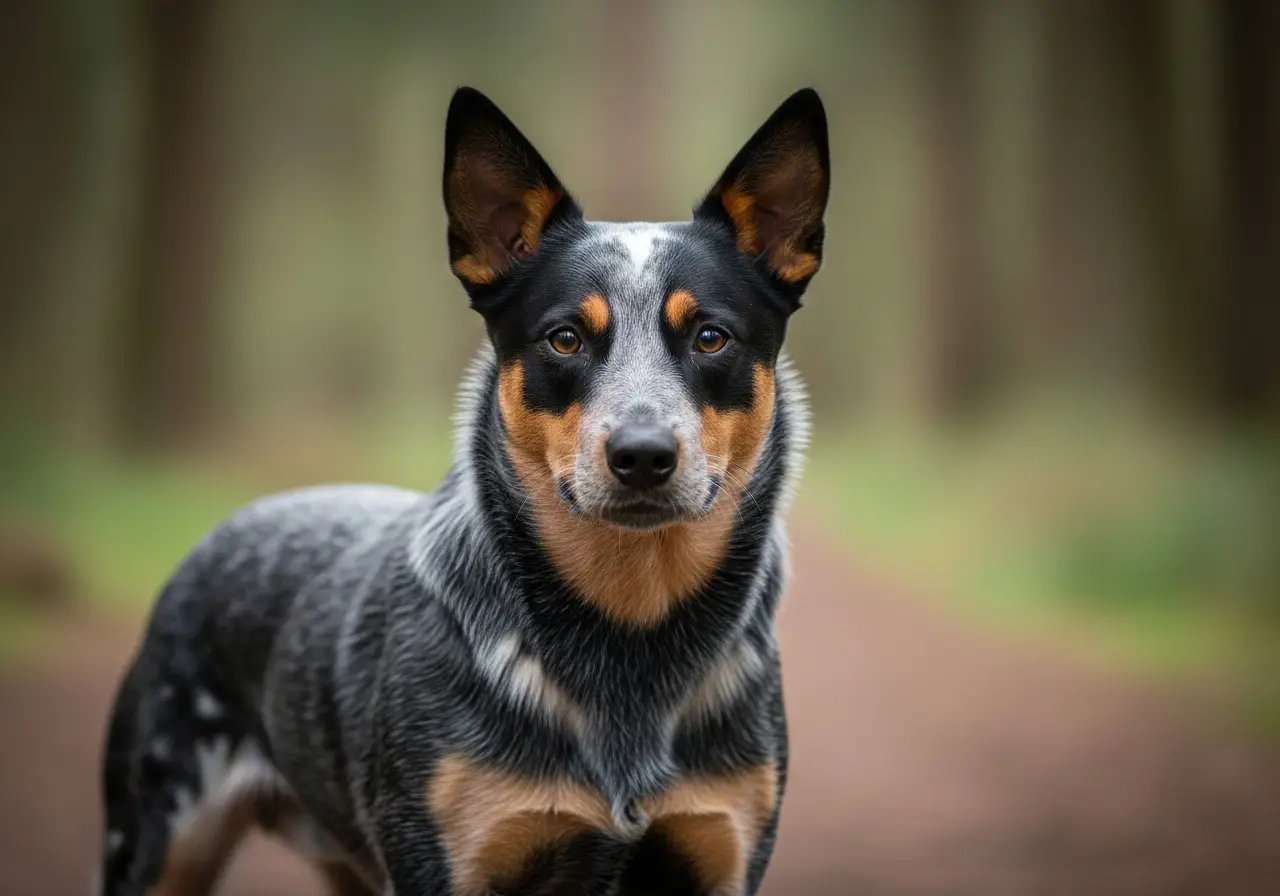
The Australian Stumpy Tail Cattle Dog is a rare Australian herding dog with a natural short tail, selected for hard cattle work under extreme conditions. Its mental and physical stimulation needs are both at the highest level. Anyone keeping this breed takes on a dog that requires a clear task and an experienced primary caregiver daily, not occasionally, but structurally.
02Introduction
What makes the Australian Stumpy Tail Cattle Dog special
The Australian Stumpy Tail Cattle Dog is a rare Australian driving dog, FCI Group 1, with a natural bobtail and a withers height of 43–51 cm.
03Profile
Key facts and suitability
- Origin
- Australien
- Original purpose
- Cattle driving, herding work
- FCI
- No. 351 · Group 1 · Sektion 2: Treibhunde
- height at the withers
- 43–51 cm
- Weight
- 15–22 kg
- Life expectancy
- 12–15 Years
- Coat type
- Short-haired
- Minimum exercise
- 120 min/day
- Puppy price
- 800–1'800 CHF
- Waiting period
- 9 months
- Sports
- Agility · Herding work · Obedience · Frisbee
04Temperament
How the Australian Stumpy Tail Cattle Dog shows up in everyday life
During the morning run, the Australian Stumpy Tail Cattle Dog reveals a side that surprises many: it does not simply run alongside its owner, but constantly observes the surroundings, registers every movement and reacts to joggers or cyclists with a clear control impulse. This is not misbehaviour; this is its genetic programme.
Internally, this dog requires daily intensive physical exercise of at least two hours, as well as demanding mental work. Simple walks do not meet this need. Herding work, flirt pole, scent work or structured dog sports correspond to its profile. Its maximum time for being left alone is approximately four hours, provided it has been sufficiently exercised beforehand.
Externally, it behaves reservedly to distrustfully towards strangers. These two axes (high need for social contact with the primary caregiver on the one hand, pronounced reserve towards unknown people on the other) must not be confused. A Stumpy Tail that is closely bonded to its owner is therefore not automatically open to every visitor.
In family life with clear structure, it functions reliably. Its herding instinct also directs itself towards children or other pets without guidance. Anyone who wants to relax on the sofa in the evening without the dog commenting on every step will not be happy with this breed in the long run. However, anyone looking for a dog that thinks along, works together and wants to be challenged daily will find an exceptionally focused partner in it.
05Needs
What this breed needs daily
The Australian Stumpy Tail Cattle Dog requires at least two hours of intensive exercise daily, and this does not mean leisurely walks, but activities with a demanding character. Running, bikejoring, swimming or extensive cross-country runs form the physical basis.
In addition, mental stimulation is not optional, but structurally necessary. Its need for mental work is at the highest level. Herding work is the most species-appropriate form of enrichment; where this is not possible, flirt pole, nose work, scent work or demanding obedience sports provide an equivalent alternative. Simple fetch games or short training sessions without complexity are not sufficient.
The maximum time for being left alone is approximately four hours, provided the dog has been sufficiently exercised beforehand. Longer absences without preparation reliably lead to stress behaviour in this breed.
The Stumpy Tail requires a primary caregiver who is able to set clear daily structures and actively channel the herding and guarding instincts. Guidance takes place through clarity and consistency, not through pressure or harshness. A dog training school with experience in drive-strong working dogs is particularly useful during the puppy phase.
A garden is no substitute for structured exercise, but can serve as an additional retreat space. Keeping it in an apartment is possible with consistent exercise, but places higher demands on the owner's daily planning.
Exercise
Very high
mental work
A lot
Social needs
Medium
training
Demanding
06Sport & Mental and Physical Stimulation
What sports the Australian Stumpy Tail Cattle Dog is suited for
Realistic in terms of physiology and genetics – not every breed suits every sport.
Structurally and physiologically suitable: Suitable for herding work, treibball and coursing · CaniCross / bikejoring possible.
07Quick Check
08Suitability
Who this breed is suitable for – and who it isn't
✓Matches
The Australian Stumpy Tail Cattle Dog suits owners with proven experience in handling drive-strong working dogs. Anyone who has already kept a Border Collie, Australian Shepherd or Cattle Dog and knows what daily structural work means brings a realistic starting basis.
The breed is suitable for people who can plan at least two hours of active exercise, including a mental component, daily. An owner with access to herding work, flirt pole or comparable dog sports best meets the genetic profile of this breed.
Households in rural areas or with a large garden offer more favourable conditions, but are not a mandatory requirement if exercise is ensured consistently. It is also important that the owner is able to actively manage the pronounced guarding instinct; this concerns dealing with visitors as well as behaviour in public. Families with children from about ten years of age, in which all household members know the herding instinct and act accordingly, are also an option.
×Doesn't match
The Australian Stumpy Tail Cattle Dog does not suit owners who are keeping a dog for the first time. Also, anyone who has experience with dogs but has previously worked exclusively with socially uncomplicated breeds usually significantly underestimates this dog.
The breed is not suitable for households where the dog is regularly alone for more than four hours, even if the rest of the time is spent actively. Anyone who cannot or will not structure their daily life according to the needs of a drive-strong working dog will be permanently overwhelmed by a Stumpy Tail.
Anyone who confuses the high need for social contact with the primary caregiver with general openness towards strangers makes a consequential mistake: This dog is closely bonded to its primary caregiver and at the same time reserved to distrustful towards unknown people. Households with very frequent visitor traffic or children under ten years of age, who are not yet able to understand the herding instinct and react accordingly, should not choose this breed. The same applies to owners looking for a calm companion dog for everyday life.
10Line reality
Show line, working line, breeder market
The Australian Stumpy Tail Cattle Dog is bred so rarely in Germany and Switzerland that a pronounced line differentiation between working and show lines, as known with the Australian Cattle Dog or Border Collie, practically does not exist.
In Australia, the country of origin, there are breeders who keep the Stumpy primarily as a working dog for cattle work, and those who breed for FCI-compliant show characteristics. These differences affect drive intensity and temperament: work-oriented lines generally show an even more pronounced control and herding instinct, as well as a higher readiness to react to movement stimuli. Show lines can be somewhat more balanced in handling, without losing the fundamental working character.
Anyone looking for a Stumpy Tail in the German-speaking region will generally encounter breeders whose dogs come from Australian or British imports. Specific enquiries about the origin line and usage profile of the parent animals are particularly important for this breed, as the small breeding base in the DACH region hardly allows for its own line differentiation.
11Health · Reality
What you need to plan for medically with your Australian Stumpy Tail Cattle Dog
The Australian Stumpy Tail Cattle Dog is considered a functionally robust breed with a life expectancy of approximately 12 to 15 years. This range is based on information from Australian breeding associations; reliable epidemiological studies for the German-speaking region do not exist due to the small population size.
Two health aspects deserve special attention: Firstly, genetically caused deafness occurs, which can be reliably diagnosed using the BAER test (Brainstem Auditory Evoked Response). Reputable breeders test all breeding animals. Unilateral deafness often remains unnoticed for a long time in everyday life but affects the dog's responsiveness in certain situations.
Secondly, the T-box gene, which causes the natural short tail, is associated with vertebral malformations in homozygous combinations. Responsible breeding avoids mating two Stumpy carriers without appropriate preliminary examinations.
Hip dysplasia (HD) occurs in the breed; specific rates for the Stumpy Tail are not published due to the small breeding base. X-ray examinations of parent animals according to FCI standards are nevertheless standard in reputable breeding.
Overweight poses a lower risk in this highly active breed than in less exercise-loving dogs, provided that the workload corresponds to the need. However, it can occur with permanent under-stimulation and simultaneously high food rations. Preventive examinations by the vet should take place annually and include hearing tests and the musculoskeletal system.
12Structured data
Health by the numbers
Prone to diseases
Progressive Retinal Atrophy, congenital deafness, hip dysplasia
Recommended health tests
BAER test, eye examination, hip X-ray
13Myths ↔ Reality
What is often said incorrectly about this breed
Five myths, five realities, five sources.
„The Stumpy Tail is simply a Cattle Dog with a shorter tail.
The Australian Stumpy Tail Cattle Dog and the Australian Cattle Dog are two distinct breeds with separate FCI standards. The Stumpy is generally somewhat leggier and shows an even more pronounced control drive. The natural short tail results from a mutation in the T-box gene and is not a docking trait.
„Anyone who runs a lot has a balanced Stumpy Tail.
Pure physical exercise is not enough for this breed. The mental workload requirement is at the highest level. A Stumpy that runs for two hours daily but receives no mental task often develops control behaviour towards people, vehicles or other animals. Herding work, drive ball or structured dog sports are necessary supplements.
„The Stumpy Tail is a robust dog without significant health problems.
Although the breed is considered functionally robust, genetically caused deafness (BAER test recommended) and hip dysplasia do occur. Furthermore, the T-box gene causing the short tail carries a risk of vertebral malformations in homozygous combinations. Reputable breeders carry out appropriate health tests.
„He is open and friendly towards strangers after a short settling-in period.
The Australian Stumpy Tail Cattle Dog shows a genetically anchored reserve towards strangers, which can be influenced by socialisation but not fundamentally changed. Its guarding instinct is strongly pronounced. Owners who frequently receive visitors or keep the dog in heavily frequented environments must actively manage this aspect.
„The breed is suitable for experienced dog owners with an active lifestyle.
An active lifestyle alone is not enough. The Stumpy Tail requires an owner with experience in handling high-drive working dogs, who is able to set clear structures and actively channel the herding and guarding instincts. Physical activity without leadership competence leads to a physically fit but behaviourally problematic dog.
14animal welfare
The animal welfare perspective
Breeder market, designer versions, animal shelter reality — what no one writes in the puppy ad.
The Australian Stumpy Tail Cattle Dog is rarely found in animal welfare in the German-speaking region. The low prevalence of the breed means that surrenders are usually due to specific husbandry errors, primarily an underestimated work and exercise requirement. Anyone taking on a Stumpy Tail via an animal welfare organisation generally takes on a dog that has already had negative experiences with under-stimulation. This does not make it unsuitable, but increases the demands on the settling-in phase and the experience of the receiving owner.
The backyard breeder market plays a subordinate role in this breed because demand is too low to be economically attractive. Nevertheless, offers without comprehensible breeding documentation occasionally exist on the internet. Missing BAER tests and missing HD findings are common with such offers. Anyone responding to such an offer risks not only health problems for the dog but also considerable follow-up costs.
Designer versions or trend crosses with the Stumpy Tail are not known in the DACH region. The breed is too rare to serve as a basis for hybrid breeding.
A structural problem exists in that the Stumpy Tail is occasionally chosen by owners due to its visual similarity to the Cattle Dog, who actually envision a somewhat less intense working dog. The Stumpy Tail is at least equal to the Cattle Dog in drive intensity and leadership demands; anyone who does not plan for this overburdens themselves and the dog. Education before purchase is more important for this breed than for many others.
15Costs · Transparency
What this breed realistically costs
A puppy from a reputable breeder costs between 1,200 and 2,000 EUR in the German-speaking region. Due to the small breeding base and long waiting times, prices at the upper end of this range are common. Offers significantly below 1,000 EUR without complete health documentation are a warning signal.
Annual living costs consist of food (high-quality dry food or BARF: approx. 600–1,000 EUR/year depending on weight and type of food), basic equipment and care (approx. 200–400 EUR/year) as well as dog training school, especially in the first two years (approx. 300–600 EUR/year).
Basic veterinary care (vaccinations, parasite prevention, annual preventive examination) is approx. 300–500 EUR/year. In addition, possible costs for BAER test follow-up examinations or orthopaedic assessments apply. A dog health insurance policy costs between 40 and 100 EUR/month depending on the provider and scope of benefits and is recommended for a breed with known health risks.
Total costs in the first year (incl. getting a dog): realistically 3,500–5,000 EUR. From the second year: approx. 2,000–3,500 EUR/year, depending on health history and activity level.
16Puppy search
What you need to consider when choosing a breeder
- Because the Australian Stumpy Tail Cattle Dog is extremely rare in the German-speaking area, finding a puppy is more complex than with common breeds.
- Reputable breeders can be found via the VDH or comparable national umbrella organisations (ÖKV, SKG).
- A waiting time of one year or more is not an exception for this breed, but the rule.
- Characteristics of reputable breeding: Both parent animals were tested for hip dysplasia and genetic deafness (BAER test).
- The breeder provides health certificates unsolicited.
- Puppies grow up in a stimulating environment and are accustomed to various everyday situations early on.
- The breeder asks specific questions about the living situation and refuses to hand over a puppy if the profile does not fit.
- Warning signs: No BAER test, no X-ray reports, immediate availability without a waiting list, sale via intermediary platforms without breeder contact.
- Placement via animal welfare organisations is rare for this breed, but not excluded.
- Dogs that have been rehomed due to underestimated work and exercise requirements require experienced owners with clear structure, which does not make them less suitable, but rather specifies the demands placed on the receiving household.
FAQ
Frequently asked questions about the Australian Stumpy Tail Cattle Dog
Is Australian Stumpy Tail Cattle Dog a family dog?
Australian Stumpy Tail Cattle Dog is considered suitable for families with good socialisation and species-appropriate care.
How much exercise does Australian Stumpy Tail Cattle Dog need?
At least around 120 minutes of exercise per day. As an active breed, more so — plus mental stimulation.
What is the size and weight of Australian Stumpy Tail Cattle Dog?
Fully grown, Australian Stumpy Tail Cattle Dog reaches about 43–51 cm at the withers and weighs around 15–22 kg.
What is the life expectancy of Australian Stumpy Tail Cattle Dog?
The life expectancy of Australian Stumpy Tail Cattle Dog is approximately 12–15 years.
Which diseases are common in Australian Stumpy Tail Cattle Dog?
Progressive Retinal Atrophy, congenital deafness, hip dysplasia
17Breed clubs
Official breed clubs in DACH
19Related
Similar breeds – and their differences
You might also be interested in
Participate
Do you have a good photo of your Australian Stumpy Tail Cattle Dog?
We are looking for expressive images for our breed profiles. Submit yours; the editorial team reviews every submission before publication.
Does this breed suit you?
Natural short-tailed herding dog, rarer than the Cattle Dog. High energy and strong work motivation. Not a household pet without a job.