
01Summary
In a paragraph
If you only have 30 seconds.
The Australian Cattle Dog is not a companion dog with a sporting bonus; it is a working dog that needs tasks, structure, and an experienced handler. Its herding and control instincts are deeply rooted genetically and cannot be trained away, only channelled. Anyone who understands this dog and handles it accordingly gains an exceptionally enduring partner. Anyone who underestimates it obtains a serious keeping problem.
02Introduction
What makes the Australian Cattle Dog special
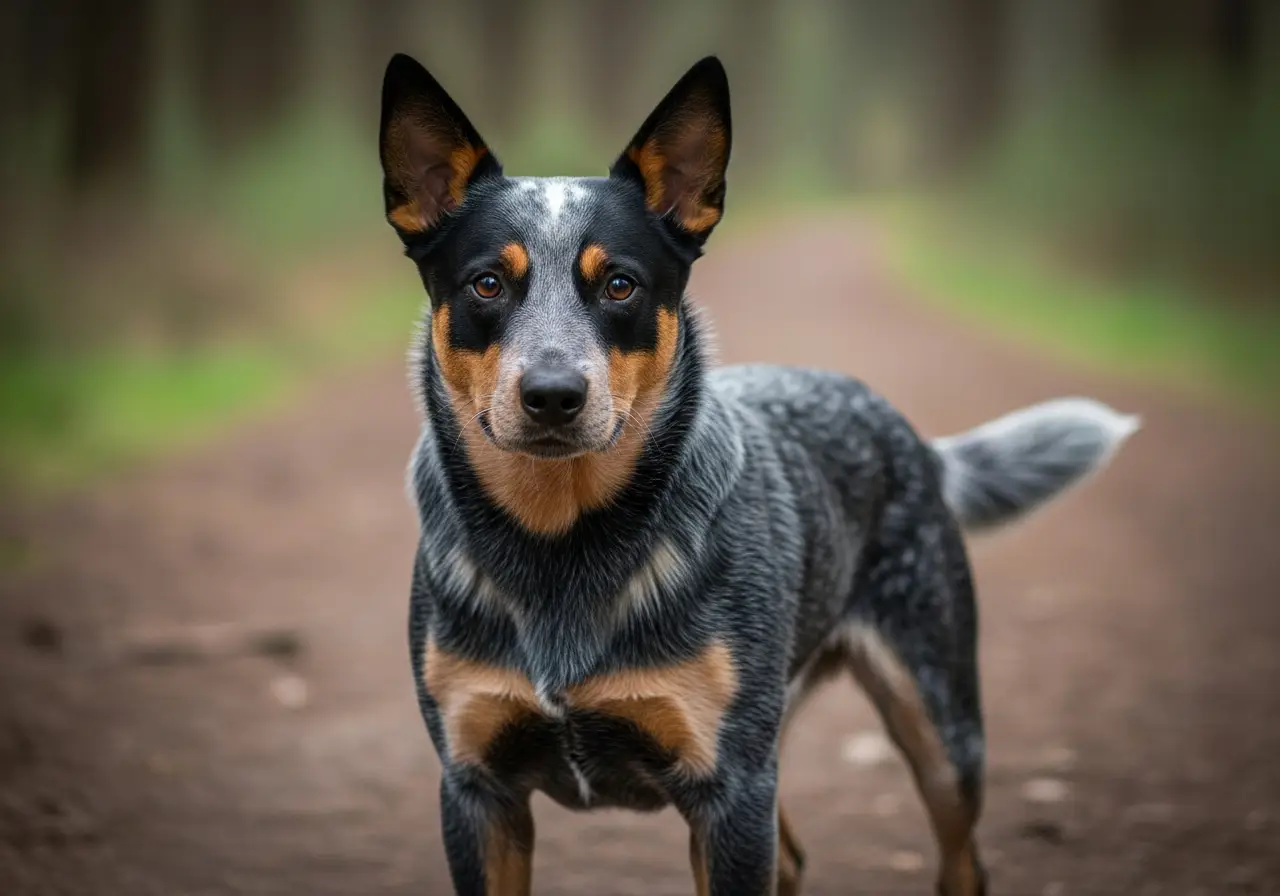
The Australian Cattle Dog (Blue/Red Heeler) is a tough Australian herding dog, FCI Group 1, with blue or red marbling pattern, shoulder height 43–51 cm.
03Profile
Key facts and suitability
- Origin
- Australien
- Original purpose
- Herding cattle over long distances
- FCI
- No. 287 · Group 1 · Sektion 2: Treibhunde
- height at the withers
- 43–51 cm
- Weight
- 15–22 kg
- Life expectancy
- 12–16 Years
- Coat type
- Short-haired
- Minimum exercise
- 120 min/day
- Puppy price
- 1'000–2'000 CHF
- Waiting period
- 6 months
- Sports
- Agility · Frisbee · Flyball · Herding Work · Obedience
04Temperament
How the Australian Cattle Dog shows up in everyday life
When returning home, the Australian Cattle Dog registers every change in the room: who is sitting where, who is new, what has moved. This speed of processing stimuli is no coincidence, but the result of breeding that required lightning-fast decisions during cattle driving.
Internally, this dog requires a close working bond with its primary caregiver (need for social contact: high), daily intensive mental work (mental work requirement: maximum) and at least two hours of active exercise. These three factors are non-negotiable; if one is missing permanently, it shows in control behaviour, barking or destructive activity.
Externally, the Cattle Dog behaves reservedly to distrustfully towards strangers (friendliness-strangers: low). This is not a training error, but breed-typical guarding behaviour. Anyone expecting a sociable dog that greets visitors joyfully will be disappointed. The Cattle Dog tolerates strangers; it does not seek them out.
These two axes must not be confused: A high need for social contact with the primary caregiver does not mean openness towards all people. On the contrary, the intense bond with the core family reinforces guarding behaviour towards outsiders.
Its herding instinct also directs itself at children or other pets in everyday life if there is no clear guidance. Circling movements, nipping at the heels or encircling people are not aggression; they are work, as this dog understands it. Anyone who does not recognise this and guide accordingly loses control over the behaviour.
05Needs
What this breed needs daily
The Australian Cattle Dog requires at least two hours of active exercise daily, and this does not mean a relaxed walk. Running, sprinting, changes of direction, terrain work: the dog needs activity that challenges its body and simultaneously binds its attention.
Mental stimulation is just as essential as physical exercise. Scent work, nose work, flirt pole play, agility, obedience or genuine herding work: the Cattle Dog needs tasks in which it works together with a primary caregiver. Sole enrichment in the garden does not replace this collaboration.
Being left alone is possible if the dog has been sufficiently stimulated beforehand. Four hours are a realistic maximum for a well-stimulated adult. Puppies and young dogs tolerate significantly less.
The coat is short and uncomplicated to care for: weekly brushing and seasonal thorough brushing during shedding periods are sufficient. Elaborate trimming or shearing is not required.
Nutrition is based on the activity level; a Cattle Dog in active dog sports has a significantly higher calorie requirement than a dog with a moderate daily routine. Overweight is rare in this breed if the workload is appropriate; however, it can develop under insufficient stimulation and unchanged food quantities.
Social contact with the primary caregiver is a basic need. The Cattle Dog is not a kennel dog; it requires integration into the family's daily life, clear rules, and a primary caregiver who is consistent and physically robust.
Exercise
Very high
mental work
A lot
Social needs
High
training
Demanding
06Sport & Mental and Physical Stimulation
What sports the Australian Cattle Dog is suited for
Realistic in terms of physiology and genetics – not every breed suits every sport.
Structurally and physiologically suitable: Suitable for herding work, treibball and coursing · CaniCross / bikejoring possible.
07Quick Check
08Suitability
Who this breed is suitable for – and who it isn't
✓Matches
The Australian Cattle Dog suits owners who can plan at least two hours of active exercise with the dog daily, not as an occasional exception but as a fixed part of everyday life. Experience with working dogs or at least with high-drive breeds is a prerequisite.
Suitable are owners who practice or wish to practice active dog sports: Agility, Obedience, Treibball, tracking work, or Herding Trials correspond to the genetic profile of this breed. Anyone looking for a dog with which they can work together rather than just care for it will find an exceptionally willing-to-learn partner in the Cattle Dog.
Families with children from about ten years of age are suitable if both parents have experience with the breed and the herding instinct is actively controlled. Small children and the uncontrolled herding instinct of Cattle Dogs are a risky combination.
Owners who live in the countryside or in a rural environment benefit from the natural opportunities for stimulation. Keeping the dog in an apartment is possible if the stimulation programme is implemented consistently; the size of the apartment is less decisive than daily activity.
People who enjoy an intense human-dog relationship based on mutual trust and are willing to invest in training and time will find a loyal, enduring companion in this breed.
×Doesn't match
The Australian Cattle Dog does not suit owners keeping a dog for the first time. Its control and herding instincts, its sensitivity to stimuli, and its assertiveness regularly overwhelm first-time owners, as evidenced by surrender statistics in animal shelters and rescue stations.
Anyone who is away from home for more than four hours daily and has no reliable care solution should choose a different breed. The Cattle Dog does not tolerate permanent under-stimulation or prolonged periods alone.
Owners looking for a sociable, stranger-friendly dog that warmly greets visitors will be disappointed by this dog. Anyone who mistakes the low friendliness towards strangers for lack of socialisation and tries to train it away risks having a permanently overwhelmed dog.
Families with small children under six years of age should not consider the Cattle Dog. The breed-typical herding instinct (nipping, circling, controlling movements) is not a training problem but a genetic predisposition that poses a real risk of injury to small children.
Owners looking for a dog that occupies itself, lies quietly in its basket, or is satisfied with little effort will not be happy with the Australian Cattle Dog, and neither will the dog be with them.
10Line reality
Show line, working line, breeder market
The Australian Cattle Dog shows an increasingly recognisable differentiation between working lines and show lines, although this is less extreme compared to other breeds (such as the Border Collie).
Working line dogs, used on Australian and American ranches, show a more pronounced drive, higher sensitivity to stimuli and greater independence at work. These dogs are more demanding for dog sports or leisure keeping; their willingness to work demands a real task, not substitute enrichment.
Show line dogs, bred to exhibition standards, are temperamentally somewhat more balanced and show a slightly reduced work drive. However, they are by no means "easier"; the basic character of the breed remains intact.
In Germany and the DACH region, show lines are more common. Anyone specifically looking for a dog for dog sports or work-related activities should explicitly ask the breeder about line affiliation and working titles in the pedigree.
Field trial lines in the strict sense do not exist for the Cattle Dog in the same way as for hunting dogs. Herding trials, however, are a relevant criterion for assessing work suitability and are promoted by reputable breeding associations.
11Health · Reality
What you need to plan for medically with your Australian Cattle Dog
The Australian Cattle Dog is considered a robust working breed with a life expectancy of 12 to 15 years, which is an above-average value in comparison with other breeds. Individual dogs reach 16 years, indicating an overall solid genetic basis.
Congenital deafness is the most well-known breed-typical disease. It occurs unilaterally or bilaterally and is genetically linked to pigmentation. The BAER test (Brainstem Auditory Evoked Response) is the gold standard for diagnosis in puppies. According to OFA database data (as of 2023), around 2–3% of tested Cattle Dogs show bilateral deafness; unilateral deafness is more common and often goes unnoticed in everyday life.
Hip dysplasia (HD) is documented but less common than in large Retriever breeds. OFA evaluations show HD findings in approximately 5–8% of Cattle Dogs tested (Source: OFA Hip Dysplasia Statistics, 2023). Regular X-ray examinations of parent dogs are standard in reputable breeding.
Progressive Retinal Atrophy (PRA) and other eye diseases occur occasionally; an eye certificate for the parent dogs is recommended.
Overweight is rare in Cattle Dogs that receive sufficient stimulation. The risk increases significantly with lack of exercise or after neutering; the amount of food must be adjusted to the actual activity level.
Preventive examinations to check before purchasing a puppy: BAER test for both parent dogs, HD X-ray, eye certificate. Over the lifespan: annual preventive care with the vet, dental check-up, weight monitoring.
12Structured data
Health by the numbers
Prone to diseases
Progressive Retinal Atrophy, Hip Dysplasia, Congenital Deafness
Recommended health tests
BAER Test (hearing), Eye Examination, Hip X-ray
13Myths ↔ Reality
What is often said incorrectly about this breed
Five myths, five realities, five sources.
"The Australian Cattle Dog is a robust dog that occupies itself.
This assumption regularly leads to keeping problems. The Cattle Dog requires structured tasks and active guidance; if left to occupy itself, it develops destructive behaviour, uncontrolled herding of children or excessive barking. Independence in this breed means problem-solving competence, not contentment with little.
"Blue Heeler and Red Heeler are different breeds.
They are the same breed, the Australian Cattle Dog. The terms refer exclusively to coat colour: blue marbled pattern (Blue Heeler) or red marbled pattern (Red Heeler). FCI Standard No. 287 describes both colour variants within a single breed.
"A large garden replaces daily stimulation.
A garden offers space for movement, but no mental stimulation. The Australian Cattle Dog requires guided activity with a primary caregiver, scent work, flirt pole play, agility or genuine herding work. A dog running alone in the garden is not sufficiently stimulated; it is merely unsupervised.
"The Cattle Dog is easy to train due to its intelligence.
High intelligence means fast learning, in both directions. The Australian Cattle Dog recognises inconsistency immediately and exploits it. Without clear structure and experienced guidance, it develops its own solution strategies, which rarely align with the owner's expectations. Experience with working dogs is a prerequisite, not an option.
"Genetic deafness only affects white or merle dogs.
In the Australian Cattle Dog, congenital deafness (BAER-tested) is also documented in normally coloured animals. The link to piebald and merle genetics is known, but does not exclude other colour variants. Reputable breeders carry out BAER tests (Brainstem Auditory Evoked Response) on puppies before they are released.
14animal welfare
The animal welfare perspective
Breeder market, designer versions, animal shelter reality — what no one writes in the puppy ad.
The Australian Cattle Dog is among the breeds that end up disproportionately often in animal shelters and rescue stations in the DACH region, not due to aggression problems but because owners are overwhelmed. The pattern is well known: an owner underestimates the need for exercise and mental work, the dog develops controlling behaviour or destructive activity, and the situation escalates.
Backyard breeders and unscrupulous suppliers exploit the popularity of the breed, particularly on social media, where the Cattle Dog is marketed as a "sporty everyday dog" or "loyal family dog". Puppies without BAER testing, without HD documentation and without prior consultation are regularly found at dog shows and on classifieds portals. The purchase price there is often significantly below the market rate for reputable breeding – a warning signal, not a bargain.
Designer versions of the Cattle Dog (e.g., crosses with Border Collie or Australian Shepherd sold under fantasy names) promise "the best of both breeds" but often deliver unpredictable combinations of instincts that are even more demanding for first-time owners than purebreds.
Problems related to keeping arise primarily from under-stimulation. A Cattle Dog that is actively occupied for less than two hours a day develops behaviours perceived as "problems", although from the dog's perspective they are logical reactions to unmet basic needs.
Adopting an adult Cattle Dog from a rescue organisation is a serious alternative to buying a puppy. Specialised clubs know the dogs, can assess instinct strength and character, and support the rehoming process with expert knowledge. An adult dog from rescue is not a compromise; for many owners, it is the more suitable choice.
15Costs · Transparency
What this breed realistically costs
A puppy from a reputable breeder with VDH/FCI papers, BAER testing and HD documentation of the parent dogs costs between 1,200 and 1,800 euros in the DACH region (as of 2024). Offers significantly below this often come from breeding operations without health tests.
The annual living costs for an adult Cattle Dog are approximately 1,500 to 2,500 euros, depending on food choice, insurance and activity level. High-quality dry food or raw feeding (BARF) for an active dog of this size costs between 60 and 120 euros per month.
Veterinary costs on average per year: routine preventive care (vaccinations, parasite prevention, annual check-up) amounts to 200 to 400 euros. Unexpected treatment costs, e.g., for injuries sustained during dog sports, can quickly reach 500 to 2,000 euros.
Dog health insurance (surgery insurance) typically costs 30 to 60 euros per month for this breed and size class. Given the active lifestyle and associated injury risk, coverage is recommended.
Dog sport membership, training fees and equipment (lead, harness, transport box) add one-off and ongoing costs, realistically 300 to 600 euros in the first year.
16Puppy search
What you need to consider when choosing a breeder
- Reputable breeders of the Australian Cattle Dog are usually members of the Australian Cattle Dog Club Deutschland e.V.
- (ACDCD) or a comparable recognised breeding association in the DACH region.
- Membership alone is not a quality indicator, but it is an initial clue.
- Concrete criteria for reputable breeding: Puppies are handed over no earlier than eight weeks of age.
- Both parent animals have been tested for congenital deafness via BAER testing, and the results are available in writing.
- Hip dysplasia examinations (HD) of the parent animals are documented.
- The breeder asks questions about the living situation and refuses a sale if the prerequisites do not match.
- Warning signs: Puppies without pedigree, multiple litters available simultaneously, no personal contact with the mother bitch, sale via animal markets or without prior discussion.
- Adoption through animal shelters and rescue stations is an equally valid option.
- Australian Cattle Dogs are surrendered disproportionately often due to being overwhelmed; accordingly, specialised rescue organisations exist that place dogs with a known background.
- An adult dog from adoption has the advantage that character and drive strength can already be assessed.
- Purchase prices under 800 CHF for a puppy with papers are a warning sign.
- Reputable breeding with health tests is costly.
FAQ
Frequently asked questions about the Australian Cattle Dog
Is Australian Cattle Dog a family dog?
Australian Cattle Dog is considered suitable for families with good socialisation and species-appropriate care.
How much exercise does Australian Cattle Dog need?
At least around 120 minutes of exercise per day. As an active breed, more so — plus mental stimulation.
What is the size and weight of Australian Cattle Dog?
Fully grown, Australian Cattle Dog reaches about 43–51 cm at the withers and weighs around 15–22 kg.
What is the life expectancy of Australian Cattle Dog?
The life expectancy of Australian Cattle Dog is approximately 12–16 years.
Which diseases are common in Australian Cattle Dog?
Progressive Retinal Atrophy, Hip Dysplasia, Congenital Deafness
17Breed clubs
Official breed clubs in DACH
19Related
Similar breeds – and their differences
You might also be interested in
Participate
Do you have a good photo of your Australian Cattle Dog?
We are looking for expressive images for our breed profiles. Submit yours; the editorial team reviews every submission before publication.
Does this breed suit you?
One of the toughest working dogs there is. Needs intensive daily enrichment. Tends to bond with a single person. Not a beginner dog.