
Dog licks its anus, what to do?
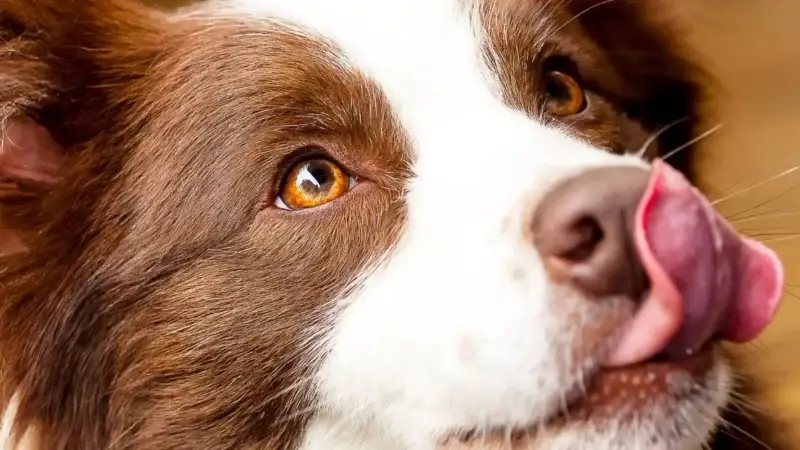
Anal licking in dogs is a normal grooming behaviour that serves for cleaning and emptying the anal glands.
Content
Anal licking in dogs is a normal grooming behaviour that serves for cleaning and emptying the anal glands. It becomes problematic if the dog licks itself intensively several times a day or whimpers while doing so.
Why do dogs lick their anus?
Licking briefly three to four times a day is hygiene. Dogs have two anal glands on either side of the anus, which are automatically emptied with every bowel movement. Licking removes secretory residues and keeps the area clean.
The anal area also transports scent information. When your dog smells its own anus and licks it, it gathers information about its health status, similar to how humans look in the mirror.
When is licking a problem?
You can recognise excessive licking by these signs: The dog licks its anus more than five times a day, the licking lasts longer than 30 seconds at a time, or it whimpers while doing so. Also, if the skin around the anus is red or smells of fish, something is wrong.
Blocked anal glands are the most common reason for compulsive licking. You can recognise this by an intense fishy smell, brown secretions on the dog bed, or if your dog scoots its bottom along the floor.
What can I do about excessive licking?
If you suspect blocked anal glands, go to the vet. Manual emptying should always be done by a professional; incorrect technique can injure the glands.
For training at home: Interrupt the licking with a clear “No” and immediately distract with a toy. Reward your dog as soon as it stops licking. More mental and physical stimulation reduces stress-related licking, especially nose work is suitable.
A collar prevents licking until the cause is treated. If worm infestation or allergies are the trigger, the underlying disease must be treated before the behaviour disappears.
More from the Wiki
All wiki entries →Plum
The plum is a stone fruit of the genus Prunus. Its stone contains cyanogenic glycosides; the …
Rhubarb
Rhubarb is a knotweed whose leaves are rich in soluble oxalic acid. For dogs, the leaves …
Why is dog faeces white?
White dog faeces occurs when normal digestion is disrupted or certain substances change the colour of …
Why do some dogs eat their vomit?
Eating one's own vomit is normal behaviour in dogs, stemming from evolutionary instincts.