
The Chow Chow: Breeding for Harmful Traits or Not?
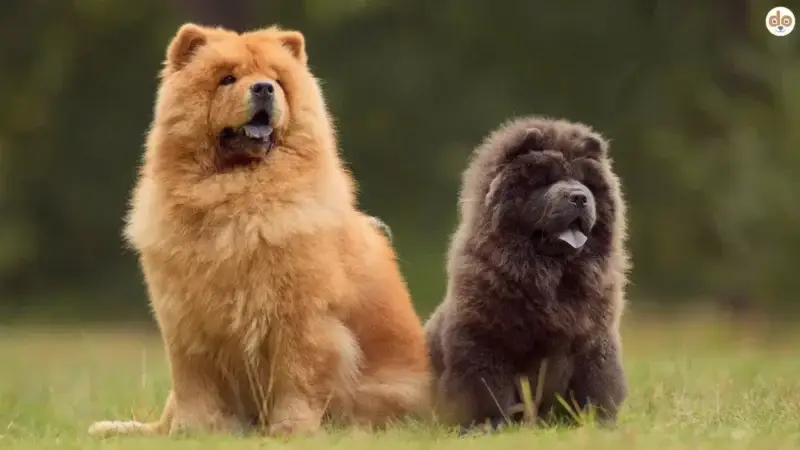
The Chow Chow comes with some health risks that are linked to its breeding history and its distinctive physical characteristics. In our article series «Breeding for harmful traits (Qualzucht) or not?» we take a closer look at individual dog breeds: What did the breed originally look like? Which features are now considered breeding for harmful traits (Qualzucht)? And are there still healthy representatives of this breed, or is it now inextricably linked to health problems?
Origin and History of the Breed
The Chow Chow is one of the oldest known dog breeds in the world. Genetic studies suggest that its origins go back up to 8,300 years, with a close connection to the origins of domesticated dogs in Central Asia. Its homeland is in northern China, where it was kept as a versatile working dog for centuries: It served as a guard dog, draft animal for sleds, hunting helper and occasionally also as a source of meat and fur. Particularly during the Tang Dynasty (618–907 AD), the Chow Chow was an integral part of imperial households.
In the 19th century, the first specimens arrived in Europe, where they were initially referred to as “Chinese noble dogs”. The exotic appearance and cat-like nature soon made the breed a status symbol in Victorian society. In Great Britain, the first Chow Chow Club was founded in 1895, and shortly afterwards the breed standard was created. Throughout the 20th century, the breed established itself worldwide as a companion and show dog.
Earlier types of Chow Chows were built more functionally: They usually had a longer muzzle, fewer wrinkles and clearer eye areas. The extremely plush appearance preferred today is the result of targeted breeding for certain traits, not always to the dogs’ advantage.
The breed today
The modern Chow Chow is medium-sized, compact and appears particularly bulky due to its dense double coat. Typical is the broad, massive head with a short muzzle, small, deeply set eyes and a characteristic blue-black tongue. The hindquarters often show a steep angulation, which gives the gait its breed-typical “stiffness”.
From an animal welfare perspective, the following are particularly problematic:
- shortening of the muzzle (predisposition to breathing problems)
- narrow nostrils
- extremely small eye openings, often in combination with eyelid malpositions (entropion, ectropion)
- very dense coats that predispose to heat problems
In addition, there is targeted breeding for a particularly “serious” facial expression, which combines neotenous features with a bulging forehead area, an aspect that is associated with the baby schema but usually has serious health consequences.
Frequent Health Problems
The Chow Chow is considered a breed with high health demands. The most common problems include:
- Hip and elbow dysplasia (HD/ED): widespread, leading to pain and restricted mobility
- Patellar luxation: misalignment of the kneecap, sometimes correctable surgically
- Entropion/Ectropion: eyelid malpositions, often painful and chronically inflammatory
- Skin problems: especially under the dense coat, e.g. hot spots and eczema
- Brachycephalic Obstructive Airway Syndrome (BOAS): particularly in dogs with extremely short muzzles
- Hypothyroidism and other autoimmune diseases
- Sensitivity to heat: due to dense coat in combination with breathing problems
Many of these ailments occur not only in isolated cases, but frequently as typical for the breed. According to vets and breeding statistics, eye operations (to correct eyelid malpositions) and orthopaedic interventions are not uncommon.
Poorly bred animals incur correspondingly high vet costs: In addition to operations, many dogs require regular medical treatments, ointments, special food or food supplements.
The care requirements of a Chow Chow are also considerable: Daily brushing and care of the undercoat, especially during moulting, are necessary. In addition, due to possible breathing problems, walks or sporting activities (if possible at all) must be adapted to the dogs’ low heat tolerance.
Are there any healthy dogs of this breed?
Despite the many problems, there are breeding lines that place value on health and moderate typification. Reputable breeders pay attention to HD/ED freedom, correct eyelids, open nostrils and a moderate head shape. Some European breeding associations are also beginning to breed Chow Chows less extremely. Working or utility lines are currently still quite rare. There is so far no special “retro” movement as with the Pug, but occasionally Chow Chows with longer muzzles and a sportier build are bred unofficially.
Anyone who wants a Chow Chow should:
- buy consistently only from breeders with comprehensive health testing
- do not select puppies with extremely short muzzles or narrow eyes
- see and assess the parent dogs yourself (breathing, gait, temperament)
- A reputable breeder answers questions about health openly, shows certificates, and does not breed for show extremes.
Conclusion on the Chow Chow: Breeding for Harmful Traits or Not?
The Chow Chow is an old breed, but it is massively over-typified in many breeding lines. The combination of short muzzle, steeply angled hindquarters and narrow eye area often leads to health restrictions.
In its current form of breeding, the Chow Chow can be described as partially typical of cruel breeding, depending on its origin. Show lines with extreme appearances are particularly problematic. However, there are still chances for healthier representatives: selected with care, from controlled breeding and with a focus on function rather than form.
The breed is not suitable for beginners anyway. Interested parties should therefore not only bring experience but also be willing to invest in care, training and preventive healthcare.