4 sourcesUpdated September 11, 2026Responsible editor: Roger KleinText: Miriam Schäfer
01Summary
In a paragraph
If you only have 30 seconds.
The pug is a Chinese companion dog with a pronounced need for social contact and moderate exercise drive, but its short snout is not a style feature; it is a medical issue. Anyone keeping a pug plans for vet costs, selects breeders based on breathing tests and X-ray reports and consistently protects the dog from heat. Anyone who takes this seriously gets an attentive, people-oriented companion.
02Introduction
What makes the Pug special
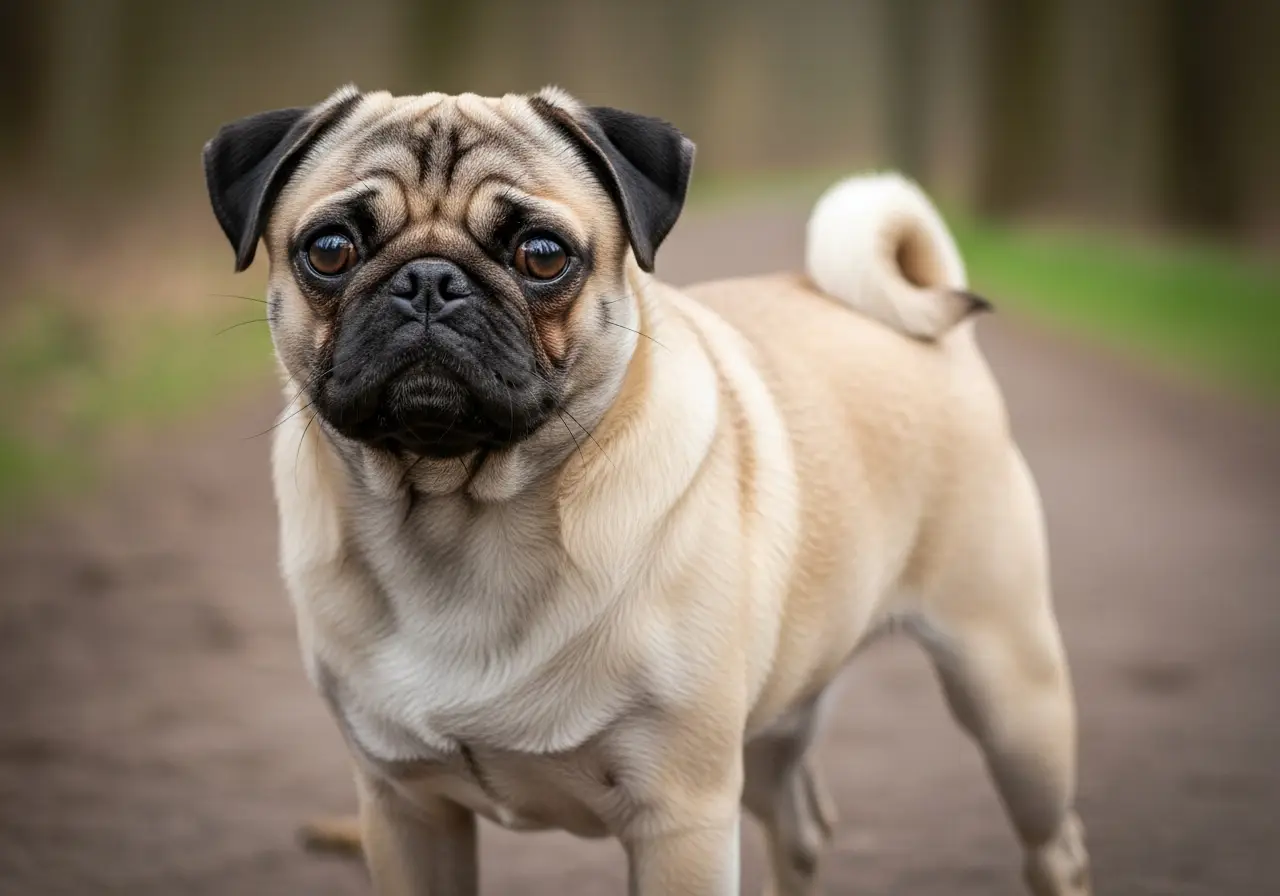
Pug: brachycephalic Chinese companion dog – sociable and affectionate, but severely at risk to health due to extreme skull shortening
03Profile
Key facts and suitability
- Origin
- China
- Original purpose
- Imperial companion dog
- FCI
- No. 253 · Group 9 · Section 11
- height at the withers
- 25–36 cm
- Weight
- 6–8 kg
- Life expectancy
- 12–15 Years
- Coat type
- Short-haired
- Minimum exercise
- 20 min/day
- Puppy price
- 1'500–3'000 CHF
- Waiting period
- 4 months
- Sports
- Tricks Nosework
04Temperament
How the Pug shows up in everyday life
When you come home, the Pug is already at the door. Not loud, but present: it follows you into the kitchen, lies next to the desk, seeks physical contact while watching TV. This need for social contact is structural: The Pug has been bred exclusively as a human companion over centuries, without a working task. This means it orients itself towards humans, not towards a task.
Its need for social contact is high. Three hours alone are already the upper limit for many Pugs before restlessness or vocalisations set in. It will engage in mental work in the classic sense, such as nose work or search games, but its drive for this is moderate. It does not need a daily training session, but it needs you.
Towards strangers, the Pug generally shows itself to be open and curious. It rarely barks out of mistrust, but rather as a greeting. It is usually compatible with other dogs, provided the encounters are calm. Hectic situations, such as loud children or fast movements, can overwhelm it because it cannot physically evade them and quickly becomes stressed.
Important: Openness towards strangers does not mean that it does not need boundaries. A Pug that has never heard "no" develops stubbornness and volume as means of communication. Clear, calm consistency pays off, not because of dominance, but because otherwise it writes the rules itself.
05Needs
What this breed needs daily
The Pug needs 30 to 60 minutes of exercise daily, divided into two to three sessions, not as a continuous strain. Pace and distance depend on temperature and individual breathing status. At more than 20 degrees Celsius, walks should be moved to the early morning or late evening. Heat is not just discomfort for the Pug, it is a medical risk.
Mental stimulation: The need for mental work is moderate. Short search games, nose work or simple learning units of five to ten minutes are sufficient to keep it mentally occupied. Do not overwhelm it with long training sequences, as it loses motivation quickly if pressure arises.
Need for social contact: High. The Pug is not a dog that can easily stay alone for eight hours. Three hours are already the limit for many dogs. Anyone who is regularly absent for long periods needs a reliable care solution, such as a dog sitter, day care or a second key person.
Grooming: Brush the short coat once or twice a week. It sheds regularly, especially during moulting. The facial folds must be checked daily and cleaned and dried if necessary, as damp folds are an entry point for yeast and bacteria. Check eyes daily for redness, discharge or cloudiness. Claws grow back quickly with little exercise on hard surfaces and must be trimmed regularly.
Exercise
Low
mental work
Something
Social needs
High
training
Easy
06Sport & Mental and Physical Stimulation
What sports the Pug is suited for
Realistic in terms of physiology and genetics. Not every breed suits every sport.
Structurally and physiologically suitable: not an endurance sport (brachycephaly / BOAS).
07Quick Check
08Suitability
Who this breed suits and who it doesn't
✓Matches
The Pug suits people who are looking for a close companion dog and are willing to actively take over its health management. Specifically, this means: You are at home most of the day or have a reliable care solution for absences of more than three hours. You live in a temperate climate zone or have air-conditioned rooms for summer months.
Well suited: Calm single people or couples with a flexible daily routine who appreciate closeness and physical contact. Families with children from about eight years old who have learned to treat dogs respectfully and do not initiate hectic rough-and-tumble play. People living in flats without a garden, provided walks are possible during cooler times of the day. Owners who budget for vet costs and are willing to demand a BOAS check before purchase.
Anyone who already has experience with highly bonded or brachycephalic breeds brings an advantage: They know the signs of breathing stress and know when a vet visit must not be postponed.
×Doesn't match
The Pug does not suit people looking for a sporty companion dog for jogging, cycling or multi-hour hikes. Its anatomy sets clear limits here: this is not a question of fitness, but of physiology.
Not suitable: Owners who are regularly away from home for more than three to four hours a day and cannot organise a care solution. People in hot climate zones without air conditioning or the possibility of scheduling walks during cooler times of the day. Anyone who regards vet costs as an exception rather than a budget item will struggle, since with Pugs, regular check-ups and possible operations (BOAS correction, eyes) are not uncommon.
A common misunderstanding: The Pug's openness towards strangers is equated with low care effort. This is wrong. A dog that reacts friendly to visitors can still suffer from separation anxiety if its key person is missing. Anyone who believes a social dog also gets along well alone underestimates the difference between how it reacts to strangers and how much it needs social contact.
09Related
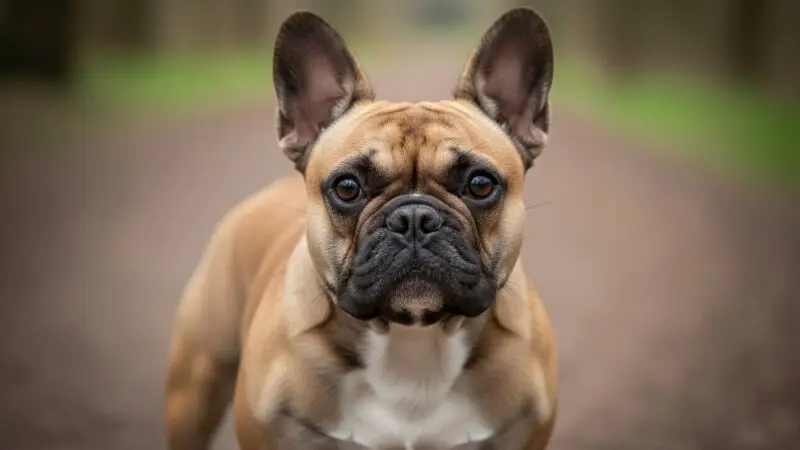
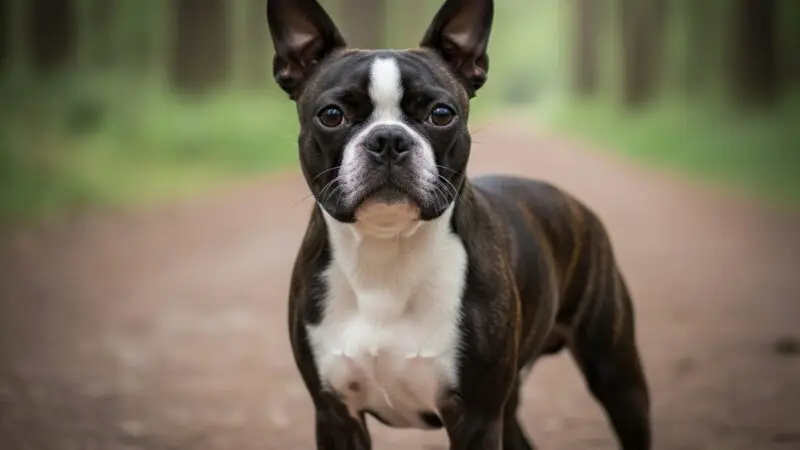
Similar breeds and how they differ

10Line reality
Show line, working line, breeder market
The pug does not have a classic working line-show line division like retrievers or herding dogs. There is no field trial line, no protection service branch, no regional utility dog variant. The breed was historically bred exclusively as a companion dog, and this function has remained constant across all breeding lines.
What exists is a differentiation by breeding philosophy: On one side are breeders who work strictly according to FCI standards, conduct health tests (BOAS grading, eye examination, spinal MRI for hemivertebrae) as mandatory programmes, and select breeding animals based on breathing function. On the other side are backyard breeders who optimise for looks and demand, with the result that airway problems and eye diseases occur disproportionately frequently in these litters.
The term "Retro Pug" refers to dogs with a slightly longer muzzle that have been produced by crossbreeding with other breeds. These dogs are not recognised by the FCI as a separate breed and are not subject to uniform studbook registration. Whether they are actually healthier depends on the individual dog and the parent animals used, not on the label.
Anyone buying a Pug should specifically question the breeder's breeding philosophy: Which health tests are available? What is the BOAS grade of the parent dogs? Is there an MRI for hemivertebrae? These questions distinguish serious breeding from appearance optimisation.
11Health · Reality
What you need to plan for medically with your Pug
According to a British study (Kennel Club / University of London, 2024), the life expectancy of the pug is on average 11.0 years, with a range of approximately 7 to 15 years depending on health status and living conditions.
Brachycephalic Obstructive Airway Syndrome (BOAS): This is the most common and consequential disease in the breed. A study by the University of Cambridge (Liu et al., 2017, PLOS ONE) found that over 90 percent of the pugs examined showed clinically relevant BOAS symptoms. Affected dogs have narrowed nostrils, an elongated soft palate and sometimes a hypoplastic trachea. Operations to correct these issues cost between 800 and 2,500 euros depending on the procedure.
Eye diseases: Corneal ulcers, entropion and keratoconjunctivitis sicca (dry eye) are common. Regular eye checks by the vet are mandatory, not optional.
Hemivertebrae: Wedge-shaped vertebrae occur above average in pugs and can lead to neurological deficits. An MRI before breeding is recommended, but not standard everywhere.
Overweight: Pugs are prone to being overweight, which directly worsens breathing problems. Weight control is not an aesthetic question, but part of basic medical care.
Preventive examinations: BOAS grading, eye examination (CAER), X-ray/MRI for hemivertebrae, at least once a year by the vet, immediately if symptoms occur.
12Structured data
Health by the numbers
Prone to diseases
brachycephalic obstructive airway syndrome, eye problems, skin fold infections, hip dysplasia
Recommended health tests
BOAS check, eye examination, hip X-ray
13Myths ↔ Reality
What is often said incorrectly about this breed
Five myths, five realities, five sources.
"The pug hardly needs exercise, it is a couch dog."
The pug needs 30 to 60 minutes of moderate exercise daily. Lack of mental and physical stimulation leads to overweight, which worsens breathing problems. The difference from active breeds lies in the pace and sensitivity to heat, not in the need for exercise itself. Walks should be scheduled in the early morning or evening hours.
"Snoring and panting are just part of being a pug."
Audible breathing noises are not breed charm, but a clinical warning signal. Brachycephalic Obstructive Airway Syndrome (BOAS) includes narrowed nostrils, an elongated soft palate, and a constricted trachea. Affected dogs suffer from chronic oxygen deficiency. A vet BOAS examination before purchase is not a precautionary measure but standard.
"Retro pugs are healthier, the breeder label is sufficient proof."
The term 'retro pug' is not defined by the FCI or a recognised breeding association and is subject to no uniform studbook record. Whether an animal actually has better airways can only be proven by BOAS grading, X-rays, and breathing tests, not by a label. Reputable breeders provide these findings unsolicited.
"The pug is suitable for every beginner due to its friendliness."
The social openness of the pug towards strangers says nothing about how demanding its care is. Its high need for social contact, sensitivity to heat, regular health checks, and tendency towards separation anxiety make it a dog that requires experience in handling strongly bonded breeds.
"Pugs have no eye problems as long as the eyes do not protrude."
Even pugs with anatomically correctly positioned eyes are susceptible to corneal ulcers, entropion, and dry eye (keratoconjunctivitis sicca). The flat skull shape structurally reduces protection of the eyeball. Regular eye checks by the vet are part of basic care, regardless of optical impression.
14animal welfare
The animal welfare perspective
Breeder market, designer versions, animal shelter reality: what no one writes in the puppy ad.
The pug belongs to the breeds that regularly appear in shelters and rescue centres, not because it is difficult to handle, but because the reality of keeping one often looks different than expected. Underestimated vet costs, lack of preparation for the high need for social contact and being overwhelmed by health management are the most common reasons for surrendering.
Backyard breeder market: Demand for pugs has been high for years. This attracts backyard breeders who breed without health tests and sell puppies via classifieds portals. Animals from such sources have a statistically higher risk of severe BOAS cases, eye problems and hemivertebrae, because parent animals were not examined for these traits. The lower purchase price is often more than offset by higher subsequent costs.
Designer versions: The "Retro Pug" is often marketed as a healthier alternative. This may be true in individual cases, but does not have to be. Without standardised health tests and studbook entries, there is no way to verify this. Anyone who trusts a label instead of medical reports is buying blind.
Breeding and husbandry-related problems: The brachycephalic anatomy of the pug is the result of decades of selection for a trait that structurally harms the dog. This is not an opinion, but the finding of vets and animal welfare organisations. Anyone buying a pug shares responsibility for which breeding direction they support.
Adoption as an equally valid option: Breed-specific rescue centres and general animal welfare organisations regularly rehome pugs. Many of these animals are young, health-checked and looking for a stable home. A pug from a rescue is not a stopgap solution but an informed decision.
15Costs · Transparency
What this breed realistically costs
Getting a dog: With reputable breeders with VDH/FCI papers and complete health tests, the puppy price in Germany and Austria is between 1,200 and 2,000 euros, in Switzerland between 1,500 and 2,500 CHF. Offers significantly below that, especially on classifieds portals without studbook entries, almost always come with missing health tests.
Running costs per year: Food for an adult pug costs between 400 and 800 euros annually depending on quality. Basic care (brushing, nails, wrinkle cleaning) is inexpensive if done yourself; professional care hardly applies to short-haired coats.
Vet: This is the largest cost block. Annual routine examinations including vaccinations cost 150 to 300 euros. In addition, regular eye checks (50 to 120 euros per visit). A BOAS operation costs between 800 and 2,500 euros depending on the procedure and is necessary for a significant proportion of the breed during its lifetime.
Insurance: A dog health insurance with surgery cover costs between 60 and 150 euros monthly for a pug depending on provider and coverage. Given the breed-typical surgical risks, such insurance is not a luxury option, but a sensible safeguard. Realistic total costs per year: 1,500 to 3,500 euros, significantly more in years with operations.
16Puppy search
What you need to consider when choosing a breeder
- Serious breeders provide health reports unsolicited: BOAS grading of the parent dogs, eye examination (CAER), X-rays for hemivertebrae.
- Anyone who evades on request or says their dogs have "no problems" does not provide a basis for an informed decision.
- Inspect the litter on site: puppies should not make audible breathing noises, even when playing.
- Breeders with VDH/FCI studbook entries are subject to breeding regulations that prescribe minimum tests.
- This is not a guarantee of quality, but a starting point.
- Ask about membership in the German Pug Club, the Austrian Pug Club or the Small Dog Club of Switzerland.
- Adoption as an equally valid option: Many pugs end up in animal welfare organisations because owners have underestimated the vet costs.
- Animal welfare organisations and breed-specific rescue centres regularly rehome pugs, including young animals.
- A pug from a rescue has the same needs as buying a puppy, but often already comes with an assessment of its health status.
- Find out about adoption contacts from the breed clubs.
FAQ
Frequently asked questions about the Pug
Is Pug suitable for beginners?
Pug is considered suitable for first-time dog owners.
Is Pug a family dog?
Pug is considered suitable for families with good socialisation and species-appropriate care.
How much exercise does Pug need?
At least around 20 minutes of exercise per day.
Does Pug suit an apartment?
With enough exercise and enrichment, Pug can also be kept in an apartment.
What is the size and weight of Pug?
Fully grown, Pug reaches about 25–36 cm at the withers and weighs around 6–8 kg.
What is the life expectancy of Pug?
The life expectancy of Pug is approximately 12–15 years.
Which diseases are common in Pug?
brachycephalic obstructive airway syndrome, eye problems, skin fold infections, hip dysplasia
Participate
Do you have a good photo of your Pug?
We are looking for expressive images for our breed profiles. Submit yours; the editorial team reviews every submission before publication.
Does this breed suit you?
A breed with significant health concerns – parent dogs should be BOAS-checked. Be mindful of breathing difficulties in summer.