
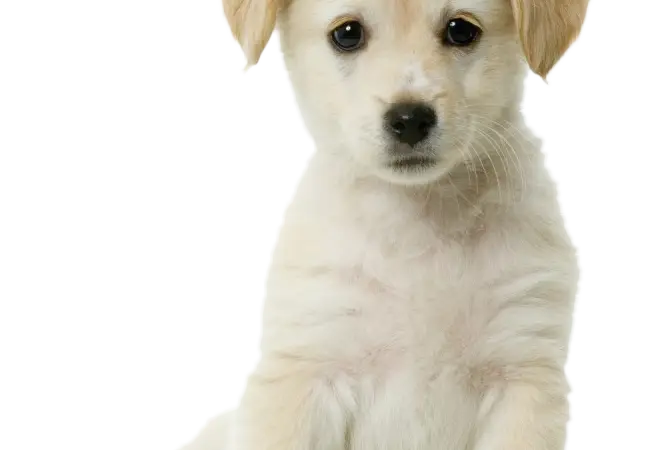
The Socialisation Window – Week 3 to 12
Between the third and twelfth week of life, the puppy’s brain forms neuronal connections to environmental stimuli. Humans, cars, rain, other dogs are emotionally evaluated and stored during this phase. A puppy that only knows its own flat during these weeks often reacts fearfully to new stimuli later. This is not a question of training, but neuroplasticity: what is missing in this window is hard to make up for later.
The problem: full vaccination protection only exists after the third vaccination (week 16). Until then there is a risk of infection. Isolation is nevertheless wrong. Controlled contact is correct, visiting friends with vaccinated dogs, puppy playgroups on clean surfaces, carrying in busy streets. Public dog parks with unknown animals should be avoided before the third vaccination.
From week 16 (after the last vaccination) uncontrolled contacts are acceptable. The vet sets the timetable.
The First Night – Reality
With the handover, the puppy loses its mother and littermates. It is in an unfamiliar environment, without known smells or sounds. It whines, pees, chews. This is a stress reaction, not a behavioural problem.
The puppy spends the first night in a transport box or a demarcated room, not in the owner’s bed, as it would otherwise get used to constant proximity. The box must be large enough for the puppy to stand, turn around and lie down, but no larger: too much space and it will use a corner as a toilet. A cloth with the smell of the litter environment, often provided by the breeder, has a calming effect. The puppy will be noisy on the first night. Every reaction reinforces the behaviour. Ignoring is difficult, yet it works.
At eight weeks, the bladder holds for four to six hours. Sleeping through the night is not possible in the first eight to twelve weeks.
Vaccination Schedule
The first vaccination is carried out by the breeder, usually in week 6 to 8 (distemper, parvovirus, leptospirosis, kennel cough if applicable). The second vaccination follows three to four weeks later (week 10–12), the third another three to four weeks later (week 14–16). After the third vaccination, basic immunisation is usually achieved.
Rabies is often administered with the third vaccination (week 16), booster after 12 months, then every one to three years depending on the vaccine and national regulations.
Booster: annually in the first two years, then often every one to three years. The vet draws up the plan.
Nutrition
Puppies need food with increased calcium and phosphorus content (bone growth) as well as a higher protein proportion (muscle building). The kibble size is adjusted. At 8 weeks: 3 to 4 meals daily. At 4 months: 3 meals. At 6 months: 2 meals. At 12 months: 1 to 2 meals (large breeds need 2 due to the risk of gastric torsion).
Food quantity: according to manufacturer’s instructions, not by feel. Overweight in puppyhood leads to joint problems. The ribs must be palpable, not visible. The belly must not hang.
Changing food: gradually over 7 to 10 days (25% new food, 75% old, then increase the proportion). An abrupt change causes diarrhoea.
Sleep Requirement
Puppies sleep 18 to 20 hours daily. During sleep, synaptic connections are consolidated, the brain is reorganised, and growth hormones are released. A puppy with sleep deprivation shows overstimulation, becomes irritable and stands out due to behavioural abnormalities.
After 20 minutes of play or training, a rest phase follows (box or separate room). The puppy will protest. After 30 minutes of rest, it is receptive again. This structure is neurologically more important than command training.
Training
Punishment does not work with puppies. The brain cannot link causality over more than a few seconds. Reward immediately after desired behaviour, for example urinating outside, consolidates the connection.
House training: at 8 weeks bladder control is lacking. It begins at 12 weeks, increases at 16 weeks, and is usually reliable at 6 months. This is development, not a question of training. Going out after every meal, after sleeping, after playing. At 8 weeks, 8 or more trips daily are normal.
Biting: puppies bite playfully because bite inhibition is learned in the litter. If bitten on the hand, call out “Ouch” loudly and withdraw the hand. This simulates the mother’s reaction. Over time, the puppy learns that tooth contact ends the game. The behaviour is playful, not aggressive.