
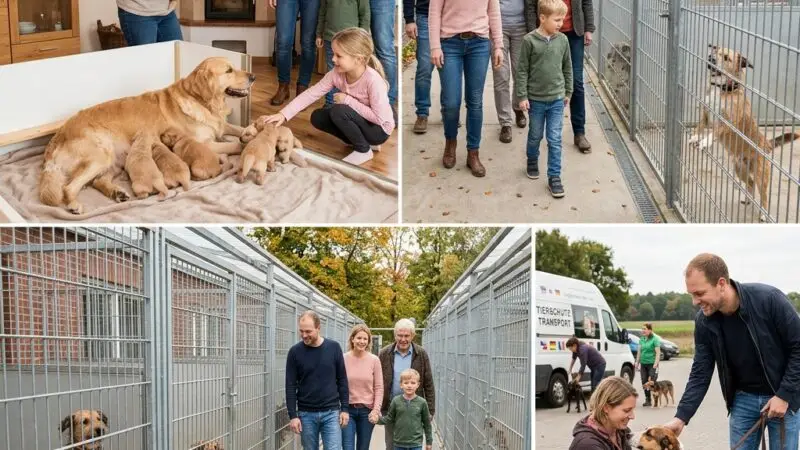
Breeder, animal shelter or foreign dog? Each path has its own prerequisites, risks and legal rules. More important than the source is that you recognise unscrupulous providers and make a decision for 10 to 15 years.
The three paths to your own dog: Figures and structures
In Germany, Austria and Switzerland, hundreds of thousands of dogs enter private households annually. In 2022, the Association for German Dog Breeding (VDH) registered around 63,400 puppies. This is only a fraction of the actually bred puppies. At the same time, thousands of animals permanently wait for placement in German animal shelters. Switzerland places over 2,500 dogs per year, and new animals arrive daily in Austrian animal shelters. Demand is high, supply is diverse, and not all providers operate reputably.
Breeders: What is actually normal?
A reputable breeder pursues a breeding goal. To bring health, character and breed standard into alignment. This costs time, money and expertise. VDH-registered breeders document their breeding animals, have them regularly checked by veterinarians for hereditary diseases (HD/ED tests, eye examinations depending on the breed) and do not sell their puppies like mass-produced goods. A good breeder intends to get to know you, reserves the right of take-back and remains in contact if problems arise.
Alongside this exists a grey market: hobby breeders who produce litters without control, commercial backyard breeders in breeds bred for harmful traits and illegal traders who forge papers and give away puppies too early. The boundary between hobby breeding and backyard breeding is difficult for laypeople to recognise.
Animal shelter and mediation: Safety net rather than selection exchange
An animal shelter is a safety net. There sit dogs that have been given up, got lost or were rescued from poor conditions. Every dog has a story. Reputable animal shelters check adopters: living situation, professional everyday life, experience with dogs. This serves to ensure that a dog is not given up again.
Foster homes and private rehoming organisations work similarly, but often have better opportunities to get to know the dog before rehoming. A dog in a foster home shows its behaviour in everyday life, not under the stress of an animal shelter situation. Adoption fees (50 to 300 EUR) are cost reimbursements for vet visits, vaccinations, neutering and food.
International animal welfare: Rescue or marketing?
Every year, over 100,000 dogs are brought from Southern and Eastern Europe to Germany. Many come from Romania, Turkey or Eastern Europe, countries where street dogs exist in large numbers and often live in poor conditions. An imported dog can be a genuinely rescued animal. But it can also be part of a system that makes local backyard breeders profitable: more dogs are bred because there is demand from the West.
Reputable international animal welfare organisations work with partners on the ground, support local neutering programmes and bring dogs to Germany according to strict criteria. They test for Mediterranean diseases, know the origin and document it. Disreputable organisations collect dogs en masse without checking prerequisites, forge documents or provide no aftercare. The difference determines whether you are actually helping or financing abuse.
The ethical question: Breeding or rescuing?
This question cannot be answered dogmatically. A dog from reputable breeding and a dog from an animal shelter are both living beings with real needs. Every puppy bought is demand for the market. If you buy a puppy while dogs die because the animal shelter is overcrowded, that is a conscious decision. The ethically more consistent choice is often adoption. The more honest choice is to know your reasons and stand by them.
Unethical is any purchase that promotes breeding for harmful traits (Qualzucht). Unethical is buying from puppy dealers or backyard breeders. It is unethical to bring an international dog without having its health checked, or if its origin is not documented.
What this page offers you
This overview provides orientation. The following detail pages cover: How do I recognise a reputable breeder? How does an adoption work? Which diseases do international dogs bring with them and how do I test for them? How much does a dog really cost? Every question is answered.
FAQ
Does an animal shelter dog really cost less?
Numerically, yes: adoption fees are between 50 and 300 EUR. In the long term, an animal shelter dog may require behavioural support, vet visits and patience that a bought puppy might also need. The saving is psychological, not necessarily financial.
Can international dogs fit into normal families?
Yes, many do, with the right preparation and if they are health-tested. No, if the family does not know what they are letting themselves in for: lack of early socialisation means fear behaviour that requires real work.
How do I recognise a puppy dealer?
A puppy dealer always has puppies, advertises them online at unrealistic prices, demands advance payment and does not want contact after the purchase. A breeder has a litter every few years, wants to meet you, asks about your situation and reserves the right to take their puppy back.
What is breeding for harmful traits (Qualzucht) and why is it a problem?
Breeding for harmful traits (Qualzucht) refers to physical characteristics that cause suffering to the animal: flat faces (Pugs), overly long backs (Dachshunds), exaggerated size (Great Danes). These dogs cannot breathe, run or eat without pain. In Germany, breeding for harmful traits is illegal but rarely prosecuted.
Should I buy a dog or rather adopt?
The ethically cleanest answer: adoption. The honest answer: if you want a bought dog, then buy from a breeder who knows their craft, not from a backyard breeder. And then bear the consequences of this decision and help the animal shelter in other ways.