
Do Not Show Off Puppies – Why Raising Them Is Not Content
Content
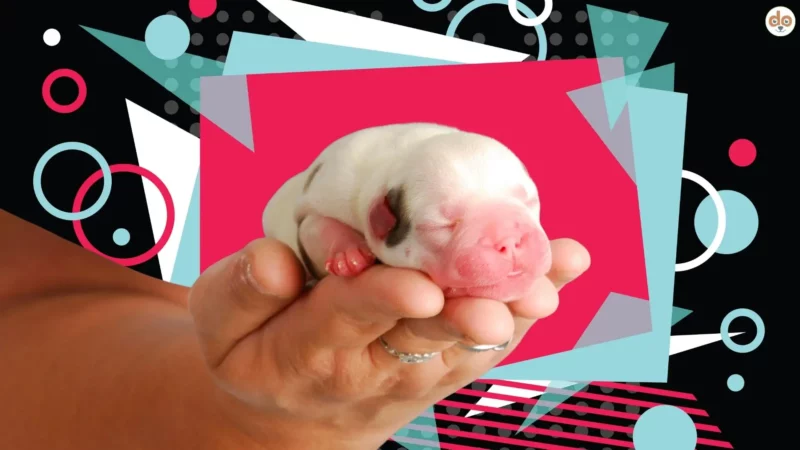
In times of social media, puppies are increasingly used as content objects: staged cutely, for clicks and likes. Particularly inexperienced breeders often think: “Just a short video, that can’t hurt.” I understand this thought – but it is wrong. In this guide, I explain why such practices are not only ethically questionable, but can directly burden the developing nervous system of a puppy – and what serious consequences that can have.
The Sensitive First Weeks of Life
The first weeks – neonatal and transitional phase, roughly between birth and week three – are not a romantic cuteness phase. They are developmentally biologically highly critical: for survival, physiological stability and early stress regulation. Puppies and mother are a system during this time:
- The body temperature, heart rate and digestion of the puppies depend partly directly on contact with the mother.
- Disturbances – an interrupted suckling, short separation, draught, loud noises – burden homeostasis, i.e. the internal balance.
- The neuronal development of the stress axes, including the HPA axis, reacts particularly sensitively to external influences in this phase.
Every abrupt manipulation, even for thirty seconds in front of the camera, is a stimulus. And stimuli in this phase are no small matter.
What Science Says About Early Burdens
A study that exactly examines “filming puppies for Instagram” does not yet exist – one must say that fairly. But the scientific basis for a critical assessment is nevertheless solid:
- The quality of maternal care – physical contact, licking, calm suckling – is demonstrably linked to the later behaviour of the puppies: less fear, better stress regulation.
- Too early separation or early weaning are associated with higher risks for behavioural problems, timidity and poor adaptability.
- Early burdens in critical developmental phases leave traces – in the form of increased stress behaviour and emotional instability, which only show themselves months later.
- Gentle, strictly controlled neonatal interactions can certainly have positive effects. But that is something completely different from uncontrolled lifting or disturbing during suckling.
Every unnecessary stress, every unnecessary separation, every disturbance of the mother-child bond is a risk. Not a harmless photo moment.
Possible Long-Term Effects
Repeated early stress episodes could, in extreme cases, contribute to the following problems:
- increased irritability, lower stress resistance
- fearful or insecure behaviour in new situations
- intensified competition for resources – food jealousy, toy jealousy
- problems with bonding or social behaviour
- chronically elevated stress hormone levels and thus a higher susceptibility to diseases
Whether and how strongly all this shows depends on many factors – genetics, environment, later socialisation, training. But the risk is real, and it can be avoided.
Why Many Breeders Argue Incorrectly
I hear these sentences again and again – and they sound plausible at first glance:
- “That doesn’t hurt, it’s just short.” – Every stimulus counts. Especially in this sensitive phase.
- “I’m just doing good marketing.” – Marketing that comes at the expense of animal welfare is not good marketing.
- “They’re not crying.” – Silent stress reactions – increased heart rate, rising cortisol levels – are inaudible, but they still occur.
- “Others do it too.” – True. And many still get it wrong for that very reason.
In case of doubt, animal welfare and the individual development of the litter should take precedence. Always.
Recommendations & “Good Practice” for Breeders
Those who want to do better don’t need complicated theory – just a few clear principles:
- Film or photograph only when puppies and mother are completely undisturbed – for example, when they are nursing or sleeping safely, not when they are active and restless.
- In the first three weeks, keep direct interventions to an absolute minimum – only what is truly necessary: checking, weighing, essential health care by experienced hands.
- Protect undisturbed mother-offspring time: sufficient retreat spaces, constant warmth, minimal noise.
- If filming anyway: work from a distance, use wide-angle rather than close-ups, no disruptive additional lighting, no hectic movements, no lifting for the camera.
- Plan content for later: From week three to five, puppies are significantly more stable – this is a much more suitable phase for social media content.
- Use every contact with the offspring meaningfully: gentle handling, good timing, calmness – this has a positive impact.
- Document litter development, health data and behaviour – as a genuine reference for potential buyers, not as clickbait material.
What Prospective Owners and Buyers Should Know
Even as a prospective buyer, you can make a difference here – without much effort:
- Ask for photos and videos from calm, unposed moments. Staged scenes are not a good sign.
- Look closely: Was the mother in the picture? Was the calm visibly disturbed? Is there information on litter development?
- Support breeders who do it right – through recommendations, targeted questions, and interest in the real facts.
- Share education. The more informed buyers are, the less profit-driven staging pays off.
Rearing is not a Content Event
Filming puppies during their most sensitive phase is not harmless. It carries real risks for stress, bonding and later development. Anyone breeding with heart protects animal welfare – even when no one is watching. No show moments at any cost. Neither for the camera nor for reach.
My tip: If you want to document a litter, wait until the puppies are more stable – from week three or four onwards. Use calm scenes, leave the mother in peace, and remember: respect for the animal is the best marketing you can have.