
Sand colic in dogs: Tips for prevention
Sand colic in dogs is caused by larger amounts of sand in the intestines and can become life-threatening. It becomes critical from about one teaspoon of sand per kilogram of body weight.
Content
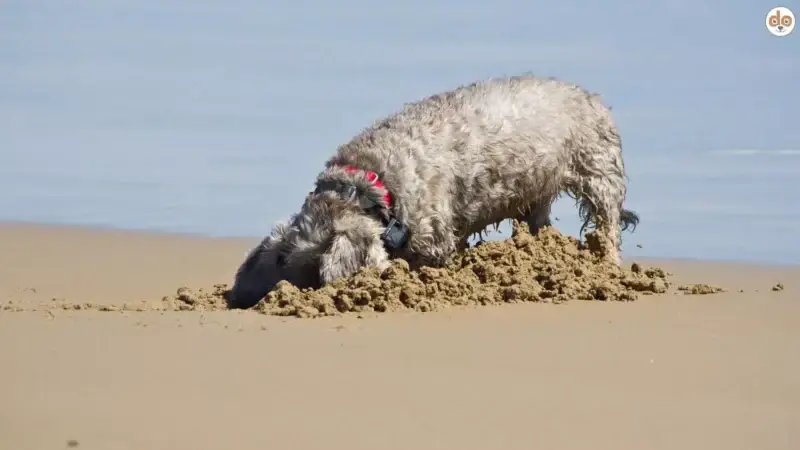
Your dog digs enthusiastically on the beach, snaps at the ball and visibly has sand in its mouth? In most cases, this is harmless. It becomes problematic when dogs swallow larger amounts of sand – from about one teaspoon per kilogram of body weight, a sand colic can occur.
From what amount of sand does it become dangerous for dogs?
Sand colic does not develop from individual grains of sand. Only when larger amounts accumulate in the gastrointestinal tract is a blockage threatened.
In a 25-kilogram dog, it becomes critical from about 25 grams of sand – this corresponds to approximately two tablespoons. Dogs typically ingest such amounts when digging intensively or when eating food from sandy ground.
The sand binds fluid in the intestines and becomes rock-hard. Unlike other indigestible objects, it does not dissolve and can completely block the intestines.
What symptoms do dogs show with a sand colic?
The first signs usually appear 6 to 24 hours after ingesting the sand.
Vomiting without success: Your dog retches, but little or nothing comes up. Repeated, unsuccessful retching is a warning sign.
Bloated, hard belly: The belly feels tense and is sensitive to pressure. Many dogs adopt a hunched posture or do not want to be touched.
No faeces or sandy faeces: Either the dog does not pass any faeces, or the faeces contain clearly visible amounts of sand and are unusually hard.
Loss of appetite and lethargy: The dog refuses food and water, lies around listlessly or wanders about restlessly.
What does the vet do if sand colic is suspected?
If sand colic is suspected, immediate veterinary assistance is necessary. Every hour counts.
X-rays show sand accumulations as bright, characteristic shadows in the intestines. The vet can thus assess the location and extent of the blockage.
In mild cases, infusions and special laxatives help to soften and flush out the sand. In advanced cases, surgery is often necessary to surgically remove the sand clumps.
Untreated sand colic can become life-threatening within 48 hours, as the intestine can rupture or die.
How do you prevent sand colic at the beach?
Days at the beach are pure joy for most dogs. With a few precautionary measures, they remain so.
Offer food and water at height: Use a bowl or a feeding mat so that your dog does not eat directly from the sand. Dogs also often swallow sand when drinking from beach streams.
Limit digging sessions: Let your dog dig calmly, but interrupt intensive digging phases every 10–15 minutes. Offer it water and distract it with other activities.
Rinse toys regularly: Balls and sticks collect sand when thrown. Rinse them in the water in between before your dog picks them up again.
Check the mouth: After playing in the sand, briefly look into the mouth and remove larger amounts of sand with a damp cloth.
Which dogs are particularly at risk?
Young dogs under one year of age have a higher risk, as they ingest more sand out of curiosity.
Dogs with a strong prey drive dig more intensively and for longer periods. Terriers and other digging-prone breeds should be watched particularly closely.
Stressed or anxious dogs also tend to eat unusual things – including sand.
My dog has eaten sand – when do I need to go to the vet?
For a few grains of sand, observation is sufficient. Go to the vet immediately in case of repeated vomiting, a distended belly, or if no faeces are passed.
Can I treat sand colic at home?
No, sand colic always requires veterinary treatment. Home remedies can worsen the situation and cost valuable time.
Is sea sand more dangerous than inland sand?
Fine beach sand clots together faster in the intestine than coarser sand from inland waters. However, both can cause sand colic.
How do I recognise if my dog has swallowed too much sand?
First warning signs are sandy saliva, frequent licking of the lips, and unusual thirst after visiting the beach.
Can small dogs also get sand colic?
Yes, in small dogs even small amounts of sand are sufficient. A 5-kilogram dog can already develop problems with just one teaspoon of sand.