
01Summary
In a paragraph
If you only have 30 seconds.
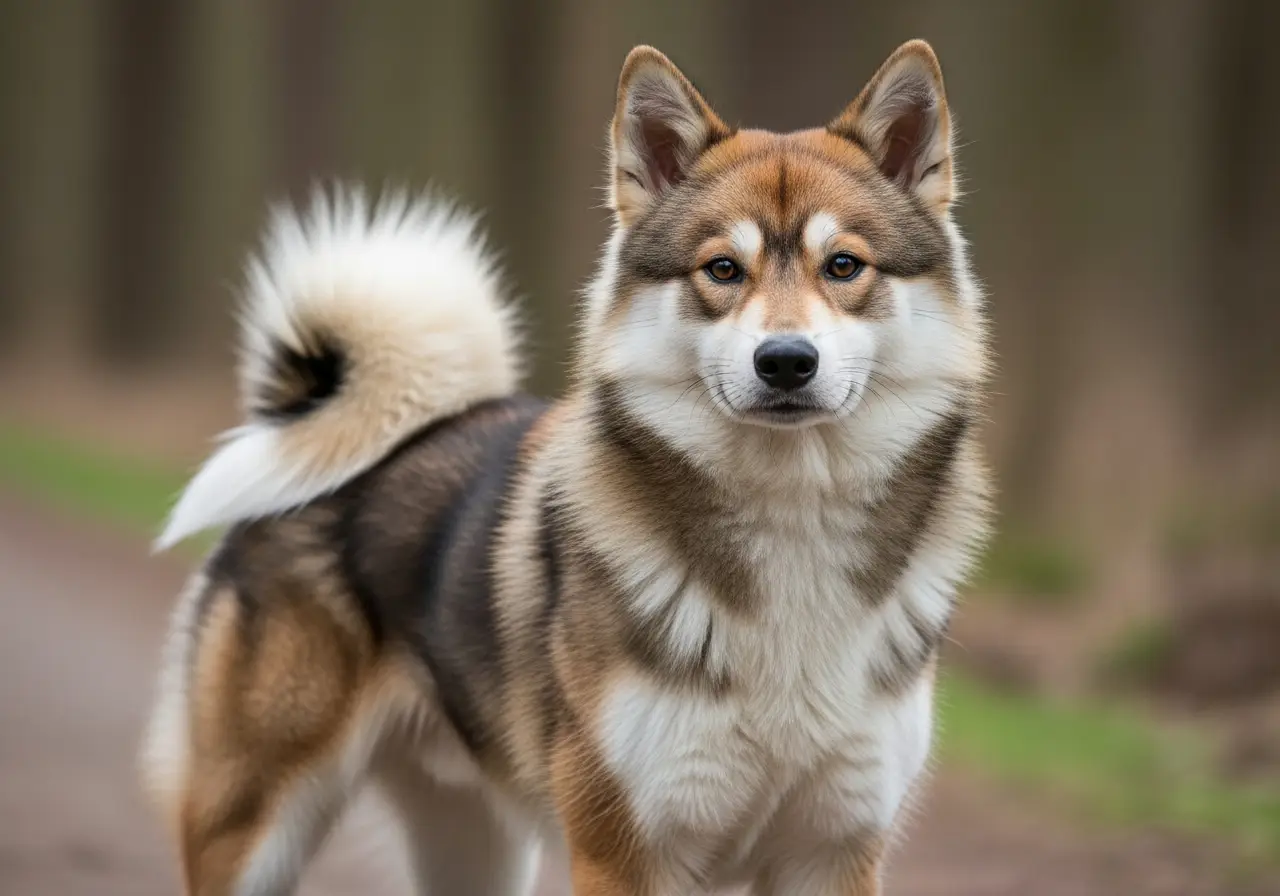
The Thai Bangkaew is a South-East Asian spitz-type dog with pronounced territorial and protective behaviour. It bonds closely with its family but meets strangers with marked reserve. The breed demands experienced owners, a secure property and approximately 90 minutes of active exercise plus mental stimulation daily. Those who meet these requirements receive a robust, loyal dog with a long life expectancy.
02Introduction
What makes the Thai Bangkaew special
Thai Bangkaew: South-East Asian herding spitz, lively, self-confident, and strongly focused on its family
03Profile
Key facts and suitability
- Origin
- Thailand
- Original purpose
- Guard and companion dog
- FCI
- No. 358 · Group 5 · Section 5
- height at the withers
- 41–55 cm
- Weight
- 16–25 kg
- Life expectancy
- 12–14 Years
- Coat type
- Doppel
- Minimum exercise
- 60 min/day
- Puppy price
- 1'200–2'000 CHF
- Waiting period
- 5 months
- Sports
- Agility Scent work
04Temperament
How the Thai Bangkaew shows up in everyday life
When a stranger enters the property, the Thai Bangkaew reacts immediately: it barks, positions itself between the visitor and the family and observes the situation attentively. This behaviour is not a sign of aggression, but an expression of its genetically anchored protective instinct. Only when the primary caregiver clearly resolves the situation does it relax, and even then a certain alertness remains.
In everyday family life, the internal axis is clearly visible: the Thai Bangkaew requires close integration into the daily routine of its primary caregivers. It follows them through the house, observes activities and seeks regular contact. Being left alone for long periods, more than five hours, leads to restlessness and can intensify territorial behaviour.
On a walk outside the property, it behaves differently than at home: it is attentive but less reactive as long as the handling remains clear and calm. Unknown persons who approach quickly, however, cause tension. A structured approach to encounters (keeping distance, no forced contact) noticeably reduces stressful situations.
The external axis and the internal axis diverge clearly here: a high need for social contact with one's own family stands alongside pronounced reserve towards strangers. Anyone who does not understand this difference and assesses the dog as "family-oriented = sociable with everyone" underestimates the risk potential in social situations.
Mental stimulation through nose work, search tasks or structured training takes pressure off everyday life. A Thai Bangkaew that is challenged daily shows significantly less control behaviour in its territory.
05Needs
What this breed needs daily
The Thai Bangkaew requires at least 90 minutes of active exercise daily, divided into several sessions. Pure walks on familiar routes are not sufficient in the long term. The exercise should include variety: changing environments, terrain work, sniffing passages. This keeps the dog mentally challenged and prevents excess energy from being redirected into control behaviour in its territory.
The need for mental work is high. Nose work, search games, structured obedience training and impulse control exercises are part of the weekly programme. The Thai Bangkaew learns quickly, which means that monotonous repetitions underchallenge it and lead to self-initiative, which is not always desirable.
It tolerates being left alone for up to about five hours, provided it is accustomed to the property and receives sufficient stimulation. Longer absences without a care solution are incompatible with the character of this breed.
A secured property is not a recommendation, but a basic prerequisite. The pronounced guarding instinct demands clear spatial boundaries. Without fencing, there is a risk that the dog will define its territory itself, with incalculable consequences for neighbours and passers-by.
Social integration into family life is just as central as physical exercise. The Thai Bangkaew is not a dog that can be kept in an outdoor enclosure and remain balanced. It needs closeness to its key people, a clear daily structure and reliable interaction, daily, not situationally.
Exercise
High
mental work
A lot
Social needs
Medium
training
Demanding
06Sport & Mental and Physical Stimulation
What sports the Thai Bangkaew is suited for
Realistic in terms of physiology and genetics – not every breed suits every sport.
Structurally and physiologically suitable: CaniCross / bikejoring possible.
07Quick Check
08Suitability
Who this breed is suitable for – and who it isn't
✓Matches
The Thai Bangkaew suits owners with proven experience in handling territorial or protection-oriented dogs. Anyone who has already handled a dog with pronounced guarding behaviour and knows how to set boundaries calmly and consistently brings the most important prerequisite.
Suitable are households with their own, securely fenced property, fence height at least 180 cm, no gaps. People who can plan 90 minutes of active exercise plus mental stimulation daily meet the breed's exercise needs.
Families with older children from about ten years old, who are instructed in handling the dog, may be considered, provided that the adult key people take on the leadership role clearly and permanently.
People who live in rural or quiet suburban areas and have little public traffic on their property create an environment in which the Thai Bangkaew can use its guarding behaviour in a measured way, without being permanently overstimulated.
Owners who are prepared to use a dog training school for several years and understand socialisation as an ongoing process provide this breed with the structural foundation it needs.
×Doesn't match
The Thai Bangkaew is not suitable for households keeping a dog for the first time. Those without experience of territorial dogs tend to underestimate the consistency and continuity this breed demands in terms of leadership.
People living in urban rented flats without a garden, or whose daily routine frequently involves changing visitors, tradespeople or delivery services on the premises, create an environment that permanently activates the guarding instinct, resulting in considerable stress levels for both dog and surroundings.
Households with small children under eight years of age, where clear supervision and a leadership structure cannot be guaranteed, are also unsuitable. The protective behaviour of the Thai Bangkaew does not automatically extend to children as objects to protect; it can also be directed against unknown persons accompanying children.
Anyone who equates the dog’s high need for social contact with the family to general friendliness towards strangers makes a dangerous misjudgement. This confusion of the two behavioural axes is one of the most common causes of conflicts with this breed.
Owners who are away from home for more than five hours a day and cannot organise care solutions do not meet the need for social contact of this breed.
10Line reality
Show line, working line, breeder market
A formal differentiation into working, show or field trial lines does not exist for the Thai Bangkaew. The breed is kept without a working test (FCI Standard No. 358), and an institutionalised performance breeding has not established itself outside Thailand.
Within Thailand, however, informal differences can be observed: dogs from rural provincial breeding, which are bred closer to the original farm dog type, often show more pronounced territorial and guarding behaviour than dogs from urban hobby breeding, which have been selected more for appearance and tractability. These differences are not documented in stud books, but are relevant in practice.
In the DACH region, the breeding base is so narrow that no line differentiation can be spoken of in the European context. Interested parties should specifically ask the breeder about the background use of the parent animals and have the temperament assessment of both parents shown to them; this provides more insight into the expected temperament than any line designation.
11Health · Reality
What you need to plan for medically with your Thai Bangkaew
The Thai Bangkaew is considered a relatively robust breed with a life expectancy of 12 to 14 years. Reliable population studies from the DACH region do not exist due to the small number of dogs. The available data comes predominantly from Thailand and individual European breeding registers.
Hip dysplasia (HD) is reported occasionally in the breed. A systematic HD evaluation with published rates does not exist for the Thai Bangkaew, unlike breeds such as the Labrador Retriever, for which the VDH documents HD rates of around 20%. Breeders should nevertheless be able to provide X-ray examinations of the parent dogs for HD; the absence of this examination is a warning sign.
Skin diseases, particularly allergic reactions and folliculitis, occur in the breed. An exact prevalence has not been published. In cases of persistent skin changes, itching or hair loss, dermatological examination by a vet is indicated.
For preventive care, annual general check-ups, a structured vaccination plan according to the STIKO recommendations of the German Federal Association of Veterinary Chambers (as of 2023) and semi-annual parasite controls are recommended. Weight management is relevant: the compact body build of the breed leads to underestimating overweight; even 10% overweight measurably increases joint stress.
Dental care is often neglected. Daily tooth brushing or suitable chewing alternatives reduce the risk of periodontitis, which frequently occurs in medium-sized dogs from the sixth year of life onwards.
12Structured data
Health by the numbers
Prone to diseases
Hip dysplasia Eye problems
Recommended health tests
Hip X-ray Eye examination
13Myths ↔ Reality
What is often said incorrectly about this breed
Five myths, five realities, five sources.
"The Thai Bangkaew is like a Nordic spitz, open and sociable.
Visually, the breed resembles spitz types, but characteristically differs significantly. The Thai Bangkaew shows pronounced reserve towards strangers, up to active distrust. This behaviour is genetically anchored and not a lack of training. Early, structured socialisation can lower the reaction threshold, but does not fundamentally change the basic character.
"Because it is intelligent, it is easy to train.
The FCI standard describes the breed as alert and trainable. Intelligence, however, does not mean willingness to cooperate under any handling. The Thai Bangkaew questions inconsistent signals and exploits the owner's uncertainties. Without a clear, long-term established leadership structure, it displays independent behaviour that is difficult to correct.
"As a family dog, it is suitable for any household with a garden.
A garden alone is not sufficient. The Thai Bangkaew requires a secure property, experienced owners, and a clear social structure within the household. In families with small children or frequently changing visitors, its pronounced protective behaviour can lead to conflict situations if consistent handling is absent.
„The breed is robust, visits to the vet are hardly necessary.
The Thai Bangkaew is indeed considered a comparatively healthy breed, but robustness does not mean immunity against diseases. Hip problems, skin conditions and age-related complaints do occur. Regular check-ups and a structured vaccination and parasite plan are also mandatory for this breed.
„It gets along easily with other dogs.
The Thai Bangkaew can display dominance towards conspecifics of the same sex. In particular, males often show tension when living with other males. Careful introduction and permanent management of cohabitation with other dogs are necessary; a smooth automatic process does not exist.
14animal welfare
The animal welfare perspective
Breeder market, designer versions, animal shelter reality — what no one writes in the puppy ad.
The Thai Bangkaew is one of the rarest breeds in the German-speaking region. This rarity protects it on the one hand from the excesses of the mass market, but on the other hand makes acquisition vulnerable to dubious sources.
Backyard breeder market and import risks
Because legal breeders hardly exist in the DACH region, interested parties resort to imports from Thailand or other Asian countries. Classifieds portals regularly feature offers that provide neither pedigree nor complete vaccination documentation. Dogs from such sources are often handed over too early, insufficiently socialised and subsequently show increased fearfulness or protective behaviour, which considerably complicates keeping a breed that is already territorial by nature.
Breeding and husbandry-related problems
The Thai Bangkaew is not a fashion breed in the sense of brachycephaly or extreme body build. The breeding-related risks lie elsewhere: in selection for visual characteristics without temperament assessment. Dogs bred for show success, without territorial and protective behaviour being systematically evaluated, may exhibit temperament traits that are unmanageable for inexperienced owners.
Trend risk
The breed occasionally experiences spikes in attention on social media, triggered by photos of its distinctive appearance. Experience shows that such trends lead to impulsive purchasing decisions without adequate preparation. A Thai Bangkaew that ends up in an unsuitable household often faces rehoming or neglect, not because the breed is problematic, but because the requirements for keeping it were not met.
Rehoming as an equivalent option
In the DACH region, Thai Bangkaew dogs rarely appear in animal shelters or rescue stations. Those actively searching can contact specialised rehoming organisations for dogs from South-East Asia. These dogs often have an unknown background and require experienced owners, which is a basic prerequisite for this breed anyway. Rehoming is therefore not a compromise solution, but an equivalent alternative to looking for a puppy.
15Costs · Transparency
What this breed realistically costs
A Thai Bangkaew from a reputable, FCI-recognised breeder costs between 1,200 and 2,500 EUR in the DACH region, provided that a breeder is even available in the region. For imports from Thailand, transport costs, veterinary certificates and customs clearance are added, which can drive the total price to between 2,500 and 4,000 EUR. Offers significantly below 1,000 EUR without papers are a clear warning sign.
The annual living costs for a medium-sized breed of this size are typically between 1,800 and 3,000 EUR. Of this, around 600 to 900 EUR goes on high-quality food, 200 to 400 EUR on care (grooming, nail trimming), and 300 to 600 EUR on basic veterinary care including vaccinations and parasite prevention.
Unforeseen veterinary costs (illnesses, injuries, operations) can quickly reach 1,000 to 5,000 EUR per incident. Pet insurance costs between 80 and 150 CHF per month for a medium-sized dog in Switzerland, and between 40 and 100 EUR in Germany. Given the breed's life expectancy of 12 to 14 years, coverage is financially worthwhile in most scenarios.
Dog training school and training over several years are not an optional expense for this breed, but a necessary part of ownership, to be budgeted at between 500 and 1,500 EUR in the first two years.
16Puppy search
What you need to consider when choosing a breeder
- The Thai Bangkaew is exceptionally rare in the German-speaking region.
- Reputable breeders are hardly based in Germany, Austria or Switzerland; most active breeding programmes are located in Thailand.
- Waiting times of a year or more are realistic.
- A reputable breeder allows visits to the litter before handing over the puppies, shows both parent dogs or at least the dam, and provides health certificates and pedigree records.
- They ask questions about the living conditions and refuse to hand over a puppy if the prerequisites are not suitable.
- Puppy mills and intermediaries without breeding book entries occasionally offer this breed via classifieds portals, often without proof of origin and at suspiciously low prices.
- For imports from non-EU countries, rabies vaccination, microchip and health certificate are mandatory; missing documents are a clear warning sign.
- As the breed practically does not appear in animal welfare organisations in the DACH region, rehoming via rescue centres is rare.
- Nevertheless, it is worth enquiring with specialised international dog rehoming organisations that care for dogs from South-East Asia.
- The VDH and the FCI breed club are the first points of contact for verified breeder contacts.
- A personal inspection on site, even if it involves a long journey, is not optional but mandatory for this breed.
FAQ
Frequently asked questions about the Thai Bangkaew
Is Thai Bangkaew a family dog?
Thai Bangkaew is considered suitable for families with good socialisation and species-appropriate care.
How much exercise does Thai Bangkaew need?
At least around 60 minutes of exercise per day.
What is the size and weight of Thai Bangkaew?
Fully grown, Thai Bangkaew reaches about 41–55 cm at the withers and weighs around 16–25 kg.
What is the life expectancy of Thai Bangkaew?
The life expectancy of Thai Bangkaew is approximately 12–14 years.
Which diseases are common in Thai Bangkaew?
Hip dysplasia Eye problems
17Breed clubs
Official breed clubs in DACH
19Related
Similar breeds – and their differences
You might also be interested in
Participate
Do you have a good photo of your Thai Bangkaew?
We are looking for expressive images for our breed profiles. Submit yours; the editorial team reviews every submission before publication.
Does this breed suit you?
Rare spitz breed from Thailand – independent and territorial