
01Summary
In a paragraph
If you only have 30 seconds.
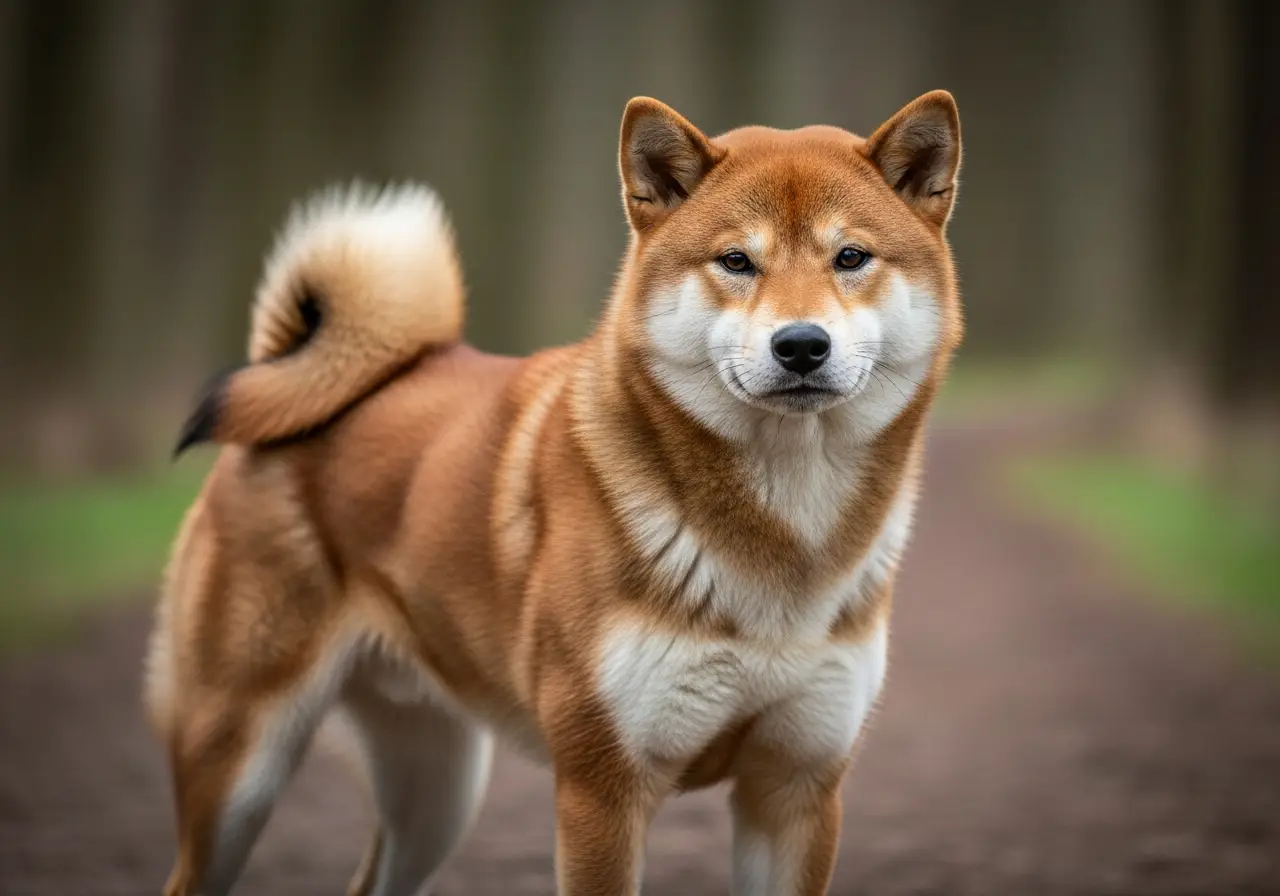
The Shikoku is a Japanese primitive spitz that was selected over centuries for wild boar hunting in the mountains. This origin shapes it to this day: high exercise needs, pronounced independence and a prey drive that requires consistent management. Those who underestimate it get a dog that finds its own enrichment, and rarely to the advantage of the household.
02Introduction
What makes the Shikoku special
Shikoku: Japanese primitive spitz from Shikoku Island, enduringly wild and closely tied to its hunting origins
03Profile
Key facts and suitability
- Origin
- Japan
- Original purpose
- Wild boar hunting
- FCI
- No. 319 · Group 5 · Sektion 5: Asiatische Spitze und verwandte Rassen. Ohne Arbeitsprüfung.
- height at the withers
- 43–55 cm
- Weight
- 16–26 kg
- Life expectancy
- 10–15 Years
- Coat type
- Doppel
- Minimum exercise
- 90 min/day
- Puppy price
- 2'000–3'500 CHF
- Waiting period
- 8 months
- Sports
- Scent work Agility
04Temperament
How the Shikoku shows up in everyday life
On the morning walk, it quickly becomes clear what drives the Shikoku: it scans the environment systematically, registers every breeze from the undergrowth and pulls on the lead towards every rustle. This is not a training problem; this is hunting dog genetics refined over centuries.
At home, it behaves more calmly than its need for movement might suggest. After sufficient stimulation, it lies down and observes. It does not seek permanent interaction, but appreciates the proximity to its primary caregiver. This need for social contact is selective: the bond with the core family runs deep, while towards strangers it shows itself reserved to rejecting. Visitors who want to touch the dog immediately will meet with clear rejection.
Here lies an important distinction: the Shikoku requires intense bonding with its primary caregivers (internal axis, need for social contact 3/5), but reacts to external stimuli such as strangers with reserve (external axis, friendliness towards strangers 2/5). Anyone who confuses these two levels and assumes that a socially bonded dog is automatically open to everyone will experience surprises.
In everyday life with children, it works well with clear structure and early socialisation; spontaneous, loud interactions from children it does not know are tolerated less. With other dogs, it appears self-confident; conflicts arise mainly when a counterpart ignores the Shikoku’s body language.
Mental stimulation through nose work, search games or structured training is not a bonus, but a basic requirement. A Shikoku that is physically exercised but mentally under-stimulated will develop its own initiative, and this rarely aligns with the owner’s expectations.
05Needs
What this breed needs daily
The Shikoku requires at least 90 to 120 minutes of active movement daily, not garden leisure time, but targeted activity with the owner. Running, hiking in rough terrain or bikejoring most closely correspond to its original movement profile.
Mental and physical stimulation is also required. Nose work, basic mantrailing or search games in the terrain engage the prey drive in a controlled manner. At least 20 to 30 minutes daily should be planned for structured mental work, regardless of the physical exercise.
Being left alone must be built up carefully and gradually. Four hours are considered a realistic maximum for a well-conditioned adult; more is possible if the dog is sufficiently stimulated and the absence has been trained. Spontaneous long absences without preparation lead to stress behaviour.
A secure area is not an option, but a requirement. The Shikoku's prey drive sets in quickly with wild stimuli; a normal garden fence is often insufficient. Fences of at least 180 cm height without climbing aids are recommended.
Training requires consistency over months and years. The Shikoku actively questions inconsistent leadership, not out of stubbornness, but because it was selected as an independently working hunting dog. Short, clear training sessions with a high frequency of repetition yield better results than long exercise blocks. A dog training school with experience in primitive spitz breeds or hunting dogs is recommended, especially in the first year.
Exercise
High
mental work
A lot
Social needs
Medium
training
Demanding
06Sport & Mental and Physical Stimulation
What sports the Shikoku is suited for
Realistic in terms of physiology and genetics – not every breed suits every sport.
Structurally and physiologically suitable: Suitable for mantrailing, dummy work and tracking · CaniCross / bikejoring possible.
07Quick Check
08Suitability
Who this breed is suitable for – and who it isn't
✓Matches
The Shikoku suits owners who already have experience with independent hunting or primitive spitz breeds and know that bonding is not synonymous with compliance. Specifically suitable are people who can plan 2 to 2.5 hours daily for exercise and training, not as an exception, but as a fixed part of the day.
A nature-oriented place of residence with access to forest and terrain is advantageous. Those who regularly hike, run or integrate outdoor activities into their daily routine will find an enduring companion in the Shikoku. A secure property with a sufficiently high fence is a prerequisite.
Households with a calm, structured atmosphere suit the dog's nature. Those who rarely receive visitors or can prepare them well for the reserved character of the dog avoid conflict situations. Families with older children from about ten years of age, who are experienced in dealing with dogs, are also suitable, provided that clear rules are consistently observed.
×Doesn't match
The Shikoku does not suit owners keeping a dog for the first time, or people whose previous experience is limited to social, cooperative breeds. Those who expect a loyal dog to automatically be obedient and approachable with strangers confuse the internal bonding axis with external social behaviour; in the Shikoku, these are far apart.
The breed is not suitable for households where the dog regularly spends more than four hours alone without this being left alone having been systematically trained. Equally unsuitable are urban living conditions without secure exercise areas and without a realistic possibility for daily exercise in the terrain.
Those who have little time for consistent training or rely on quick learning success will not be happy with the Shikoku in the long term. Families with small children or frequently changing visitors should realistically assess the dog's reserve towards strangers before making a decision.
10Line reality
Show line, working line, breeder market
In the Shikoku, there is no pronounced differentiation between working and show lines, as is known with western hunting or utility dog breeds. The breeding base outside Japan is too small to develop parallel lines with different selection focuses.
In Japan itself, breeding is oriented towards the preservation of the original type, with body structure, coat colour and character traits taking centre stage. The three historical varieties Awa, Hongawa and Hata are no longer active as separate breeding lines today; the Hongawa variety is considered the basis of modern purebred breeding.
European breeders often work with imports from Japan to maintain genetic diversity. This means for prospective owners: The character differences between individual dogs depend less on line affiliation than on the care taken in the respective breeding, socialisation within the litter and the early imprinting phase. A direct comparison of working line versus companion dog line is not meaningfully applicable to the Shikoku.
Anyone looking for a Shikoku should instead pay attention to the character assessment of the parent dogs and specifically ask for breeding facilities that document health tests and socialisation.
11Health · Reality
What you need to plan for medically with your Shikoku
The Shikoku is considered a robust breed with a life expectancy of 10 to 15 years, whereby well-kept dogs with sufficient exercise and normal body weight tend to reach the upper end of this range.
Due to the small breeding base outside Japan, reliable epidemiological data on hereditary diseases are limited. Known risk areas include hip dysplasia (HD) and eye diseases. Reputable breeders have parent animals X-rayed for HD and carry out ophthalmological examinations; interested parties should request these proofs before purchase.
The risk of overweight is lower in the Shikoku than in many other breeds, as the exercise need is high and appetite is regulable. Nevertheless, it applies: overweight puts strain on joints and demonstrably shortens life expectancy; a study by the University of Liverpool (German Shepherd cohort, 2019, PLOS ONE) showed a reduction in life expectancy by up to 2.5 years in overweight dogs. This finding can be transferred to medium-sized hunting dogs.
Recommended preventive examinations: annual veterinary check-up from the fifth year of life, HD screening of parent dogs before breeding, ophthalmological examination in puppyhood and adulthood. In cases of lameness, visual changes or significant behavioural changes, a veterinary assessment should be initiated promptly.
12Structured data
Health by the numbers
Prone to diseases
Hip dysplasia Eye problems
Recommended health tests
Hip X-ray Eye examination
13Myths ↔ Reality
What is often said incorrectly about this breed
Five myths, five realities, five sources.
“The Shikoku is like a small Akita, so calm and dignified in the house.
The Shikoku shares its Japanese origin with the Akita, but not its temperament. It was selected as an active hunting dog for mountainous terrain, not as a guard dog. In the home, it shows itself to be alert and fond of movement, not phlegmatic. Anyone expecting a calm companion dog will be surprised by the actual energy and stimulation requirements.
“Japanese dogs are naturally clean, quiet and easy to care for.
Japanese spitz breeds do indeed tend towards pronounced grooming behaviour. However, this does not mean low maintenance effort: the Shikoku has a dense undercoat that changes strongly seasonally and requires regular brushing. Furthermore, it is not a quiet dog; it communicates clearly if its needs are not met.
“A large garden replaces daily exercise.
A secure area is necessary for the Shikoku, but does not replace active stimulation. Dogs with a high prey drive and need for movement do not regulate themselves in the garden. Without targeted activity (running, nose work, structured interaction), behavioural problems such as excessive digging, escape attempts or frustration vocalisation arise.
“The Shikoku is loyal and obedient, it always comes back.
The Shikoku shows strong loyalty towards its primary caregiver. However, this bond does not protect against hunting-motivated absence. As soon as a wild stimulus is active, the prey drive overrides the bond. A reliable recall requires years of consistent training, and even then, off-leash walking in areas rich in wildlife remains a calculated risk.
“Rare breeds are healthier because they have not been overbred.
A small breeding base increases the risk of inbreeding depression and genetic impoverishment. In the Shikoku, the world population outside Japan is low, which restricts breeding selection. Reputable breeders work with international pairings and health tests to counteract this risk. Rarity alone is not a health characteristic.
14animal welfare
The animal welfare perspective
Breeder market, designer versions, animal shelter reality — what no one writes in the puppy ad.
The Shikoku is an absolute rarity in Europe. This limits the backyard breeder market, but does not fully protect against dubious offers. Anyone who comes across Shikoku puppies online without a pedigree, without the breeder’s club membership or at a suspiciously low price should be sceptical. Occasionally, mixed-breed dogs or other Asian spitz types are marketed as Shikokus, a risk that is particularly high for rare breeds with low public awareness.
Designer versions or trend crossbreeds hardly exist for the Shikoku, as the breed has not entered the mainstream. This could change: once a breed gains visibility through social media presence, experience shows that an increase in dubious offers follows. Anyone who finds the Shikoku attractive because of its appearance or rarity should be aware that precisely these factors attract backyard breeders.
Keeping-related problems with the Shikoku arise almost exclusively due to underestimation: too little exercise, inadequate securing of the premises, insufficient socialisation during the puppy phase. These dogs then end up being rehomed, not because they are difficult, but because the keeping requirements were not met. The number of surrenders is low in absolute terms, but relevant relative to the total population.
Rehoming an adult Shikoku through animal welfare organisations or specialised rescue centres for Asian spitz breeds is an equivalent option to buying a puppy. Adult dogs show their character openly, which is a real advantage in assessment for a breed with pronounced independence. Anyone who meets the keeping requirements will find no compromise in a rehomed Shikoku, but a sound basis for decision-making.
15Costs · Transparency
What this breed realistically costs
A Shikoku puppy from a reputable, club-affiliated breeder costs between 1,500 and 2,500 EUR in the DACH region. Offers significantly below this indicate missing health tests or lack of club affiliation.
The annual living costs for an adult Shikoku are typically between 1,800 and 3,000 EUR. This includes high-quality food (approx. 600–900 EUR/year for a medium-sized dog), basic care including grooming during the moult (approx. 100–200 EUR), as well as basic equipment, leads and accessories.
Veterinary costs vary considerably: routine examinations, vaccinations and parasite prevention add up to approx. 300–500 EUR annually. In the event of illness or surgery, individual costs can quickly reach 1,000–3,000 EUR. Pet insurance for this breed costs between 40 and 100 EUR monthly depending on the provider and scope of cover, and is recommended for a rare breed with limited data availability.
Additional costs include dog training school (approx. 200–500 EUR in the first year) and, if necessary, dog care during absences.
16Puppy search
What you need to consider when choosing a breeder
- Reputable Shikoku breeders in the DACH region are rare.
- This makes the search more demanding and increases the risk of falling for backyard breeders.
- The following criteria help with assessment: The breeder is a member of a recognised breed club (e.g.
- DCNH or SKAS), provides pedigrees with FCI recognition and only allows puppies to be taken away from the eighth week of life.
- Parent animals should be viewable on site; a breeder who refuses this is a warning sign.
- Health tests of the parent animals, at least eye and hip examinations, should be documented.
- Waiting lists of several months are normal for this rare breed and not a disadvantage.
- Placement via animal welfare organisations or breed rescues is rare for the Shikoku, but not excluded.
- Dogs that were given up due to underestimated prey drive or independence require experienced owners, but are no worse dogs.
- Those open to an adult Shikoku should contact specialised placement centres for Asian spitz breeds.
FAQ
Frequently asked questions about the Shikoku
Is Shikoku a family dog?
Shikoku is considered suitable for families with good socialisation and species-appropriate care.
How much exercise does Shikoku need?
At least around 90 minutes of exercise per day. As an active breed, more so — plus mental stimulation.
What is the size and weight of Shikoku?
Fully grown, Shikoku reaches about 43–55 cm at the withers and weighs around 16–26 kg.
What is the life expectancy of Shikoku?
The life expectancy of Shikoku is approximately 10–15 years.
Which diseases are common in Shikoku?
Hip dysplasia Eye problems
17Breed clubs
Official breed clubs in DACH
19Related
Similar breeds – and their differences
You might also be interested in

Participate
Do you have a good photo of your Shikoku?
We are looking for expressive images for our breed profiles. Submit yours; the editorial team reviews every submission before publication.
Does this breed suit you?
Primitive Japanese hunting dog – very independent and not suitable for first-time dog owners