
01Summary
In a paragraph
If you only have 30 seconds.
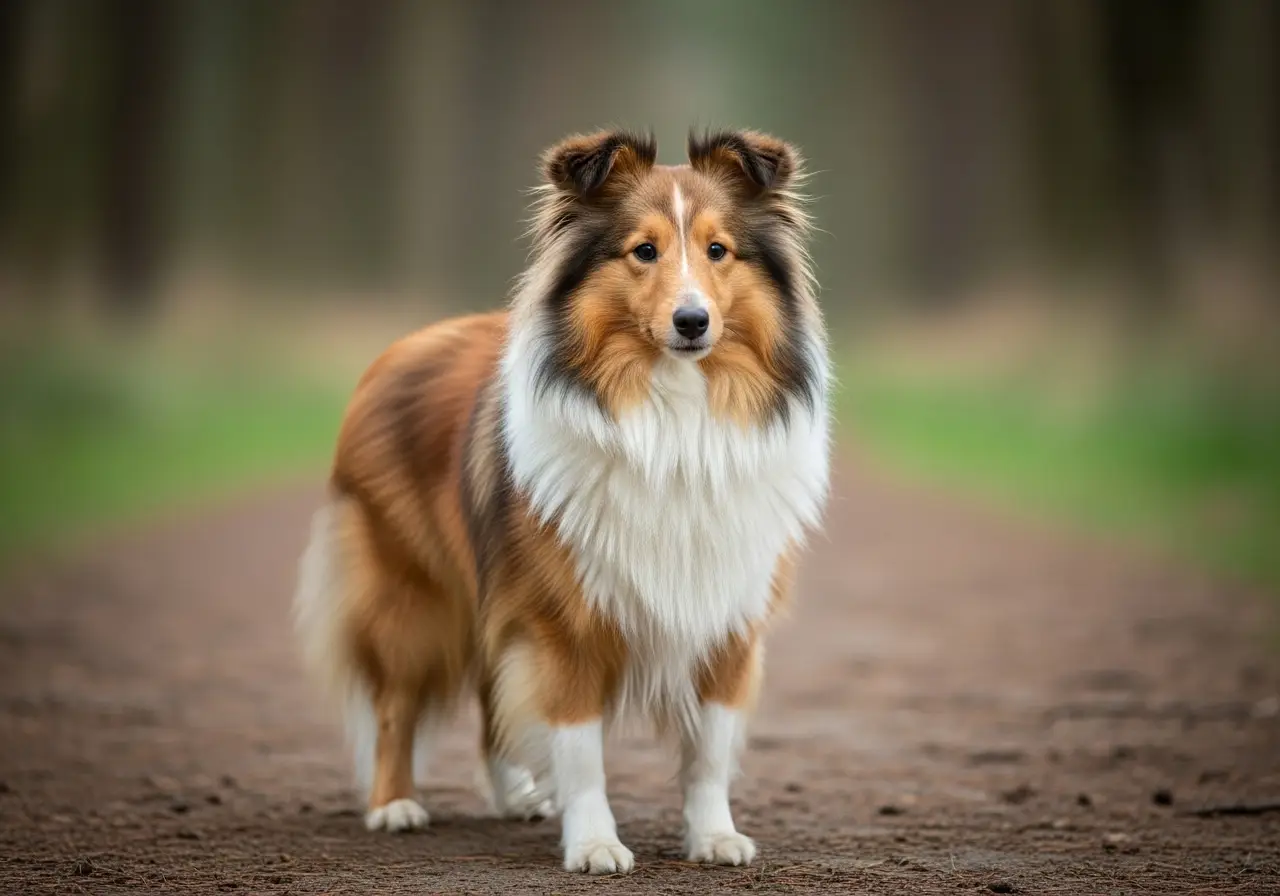
The Shetland Sheepdog is a miniature herding dog with a full working programme. Its eagerness to learn and close bond with humans can easily mask the fact that it requires daily mental and physical stimulation and clear guidance. Anyone expecting a calm companion dog will be surprised by alert behaviour, herding instinct and sensitivity. With the right owner, it unleashes exceptional potential.
02Introduction
What makes the Shetland Sheepdog (Sheltie) special
Shetland Sheepdog (Sheltie): miniaturised Collie from the Shetland Islands, highly intelligent, attentive, and closely bonded to the family
03Profile
Key facts and suitability
- Origin
- Grossbritannien
- Original purpose
- Herding sheep and ponies
- FCI
- No. 88 · Group 1 · Section 1
- height at the withers
- 33–41 cm
- Weight
- 5–11 kg
- Life expectancy
- 12–15 Years
- Coat type
- Long-haired
- Minimum exercise
- 60 min/day
- Puppy price
- 1'500–2'500 CHF
- Waiting period
- 5 months
- Sports
- Agility Obedience Flyball
04Temperament
How the Shetland Sheepdog (Sheltie) shows up in everyday life
When you come home, the Sheltie registers every change immediately: an unfamiliar vehicle in front of the house, a new smell on your jacket, a visitor in the hallway. The alerting behaviour sets in immediately, loud, precise, persistent, until the owner has confirmed the situation. This is not a mistake; this is herding dog instinct in its purest form.
In everyday family life, the internal axis becomes clearly apparent: The Sheltie needs closeness to their primary caregiver, seeks eye contact and attentively follows movements in the room. The need for social contact and the need for mental work are both four out of five, which means they do not just want to be present but to be actively included. A walk without a task is not enough for them.
The external axis deviates from this. They show reserve towards strangers, which observers often misinterpret as shyness. In fact, it is selective social behaviour: The Sheltie decides for themselves whom to trust and does not do so quickly. Anyone receiving visitors unknown to the dog should give the animal time; pushing increases tension.
With familiar conspecifics, the Sheltie is generally amenable. Towards unknown dogs, their behaviour depends on the situation; herding impulses can also occur here, especially if other dogs move quickly.
In training, they show a quality that surprises many owners: They anticipate signals before they are fully given. This makes them exceptionally high-performing in canine sports and demanding in everyday life because inconsistent signals confuse them.
05Needs
What this breed needs daily
The Sheltie needs 60 to 90 minutes of active exercise daily, divided into several sessions, not as a single long walk. Pure running rounds without a mental component do not fully meet their needs. Exercise and mental work must be combined.
Mental stimulation is not an option but a basic requirement. Structured trick training, nose work, obedience or agility are suitable forms. The Sheltie learns quickly and with nuance, which also means that they register boredom quickly and react with restlessness or barking. At least one training session per day of 15 to 20 minutes should be planned.
Being left alone is possible but must be built up gradually. Four hours are considered a realistic maximum for a well-conditioned Sheltie, provided the dog has been systematically accustomed to absence. Abrupt long absences overwhelm them.
The need for social contact is high. The Sheltie needs a reliable primary caregiver who acts in a present and consistent manner. Changing caregivers or unpredictable daily routines cause stress. Clear structures and predictable routines stabilise them.
The long coat requires weekly grooming with suitable tools. During the moulting season, twice a year, the care effort increases considerably. Ears, paws and undercoat require regular checks. Anyone who underestimates the care effort risks matting, which is painful and costly to treat.
Exercise
Medium
mental work
A lot
Social needs
High
training
Easy
06Sport & Mental and Physical Stimulation
What sports the Shetland Sheepdog (Sheltie) is suited for
Realistic in terms of physiology and genetics – not every breed suits every sport.
Structurally and physiologically suitable: Suitable for herding work, treibball and coursing.
07Quick Check
08Suitability
Who this breed is suitable for – and who it isn't
✓Matches
The Sheltie suits owners who can plan 60 to 90 minutes of active exercise daily plus at least one structured training session. An affinity for canine sports is a clear advantage; agility, obedience or rally obedience offer the dog the combination of exercise and mental work that they need.
Families with children from about eight years old are suitable if the handling of the dog is respectful and calm. Toddlers who act loudly and unpredictably overwhelm the sensitive dog. A garden is helpful but not a substitute for active enrichment.
Owners who already have experience with sensitive or herding breeds will find an exceptionally willing-to-learn partner in the Sheltie. First-time owners are not fundamentally excluded, but they need a supporting dog training school from the start and the willingness to engage intensively with herding dog psychology.
Anyone who works from home or has flexible working hours benefits from this: The Sheltie appreciates continuity and closeness to their primary caregiver. Quiet households with a regulated daily routine correspond better to their temperament than loud, unstructured environments.
×Doesn't match
The Sheltie does not suit owners who expect a calm, uncomplicated companion dog. Anyone who finds the alerting behaviour annoying and does not make time for consistent training will be in permanent conflict with the dog.
Households where the dog is regularly alone for more than four hours without a care concept existing are unsuitable. Owners who restrict exercise to short walks and do not offer mental stimulation also structurally underestimate the dog.
Anyone who views reserve towards strangers as a training problem and expects the Sheltie to greet every visitor joyfully misunderstands the breed-typical behaviour. This expectation leads to frustration on both sides. Anyone who frequently receives visitors and is looking for a sociable dog should choose a different breed.
Families with very small children who act loudly and unpredictably place a burden on the sensitive Sheltie. Loud, chaotic households without clear structures cause chronic stress in the Sheltie, which manifests as excessive barking, herding behaviour or withdrawal.
Owners who consider grooming a trivial matter should assess the time commitment realistically; especially during moulting season, weekly grooming is not sufficient.
10Line reality
Show line, working line, breeder market
In Sheltie breeding, there is no such pronounced separation between working lines and show lines as, for example, in the Border Collie or German Shepherd. Nevertheless, differences can be observed within the breed that are relevant for prospective buyers.
Breeding lines with a focus on exhibition success tend towards more pronounced type consistency in coat, colour, and proportions. The work drive is present, but occasionally takes a back seat to aesthetic breeding goals. Joy of movement and willingness to learn remain intact, but the intensity of the herding instinct varies between lines.
Lines with a focus on dog sports, particularly Agility and Obedience, produce dogs with higher reaction speed and more pronounced willingness to work. These dogs are more demanding in everyday life, as their need for enrichment is correspondingly higher.
Regionally, there are breeders in Germany, Austria, and Switzerland who try to combine both aspects. The Shetland Sheepdog Club Deutschland e.V. maintains a studbook list and provides information on the breeding goals of individual breeders.
Prospective buyers should specifically ask about the primary use focus of the parent dogs: show results alone reveal little about the working drive. Anyone looking for a dog for canine sports should prefer parent dogs with proven suitability for sports.
11Health · Reality
What you need to plan for medically with your Shetland Sheepdog (Sheltie)
According to figures from the Shetland Sheepdog Club Deutschland e.V., the life expectancy of the Shetland Sheepdog is 12 to 14 years, and in individual cases even longer. This places it among the longer-lived medium-sized breeds.
Eye diseases represent the most significant breed-specific health risk. Collie Eye Anomaly (CEA) is a hereditary eye malformation that also occurs in Shelties. Reputable breeders test parent dogs for CEA; a genetic test is available. Prospective buyers should request test results for both parent dogs. Additionally, Progressive Retinal Atrophy (PRA) occurs in the breed and can lead to blindness.
The MDR1 gene (also known as the ABCB1 gene) is frequently affected in Shelties: dogs with the MDR1 mutation react to certain medications (including ivermectin and loperamide) with severe poisoning symptoms. Studies by Washington State University show that up to 15% of Shelties may be homozygously affected. A genetic test before administering medication for the first time is strongly recommended (current status: WSU Veterinary Clinical Pharmacology Lab, regularly updated).
Hip dysplasia (HD) occurs in the breed but is less common than in large dog breeds. X-ray examinations of parent dogs by recognised assessors (OFA or SV evaluation) are standard with reputable breeders.
Dermatomyositis, an inflammatory disease of the skin and muscles, occurs as a breed-specific condition and can significantly impair quality of life in severe cases. Preventive examinations by the breeder and the vet after purchase are recommended.
12Structured data
Health by the numbers
Prone to diseases
MDR1 mutation Hip dysplasia Eye problems
Recommended health tests
MDR1 genetic test Hip X-ray Eye examination
13Myths ↔ Reality
What is often said incorrectly about this breed
Five myths, five realities, five sources.
„The Sheltie is a calm lapdog that requires little enrichment.
The Sheltie carries the full work drive of a herding dog in a small format. Without daily mental stimulation, it develops nervousness, excessive barking, or herding behaviour towards family members. It only appears calm when its needs are met.
„Shelties are naturally friendly towards all people.
The FCI standard describes the Sheltie as reserved towards strangers. This behaviour is typical for the breed and not a training error. Towards strangers, it often shows reserve up to pronounced alert behaviour; this is herding dog instinct, not shyness.
„The long coat of the Sheltie is high-maintenance, that is the only extra effort.
Grooming is indeed time-intensive (weekly brushing, intensive care during moulting). The actual extra effort lies, however, in daily training and mental stimulation. Whoever only plans for grooming fundamentally underestimates the dog.
„Shelties bark a lot because they are poorly trained.
Alert behaviour is genetically anchored in the Sheltie. As a herding dog, acoustic signalling was a core task. Consistent training can channel and reduce barking, but it cannot be completely stopped. Whoever is looking for a quiet breed should know this before buying.
„The Sheltie is a Mini-Collie, both breeds are identical in character.
Sheltie and Rough Collie share common ancestors, but differ significantly in sensitivity, reaction speed, and alert behaviour. The Sheltie reacts more finely and quickly to environmental stimuli. Whoever knows a Collie therefore does not yet know a Sheltie.
14animal welfare
The animal welfare perspective
Breeder market, designer versions, animal shelter reality — what no one writes in the puppy ad.
Shelties regularly end up in animal shelters and with breed rescue organisations, and for a recurring reason: the dog did not match what the owner had envisioned. Alert behaviour, herding instinct and high stimulation needs are underestimated before purchase but perceived as unbearable after a few months. This is not a failure of the dog.
The backyard breeder market caters to the demand for the "pretty little Collie" without regard for health tests. CEA and MDR1 genetic tests, hip X-rays and dermatomyositis screening cost time and money, both of which unscrupulous providers save. Puppies from such sources statistically end up at the vet with health problems more often and in animal shelters earlier.
Designer variants of the Sheltie, such as crosses with other small breeds under fantasy names, promise "the best of both worlds" but deliver neither the health guarantees of reputable purebred breeding nor calculable temperament traits. Anyone buying such a dog is funding a business model without breeding standards.
Adopting an adult Sheltie from animal welfare organisations is an equally valid option. Adult dogs already show their character; alert behaviour, social behaviour and energy levels are observable, not just promised. Breed rescue organisations such as the Sheltie-Notfallring place dogs with prior knowledge of their history and behaviour.
Anyone looking for a puppy should choose breeders who are members of the Shetland Sheepdog Club Deutschland e.V., provide proof of health tests and hand over puppies only from the eighth week of life onwards. No reputable breeder pressures you into buying.
15Costs · Transparency
What this breed realistically costs
A Sheltie puppy from reputable association breeding costs between 1,200 and 1,800 euros in the DACH region. Prices below that, especially under 800 euros, indicate missing health tests or unscrupulous origins. From animal welfare, the adoption fee is usually between 250 and 450 euros.
Annual living costs range from 1,500 to 2,500 euros depending on keeping conditions. This includes food (400–700 euros/year depending on quality), grooming (professional trimming 3–4 times a year at 60–100 euros each or personal effort with tools), basic equipment, dog tax and training costs.
Vet costs for routine care (vaccinations, parasite prevention, annual examination) amount to 300 to 500 euros per year. In addition come the MDR1 genetic test (one-off approx. 60–80 euros) and possible eye examinations. For illnesses such as dermatomyositis or eye surgery, individual costs of 1,000 to 3,000 euros can arise.
Dog health insurance for a Sheltie costs between 40 and 90 euros monthly depending on the provider and scope of cover. Given the breed-specific health risks, surgery insurance is recommended.
16Puppy search
What you need to consider when choosing a breeder
- Reputable Sheltie breeders are generally members of the Shetland Sheepdog Club Deutschland e.V.
- (SSCD) or a comparable association in Austria or Switzerland.
- Association membership alone is not a quality indicator, but it serves as an initial point of reference.
- The following documentation should be available before purchase: CEA genetic testing for both parent dogs, MDR1 genetic testing, hip dysplasia X-ray results (OFA or equivalent), and, depending on lineage affiliation, dermatomyositis screening.
- Anyone who cannot or will not provide these documents is not a reputable contact.
- Puppies are handed over no earlier than eight weeks of age.
- Earlier handover is a warning sign.
- A reputable breeder asks questions about the buyer's daily life, requires a home visit or an in-depth conversation, and takes the dog back in case of emergency.
- Adopting an adult Sheltie from animal welfare organisations is a fully valid alternative.
- Breed rescue organisations know the dogs and can provide recommendations for a suitable household.
- Animal shelters in the DACH region regularly have Shelties in their care.
- Purchase prices below 800 euros for a purebred puppy with papers are a warning sign.
- Reputable breeding with comprehensive health screening is costly.
FAQ
Frequently asked questions about the Shetland Sheepdog (Sheltie)
Is Shetland Sheepdog (Sheltie) suitable for beginners?
Shetland Sheepdog (Sheltie) is considered suitable for first-time dog owners.
Is Shetland Sheepdog (Sheltie) a family dog?
Shetland Sheepdog (Sheltie) is considered suitable for families with good socialisation and species-appropriate care.
How much exercise does Shetland Sheepdog (Sheltie) need?
At least around 60 minutes of exercise per day.
Does Shetland Sheepdog (Sheltie) suit an apartment?
With enough exercise and enrichment, Shetland Sheepdog (Sheltie) can also be kept in an apartment.
What is the size and weight of Shetland Sheepdog (Sheltie)?
Fully grown, Shetland Sheepdog (Sheltie) reaches about 33–41 cm at the withers and weighs around 5–11 kg.
What is the life expectancy of Shetland Sheepdog (Sheltie)?
The life expectancy of Shetland Sheepdog (Sheltie) is approximately 12–15 years.
Which diseases are common in Shetland Sheepdog (Sheltie)?
MDR1 mutation Hip dysplasia Eye problems
17Breed clubs
Official breed clubs in DACH
19Related
Similar breeds – and their differences
You might also be interested in

Participate
Do you have a good photo of your Shetland Sheepdog (Sheltie)?
We are looking for expressive images for our breed profiles. Submit yours; the editorial team reviews every submission before publication.
Does this breed suit you?
MDR1 test important before administering medication – very eager to learn and closely bonded to humans