
01Summary
In a paragraph
If you only have 30 seconds.
The Serra da Estrela Mountain Dog is not a companion dog in the classical sense. He descends from centuries of independent livestock guarding work in the Portuguese high mountains and carries this heritage in every decision. Anyone who keeps him takes responsibility for a dog that assesses situations independently, defends territory, and approaches strangers with fundamental wariness. This demands experience, space, and clear structure from the very beginning.
02Introduction
What makes the Serra da Estrela Mountain Dog special
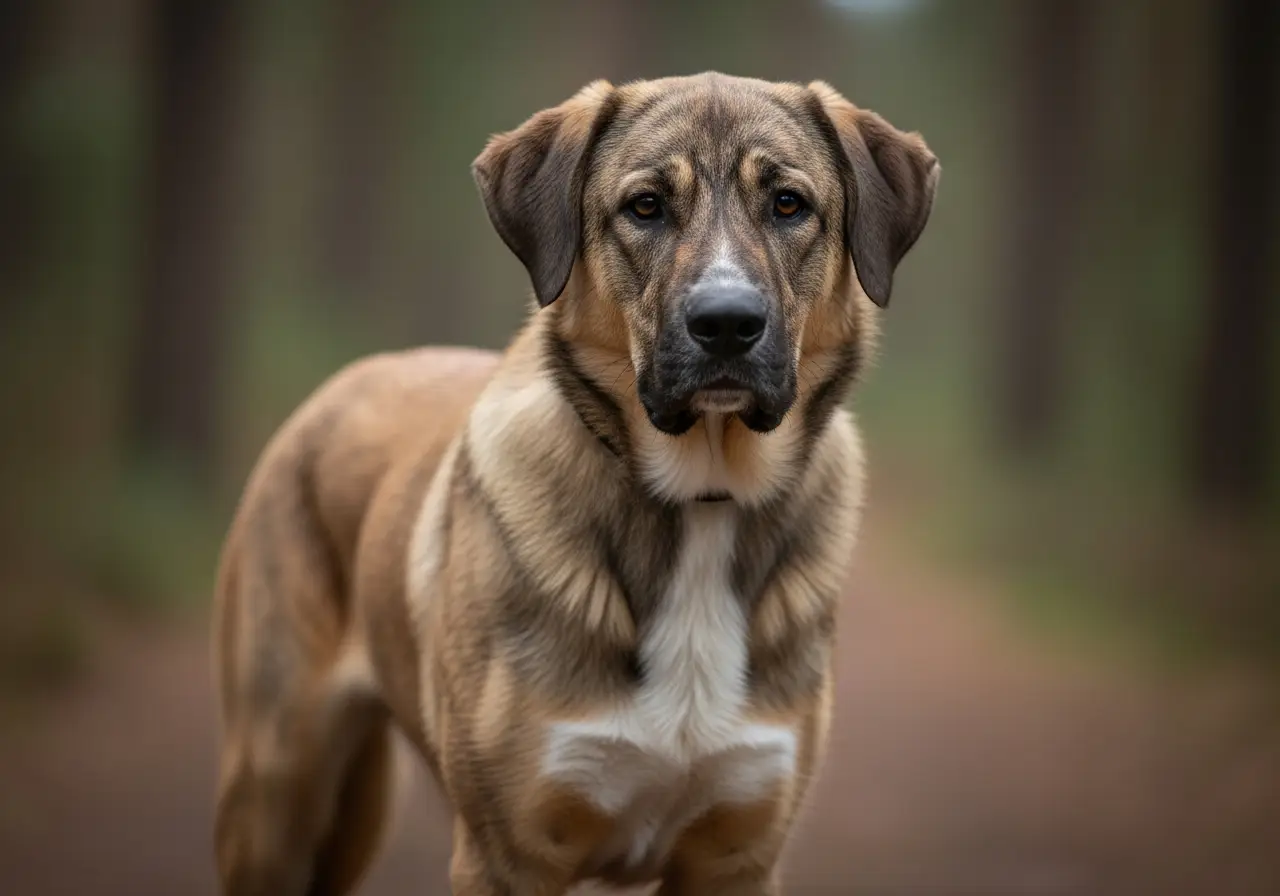
Serra da Estrela Mountain Dog: powerful Portuguese livestock guardian from the high mountains, loyal to the family, distant towards strangers
03Profile
Key facts and suitability
- Origin
- Portugal
- Original purpose
- Livestock guarding
- FCI
- No. 173 · Group 2 · Section 2.2
- height at the withers
- 62–72 cm
- Weight
- 30–50 kg
- Life expectancy
- 10–12 Years
- Coat type
- Long-haired
- Minimum exercise
- 90 min/day
- Puppy price
- 1'200–2'000 CHF
- Waiting period
- 5 months
- Sports
- Hiking
04Temperament
How the Serra da Estrela Mountain Dog shows up in everyday life
When returning home, the Serra da Estrela registers who enters the property and who does not belong there. Known people are greeted calmly; strangers are observed at a distance. It does not bark out of nervousness, but out of conviction. This difference is noticeable in everyday life.
In family everyday life, it shows itself calm and present. It does not seek constant closeness but is watchful over its territory. Children it has known since puppyhood it accepts as part of its pack; unknown children who act loudly and unpredictably trigger attention and distance in it, not playfulness.
Internal axis: The need for social contact of the Serra da Estrela is moderate. It does not require constant enrichment or an intensive bonding programme. What it needs is a clearly defined territory, a reliable primary caregiver and everyday structure without chaos.
External axis: Towards strangers (whether visitors, tradesmen or passers-by at the fence), it reacts with distrust. This behaviour is characteristic of the breed and not a sign of insufficient socialisation. It can be guided into orderly channels through early, consistent socialisation, but cannot be trained away.
Anyone who confuses these two poles and equates loyalty to the family with openness towards everyone fundamentally underestimates the breed. A Serra da Estrela that greets every visitor joyfully does not correspond to the breed type. A Serra da Estrela that tolerates visitors after introduction by the owner, however, does.
05Needs
What this breed needs daily
The Serra da Estrela requires 60 to 90 minutes of exercise daily. More decisive than the pure walking time, however, is access to a large, securely fenced property. A fence with a height of at least 180 cm and a grounded base is not a recommendation, but a minimum requirement; this dog defends its territory and must not be able to leave uncontrolled.
It requires mental stimulation in moderate amounts. It is not a dog that expects new tasks or complex training sessions daily. Calm patrol walks over its territory, structured encounters with known people and a regulated daily routine largely cover its need for mental work.
Socially, he needs a reliable primary caregiver with clear body language. He immediately registers indecisiveness or inconsistent leadership and fills any resulting gaps independently, according to his own assessment rather than that of the owner. This is not a question of dominance, but the result of millennia of selection for independent decision-making.
He generally tolerates being left alone in his own territory well, provided the area is secure and he is familiar with the situation. Six hours are a realistic guideline; beyond that, a care solution should be available.
Puppy socialisation is particularly critical for this breed. Anyone who fails to systematically accustom the dog to various people, noises, and situations during the first few months of life risks ending up with an adult dog that perceives every novelty as a threat.
Exercise
Medium
mental work
Medium
Social needs
Low
training
Experts
07Quick Check
08Suitability
Who this breed is suitable for – and who it isn't
✓Matches
The Serra da Estrela suits owners with proven experience in handling livestock guardian dogs or similarly independent breeds with strong protective instincts. Anyone who has already handled a Kangal, Maremmano, or Pyrenean Mountain Dog brings a relevant foundation to the table.
The breed is suitable for owners with a large, securely fenced property; at least 500 m² of secured outdoor space is considered the minimum. Rural or small-town locations with a quiet environment are suitable; dense urban environments with high visitor frequency are not.
Families with children aged around ten and above, who have grown up in the household and known the dog since puppyhood, can live well with this breed, provided the parents clearly take on the leadership role and children do not interact with the dog unsupervised.
Owners who are willing to invest time in early and consistent socialisation and attend a dog training school with experience in livestock guardian dogs lay the foundation for stable coexistence. Anyone who realistically plans for the breed’s wariness of strangers and structures visits accordingly will cope well with the nature of this breed.
×Doesn't match
The Serra da Estrela does not suit owners keeping a dog for the first time. Even those with experience of socially open breeds such as Golden Retrievers or Labradors often underestimate the demands of this breed, as the leadership requirements and wariness of strangers are fundamentally different.
The breed is not suitable for households without secured outdoor space. Keeping a dog in an apartment, even with daily long walks, does not replace a territory. Anyone living in a rented flat or a terraced house without their own garden should not consider this breed.
Anyone expecting the dog to greet strangers friendly after sufficient training fundamentally misunderstands the breed. Wariness of strangers is not a training error; it is a breed-typical trait. Anyone who frequently receives visitors and is looking for a socially open dog will find better compatibility in other breeds.
Households with very young children under six years of age, with frequently changing caregivers, or with high social fluctuation in daily life are also unsuitable. Owners who are absent for more than six hours a day due to work and cannot organise a care solution should also not consider keeping this breed.
10Line reality
Show line, working line, breeder market
The Serra da Estrela does not exhibit pronounced line differentiation in the sense of working lines versus show lines, as is known, for example, with the German Shepherd Dog or the Labrador Retriever. The breeding population in Central Europe is too small for independent lines with measurable behavioural differences to have established themselves.
Within Portugal, regional differences in type and temperament exist, which go back to the original areas of origin. Dogs from active herding farms tend to show more pronounced guarding behaviour and greater independence than dogs from pure companion dog breeding. However, these differences are not systematically documented and are hardly reproducible in Central European breeding.
The two coat varieties, long and short, are not lines in the cynological sense, but varieties of the same standard. They differ in maintenance effort, not in temperament or function.
Anyone looking for a Serra da Estrela should pay less attention to line affiliation than to the health documentation of the parent animals, the socialisation of the puppies and the breeder's experience with the breed. With such a small breeding population, the quality of the individual breeder is more relevant than any line affiliation.
11Health · Reality
What you need to plan for medically with your Serra da Estrela Mountain Dog
The Serra da Estrela Mountain Dog has a life expectancy of an average of 10 to 13 years. As a large molossoid, he carries an increased risk of hip dysplasia (HD) and elbow dysplasia (ED). Reliable breed-specific HD prevalence studies for the Serra da Estrela are not available in sufficient case numbers for Central Europe; as a guideline, it is noted that HD rates of 20 to 40 % are documented in non-selected populations of comparable molossoids (OFA database, status 2023). Reputable breeders provide HD X-ray findings for both parent dogs; this is a minimum standard, not a bonus.
Gastric dilatation and volvulus (bloat, GDV) is a life-threatening risk in large, deep-chested breeds. Owners should know the symptoms: distended abdomen, unproductive retching, restlessness, drooling. If suspected, every minute counts; immediate veterinary emergency care is required.
The dense coat of both varieties requires regular checks for matting, parasites and skin irritation, especially during moulting periods (spring and autumn). Ears and paws should be checked weekly.
Preventive examinations: HD/ED screening of parent dogs before breeding, annual veterinary check-ups from the fifth year of life onwards, dental checks (lips and gums are often neglected in molossoids). Overweight significantly increases the risk of joint problems in this breed; weight should be monitored regularly and kept within the normal range.
12Structured data
Health by the numbers
Prone to diseases
Hip dysplasia Elbow problems
Recommended health tests
Hip X-ray Elbow X-ray
13Myths ↔ Reality
What is often said incorrectly about this breed
Five myths, five realities, five sources.
„The Serra da Estrela is like a large Labrador, gentle and open to everyone.
The FCI standard explicitly describes it as distrustful of strangers. This distrust is not a training error, but genetically anchored livestock guarding behaviour. A Serra da Estrela that greets strangers joyfully does not correspond to the breed type. Owners must actively manage this behaviour, not try to train it away.
„With enough stimulation and sport, he becomes balanced and social.
The Serra da Estrela is not a sports dog. Its exercise requirement is moderate; what is decisive is a secured territory, not the number of kilometres. Excessive physical exertion does not change its guarding instinct. Social behaviour towards strangers remains characteristically reserved, regardless of the level of stimulation.
„Livestock guardian dogs are aggressive and dangerous; they cannot be kept as a family dog.
The Serra da Estrela is loyal and gentle towards its family; the FCI standard explicitly uses the term 'gentle towards its master'. Danger does not arise from the breed, but from lack of socialisation, unsuitable living conditions or overwhelmed owners. With experienced leadership and clear structure, it is a reliable family dog.
„The long coat requires intensive care; the short-haired version is the easier choice.
Both coat varieties of the Serra da Estrela require regular grooming, especially during moulting. The short-haired variant slightly reduces the maintenance effort, but does not change character, housing requirements or guarding instinct. Anyone who decides on the breed primarily chooses a temperament, not a coat variety.
„As a rare breed, it is particularly healthy; inbreeding is not an issue.
Rarity does not protect against hereditary diseases. In small breeding populations, the risk of inbreeding depression and the spread of recessive hereditary defects increases. Hip dysplasia (HD) is a known risk in large Molossoids. Reputable breeders provide X-ray findings for both parent animals. Anyone who omits this acts negligently.
14animal welfare
The animal welfare perspective
Breeder market, designer versions, animal shelter reality — what no one writes in the puppy ad.
The Serra da Estrela Mountain Dog is a rarity in Germany and Switzerland. This protects it from certain trends but creates its own risks.
Backyard breeder market: Because demand exceeds supply, there are offers from Eastern Europe advertising low prices and short waiting times. Such offers often come from operations without health documentation, without socialisation of the puppies and without breed knowledge. A puppy from such origins carries an increased risk of behavioural issues and health problems; both are particularly consequential in this breed, as the husbandry requirements are already high.
Husbandry-related problems: The most common animal welfare case involving the Serra da Estrela does not arise from neglect in the classical sense, but from misjudgement. Owners who choose the breed for its imposing appearance without knowing the handling requirements and space needs quickly reach their limits. A territorially driven dog weighing 50 kilograms, kept in a city apartment or a small semi-detached house garden, develops behavioural issues not because it is difficult, but because its basic needs are not met.
Rehoming as an option: Adult Serra da Estrela dogs available for rehoming exist. They rarely end up in general animal shelters, more often through breed club networks or specialised livestock guardian dog rehoming organisations. For experienced owners with suitable infrastructure, an adult dog with a known history is a responsible alternative to a puppy and often the quicker option. The Club for Southern and Eastern European Shepherd Dogs (KSOH) can serve as a first point of contact here.
15Costs · Transparency
What this breed realistically costs
A puppy from a reputable breeder costs between 1,500 and 2,500 euros in Central Europe, depending on the breeding line, health documentation and country of origin. Offers significantly below this signal missing investments in health tests or socialisation.
Running costs per year: Food for an adult Serra da Estrela (40–60 kg) costs between 800 and 1,500 euros annually, depending on quality. Grooming (regular brushing for the long-haired variety, occasional trimming visits) costs 200 to 400 euros per year. Basic veterinary care (vaccinations, parasite prevention, annual check-up) amounts to 300 to 600 euros annually.
Unforeseen veterinary costs: In the case of gastric torsion (GDV), emergency operations from 2,000 euros are realistic. HD treatments range between 500 and 3,000 euros depending on severity. Pet insurance with surgery cover costs 60 to 120 euros monthly for this size class and is a sensible safeguard for this breed.
Infrastructure costs: A secure fence (180 cm, ground-anchored) for a large plot is a one-off investment of 3,000 to 8,000 euros, depending on plot size and execution. These costs belong in the realistic total calculation before getting a dog.
16Puppy search
What you need to consider when choosing a breeder
- Reputable Serra da Estrela breeders are exceptionally rare in Central Europe.
- Waiting periods of twelve to eighteen months are realistic.
- Anyone who finds a puppy within a few weeks should regard this as a warning sign.
- Characteristics of reputable breeding: Both parent dogs have been X-rayed for hip dysplasia (HD) and the findings are presented in writing.
- The breeder is a member of a recognised breed club, such as the Club for South and East European Herding Dogs (KSOH) in Switzerland.
- Puppies grow up in a family environment, not isolated in kennels.
- The breeder asks questions about the owner, the living conditions, and experience, and rejects applicants who are not suitable.
- Adoption as an equally valid option: Adult Serra da Estrela Mountain Dogs available through rehoming exist, albeit rarely.
- They are often dogs surrendered by overwhelmed owners.
- An adult dog from reputable rehoming with a known background can be a responsible choice for experienced owners.
- Breed club contacts and specialised livestock guardian dog rehoming organisations are the right places to turn here.
- Purchase offers from abroad without personal inspection, without health documentation, or at unusually low prices are highly likely to be unreliable.
FAQ
Frequently asked questions about the Serra da Estrela Mountain Dog
Is Serra da Estrela Mountain Dog a family dog?
Serra da Estrela Mountain Dog is considered suitable for families with good socialisation and species-appropriate care.
How much exercise does Serra da Estrela Mountain Dog need?
At least around 90 minutes of exercise per day.
What is the size and weight of Serra da Estrela Mountain Dog?
Fully grown, Serra da Estrela Mountain Dog reaches about 62–72 cm at the withers and weighs around 30–50 kg.
What is the life expectancy of Serra da Estrela Mountain Dog?
The life expectancy of Serra da Estrela Mountain Dog is approximately 10–12 years.
Which diseases are common in Serra da Estrela Mountain Dog?
Hip dysplasia Elbow problems
17Breed clubs
Official breed clubs in DACH
19Related
Similar breeds – and their differences
You might also be interested in


Participate
Do you have a good photo of your Serra da Estrela Mountain Dog?
We are looking for expressive images for our breed profiles. Submit yours; the editorial team reviews every submission before publication.
Does this breed suit you?
Large livestock guardian dog – territorial and independent, not suitable for first-time dog owners