4 sourcesUpdated September 11, 2026Responsible editor: Roger KleinText: Redaktion rundum.dog
01Summary
In a paragraph
If you only have 30 seconds.
The Leonberger is a large, calm companion dog from Baden-Württemberg, bred for representation and work, today primarily a family dog with clear keeping requirements. Its dense coat, weight and breed-specific health risks require concrete preparation. Anyone who brings space, time and financial resilience receives a people-oriented, mentally strong dog with a confident presence.
02Introduction
What makes the Leonberger special
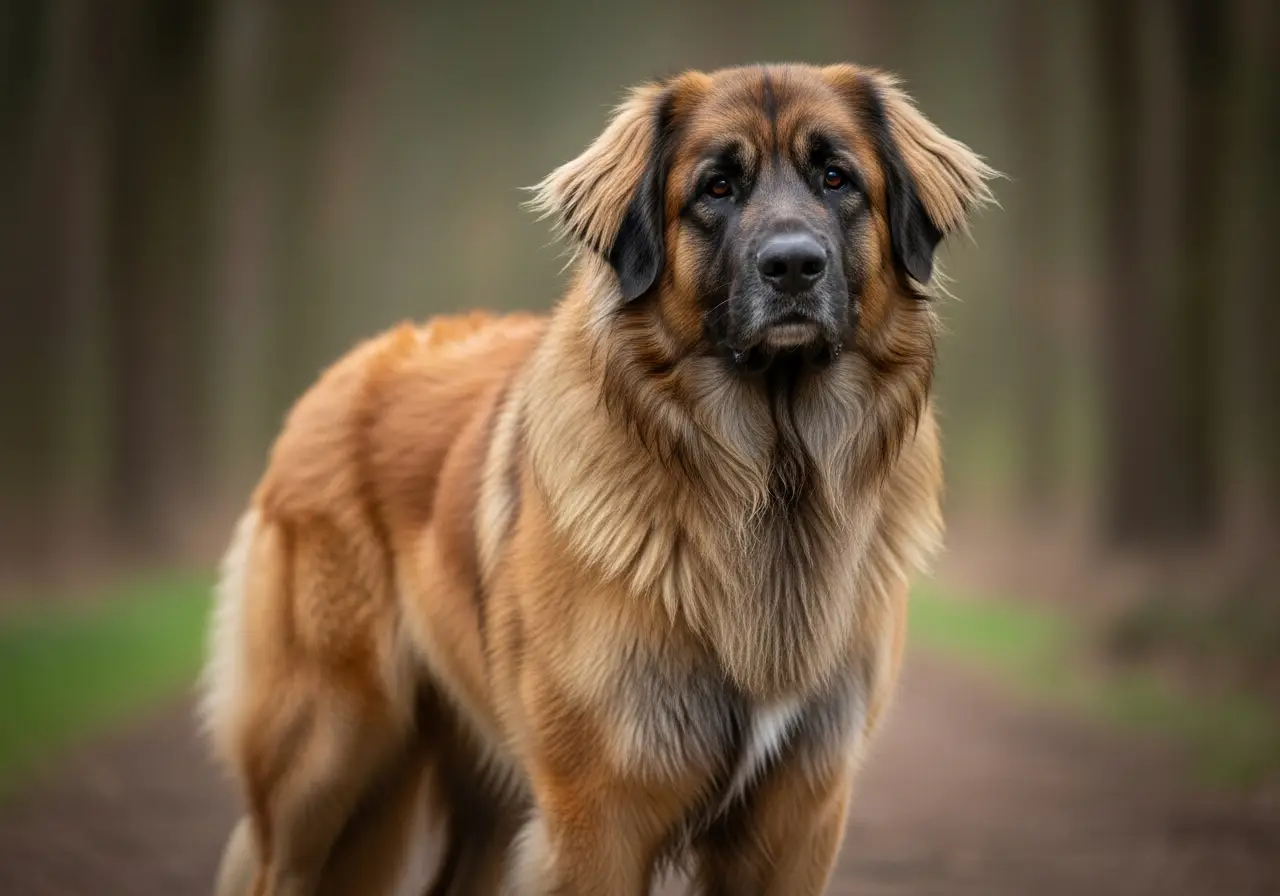
The Leonberger is a gentle German giant dog, FCI Group 2, with breed-typical polyneuropathy (LPN), height at the withers 65–80 cm.
03Profile
Key facts and suitability
- Origin
- Deutschland (Leonberg)
- Original purpose
- Companion dog and draft work
- FCI
- No. 145 · Group 2 · Section 2.2
- height at the withers
- 65–80 cm
- Weight
- 41–77 kg
- Life expectancy
- 8–10 Years
- Coat type
- Long-haired
- Minimum exercise
- 60 min/day
- Puppy price
- 2'000–3'500 CHF
- Waiting period
- 12 months
- Sports
- Swimming · sledding sports · Obedience · Therapy dog
04Temperament
How the Leonberger shows up in everyday life
When you come home after a long day at work, you are not met by a hyperactive greeting storm. The Leonberger gets up, wags its tail calmly and seeks physical contact: it puts its head on your knee and stays there. This calmness is not disinterest; it is an expression of a deep, stable family bond.
At home, the Leonberger has a high need for social contact: It relies on human closeness and does not tolerate long phases of isolation. Four hours alone are the realistic maximum for a well-adjusted dog. Anyone who is regularly away from home for longer must organise a care solution, without compromise.
Towards strangers, the Leonberger behaves openly and neutrally. A high need for social contact and high friendliness towards strangers go together here: a well-socialised Leonberger shows neither shyness nor aggression. It observes, takes its time and then makes contact. This makes it manageable in everyday life with visitors, in the city or at the vet, provided that socialisation in puppyhood was broad and consistent.
On a walk, it moves at a moderate pace. It does not pull hectically, but explores thoroughly. On the dog meadow, it rarely seeks conflict; it tends to avoid smaller dogs rather than escalating. With children in the household, it shows patience: its threshold for irritation is high. Nevertheless, the following applies: No dog of this size should interact with toddlers unsupervised. An accidental knock-over due to body mass is possible at any time.
It requires mental work to a moderate extent. Nose work, search games and structured training sessions are sufficient to provide it with mental and physical stimulation. It learns attentively and cooperatively. Pressure and harsh correction are counterproductive.
05Needs
What this breed needs daily
The Leonberger requires 60 to 90 minutes of exercise daily at a moderate pace. Intensive sporting exertion (long endurance running, cycling accompaniment over several kilometres) should be avoided before the complete completion of bone growth (approx. 18 to 24 months). Afterwards, extended hikes, swimming and pulling work are possible and sensible.
The form of exercise plays a role: Leonbergers benefit from varying routes, changes in terrain and sniffing time. A dog that completes the same round at a steady pace every day is not sufficiently stimulated; it is merely tired.
It requires mental and physical stimulation to a medium extent. Nose work, search games and short training sequences with clear tasks cover its need for mental work. Complex dog sports such as IPO or Agility are not typical for this breed. They are possible, but not a must.
The need for social contact is high. The Leonberger is not a dog that occupies itself. It requires human presence as a basic condition of its well-being. Being left alone must be built up step by step and consistently; four hours are the realistic maximum.
Grooming is an independent time commitment: The dense topcoat with undercoat mats without regular brushing (at least three to four times a week, daily during the moulting period). Ears, paws and the area around the mane collar require special attention. Anyone who perceives grooming as a tedious duty significantly underestimates the effort involved.
Space is not negotiable. A house with a garden or direct access to sufficient open space is the basic requirement. Cramped living conditions permanently burden a dog of this body mass.
Exercise
Medium
mental work
Medium
Social needs
High
training
Medium
06Quick Check
07Suitability
Who this breed suits and who it doesn't
✓Matches
The Leonberger suits owners who live in a house with a garden or have direct access to large open spaces and devote 60 to 90 minutes daily to structured exercise. Families with children of school age are suitable if clear rules apply for handling the dog and supervision is ensured.
Suitable are owners with prior experience in handling large breeds or those who use a supporting dog training school from the start and are prepared to build up training consistently during puppyhood. Calm, structured households correspond better to the nature of the Leonberger than chaotic, fluctuating daily rhythms.
Anyone who regularly works from home or has flexible working hours benefits from this: The Leonberger requires human closeness as a basic condition. Owners who integrate dogs into their leisure activities (hiking, swimming, excursions) find in it an enduring companion.
Financially, owners must plan a realistic budget: Vet costs for a large breed with breed-typical health risks (LPN, HD, heart diseases) are significantly above average. Anyone who factors in these costs and takes out pet health insurance is well positioned.
×Doesn't match
The Leonberger is not suitable for owners who live in a small city apartment without a garden and do not have regular access to large open spaces. Anyone who is away from home for more than four hours a day and cannot organise care arrangements fundamentally underestimates the need for social contact of this breed.
The Leonberger is not suitable for owners who mistake its calmness and friendliness for low maintenance. A calm dog is not a low-maintenance dog: grooming, space requirements and vet costs are real demands, not footnotes.
Owners who are physically limited or have difficulty handling a large dog on a lead should soberly assess the body mass of an adult male: Up to 77 kg of dog on a lead require physical control that cannot be compensated for by training alone.
Anyone with little experience with dogs and no plan for accompanying support from a dog training school risks leaving the training windows in puppyhood unused, with lasting consequences for everyday control. Anyone who also lives in a warm climate and cannot offer a cool retreat exposes the dog to unnecessary strain.
08Related
Similar breeds and how they differ
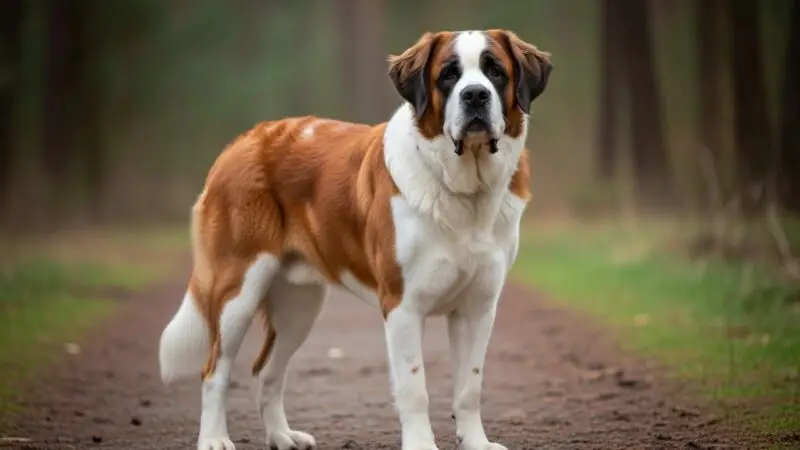
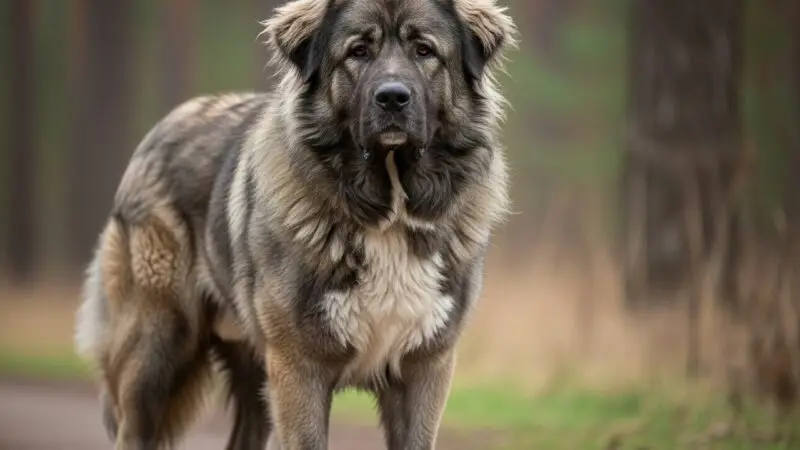
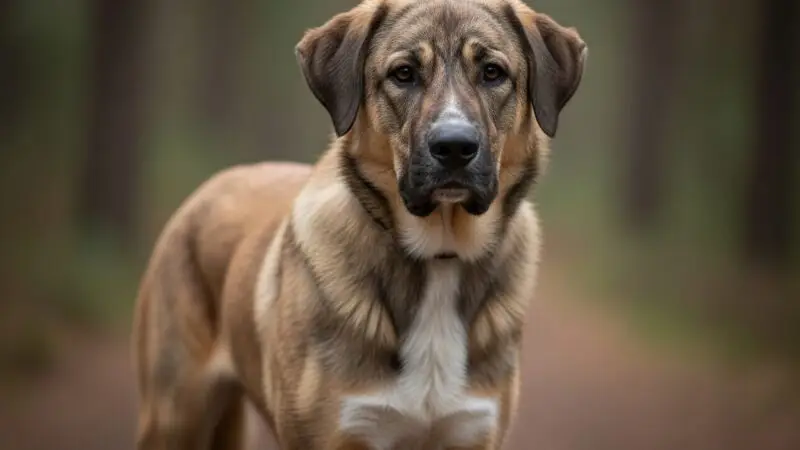
09Line reality
Show line, working line, breeder market
The Leonberger does not have a pronounced working line in the sense of IPO or protection dog breeding. The historical differentiation was rather between representation dogs (court aristocracy, status symbol) and utility dogs (farm, draught work), a distinction that no longer has breeding relevance today.
Within today's breeding, there is a tension between dogs bred for show success and those where temperament tests and health screenings are in the foreground. Show-oriented lines occasionally tend towards a heavier build and more abundant coat. Both can come at the expense of freedom of movement if breeding selection is not consistently focused on health.
In Switzerland, reputable breeding clubs in the German-speaking region require temperament tests and health examinations as a condition for breeding approval. The Deutsche Club für Leonberger Hunde e.V. mandates HD/ED X-rays and LPN DNA tests for breeding animals. Anyone looking for a puppy should specifically ask for breeders who document both criteria, temperament and health, regardless of whether the parent dogs hold show titles.
Regional differences between German, Swiss and Austrian breeding lines exist, but are less relevant for the owner in everyday life than the individual breeding selection of the respective breeder.
10Health · Reality
What you need to plan for medically with your Leonberger
The life expectancy of the Leonberger is 8 to 10 years, a typical value for a breed of this body size, but one that means health problems often already occur in middle age.
Hip dysplasia (HD) and elbow dysplasia (ED) are the most common orthopaedic diseases. According to evaluations by the German Leonberger Club (Deutscher Club für Leonberger Hunde e.V.), around 20 to 30 percent of examined dogs show HD findings in the A to C range; reputable breeders X-ray both parent animals and disclose the findings.
Leonberger polyneuropathy (LPN1 and LPN2) is a breed-specific, genetically determined disease of the peripheral nervous system. It manifests as progressive gait disturbance, laryngeal paralysis and muscle wasting and can affect dogs from the fifth year of life onwards. DNA tests for LPN1 and LPN2 are available; breeders who do not provide test results should be avoided.
Heart diseases, particularly dilated cardiomyopathy (DCM), occur frequently in large breeds. An annual heart examination from the fourth year of life is recommended.
Gastric torsion (gastric dilatation-volvulus, GDV) is a life-threatening emergency that occurs disproportionately frequently in deep-chested large dogs. Owners must know the early signs: distended abdomen, unsuccessful retching, restlessness. Every delay at the vet costs lives.
Preventive examinations: HD/ED X-rays at 12 to 18 months of age, LPN DNA test, annual heart examination from the fourth year of life, regular weight control. Overweight puts disproportionate strain on joints and heart: a Leonberger with 5 kg of overweight carries the equivalent of around 7 percent additional body load on already strained joints.
11Structured data
Health by the numbers
Prone to diseases
hip dysplasia, Leonberger polyneuropathy (LPN, breed-specific), heart problems, gastric torsion
Recommended health tests
hip X-ray, DNA test for LPN, cardiac examination
12Myths ↔ Reality
What is often said incorrectly about this breed
Five myths, five realities, five sources.
"The Leonberger is a good guard dog because of its size, actively repelling intruders.
The FCI standard explicitly describes the Leonberger as neither shy nor aggressive. Its guarding instinct is moderate; it barks and shows presence, but does not attack actively. Anyone looking for a protection dog chooses the wrong breed. The Leonberger is a companion dog with a guarding instinct, not a protection dog in the working sense.
"Leonbergers are so gentle that they suit every owner, even without experience.
An adult male dog can reach a body weight of up to 77 kg and a height at the withers of 80 cm. Without early-established, consistent leadership, such a dog becomes uncontrollable in everyday life, not due to aggression, but simply due to its body mass. Owners without prior experience with large breeds absolutely need accompanying dog training school attendance and experienced support.
"The dense coat of the Leonberger protects it from heat.
The opposite is true. The dense topcoat with undercoat insulates against cold, but prevents effective heat dissipation at high temperatures. Leonbergers are sensitive to heat and show clear signs of stress at temperatures above 25 °C. Intensive exercise in the midday heat should be avoided; access to shade and water is mandatory.
"Leonberger polyneuropathy (LPN) is rare and only affects old dogs.
Leonberger polyneuropathy (LPN1 and LPN2) is a breed-typical, genetically determined disease of the peripheral nervous system. It can affect dogs already in middle age and leads to progressive gait disturbance, laryngeal paralysis and muscle wasting. Reputable breeders carry out DNA tests for LPN1 and LPN2 and disclose the results. A puppy without documented parent testing is a calculable risk.
"A Leonberger can be kept without problems in a large city apartment.
The FCI standard describes the Leonberger as a dog that can be taken anywhere; this refers to temperament, not living space. A dog of this body mass needs sufficient exercise space, a secure outdoor area and the opportunity to lie down undisturbed. Keeping in an apartment without a garden or direct access to large open areas increases the risk of lack of exercise and associated joint problems.
13animal welfare
The animal welfare perspective
Breeder market, designer versions, animal shelter reality: what no one writes in the puppy ad.
Leonbergers regularly end up in animal welfare organisations, not because they are difficult dogs, but because their keeping requirements are underestimated before purchase. The most common reasons for surrender are moving to smaller premises, financial overload due to vet costs and the simple difference between a Leonberger puppy and an adult dog weighing 60 to 77 kg.
The backyard breeder market also exists for this breed. Puppies without health documentation, without LPN DNA testing of the parent animals and without pedigree are offered on classifieds platforms at prices that appear attractive at first glance. The follow-up costs (treatment of HD, LPN or heart diseases) regularly exceed the savings on the purchase price many times over. A puppy without complete health documentation is not a bargain; it is a calculable financial and emotional risk.
Designer variants of the Leonberger (crosses that promise the appearance without breeding documentation) are present in the market, but rare. The main problem with this breed is not the trend towards hybrid forms, but the underestimation of the original: Many buyers react to the impressive appearance and calm presence without researching the concrete requirements for space, care and health prevention.
Rehoming an adult Leonberger from animal welfare is an equally valid option. Breed-specific rehoming organisations know the dogs, can assess their temperament and health status, and provide expert guidance throughout the rehoming process. An adult dog has the advantage that the growth phase, with its associated training demands, is already complete. Anyone open to this option saves a dog and is often making the better-informed decision.
14Costs · Transparency
What this breed realistically costs
A puppy from a reputable breeder with full documentation costs between 1,800 and 2,800 EUR in the German-speaking region. Prices below this range are a warning sign; higher prices are possible if the parent dogs hold show titles.
The annual living costs for an adult Leonberger realistically lie between 3,000 and 5,000 EUR. Food for a dog weighing 60 to 77 kg (quality dry food or BARF, raw feeding) costs 80 to 180 EUR per month, depending on the feeding method. Grooming by a professional dog groomer costs 80 to 150 EUR per session; with three to four sessions annually, this amounts to 240 to 600 EUR.
Veterinary costs are the biggest uncertainty. Routine check-ups, vaccinations, and parasite prevention cost 300 to 600 EUR annually. Treatments for breed-typical conditions (HD surgery, LPN assessment, heart medication) can quickly reach 3,000 to 8,000 EUR. Pet insurance for this breed costs 80 to 150 EUR per month; given the health risks, it is a serious option to consider.
Accessories (lead, collar, transport crate, sleeping area) are more expensive for a dog of this size than for smaller breeds. A suitable vehicle with sufficient cargo space must also be factored in.
15Puppy search
What you need to consider when choosing a breeder
- A reputable breeder discloses the health tests of both parent animals: hip dysplasia (HD) and elbow dysplasia (ED) X-ray reports, DNA tests for LPN1 and LPN2, and heart examinations are part of the minimum standard.
- Anyone who does not provide these documents or evades questions is not a reputable contact.
- The puppy stays with its mother for at least eight weeks and is handed over with a complete vaccination record, microchip and pedigree.
- A breeder who gives away puppies earlier or does not provide proof of pedigree does not work according to VDH/FCI standards.
- Reputable breeders are members of the German Leonberger Club (Deutscher Club für Leonberger Hunde e.V.), the Swiss Leonberger Club (SLC) or the Austrian Leonberger Club (ÖCLH).
- These associations maintain studbooks and check breeding suitability.
- Adoption is an equally valid option: Leonbergers often end up in animal welfare organisations because their size and care requirements are underestimated.
- Breed-specific adoption organisations and the Leonberger rescue service place dogs with a known history.
- An adult dog from adoption has the advantage that its temperament and health status can already be assessed.
- Purchase prices below 1,500 EUR for a puppy with complete documentation are a warning signal, not a bargain.
FAQ
Frequently asked questions about the Leonberger
Is Leonberger suitable for beginners?
Leonberger is considered suitable for first-time dog owners.
Is Leonberger a family dog?
Leonberger is considered suitable for families with good socialisation and species-appropriate care.
How much exercise does Leonberger need?
At least around 60 minutes of exercise per day.
What is the size and weight of Leonberger?
Fully grown, Leonberger reaches about 65–80 cm at the withers and weighs around 41–77 kg.
What is the life expectancy of Leonberger?
The life expectancy of Leonberger is approximately 8–10 years.
Which diseases are common in Leonberger?
hip dysplasia, Leonberger polyneuropathy (LPN, breed-specific), heart problems, gastric torsion
Participate
Do you have a good photo of your Leonberger?
We are looking for expressive images for our breed profiles. Submit yours; the editorial team reviews every submission before publication.
Does this breed suit you?
‘Lion dog’ from Leonberg. Gentle and family-friendly. Request an LPN DNA test before purchase – this neurological disease is typical for the breed.