
01Summary
In a paragraph
If you only have 30 seconds.
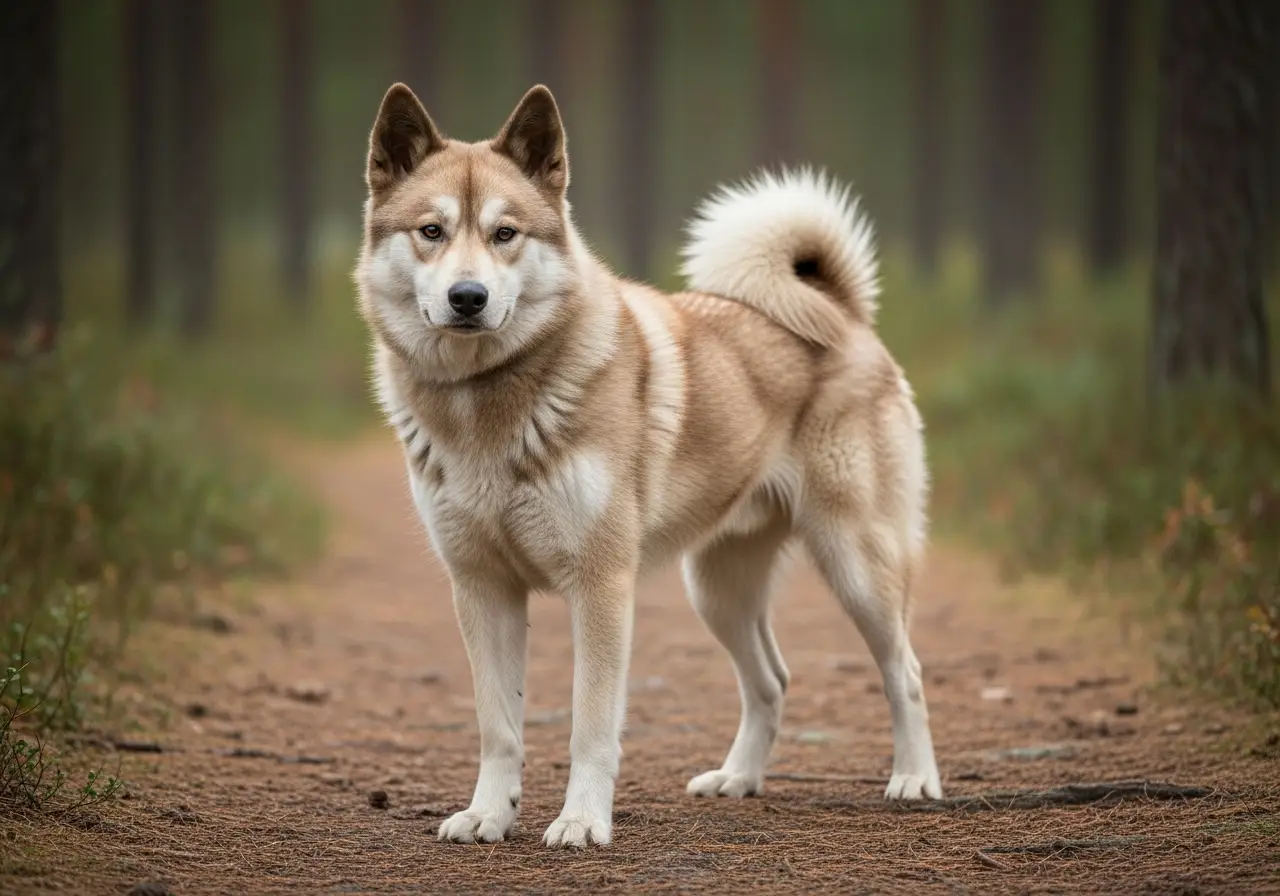
The Greenland Dog belongs to the oldest sled dogs in the world, bred not for living room carpets but for Arctic work under extreme conditions. Its exercise requirement is 120 to 180 minutes daily, its prey drive is strongly pronounced, and its independence is genetically anchored. Anyone keeping this breed needs experience with Nordic working dogs, access to sled dog sports, and a cool climate.
02Introduction
What makes the Greenland Dog special
The Greenland Dog is one of the most primitive and oldest sled dogs, FCI Group 5, bred for Arctic conditions, shoulder height 58–68 cm.
03Profile
Key facts and suitability
- Origin
- Grönland
- Original purpose
- Sled pulling, hunting polar bears and seals
- FCI
- No. 274 · Group 5 · Sektion 1: Nordische Schlittenhunde
- height at the withers
- 58–68 cm
- Weight
- 30–47 kg
- Life expectancy
- 11–13 Years
- Coat type
- Doppel
- Minimum exercise
- 180 min/day
- Puppy price
- 1'500–3'000 CHF
- Waiting period
- 12 months
- Sports
- Sled dog sports · Canicross · Skijöring
04Temperament
How the Greenland Dog shows up in everyday life
The morning run reveals what distinguishes the Greenland Dog from a companion dog: It pulls. Not out of disobedience, but because pulling work is its genetic basic programme. Anyone who walks it on a normal lead without a sled dog harness and clear structure fights against millennia of selection daily.
At home, it behaves calmly as long as its need for movement is met. If under-stimulated, it makes itself noticeable through howling, digging, or destructive behaviour. These signals are not whims, but indications of a structural keeping problem.
Here the dual-axis model applies: Internally, the Greenland Dog shows a high need for social contact; it is a pack animal and suffers from long periods of being left alone. Externally, it reacts neutrally to openly towards strangers, without a pronounced guarding instinct. These two axes must not be confused: That it is friendly towards strangers does not mean that it is easy to handle or train. Its willingness to cooperate with humans is situation-dependent and selective.
In the pack with other dogs, it shows clear hierarchy patterns. Conflicts between males are possible and should not be underestimated. It can coexist with children who are calm and respectful in their handling, but toddlers and unstructured interactions do not suit its temperament.
Its prey drive is strongly pronounced. Cats, small animals, and free-roaming animals in the vicinity pose a permanent risk. Off-leash walking without secured terrain is not an option.
05Needs
What this breed needs daily
The Greenland Dog requires at least 120 to 180 minutes of active exercise daily, and not just walks, but structured stimulation with physical resistance. Sled dog sports (canicross, bikejoring, sled dog sports) correspond most closely to its genetic orientation. Anyone who does not have access to these sports must consistently establish alternative forms of intense exercise.
Mental stimulation alone is not enough. The Greenland Dog is not a dog that is stimulated through nose work or fetching exercises. Its need for mental work is high, but it manifests differently than in herding dogs: It requires room for decision-making, orientation in the terrain, and tasks with physical demands.
Being left alone presents a particular challenge. The Greenland Dog is pack-oriented and tolerates being alone poorly; a maximum of two to three hours is considered a realistic limit. Anyone working full-time away from home requires a reliable care solution.
The climate plays a direct role. The Greenland Dog is optimised for arctic conditions. Heat above 25 degrees Celsius constitutes a serious strain. In warmer regions or during heatwaves, activity must be shifted to the early morning or late evening hours. Keeping in Southern Europe or in regions with long summers requires special caution.
Keeping in a kennel or pure apartment keeping without massive compensation through sport is incompatible with the well-being of this breed. An outdoor area with shading possibilities and cool ground is not a luxury, but a basic requirement.
Exercise
Very high
mental work
A lot
Social needs
High
training
Experts
06Sport & Mental and Physical Stimulation
What sports the Greenland Dog is suited for
Realistic in terms of physiology and genetics – not every breed suits every sport.
Structurally and physiologically suitable: Suitable for mantrailing, dummy work and tracking · CaniCross / bikejoring possible.
07Quick Check
08Suitability
Who this breed is suitable for – and who it isn't
✓Matches
The Greenland Dog suits owners who have already gained experience with Nordic working dogs or other independent breeds. Active sled dog sports (canicross, bikejöring, sledding) should be a regular part of daily life or planned concretely.
A suitable owner lives in a region with a temperate to cool climate, has sufficient open space or regular access to secure terrain, and can provide at least two hours of structured exercise daily. Professionals who leave the dog alone for a maximum of two to three hours and organise reliable care for longer absences are suitable.
Households with older children from ten years old, who handle dogs calmly and respectfully, are possible, provided that the adults take full responsibility for handling. Owners who enjoy outdoor-oriented activities such as hiking, ski touring or trekking and view the dog as a working partner will find an enduring companion in this breed.
×Doesn't match
The Greenland Dog does not suit owners keeping a dog for the first time. Even owners with prior experience with companion dogs or small breeds regularly underestimate what this breed demands.
Anyone who is out of the house for eight hours daily and cannot organise care structurally overburdens the dog, regardless of motivation or good will. Anyone who sets obedience and classic compliance as the standard for a "good dog" will permanently conflict with the independent decision-making behaviour of the Greenland Dog.
Anyone who mistakes external friendliness towards strangers for internal willingness to cooperate significantly underestimates the training effort. Households with small animals, cats or very young children should be viewed critically due to the pronounced prey drive and body size. Anyone living in a city apartment without outdoor space or in a region with long heat periods should not choose this breed, not as punishment, but because the keeping conditions do not meet the animal's needs.
10Line reality
Show line, working line, breeder market
The Greenland Dog is not bred in clearly separated working and show lines in Europe, as is the case with some other breeds. The population is small, and breeding focuses primarily on the FCI standard with an emphasis on type and health.
In Greenland itself, a traditional working population exists that continues to be actively used as sled dogs, particularly in regions north of the Arctic Circle where motorised alternatives are impractical. These dogs are still primarily selected based on performance criteria and differ in temperament and drive from European breeding stock.
In Germany, Austria, and Switzerland, the breed is supported by specialised clubs such as the German Club for Nordic Dogs (DCNH) and the Swiss Club for Nordic Dogs (SKNH). Breeding numbers are low. Anyone acquiring a Greenland Dog from European breeding will generally receive a dog with a similar basic character to the working population, although the intensity of the work drive may vary.
A distinction between “family line” and “sport line” is not established for this breed and would also be misleading: The Greenland Dog is a working dog in its entirety, whose keeping without sporting stimulation does not correspond to its nature.
11Health · Reality
What you need to plan for medically with your Greenland Dog
Compared to many modern breeds, the Greenland Dog is considered robust in terms of health. Systematic population-wide health data are limited due to low breeding numbers in Europe, which makes precise statements about disease frequencies difficult.
Hip dysplasia (HD) is also documented in Nordic working dogs. The DCNH recommends HD X-ray examinations before breeding. Anyone acquiring a puppy should review the HD results of both parent animals.
According to breed club sources, life expectancy is approximately 10 to 14 years, a range typical for medium to large dogs, which is influenced by keeping conditions and preventive healthcare.
Heat stress is the most specific health risk for this breed. The dense double coat is optimised for Arctic temperatures. At temperatures above 25 degrees Celsius, the risk of heatstroke increases significantly. Activities must be shifted to the cooler times of day; water and shade are not options but mandatory.
Overweight is a real risk if exercise requirements are not met. A Greenland Dog that does not work sufficiently tends to gain weight, with subsequent strain on joints and the cardiovascular system.
Preventive examinations should include at least annual general check-ups, dental checks, and weight monitoring. In case of performance decline, lameness, or heat symptoms, veterinary clarification is necessary without delay.
12Structured data
Health by the numbers
Prone to diseases
Hip dysplasia, generally very robust (close to wild type)
Recommended health tests
Hip X-ray
13Myths ↔ Reality
What is often said incorrectly about this breed
Five myths, five realities, five sources.
„The Greenland Dog is like a Husky, just bigger.
Greenland Dogs and Siberian Huskies share Group 5 but differ significantly in body structure, temperament, and selection history. The Greenland Dog was selected over millennia under Arctic extreme conditions for maximum endurance and independence. It is heavier, more robust, and significantly less oriented towards human guidance than the Husky. Training approaches that work with Huskies often fail with Greenland Dogs.
„Because it is friendly towards strangers, it is also easy to socialise.
The FCI standard describes the Greenland Dog as friendly towards humans; this refers to its external reaction to strangers, not its internal willingness to submit. Need for social contact and cooperation readiness towards humans are two different axes. The Greenland Dog shows a high need for social contact in the pack but makes independent decisions and responds little to classic obedience exercises.
„As a working dog, it is robust; health problems are not an issue.
Compared to many modern breeds, the breed is considered healthily stable. Nevertheless, risks exist: heat stress is a serious problem for Greenland Dogs due to their arctic adaptation. Joint diseases such as HD can occur, even though systematic population data for this breed are limited. A veterinary initial examination and regular preventive care are not optional, even for robust breeds.
“In the garden, he can provide himself with stimulation.
A garden does not replace structured stimulation. The Greenland Dog requires 120 to 180 minutes of active exercise daily, involving mental and physical demands, ideally pulling work in dog sports. A dog left to its own devices in the garden will develop boredom, digging, howling, or other avoidance behaviours. Independence does not mean self-sufficiency.
“He is not a guard dog, so he is also not territorial.
The FCI standard explicitly states that the Greenland Dog, as a sled dog, is not bonded to a specific person and is therefore not suitable as a guard dog. This does not mean, however, that it shows no territory preferences or pack dynamics. Its strong prey drive, originally directed at seals and polar bears, makes it a significant safety risk for small animals when off-leash without secured terrain.
14animal welfare
The animal welfare perspective
Breeder market, designer versions, animal shelter reality — what no one writes in the puppy ad.
The Greenland Dog is regularly rehomed in Germany and Switzerland, not because it is a difficult dog, but because its exercise needs and independence are systematically underestimated. Animal welfare organisations and breed club rehoming services report consistently that being overwhelmed by the character and insufficient stimulation are the most common reasons for rehoming.
The backyard breeder market plays a smaller role in this breed than in trendy breeds; its low popularity partly protects the Greenland Dog from uncontrolled mass production. Nevertheless, offers exist on classifieds platforms that provide puppies without papers, without health examinations of the parent animals, and without studbook registration. Anyone buying there finances structures that protect neither the animal nor the buyer.
Breeding and keeping-related problems in the Greenland Dog arise less from anatomical extreme breeding than from errors in husbandry: too little exercise, too much time alone, a climate that is too warm, and insufficient experience on the part of the owner. This combination leads to behavioural problems, which are then mistakenly interpreted as breed characteristics.
Rehoming an adult Greenland Dog from animal welfare organisations or via the breed club is an equivalent option to buying a puppy, and in many cases the more realistic one. An adult dog shows its character openly: exercise needs, social behaviour and trainability can be assessed directly, without the uncertainty of puppy development. Breed club rehoming also offers expert support from experienced owners who know the dog.
15Costs · Transparency
What this breed realistically costs
A Greenland Dog from reputable breeding with FCI papers, health tests of the parent animals and studbook registration costs between 1,200 and 2,000 euros or CHF in Germany and Switzerland. Offers significantly below this without papers and health certificates signal missing breeding standards.
Annual living costs range from 2,000 to 3,500 euros depending on the region and type of keeping. High-quality food for a large, active dog amounts to 800 to 1,400 euros per year. Care (the dense double coat requires regular brushing, especially during moulting) is time-intensive compared to other breeds, but cost-effective.
Veterinary costs for routine care (vaccinations, parasite prevention, annual examination) amount to 300 to 600 euros annually. Unforeseen treatments can quickly reach 1,000 to 3,000 euros. A dog health insurance or a health savings plan is recommended; monthly premiums for this size class are between 40 and 90 euros.
Sled dog sport equipment (harness, lead, sports gear) represents a one-off investment of 200 to 500 euros, which is however necessary for species-appropriate keeping of this breed.
16Puppy search
What you need to consider when choosing a breeder
- Reputable Greenland Dog breeders can be found in Germany via the German Club for Nordic Dogs (DCNH) and in Switzerland via the Swiss Club for Nordic Dogs (SKNH).
- Both clubs maintain breeding lists and set criteria for breeding approval.
- Characteristics of reputable breeding: Both parent animals are HD-tested and the results are provided upon request.
- The puppies grow up in a family environment, are at least eight weeks old when handed over, and have FCI papers.
- The breeder asks questions about the living situation and refuses to hand over the puppy if the conditions do not match.
- Warning signs: Puppies without papers at a significantly reduced price, no opportunity to view the mother, immediate availability without waiting time, no interest in the buyer's living situation.
- Rehoming an adult Greenland Dog through breed club contacts or animal welfare organisations is an equally valid alternative.
- Adult dogs show their character openly and allow a more realistic assessment of suitability.
- Breed club rehoming typically offers expert support from experienced owners.
FAQ
Frequently asked questions about the Greenland Dog
How much exercise does Greenland Dog need?
At least around 180 minutes of exercise per day. As an active breed, more so — plus mental stimulation.
What is the size and weight of Greenland Dog?
Fully grown, Greenland Dog reaches about 58–68 cm at the withers and weighs around 30–47 kg.
What is the life expectancy of Greenland Dog?
The life expectancy of Greenland Dog is approximately 11–13 years.
Which diseases are common in Greenland Dog?
Hip dysplasia, generally very robust (close to wild type)
17Breed clubs
Official breed clubs in DACH
19Related
Similar breeds – and their differences
You might also be interested in
Participate
Do you have a good photo of your Greenland Dog?
We are looking for expressive images for our breed profiles. Submit yours; the editorial team reviews every submission before publication.
Does this breed suit you?
One of the most primitive working dogs. Barely domesticated. Only for absolute sled dog specialists in cold climates.