
01Summary
In a paragraph
If you only have 30 seconds.
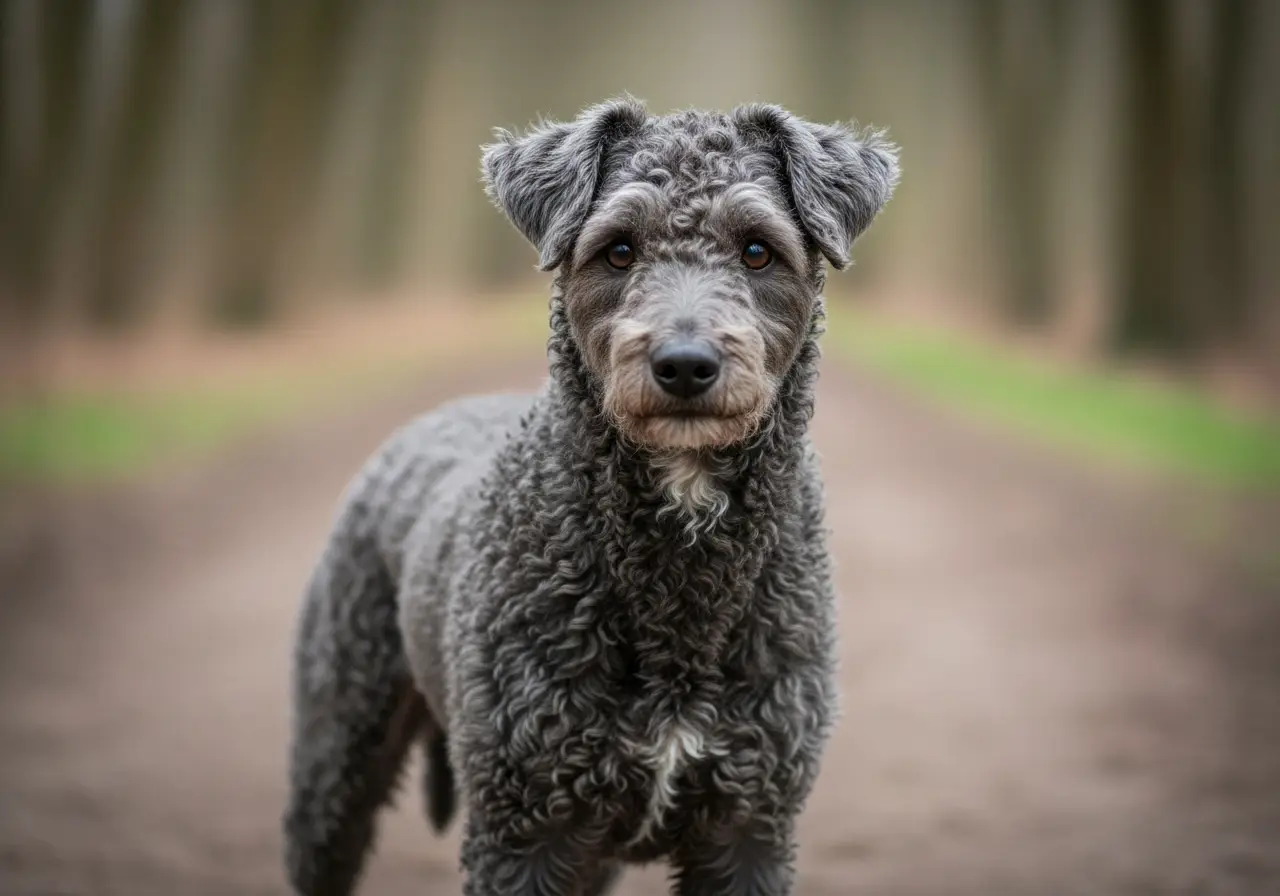
The Pumi is a Hungarian driving sheepdog with a terrier-like character, curly coat and upright drop ears. Behind the playful exterior lies a highly active working dog with pronounced herding and alert behaviour. Anyone keeping one plans at least 90 minutes of active exercise plus structured mental work daily, and brings a joy for fast, precise communication.
02Introduction
What makes the Pumi special
Pumi: Hungarian terrier-herding dog with curly coat and erect ears, active, self-confident and affectionate
03Profile
Key facts and suitability
- Origin
- Ungarn
- Original purpose
- Sheep herding Driving
- FCI
- No. 56 · Group 1 · Section 1
- height at the withers
- 38–47 cm
- Weight
- 8–13 kg
- Life expectancy
- 12–14 Years
- Coat type
- Gelockt
- Minimum exercise
- 60 min/day
- Puppy price
- 1'200–2'000 CHF
- Waiting period
- 5 months
- Sports
- Agility Obedience Herding work
04Temperament
How the Pumi shows up in everyday life
During morning exercise, the Pumi does not simply run alongside you; it scans the surroundings, registering every cyclist, every cat, every movement at the edge of the path. Its head turns before you have even noticed anything. This speed of reaction is no coincidence, but the result of centuries of selection for herding dogs.
**Internal axis, what the dog needs:** The Pumi has a high need for mental work (CCT score 5 out of 5) and a clear need for movement (4 out of 5). It actively seeks tasks. If these are missing, it organises itself through barking, control rounds in the house, or herding family members. The need for social contact is high (4 out of 5): the Pumi wants to be involved in everyday life, not waiting in a kennel.
**External axis, how the dog reacts:** Towards strangers, the Pumi shows reserve up to vigilance (friendliness towards strangers: 3 out of 5). This is not a lack of socialisation, but typical mistrust according to the FCI standard. Anyone expecting visitors should introduce the Pumi to new people in a structured manner; it will accept them but does not seek closeness on its own initiative.
These two axes diverge: a high need for social contact with the family does not mean openness towards everyone. The Pumi is not a welcoming committee; it is a working dog that knows and protects its people.
In everyday life, this means: in the evening on the sofa, the Pumi is present and attentive, not sluggish. It observes, comments on noises, and reports changes. Anyone looking for peace after work must actively train for it; it does not arise spontaneously.
05Needs
What this breed needs daily
The Pumi requires at least 90 minutes of active exercise daily, not just a walk, but stimulation involving changes of direction, pace, and tasks. Jogging, cycling with lead handling, or agility cover this need better than quiet walks.
Mental work is not optional. The need for mental work is 5 out of 5, the maximum. Nose work, obedience, flirt pole, or herding exercises in a course fill this need. Anyone offering only physical exercise will end up with a dog that is tired but not satisfied.
Training structure: The Pumi learns quickly and discriminates finely. It registers the owner's body language, timing, and mood precisely. Inconsistent signals confuse it, and it then seeks its own solutions. Short, precise training sessions of 10 to 15 minutes several times a day are more effective than one long session.
Being left alone: The Pumi tolerates being left alone for up to about four hours, provided it is sufficiently stimulated and the ability to be alone has been built up gradually. Longer absences without preparation lead to restlessness and excessive barking.
Socialisation: Early and broad socialisation with various people, environments, and stimuli is crucial. The breed-typical reserve towards strangers can be moderated through consistent socialisation during the puppy phase—not eliminated, but guided into manageable channels.
Grooming: The curled coat requires weekly combing and professional shearing every three to four months. Mats form quickly if neglected.
Exercise
High
mental work
A lot
Social needs
High
training
Demanding
06Sport & Mental and Physical Stimulation
What sports the Pumi is suited for
Realistic in terms of physiology and genetics – not every breed suits every sport.
Structurally and physiologically suitable: Suitable for herding work, treibball and coursing · CaniCross / bikejoring possible.
07Quick Check
08Suitability
Who this breed is suitable for – and who it isn't
✓Matches
The Pumi suits owners who can plan at least 90 minutes of active exercise daily, not as an exception, but as a fixed part of everyday routine. Joggers, cyclists, or dog sports enthusiasts looking for a breed with pace and responsiveness will find a capable partner in the Pumi.
It is suitable for owners with experience in working with sensitive, fast-learning dogs. Anyone who enjoys precise training and is prepared to offer mental work daily (nose work, obedience, agility, flirt pole) can build an intensive partnership with the Pumi.
Families with children from about eight years old, who live respectfully with the dog and have sufficient time for stimulation, are suitable. Crucially, at least one adult must take primary responsibility for training and stimulation.
Owners living in rural areas or on the outskirts of cities who have access to open spaces benefit from the space available. Keeping a Pumi in an apartment is possible, but requires consistent daily stimulation and tolerance from neighbours towards a dog with pronounced alert behaviour.
×Doesn't match
The Pumi does not suit owners who can plan less than 90 minutes of active exercise daily. Anyone looking for a dog that is content with short walks fundamentally underestimates the need for movement and mental work of this breed.
It is not suitable for owners who expect an open, stranger-friendly dog. The breed-typical reserve towards strangers is not a training error; anyone who views this trait as a problem has chosen the wrong breed. Households with frequently changing visitors or high social density require a dog with a different temperament profile.
For first-time owners without prior experience with sensitive working dogs, the Pumi is a demanding choice. Inconsistent handling or lack of structure quickly leads to behavioural patterns in this breed that are difficult to correct.
Households where the dog is regularly left alone for more than four hours without a care plan are unsuitable. Likewise, living conditions in which barking cannot be tolerated are inappropriate; while the Pumi's alert behaviour can be trained, it cannot be eliminated.
10Line reality
Show line, working line, breeder market
The Pumi is still bred as a utility breed in Hungary and used at herding events. A pronounced separation into working and show lines, as exists for example with the Border Collie or German Shepherd, is less pronounced with the Pumi; the breed is rare enough overall that breeding is more focused on preserving the total type.
Nevertheless, differences exist between Hungarian working lines and Western European lines, which are more oriented towards show success. Hungarian working dogs tend to display more intense herding and control behaviour as well as higher susceptibility to stimuli. Western European lines may be somewhat more balanced in temperament, although this must not be generalised.
Anyone looking for a Pumi for dog sports or herding should specifically ask the breeder about the working orientation of the parent dogs and their test results. Anyone looking for a companion dog will benefit from lines that document temperament tests and socialisation during the puppy phase. In both cases, the following applies: the basic character (restless, quick-reacting, fond of barking) remains typical of the breed, regardless of the line.
11Health · Reality
What you need to plan for medically with your Pumi
The Pumi is considered a robust breed with a life expectancy of 12 to 14 years. No significant breed-typical diseases with high prevalence are documented; however, there are some health aspects that should be known before purchase.
Hip dysplasia (HD): HD occurs in the Pumi but is rarer compared to large breeds. Reputable breeders X-ray the parent animals and provide results. The Klub für Ungarische Hirtenhunde e.V. recommends HD examinations as a prerequisite for breeding.
Hereditary eye diseases: Primary lens luxation (PLL) and progressive retinal atrophy (PRA) are known in the breed. A DNA test exists for PLL, which identifies carrier status and affected dogs. Reputable breeders test parent animals for PLL; this proof should be requested before purchase.
Degenerative myelopathy (DM): DM is a progressive spinal cord disease for which a DNA test is also available. Here too, ask the breeder for test results of the parent animals.
Weight: The Pumi tends to become overweight due to lack of exercise, which strains joints and the cardiovascular system. Weight should be checked regularly; ribs must remain palpable.
Preventive care: Annual veterinary check-ups, dental care (the breed is prone to tartar) and eye checks from middle age are recommended. Vaccination protection and parasite prevention depend on the living environment and the current STIKO vaccination schedule of the Tierärztlicher Fachverband.
12Structured data
Health by the numbers
Prone to diseases
Hip dysplasia Patellar luxation
Recommended health tests
Hip X-ray Kneecap check
13Myths ↔ Reality
What is often said incorrectly about this breed
Five myths, five realities, five sources.
“The Pumi is a small dog that manages with little exercise.
Body size says nothing about the need for exercise. The FCI standard explicitly describes the Pumi as a dog with a restless temperament that needs lots of exercise. At least 90 minutes of active stimulation daily are not a recommendation but a basic requirement for this breed. Underestimated exercise needs count among the most common reasons for rehoming herding dogs.
“The Pumi’s curly coat is easy to care for and requires little attention.
The medium-length, wavy to curly coat of the Pumi mats with incorrect care. It requires regular combing and occasional shearing, usually every three to four months. Neglecting the coat risks matting that can only be resolved by shearing. Correct care prevents this but requires consistent time investment.
“The Pumi is friendly and open towards all people.
The FCI standard explicitly describes the Pumi as somewhat suspicious of strangers. This behaviour is typical for the breed and not a training error. The Pumi bonds closely with its reference persons but shows reserve to vigilance towards strangers. Early and broad socialisation can moderate the reaction, but the fundamental nature remains.
“The Pumi hardly barks, it is a quiet dog.
The FCI standard explicitly states that the Pumi is quite loud. Alert and control behaviour are genetically anchored. The Pumi uses barking as a communication and working tool. In apartments or densely populated areas this is a serious challenge that requires consistent quiet training but can never be completely trained out.
“As a herding dog, the Pumi is automatically compatible with other dogs.
Herding dog genetics does not mean automatic social compatibility with conspecifics. The Pumi is geared towards close cooperation with humans, not pack life. With other dogs it is compatible with good socialisation but shows pronounced control behaviour that can lead to conflicts when living with dominant or reactive dogs.
14animal welfare
The animal welfare perspective
Breeder market, designer versions, animal shelter reality — what no one writes in the puppy ad.
The Pumi is a rare breed in the German-speaking region. It rarely appears in animal welfare contexts; anyone looking for a Pumi will seldom find one in shelters or via adoption organisations. However, this does not mean that adoption is not an option: herding dog rescue stations and specialised adoption networks for Hungarian dog breeds occasionally place Pumik surrendered due to improper keeping or owner overwhelm.
Why are Pumik surrendered? The most common reasons are underestimated need for activity, excessive barking in living quarters and the intensity of herding instinct behaviour. Anyone who buys a Pumi because it looks "cute" and underestimates its working character often faces an overwhelmed dog after a few months, and is themselves overwhelmed.
Backyard breeder market: The Pumi is rare enough that organised backyard breeding in the German-speaking region is less common than with fashion breeds. Nevertheless, offers without pedigree entry and without health tests exist. Anyone who buys a Pumi without PLL and DM test results of the parent animals bears the health risk alone.
Designer versions: Crossbreeds with the Pumi as a base breed are rare but not non-existent. Such dogs carry the Pumi's working drive without health tests or temperament assessments of the parent animals being available.
Adoption as an equivalent option: An adult Pumi from adoption has the advantage that character and behaviour are already assessable. Anyone with experience of herding dogs can provide a suitable home for an adult Pumi from difficult living conditions. Contacting specialised herding dog rescue stations or the Klub für Ungarische Hirtenhunde e.V. is a sensible first step.
15Costs · Transparency
What this breed realistically costs
Getting a dog: A Pumi puppy from reputable breeding with VDH/FCI papers, health tests of the parent animals (PLL, DM, HD) and initial veterinary care costs between 1,500 and 2,500 EUR in the German-speaking region. Offers significantly below this (without papers, without test results) are a warning sign.
Ongoing annual costs: Food for a medium-sized Pumi amounts to 400 to 700 EUR annually, depending on quality and food type. Grooming (clipping every three to four months at the groomer) costs 150 to 300 EUR per year. Dog sports or training courses, which are not a luxury but a necessity for this breed, amount to 200 to 600 EUR annually.
Vet: Routine check-ups, vaccinations and parasite prevention cost between 200 and 400 EUR annually. Dental cleanings under anaesthesia, which may occur regularly in the Pumi, range from 300 to 600 EUR per procedure.
Insurance: Pet health insurance costs between 30 and 80 EUR monthly, depending on the provider and scope of cover. Liability insurance for dogs is mandatory in several federal states and costs between 50 and 100 EUR annually.
Total costs: Realistically, annual running costs amount to 1,500 to 2,500 EUR, excluding unforeseen vet bills.
16Puppy search
What you need to consider when choosing a breeder
- Reputable Pumi breeders in the German-speaking region are affiliated with the Klub für Ungarische Hirtenhunde e.V.
- (Germany) or the Klub ausländischer Hirtenhunde KAH (Switzerland).
- Both associations are subordinate to the VDH and SKG respectively, and require health tests of the parent animals as a prerequisite for breeding.
- **Minimum requirements for reputable breeders:** Proof of PLL and DM DNA tests for both parent animals, hip dysplasia (HD) X-ray results, litter inspection by the breeding association, socialisation protocol for the puppies, willingness to answer questions and take back dogs.
- **Warning signs:** No pedigree entry, no test results, puppies under eight weeks old, multiple litters available simultaneously, no personal conversation before purchase.
- **Waiting time:** A waiting period of six to twelve months is customary with reputable breeders.
- The Pumi is rare; anyone who obtains a puppy immediately should critically examine the origin.
- **Adoption as an equivalent option:** Adult Pumik from adoption are rare but possible.
- The Klub für Ungarische Hirtenhunde e.V.
- occasionally places dogs surrendered by owners.
- For experienced owners, an adult dog with a known character may be a better choice than a puppy with unknown developmental potential.
FAQ
Frequently asked questions about the Pumi
Is Pumi suitable for beginners?
Pumi is considered suitable for first-time dog owners.
Is Pumi a family dog?
Pumi is considered suitable for families with good socialisation and species-appropriate care.
How much exercise does Pumi need?
At least around 60 minutes of exercise per day. As an active breed, more so — plus mental stimulation.
Does Pumi suit an apartment?
With enough exercise and enrichment, Pumi can also be kept in an apartment.
What is the size and weight of Pumi?
Fully grown, Pumi reaches about 38–47 cm at the withers and weighs around 8–13 kg.
What is the life expectancy of Pumi?
The life expectancy of Pumi is approximately 12–14 years.
Which diseases are common in Pumi?
Hip dysplasia Patellar luxation
17Breed clubs
Official breed clubs in DACH
19Related
Similar breeds – and their differences
You might also be interested in


Participate
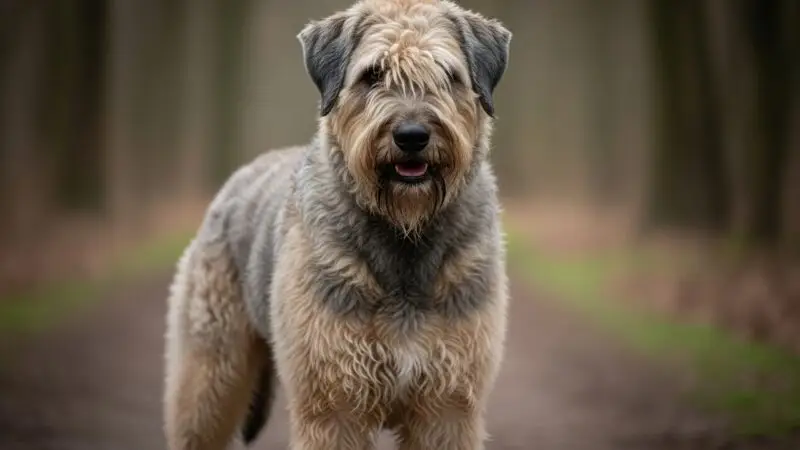
Do you have a good photo of your Pumi?
We are looking for expressive images for our breed profiles. Submit yours; the editorial team reviews every submission before publication.
Does this breed suit you?
Energetic herding dog – needs lots of enrichment and mental stimulation