
01Summary
In a paragraph
If you only have 30 seconds.
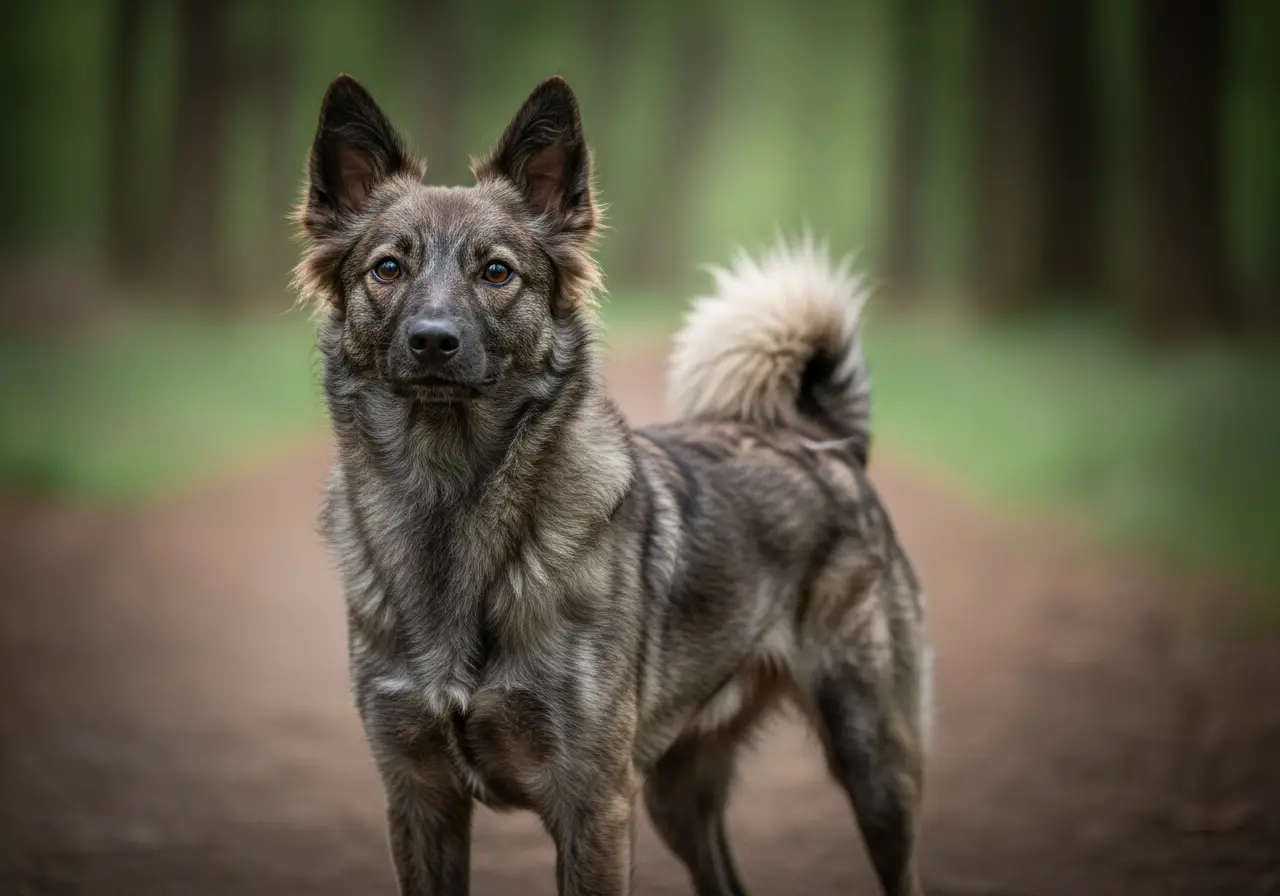
The Mudi is Hungary's rarest and most versatile herding dog: compact, quick-reacting, and with a need for mental work that leaves little room for half-measures. It works cooperatively when guidance is clear and consistent. Those who provide this receive an exceptionally trainable dog. Those who do not get one that seeks its own enrichment, rarely to the delight of all parties involved.
02Introduction
What makes the Mudi special
Mudi: the rarest Hungarian herding dog, agile and clever, with a curly coat that is easier to care for than it looks
03Profile
Key facts and suitability
- Origin
- Ungarn
- Original purpose
- Sheep herding Driving work
- FCI
- No. 238 · Group 1 · Sektion 1: Hütehunde
- height at the withers
- 38–47 cm
- Weight
- 8–13 kg
- Life expectancy
- 12–14 Years
- Coat type
- Gelockt
- Minimum exercise
- 60 min/day
- Puppy price
- 1'200–2'000 CHF
- Waiting period
- 5 months
- Sports
- Agility Obedience Herding work
04Temperament
How the Mudi shows up in everyday life
During morning exercise, the Mudi does not simply run alongside you; it observes, anticipates and reacts to the smallest signals before you consciously give them. This is no coincidence, but herding genetics in real time.
Internally, regarding what the dog needs: The need for social contact is high. The Mudi strongly orients itself towards its primary caregiver and seeks active collaboration, not passive proximity. It does not just want to be present; it wants to think along. The requirement for mental work reaches the highest level: Without daily mental challenges (nose work, obedience, herding exercises, agility), a tension level builds up that discharges into barking, herding family members, or destruction. The exercise requirement is at least 90 to 120 minutes daily, structured and varied.
Externally, how the dog reacts to its environment: Towards strangers, the Mudi shows typical reserve (scale: 3/5). It initially observes new people from a distance without becoming aggressive. This restraint is typical for the breed and not an upbringing error, but it requires consistent socialisation from the puppy stage. Anyone expecting the Mudi to greet every visitor joyfully will be disappointed.
These two axes diverge with the Mudi: A high need for social contact towards the primary caregiver does not mean openness towards all people. A Mudi that is closely attached to its owner can simultaneously be very reserved towards strangers. Anyone who does not understand this difference interprets the behaviour incorrectly and reacts incorrectly to it.
In everyday life, this means concretely: Visitors are announced, the Mudi barks loudly, observes, withdraws or keeps its distance. With time and calm introduction, it relaxes; forced contact worsens the situation.
05Needs
What this breed needs daily
The Mudi needs at least 90 to 120 minutes of active exercise daily, and not just free running in the meadow. Structured activities such as agility, obedience, tracking work or genuine herding work directly address its genetic programming and are significantly more effective than unstructured exercise.
Mental work is not a supplement, but mandatory. The requirement for mental work is at level 5, the highest level in the rating scheme. This means: Several short training sessions daily with genuine cognitive demands. Nose work, search games, trick training and impulse control exercises are well suited for everyday life. Pure repetition exercises without variation bore it quickly.
The need for social contact is high. The Mudi requires close integration into the daily life of its primary caregiver. Being left alone is possible, but must be built up carefully and gradually. A maximum of four hours daily serves as a guideline; with insufficient preparation, even less. A dog that spends many hours alone daily develops stress symptoms that manifest in alert barking or destruction.
The alert behaviour, loudly indicating changes in the environment, is pronouncedly typical for the breed. It can be well controlled through training, but does not disappear completely. In multi-storey buildings with thin walls or with neighbours who have low tolerance for dog barking, this regularly creates conflict potential.
A garden is helpful, but does not replace structured work. The Mudi needs tasks, not space.
Exercise
High
mental work
A lot
Social needs
High
training
Demanding
06Sport & Mental and Physical Stimulation
What sports the Mudi is suited for
Realistic in terms of physiology and genetics – not every breed suits every sport.
Structurally and physiologically suitable: Suitable for herding work, treibball and coursing · CaniCross / bikejoring possible.
07Quick Check
08Suitability
Who this breed is suitable for – and who it isn't
✓Matches
The Mudi suits owners who can plan at least two hours of structured activity with their dog daily, not as an exception, but as a fixed part of everyday life. Anyone who practises dog sports, trains agility, takes obedience seriously or has access to herding work will find an exceptionally motivated partner in the Mudi.
Experience in dealing with working dogs or herding dogs is a realistic prerequisite. Anyone who has already kept a Border Collie, Australian Shepherd or similar breeds and knows the requirements is well prepared.
Families with children from about eight years of age are suitable if clear rules apply, the children are trained in handling the dog and sufficient enrichment is ensured. The Mudi needs rest periods and reacts sensitively to chaotic, over-stimulating environments.
Active single people or couples without children who integrate their dog into sport and everyday life correspond particularly well to the genetic profile of the Mudi. A garden or regular access to off-leash areas significantly facilitates keeping the dog. Anyone willing to control alert behaviour through training and living in a housing situation where occasional barking is tolerated can also keep a Mudi without a garden, provided there is consistent daily stimulation.
×Doesn't match
The Mudi does not suit owners who can devote less than 90 minutes daily to active, structured enrichment. Anyone who is away from home for eight hours daily and has no dog sitter, no dog day care or no reliable care solution structurally overloads this dog, regardless of good intentions.
Anyone looking for a calm, independent dog that is content without daily training is mistaken with the Mudi. Its requirement for mental work at level 5 is not a characteristic that can be trained away; it is genetically anchored.
Anyone who views reserve towards strangers as a problem and expects a dog that greets every visitor joyfully should choose a different breed. Anyone who interprets this characteristic as an upbringing error and tries to correct it with pressure worsens the situation.
Households keeping a dog for the first time are generally overwhelmed by the Mudi, unless there is very high willingness to train, accompanying attendance at a dog training school from the first day and realistic self-assessment. Multi-storey buildings with low noise tolerance among neighbours represent another limitation: The breed-typical alert behaviour can be reduced, but not completely eliminated.
10Line reality
Show line, working line, breeder market
The Mudi does not have a pronounced division between show and working lines in the sense of the Labrador or Golden Retriever. The breed is still primarily bred for function today; performance and health are in the foreground, while aesthetic selection plays a subordinate role.
Nevertheless, differences exist within the small breeding population: Hungarian breeding facilities that focus on active herding work or dog sports produce dogs with particularly pronounced drive to work and high responsiveness to stimuli. These dogs require experienced owners with a clear training structure. Breeding facilities that select more strongly for suitability as companion dogs breed dogs with a somewhat more balanced temperament, without fundamentally reducing the drive to work.
In Germany and Switzerland, the breeding base is so small that systematic differentiation of lines is hardly possible. The Club for Hungarian Herding Dogs e.V. (KFUH) and the Club for Foreign Herding Dogs (KAH) in Switzerland coordinate breeding in the German-speaking region. Anyone looking for a Mudi should seek direct conversation with the breeder about the work orientation of the parent animals; this provides more insight into the expected dog than any line categorisation.
In dog sports, the Mudi has earned a reputation as an exceptionally trainable dog in agility and obedience. Individual dogs are also used in search-and-rescue work and in drug detection, both uses that the FCI standard explicitly mentions.
11Health · Reality
What you need to plan for medically with your Mudi
The Mudi is considered a robust breed with a life expectancy of 12 to 14 years. This range is based on information from Hungarian and German-speaking breeding clubs; large-scale epidemiological studies on the breed do not exist due to its small global population.
Hip dysplasia (HD) occurs occasionally. Reliable breed-wide rates are lacking due to low case numbers. Reputable breeders X-ray both parent dogs before breeding and make the results public. When buying a puppy, the HD status of both parents should be documented.
Eye diseases are another area deserving attention. The FCI standard describes tight, well-fitting eyelids as a breeding goal; deviations from this can lead to irritation. An ophthalmological examination of the parent dogs by a specialist vet is recommended.
The Mudi's body weight ranges between 8 and 13 kg. Overweight is less common in this active breed than in less exercise-loving dogs, but can occur with insufficient stimulation and excessive calorie intake. Regular weight checks at the vet, at least once a year, are advisable.
Preventive examinations: Annual veterinary check-up including dental examination, eye inspection, and weight control. In cases of lameness, vision changes, or persistent reduction in performance, timely investigation is required. Vaccination protection and parasite prevention according to the current STIKO vet recommendation scheme (as of 2024).
12Structured data
Health by the numbers
Prone to diseases
Hip dysplasia Patellar luxation Epilepsy
Recommended health tests
Hip X-ray Kneecap control Epilepsy screening
13Myths ↔ Reality
What is often said incorrectly about this breed
Five myths, five realities, five sources.
“The Mudi is a low-maintenance dog due to its curly coat, requiring little effort.
Although the wavy to slightly curly coat of the Mudi mats less than that of a Puli, it requires regular checks for tangles, especially behind the ears and on the flanks. However, the real effort lies not in the coat but in the mental work requirements of the breed: A Mudi with level 5 on the mental work scale demands daily mental stimulation, which far exceeds the grooming effort.
“Because the Mudi is so rare, it must be particularly uncomplicated to keep.
The low prevalence of a breed says nothing about its keeping requirements. The Mudi was selected over generations as an independently working herding dog, with pronounced herding behaviour, high exercise needs and strong bonding with its primary caregiver. These genetic traits remain regardless of population size. Rare breed does not mean easy breed.
“The Mudi is a friendly dog that approaches all people openly.
The FCI standard describes the Mudi as alert and courageous, not as sociable towards strangers. The axis for friendliness towards strangers is at 3 out of 5. Reserve is typical for the breed and not a training error. Without consistent socialisation during the puppy phase, this reserve can turn into shyness or excessive alert behaviour.
“As a herding dog, the Mudi mainly needs lots of exercise; mental work is optional.
Exercise alone is not enough for the Mudi. The need for mental work is at the highest level (5/5). A dog that is genetically predisposed to independent problem-solving when herding will develop behavioural problems with purely physical exercise without mental challenge: barking, herding family members, destruction. Agility, obedience, nose work or genuine herding work are not extras; they are basic needs.
“Because the Mudi is small and agile, it is well suited for apartment living without a garden.
The Mudi stands at 37–47 cm in height at the withers, placing it in the medium range, and has a compact build. Apartment keeping is fundamentally possible according to the FCI standard, but only with intensive daily enrichment of at least 90–120 minutes of active exercise plus structured mental work. Without these basic prerequisites, apartment keeping is unsuitable from an animal welfare perspective, regardless of the apartment size.
14animal welfare
The animal welfare perspective
Breeder market, designer versions, animal shelter reality — what no one writes in the puppy ad.
The Mudi is one of the rarest dog breeds in Germany, Austria, and Switzerland. This rarity has a downside: the market for unscrupulous providers is small, but it exists. If you find a "Mudi puppy available immediately" on classified ad platforms, you should be sceptical; reputable breeders typically have waiting lists, not spontaneously available litters.
Backyard breeders and casual breeders without club affiliation exploit the growing interest in rare breeds. They forgo health examinations of parent dogs, socialisation of puppies, and support after purchase. The result is dogs with unclear health histories and often insufficient imprinting – a serious problem for a breed with mental work requirements at level 5.
Designer versions of the Mudi (such as crosses marketed as "Mudi mixes" or under fantasy names) are currently hardly widespread in the DACH region. This could change if the breed becomes more popular due to social media attention. A dog that appears impressively agile in videos arouses interest without the underlying demands becoming visible.
Breeding-related problems: The Mudi does not show breed-typical breeding for harmful traits (Qualzucht) characteristics in the sense of brachycephaly or exaggerated body proportions. The main danger lies in the small gene pool. Inbreeding due to too few active breeding animals is a real risk that committed breeders actively combat through international pairings and consistent health selection.
Adoption as an option: Due to their small population size, Mudis rarely enter animal welfare organisations. Anyone still looking for an adult Mudi should contact the breeding clubs directly; these occasionally rehome returns or dogs from changed living situations. An adult dog with a known history is not a compromise solution, but rather the better choice for many owners.
15Costs · Transparency
What this breed realistically costs
A Mudi puppy from a reputable, club-affiliated breeder costs between 1,200 and 1,800 EUR in the German-speaking region. Prices below this for allegedly purebred animals without papers and health certificates are a warning sign, not a bargain.
Annual living costs consist of: food (quality dry food or fresh meat) approx. 600–900 EUR/year for a 10 kg dog, basic care (grooming, paw care, accessories) approx. 150–300 EUR/year, vet costs in case of illness (annual preventive care, vaccinations, parasite prevention) approx. 300–500 EUR/year.
Additional costs include dog sports or dog training school: Agility or obedience courses cost 15–30 EUR per session depending on the provider. For a breed with mental work requirements at level 5, accompanying dog training school is not an option but a sensible investment, particularly in the first two years of life.
In Switzerland, a dog liability insurance costs 60–150 CHF annually depending on the provider and canton. Health insurance for the dog is optional for a robust breed like the Mudi, but financially relieving in the event of unforeseen illnesses or accidents (approx. 400–800 EUR/year depending on coverage). Total costs in the first year including getting a dog and basic equipment: realistically 3,000–4,500 EUR.
16Puppy search
What you need to consider when choosing a breeder
- Reputable Mudi breeders in the German-speaking area are extremely rare.
- Waiting times of a year or more are not exceptional.
- Anyone looking for a Mudi plans long-term.
- Characteristics of reputable breeding: The breeder is a member of the Club for Hungarian Shepherd Dogs e.V.
- (KFUH) or the Club for Foreign Shepherd Dogs (KAH/Switzerland).
- Parent dogs have health certificates, including at least hip X-rays (HD) and eye examinations.
- The breeder asks questions about your planned daily routine, experience, and living situation.
- Puppies leave the breeding facility no earlier than eight weeks of age.
- Viewings before purchase are possible and welcome.
- Warning signs: Not a club member, no health certificates, multiple litters available simultaneously, no interest in the buyer's living situation, sales via classified ad platforms without asking questions.
- Adoption as an equally valid option: Due to their small population size, Mudis rarely enter animal welfare rehoming.
- Breed-specific rehoming centres and the breeding clubs themselves occasionally rehome older dogs or returns.
- An adult Mudi with a known history can be a solid choice, particularly for owners who wish to avoid the demands of raising a puppy or are specifically looking for a dog with an already formed character.
FAQ
Frequently asked questions about the Mudi
Is Mudi suitable for beginners?
Mudi is considered suitable for first-time dog owners.
Is Mudi a family dog?
Mudi is considered suitable for families with good socialisation and species-appropriate care.
How much exercise does Mudi need?
At least around 60 minutes of exercise per day. As an active breed, more so — plus mental stimulation.
Does Mudi suit an apartment?
With enough exercise and enrichment, Mudi can also be kept in an apartment.
What is the size and weight of Mudi?
Fully grown, Mudi reaches about 38–47 cm at the withers and weighs around 8–13 kg.
What is the life expectancy of Mudi?
The life expectancy of Mudi is approximately 12–14 years.
Which diseases are common in Mudi?
Hip dysplasia Patellar luxation Epilepsy
17Breed clubs
Official breed clubs in DACH
19Related
Similar breeds – and their differences
You might also be interested in
Participate
Do you have a good photo of your Mudi?
We are looking for expressive images for our breed profiles. Submit yours; the editorial team reviews every submission before publication.
Does this breed suit you?
Rare Hungarian herding dog – lively and well-suited for active owners with experience