
01Summary
In a paragraph
If you only have 30 seconds.
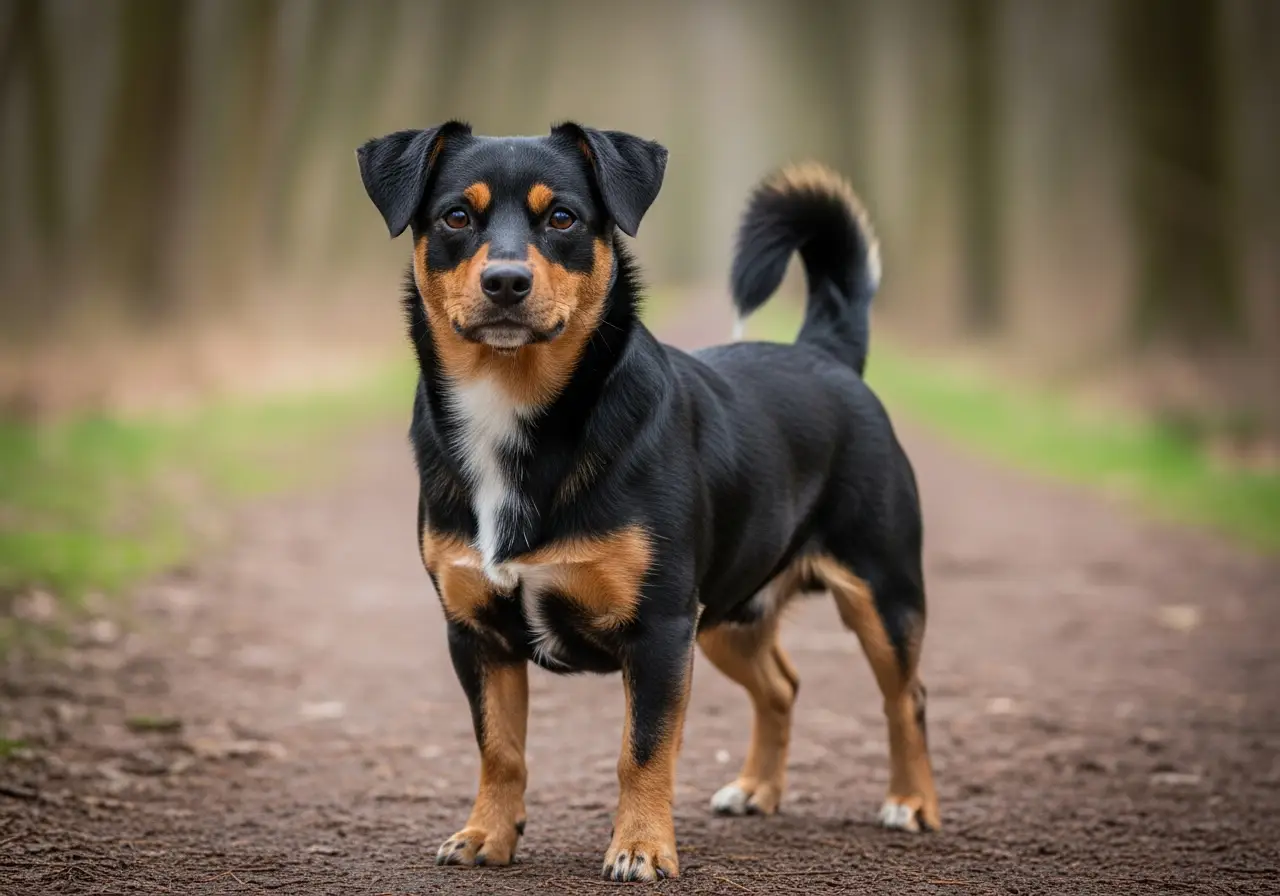
The Lancashire Heeler is a compact British herding dog that brings far more working energy than its size would suggest. It bonds closely with its primary caregiver, shows reserve towards strangers and has a pronounced herding and prey drive. Anyone who underestimates or under-stimulates it will end up with a dog that finds its own enrichment, rarely to the owner's delight.
02Introduction
What makes the Lancashire Heeler special
The Lancashire Heeler is a rare British herding dog, FCI Group 1, compact and lively, withers height 25–30 cm.
03Profile
Key facts and suitability
- Origin
- Grossbritannien
- Original purpose
- Livestock driving and rat control in Lancashire
- FCI
- No. 360 · Group 1 · Section 1
- height at the withers
- 25–30 cm
- Weight
- 5–8 kg
- Life expectancy
- 12–15 Years
- Coat type
- Short-haired
- Minimum exercise
- 45 min/day
- Puppy price
- 1'200–2'000 CHF
- Waiting period
- 9 months
- Sports
- Agility · Obedience · Herding work
04Temperament
How the Lancashire Heeler shows up in everyday life
During the morning walk, the Lancashire Heeler shows what lies within it: a rustling in the bushes makes it freeze immediately, fix its gaze, and the driving drive and terrier instinct switch on in parallel. This dog does not distinguish between a walk and work. For it, the environment is always a potential territory.
Internally, what the dog needs: The Lancashire Heeler has a high need for social contact with its primary caregiver. It does not just want to be there, but to be actively involved. Mental work in the form of nose work, trick training or structured herding tasks is not a bonus, but a basic need. Anyone who exercises it for 60 to 90 minutes daily but does not challenge it mentally will experience a restless, noisy dog.
Externally, in terms of how the dog reacts to its surroundings: The Lancashire Heeler is reserved towards strangers. It observes, assesses and decides for itself whom to trust. This reserve is not a deficiency; it is part of the breed character. Anyone expecting visitors and wanting an immediately friendly dog will be disappointed. With well-socialised conspecifics, it shows tolerance, but territorial behaviour towards unknown dogs does occur.
At home, it is attentive and present. It registers changes in the flat, alerts to noises and seeks closeness with its primary caregiver. This close bond also means that being left alone must be built up consistently and gradually. Four hours are a realistic maximum for a well-trained dog, not the starting point.
05Needs
What this breed needs daily
The Lancashire Heeler requires 60 to 90 minutes of active exercise daily. This includes not only walks but also forms of movement that appeal to its work drive: controlled search tasks, cross-country runs with changes of direction or dog sports such as agility and obedience. Pure leash walks in the city do not meet its needs.
Mental stimulation is at least equally important. The Lancashire Heeler has a need for mental work comparable to that of a medium-sized herding dog. Nose work, trick training, food search games or simple herding tasks all belong in the weekly plan. Without this component, avoidance behaviours arise: excessive barking, stubbornness or destructive behaviour in the flat.
The need for social contact is high but specific. The Lancashire Heeler wants to spend time with its primary caregiver and be actively involved, not just physically present. Passive coexistence is not enough for it. Anyone who is away from home for many hours daily requires a reliable care solution.
Keeping in a flat is possible if exercise and enrichment are ensured consistently. A garden is no substitute for structured activity, but can serve as a supplement, provided it is secure, as the prey drive is strongly pronounced.
Training requires consistency and calmness. The dog reacts sensitively to inconsistency, but learns quickly with clear, positive communication. Attending a dog training school in the first months is recommended.
Exercise
Medium
mental work
A lot
Social needs
High
training
Medium
06Sport & Mental and Physical Stimulation
What sports the Lancashire Heeler is suited for
Realistic in terms of physiology and genetics – not every breed suits every sport.
Structurally and physiologically suitable: Suitable for herding work, treibball and coursing.
07Quick Check
08Suitability
Who this breed is suitable for – and who it isn't
✓Matches
The Lancashire Heeler suits active individuals or couples who can plan at least 90 minutes daily for exercise and structured enrichment. Owners interested in dog sports (agility, obedience, nose work) will find a motivated partner in it.
Families with children from about 8 years of age are suitable if the parents take on the leadership role and establish clear rules for dealing with the dog. The Lancashire Heeler tolerates lively households, but needs opportunities to retreat and reacts to unstructured child behaviour by avoiding or barking.
Owners with prior experience in training breeds with strong drives or a stubborn nature are clearly at an advantage. Anyone who has already handled a terrier, a Corgi or another herding dog will understand the profile of this dog more quickly.
Anyone living in a flat can keep a Lancashire Heeler, provided that exercise and mental work are offered daily and reliably. A secure garden or regular access to fenced free-run areas is a clear advantage, as the prey drive can cause problems in open terrain.
People who enjoy a close, active human-dog relationship and are prepared to understand training as an ongoing process will be satisfied with this dog in the long term.
×Doesn't match
The Lancashire Heeler does not suit owners who are away from home for more than four hours daily and cannot organise a reliable care solution. The high need for social contact and the close bond with the primary caregiver make longer periods of being left alone a real strain.
Anyone looking for a calm, open dog towards strangers that greets visitors joyfully will not be happy with the Lancashire Heeler. The breed-typical reserve towards strangers is not a training error, but character; it can be mitigated by socialisation, but not trained away.
Households keeping a dog for the first time and lacking the willingness for consistent, structured training regularly underestimate this dog. Its small body size tempts people not to set boundaries consistently, with predictable consequences for living together.
Anyone looking for a dog that is content with little enrichment or that can be exercised off-lead without recall safety should consider another breed. The pronounced prey drive makes the Lancashire Heeler difficult to control in unsecured terrain.
Also, people who expect very short waiting times due to the rarity of the breed should adjust their expectations; reputable breeders have waiting lists.
10Line reality
Show line, working line, breeder market
The Lancashire Heeler is not divided into clearly defined working and show lines, as is the case with larger herding dog breeds. The total population is too small for independent breeding lines with diverging performance profiles to have become established.
Nevertheless, differences in temperament and drive intensity exist within the breed, which vary from breeder to breeder. Some British breeding operations focus on temperamental stability and suitability for everyday life as a companion dog, while others emphasise the original working disposition. Since the breed is extremely rare in Germany and Switzerland, most dogs come from British or Dutch breeding operations.
The FCI standard classifies the Lancashire Heeler as a herding and companion dog in Group 1, Section 1, without a working test. A formal separation into working and show lines does not exist in the breed standard.
Interested parties should specifically ask the breeder about the character of the parent animals and, if possible, observe both parents in everyday life. A dog from a breeding operation with a strong emphasis on drive places higher demands on guidance and enrichment than a dog from a breeding operation oriented towards suitability as a companion dog. This difference is more relevant in practice than a formal line designation.
11Health · Reality
What you need to plan for medically with your Lancashire Heeler
According to the Kennel Club (UK), the life expectancy of the Lancashire Heeler is 12 to 15 years, a solid but not exceptional value for a small breed.
The most important breed-specific hereditary disease is Lancashire Heeler Hereditary Cataract (LHHC), a hereditary lens opacity that can lead to blindness. The Kennel Club recommends a DNA test for LHHC and regular eye examinations by a recognised ophthalmologist for all breeding dogs. Buyers should request the relevant test certificates for the parent dogs.
Patellar luxation, the dislocation of the kneecap, is common in small and compact breeds and documented in the Lancashire Heeler. The severity varies from asymptomatic (Grade I) to requiring surgery (Grades III–IV). A veterinary examination of the hind limbs before purchase is advisable.
Overweight is a real risk. The Lancashire Heeler tends to gain weight with too high a calorie intake and insufficient exercise, which puts strain on joints and the cardiovascular system. Regular weight checks at the vet, at least once a year, are recommended.
Preventive examinations should include the following points: annual general health check-up, eye examination by a specialist every one to two years, assessment of the patella in the event of clinical signs and dental check-up, as small breeds are more prone to tartar. Given possible eye or joint operations, pet insurance for the dog is financially sensible.
12Structured data
Health by the numbers
Prone to diseases
Collie Eye Anomaly, patellar luxation, persistent pupillary membrane
Recommended health tests
Eye examination, patella screening
13Myths ↔ Reality
What is often said incorrectly about this breed
Five myths, five realities, five sources.
Such a small dog needs hardly any exercise and enrichment.
The Lancashire Heeler was used as a working dog on farms over generations. The FCI standard describes it as an attentive, energetic worker with a small but energy-packed body. Without sufficient stimulation, both physically and mentally, restlessness, excessive barking and other avoidance behaviours develop.
The Lancashire Heeler is an uncomplicated beginner dog because it is so small.
The breed combines herding instinct with terrier stubbornness. The FCI standard explicitly states that the Heeler performs at its best under the guidance of a firm and gentle owner. Inconsistent guidance or coddling due to body size leads to dogs that actively test boundaries.
As a herding dog, the Lancashire Heeler is open and friendly towards all people and animals.
The Lancashire Heeler typically shows reserve towards strangers. In addition, there is a pronounced driving drive and, according to the FCI standard, the instinct of a terrier when hunting hares and rats. This prey drive makes it difficult to control in freedom without a secure environment.
The Lancashire Heeler is a widely distributed breed that can be easily found from a breeder.
The Kennel Club (UK) lists the Lancashire Heeler on its watchlist for endangered native breeds. In Germany and Switzerland, there are only very few active breeding operations. Interested parties must expect waiting times of a year or more.
Small dogs do not develop joint or eye problems; this only affects large breeds.
In the Lancashire Heeler, patellar luxation and hereditary eye diseases — including Lancashire Heeler Hereditary Cataract (LHHC) — are documented as breed-typical. The Kennel Club recommends DNA tests for LHHC and ophthalmological examinations before breeding. Buyers should also demand corresponding health certificates for the parent animals.
14animal welfare
The animal welfare perspective
Breeder market, designer versions, animal shelter reality — what no one writes in the puppy ad.
The Lancashire Heeler is one of the rarest breeds in Germany and Switzerland. Animal welfare cases due to mass production or backyard breeding have hardly been documented so far, simply because demand is low and the number of breeders is small. This could change if the breed gains popularity through social media attention. The pattern is well known: Rare, photogenic breeds come into focus for breeders as soon as demand increases.
Anyone looking for a Lancashire Heeler and coming across offers on platforms such as eBay Kleinanzeigen or similar portals without waiting times, without pedigrees and without health records should not regard these offers as lucky finds. They are a warning signal. Puppies from such sources often have not received socialisation, the parent dogs have not been tested for LHHC and the buyer bears the health and financial risk alone.
Designer versions of the Lancashire Heeler (e.g. crosses marketed under a different name) do not yet exist to any significant extent. The risk with this breed lies less in trend crosses than in confusion with similarly looking mixed-breed dogs that are sold as purebred Lancashire Heelers.
Rehoming an adult Lancashire Heeler through rescue organisations or foster homes is a fully valid alternative to buying a puppy. Adult dogs already show their character, which considerably facilitates assessing suitability. Occasionally, Lancashire Heelers from UK stocks are rehomed via international animal welfare organisations. Anyone open to this option should enquire with specialised herding dog rescue organisations in Great Britain.
Housing-related problems with the Lancashire Heeler arise less from physical overexertion than from under-stimulation. A mentally and physically under-provided dog of this breed develops behavioural issues that can overwhelm owners and lead to rehoming.
15Costs · Transparency
What this breed realistically costs
A puppy from reputable VDH or FCI-recognised breeding costs between 1,200 and 2,000 EUR in Germany and Switzerland. Due to the rarity of the breed and the extensive health tests (LHHC DNA test, eye examinations), prices in this range are justified. Offers significantly below 1,000 EUR without documentation should be questioned critically.
The annual living costs consist of: food (high-quality dry food or fresh meat diet) approx. 400–700 EUR/year, basic equipment (leash, collar, transport box, sleeping area) one-off approx. 200–400 EUR, dog training school in the first year approx. 300–600 EUR and care (brushing, occasional trimming) approx. 100–200 EUR/year.
Basic veterinary costs (vaccinations, parasite prevention, annual check-up) amount to approx. 300–500 EUR/year. In addition, there are potential costs for eye operations in the case of LHHC (depending on severity 1,000–3,000 EUR) or patellar luxation operations (800–2,500 EUR per joint). Pet health insurance with surgical cover costs approx. 30–70 EUR/month for this breed and is recommended given the breed-specific health risks.
16Puppy search
What you need to consider when choosing a breeder
- The Lancashire Heeler is one of the rarest breeds in Germany and Switzerland.
- Reputable breeders are affiliated with the VDH or an FCI-recognised association and can provide pedigree certificates, health records of the parent animals and DNA test results for hereditary eye diseases (Lancashire Heeler Hereditary Cataract, LHHC).
- Anyone who does not show or cannot show these documents is not a reputable contact.
- Waiting times of one year or more are the rule, not the exception, with reputable breeders.
- Anyone who can buy a puppy immediately without a waiting time should regard this as a warning sign.
- Adopting an adult Lancashire Heeler through rescue organisations or international animal welfare groups is an equally valid option.
- Adult dogs already show their character clearly, which makes it easier to assess whether the dog and household are a good match.
- Breed-typical rehoming dogs from abroad, particularly from Great Britain, occasionally exist.
- Before purchasing or taking on a puppy, it is advisable to visit the breeder or foster home, where both parent dogs, or at least the mother, can be observed in everyday life.
- Questions about socialisation, drive strength and previous experience with the breed provide important clues as to the temperament of the puppy that can be expected.
FAQ
Frequently asked questions about the Lancashire Heeler
Is Lancashire Heeler suitable for beginners?
Lancashire Heeler is considered suitable for first-time dog owners.
Is Lancashire Heeler a family dog?
Lancashire Heeler is considered suitable for families with good socialisation and species-appropriate care.
How much exercise does Lancashire Heeler need?
At least around 45 minutes of exercise per day.
Does Lancashire Heeler suit an apartment?
With enough exercise and enrichment, Lancashire Heeler can also be kept in an apartment.
What is the size and weight of Lancashire Heeler?
Fully grown, Lancashire Heeler reaches about 25–30 cm at the withers and weighs around 5–8 kg.
What is the life expectancy of Lancashire Heeler?
The life expectancy of Lancashire Heeler is approximately 12–15 years.
Which diseases are common in Lancashire Heeler?
Collie Eye Anomaly, patellar luxation, persistent pupillary membrane
17Breed clubs
Official breed clubs in DACH
19Related
Similar breeds – and their differences
You might also be interested in
Participate
Do you have a good photo of your Lancashire Heeler?
We are looking for expressive images for our breed profiles. Submit yours; the editorial team reviews every submission before publication.
Does this breed suit you?
Very rare small British herding dog. Combines terrier and herding dog characteristics. Lively and compact.