
01Summary
In a paragraph
If you only have 30 seconds.
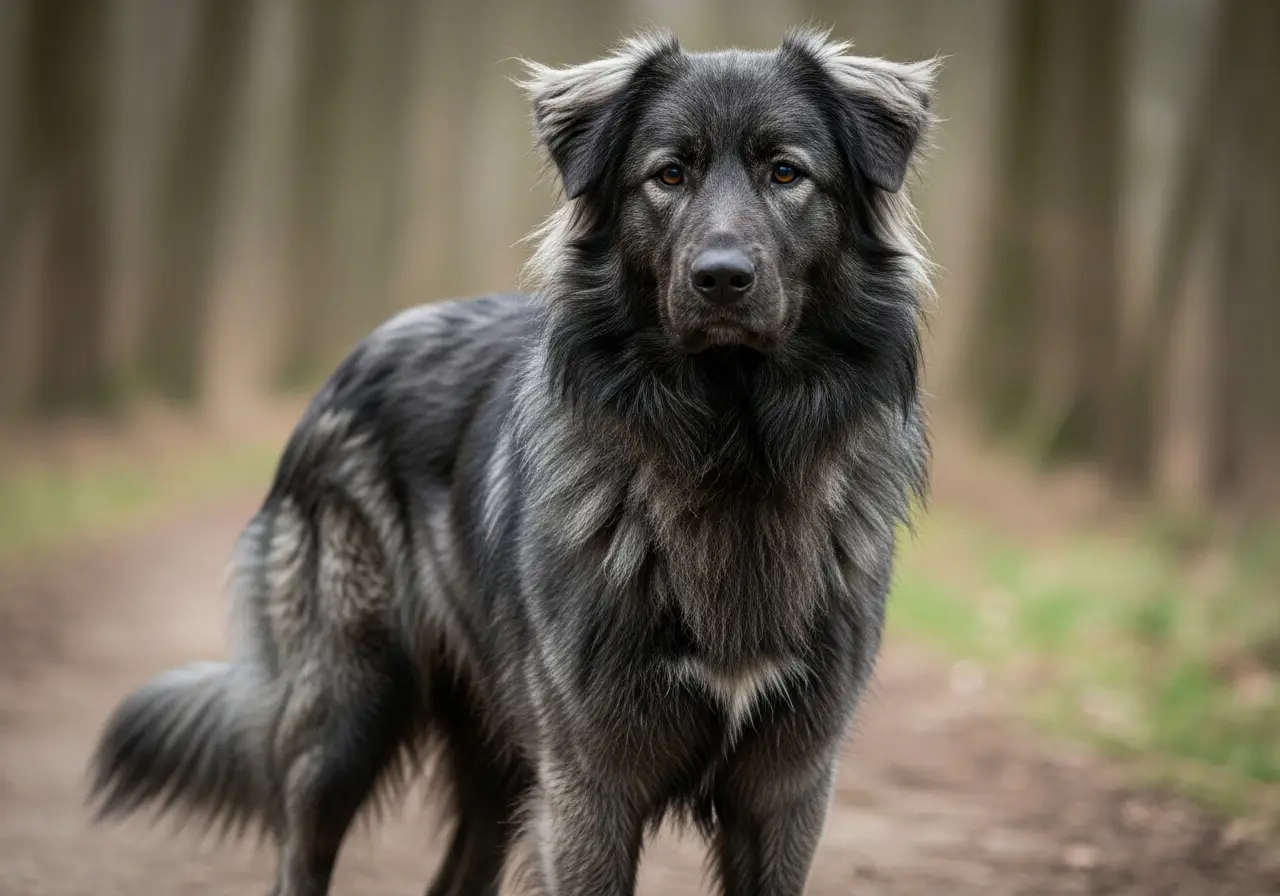
The Karst Shepherd is Slovenia's national breed and a functionally bred livestock guardian dog. Its territorial behaviour, distrust of strangers, and decision-making autonomy are not training errors; they are the profile. Anyone keeping this dog must not only tolerate but actively manage livestock guardian dog behaviour. This requires experience, space, and a consistent daily structure.
02Introduction
What makes the Karst Shepherd Dog (Kraski Ovcar) special
The Kraski Ovcar (Karst Shepherd Dog) is the national breed of Slovenia, FCI Group 2, a robust livestock guardian dog of the Karst, withers height 54–63 cm.
03Profile
Key facts and suitability
- Origin
- Slowenien
- Original purpose
- Livestock guarding on the Karst plateau
- FCI
- No. 278 · Group 2 · Section 2.2
- height at the withers
- 54–63 cm
- Weight
- 30–42 kg
- Life expectancy
- 11–13 Years
- Coat type
- Long-haired
- Minimum exercise
- 60 min/day
- Puppy price
- 800–1'500 CHF
- Waiting period
- 12 months
- Sports
- Schutzhund
04Temperament
How the Karst Shepherd Dog (Kraski Ovcar) shows up in everyday life
When a stranger enters the property, the Kraski Ovcar does not react by barking and retreating; it positions itself. It observes, assesses, and independently decides whether a situation requires action. This is not a training deficit but the result of centuries of functional selection.
In daily family life, the internal axis becomes clearly apparent: the dog forms a deep, loyal bond with its reference group. It seeks closeness without being intrusive. On an evening walk, it does not simply run beside you; it patrols. It registers changes in the terrain, reacts to sounds, and marks its territory. This attentiveness is constant, not situational.
The external axis diverges significantly from the internal one: a high need for social contact with its own group does not explicitly mean that the Kraski Ovcar reacts openly or neutrally towards strangers. Visitors entering the property are initially classified as potential threats. Without clear introduction by the primary caregiver, the dog remains reserved to rejecting, even after several encounters.
With children of its own family, it generally behaves calmly and patiently, provided the children respect the dog and contact has been structured from the start. Unknown children who behave unpredictably trigger protective reflexes instead.
Towards other dogs, it shows dominant behaviour, especially towards animals of the same sex. Dog encounters in public spaces therefore require consistent lead handling and experienced management.
05Needs
What this breed needs daily
The Kraski Ovcar requires 60 to 90 minutes of active exercise daily, structured walks, terrain work or controlled off-leash running on secured terrain. Off-leash running without fencing is not justifiable due to pronounced territorial behaviour and protective instincts.
A clearly defined, securely fenced property is not a matter of comfort but a basic prerequisite. The dog needs a territory it recognises as its own and guards. Without this spatial framework, it lacks the structural basis for its behaviour, which can lead to frustration and uncontrolled behaviour.
Mental stimulation in the Kraski Ovcar does not arise from classic obedience exercises or fetching tasks. It requires tasks corresponding to its livestock guardian dog profile: territory work, terrain patrols, structured control of its territory. Nose work and search tasks can be used additionally but do not replace a territorial task.
Socialisation must start early and continue consistently. Puppies need targeted encounters with people, animals and everyday situations, always under controlled conditions and with positive association. Lack of socialisation in the first months of life is difficult to compensate for later.
The Kraski Ovcar tolerates being left alone in its own territory for up to about six hours, provided it has received sufficient exercise and the territory is clearly defined. Longer absences without supervision are not recommended. A dog training school with experience in livestock guardian dogs is strongly advised to accompany the training.
Exercise
Medium
mental work
Medium
Social needs
Medium
training
Experts
06Sport & Mental and Physical Stimulation
What sports the Karst Shepherd Dog (Kraski Ovcar) is suited for
Realistic in terms of physiology and genetics – not every breed suits every sport.
Structurally and physiologically suitable: CaniCross / bikejoring possible.
07Quick Check
08Suitability
Who this breed is suitable for – and who it isn't
✓Matches
The Kraski Ovcar suits owners who have already gained experience with livestock guardian dogs or other independently working breeds. Those who understand the behavioural logic of livestock guardian dogs (territorial behaviour, decision-making autonomy, distrust of strangers) can guide this dog in a structured manner.
The breed is suitable for owners with a large, securely fenced property in rural or suburban areas. At least 60 to 90 minutes of active exercise daily must be reliably planned. Those who can integrate the dog into an active task, such as livestock protection on a farm or structured territory work, create optimal conditions.
Families with children are suitable if the children are older than ten years, know how to handle large dogs and contact is clearly structured from the beginning. Visitors and strangers must be introduced consistently, which requires discipline in everyday life.
Owners who are willing to attend a supporting dog training school with livestock guardian dog expertise and accompany the training long-term are clearly at an advantage. The breed demands a steady, calm leadership personality with clear body language, no volume, no harshness, but consistent decision-making ability.
×Doesn't match
The Kraski Ovcar is not suitable for owners keeping a dog for the first time or who have previously only had experience with companion or working dogs. Those unfamiliar with livestock guardian dog behaviour will regularly misjudge the dog's independence and territorial behaviour, with consequences for humans and animals.
Keeping in an apartment without a property is out of the question. Even a small city garden is insufficient to offer the dog a defined territory. Those who are away from home for more than six hours daily and cannot organise reliable supervision should not choose this breed.
Households with frequent visitor traffic (children, neighbours, tradesmen, guests) are unsuitable without a clear management strategy. The dog initially classifies unknown persons as threats; those who do not actively and consistently manage this risk aggression.
Those who choose the Kraski Ovcar due to its rarity or imposing appearance without knowing the behavioural and keeping profile make a decision on a false basis. The breed does not demand admiration, it demands competence, structure and sufficient space.
10Line reality
Show line, working line, breeder market
The Kraski Ovcar is bred exclusively as a utility breed with a livestock guardian background. A split into show and working lines, as known with other breeds such as the German Shepherd Dog or the Labrador Retriever, does not exist for the Kraski Ovcar in comparable form.
Breeding is concentrated within the Slovenian Kennel Club (ZKS) and a few breeders in neighbouring countries. The breeding objective aligns with the 2003 FCI standard, focusing on health, temperament stability, and preserving the breed-typical livestock guardian characteristics.
Given the very small international gene pool, regional lines play a minor role. However, prospective owners should check whether a breeder prioritises show success or temperament and health testing; both are possible, and priorities can influence temperament expression. Dogs from actively working livestock guardian operations generally show stronger territorial behaviour than those from purely hobby breeding.
11Health · Reality
What you need to plan for medically with your Karst Shepherd Dog (Kraski Ovcar)
Due to its low prevalence, there are no extensive breed-specific studies on the health of the Kraski Ovcar. However, as a large molossoid, it shares known risks associated with this group.
Hip dysplasia (HD) is the most relevant orthopaedic condition. In livestock guardian dogs of related breeds, such as the Kangal or the Caucasian Ovcharka, HD prevalences of 20 to 35% are reported in non-selected populations (OFA database, status 2023). No independent surveys exist for the Kraski Ovcar; reputable breeders have both parent dogs examined and assessed radiologically (HD-A or HD-B for breeding approval).
The risk of gastric torsion (gastric dilatation-volvulus, GDV) exists in deep-chested dogs of this size class. Studies show that large breeds have up to five times the GDV risk compared to small breeds (Glickman et al., 2000, Purdue University). Owners should be familiar with the symptoms: distended abdomen, restlessness, unproductive retching. In case of suspicion, immediate veterinary care is required.
The life expectancy is typically 11 to 13 years for this breed. Recommended preventive examinations include annual weight checks, HD screening for puppies (from 12 months), eye examinations, and regular dental checks. Overweight significantly increases joint stress and should be actively avoided through adjusted food quantities and sufficient exercise.
12Structured data
Health by the numbers
Prone to diseases
Hip dysplasia, generally robust
Recommended health tests
Hip X-ray
13Myths ↔ Reality
What is often said incorrectly about this breed
Five myths, five realities, five sources.
With consistent training, the Karst Shepherd Dog is an amiable family dog suitable for everyone.
The Kraski Ovcar was selected over centuries for independent decision-making and territorial behaviour. These traits can be channelled through training but cannot be trained away. The breed requires experienced owners who understand livestock guardian dog behaviour and can manage it in a structured manner. Suitability for arbitrary family situations does not align with the breed profile.
Livestock guardian dogs like the Kraski Ovcar are aggressive and unpredictable.
Livestock guardian dogs react according to the situation and follow a clear behavioural pattern: warning, escalation, protection. This behaviour is genetically ingrained and predictable if understood. Uncontrolled behaviour usually arises from insufficient socialisation, unclear leadership, or a living situation that does not provide the dog with a defined territory.
The Karst Shepherd Dog requires little exercise because it lay quietly with the flock on the Karst plateau.
Livestock guardian dogs cover many kilometres daily during work and continuously patrol their territory. The Kraski Ovcar needs 60 to 90 minutes of controlled exercise daily, plus sufficient space for independent terrain exploration. Keeping it solely in an apartment without outdoor access or a territory does not meet its needs.
Because the Kraski Ovcar is rare, it must be particularly healthy.
Rarity does not protect against breed-typical diseases. Like other large Molossoid breeds, the Kraski Ovcar carries a risk of hip dysplasia and gastric torsion (bloat). Small breeding populations also increase the risk of inbreeding depression if the gene pool is not actively diversified. Health screenings before mating are indispensable even for rare breeds.
The Karst Shepherd Dog gets along easily with other dogs because it worked in packs.
Livestock guardian dogs do work in groups, but with clearly defined hierarchies. Towards unfamiliar dogs, particularly those of the same sex, the Kraski Ovcar often displays dominant behaviour. Early and consistent socialisation is necessary but does not replace permanently structured dog encounters in daily life.
14animal welfare
The animal welfare perspective
Breeder market, designer versions, animal shelter reality — what no one writes in the puppy ad.
In Switzerland, the Kraski Ovcar is one of the rarest dog breeds in Germany, Austria, and Switzerland. Few registered litters per year mean: the market is small, and demand for reputable puppies regularly exceeds supply. This precisely creates room for dubious providers.
Anyone who comes across online offers that do not provide breeding approval, health records of the parent dogs, or proof of affiliation with a kennel club should be suspicious. Livestock guardian dogs from uncontrolled breeding carry an increased risk of temperament instability, with direct consequences for safety in everyday life. This is not an abstract animal welfare problem, but a concrete keeping risk.
Designer versions or crosses with the Kraski Ovcar hardly exist on the market; the breed is too rare and too little known for trend breeding. This is an advantage: the breed profile remains relatively clear.
Surrenders to animal welfare organisations are rare, but they do exist. The most common reason: owners underestimated the territorial behaviour and space requirements. A Kraski Ovcar kept in a city apartment without land is difficult to rehome; it requires experienced owners with suitable terrain, and this combination is rare.
Anyone taking on an adult Kraski Ovcar from animal welfare or emergency rehoming should inform themselves thoroughly about the dog's background. Livestock guardian dogs kept in unsuitable situations can develop behavioural issues that require professional support. Rehoming via specialised livestock guardian dog organisations is preferable to general animal welfare rehoming, as the matching between dog and owner is professionally guided there.
15Costs · Transparency
What this breed realistically costs
A puppy from a reputable breeder affiliated with the VDH or ZKS usually costs between 1,200 and 2,000 EUR. Offers significantly below this without proof of affiliation and health documentation are a warning sign.
The annual living costs for a Kraski Ovcar are approximately 1,500 to 2,500 EUR. This includes high-quality food (approx. 600 to 900 EUR/year for a dog of this size), grooming needs (brushing, paw care, occasional trimming), and basic equipment. Additional costs arise for a dog training school with livestock guardian dog experience, which should be attended regularly, especially in the first two years.
Veterinary costs average 400 to 800 EUR per year for routine care (vaccinations, parasite prevention, annual examination). In case of illness or orthopaedic problems, costs of 1,500 EUR and more can arise. A dog health insurance or a health budget of at least 2,000 EUR as a reserve is recommended. Liability insurance for dogs is mandatory in several federal states and costs approx. 50 to 120 EUR/year.
16Puppy search
What you need to consider when choosing a breeder
- Reputable breeders of the Kraski Ovcar are affiliated with the Slovenian Kennel Club (ZKS) or an FCI-affiliated national association.
- They provide proof of health tests for both parent animals, at least HD X-rays, and have the puppies examined by a vet, dewormed and vaccinated before handover.
- A visit to the breeder before handover is not an option but a duty for this breed.
- Those who cannot or may not see the mother dog should not accept the offer.
- The temperament of the mother gives important clues about the puppies' temperamental predisposition.
- Waiting times of several months to over a year are normal for this rare breed.
- Those who find an immediately available offer without waiting time should critically examine the origin.
- Rehoming an adult Kraski Ovcar from a crisis situation or via specialised livestock guardian dog organisations is an equally valid option.
- Adult dogs already show their character clearly, which makes it easier to assess whether the dog and the living situation are a good match.
- A trial period with expert guidance is recommended.
FAQ
Frequently asked questions about the Karst Shepherd Dog (Kraski Ovcar)
Is Karst Shepherd Dog (Kraski Ovcar) a family dog?
Karst Shepherd Dog (Kraski Ovcar) is considered suitable for families with good socialisation and species-appropriate care.
How much exercise does Karst Shepherd Dog (Kraski Ovcar) need?
At least around 60 minutes of exercise per day.
What is the size and weight of Karst Shepherd Dog (Kraski Ovcar)?
Fully grown, Karst Shepherd Dog (Kraski Ovcar) reaches about 54–63 cm at the withers and weighs around 30–42 kg.
What is the life expectancy of Karst Shepherd Dog (Kraski Ovcar)?
The life expectancy of Karst Shepherd Dog (Kraski Ovcar) is approximately 11–13 years.
Which diseases are common in Karst Shepherd Dog (Kraski Ovcar)?
Hip dysplasia, generally robust
17Breed clubs
Official breed clubs in DACH
19Related
Similar breeds – and their differences
You might also be interested in
Participate
Do you have a good photo of your Karst Shepherd Dog (Kraski Ovcar)?
We are looking for expressive images for our breed profiles. Submit yours; the editorial team reviews every submission before publication.
Does this breed suit you?
Slovenian national breed. Rare livestock guardian dog of the Karst plateau. Hardly known in D-A-CH.