
01Summary
In a paragraph
If you only have 30 seconds.
JS-Test 2026-05-06: Class-B-Save, Dingo summary (Auto-Create 5314).
02Introduction
What makes the Dingo special
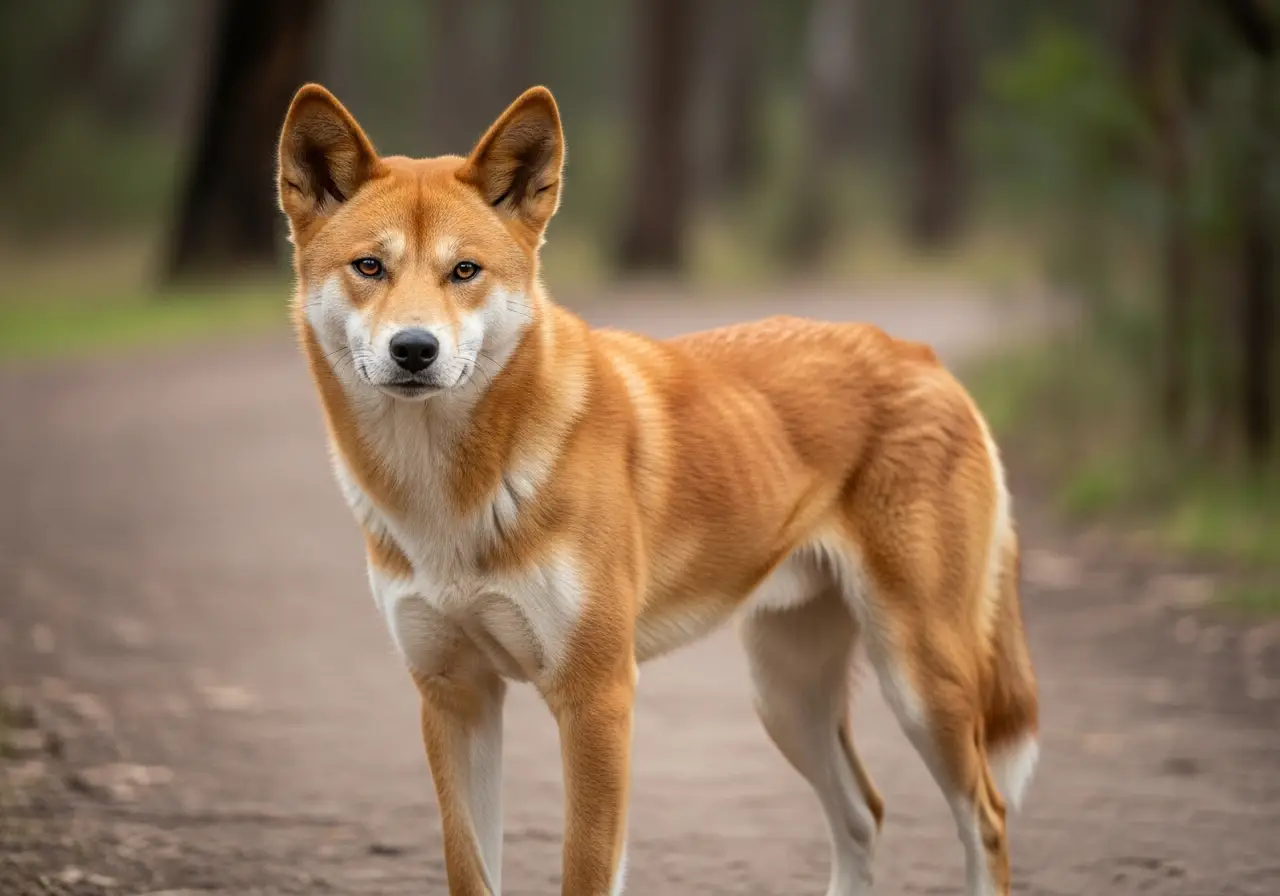
The dingo is an Australian primitive canid, not FCI-recognised, not keepable as a pet in the D-A-CH region, withers height 52–61 cm.
03Profile
Key facts and suitability
- Origin
- Australien (Ursprung Asien)
- Original purpose
- Wild-living primitive canid
- height at the withers
- 52–61 cm
- Weight
- 13–20 kg
- Life expectancy
- 5–10 Years
- Coat type
- Short-haired
- Minimum exercise
- 120 min/day
07Quick Check
09Character
Character and editorial background
The dingo is a wild-living canid of Australia with archaic behaviour and pronounced independence. Visually it resembles a slender, short-haired dog of the Spitz type, but its genetic profile and social behaviour differ significantly from domesticated dog breeds. When dealing with the dingo, it is less about breed keeping, but rather about wildlife biology, ethics and legal frameworks.
Origin and History
The dingo presumably arrived in Australia several thousand years ago with seafarers and developed further there in isolation. It is considered a semi-domesticated or re-wilded dog with close genetic proximity to early domestic dogs.
In Australia it plays a significant ecological role as an apex predator. At the same time, it stands in the tension field between nature conservation and livestock farming.
The dingo is not a recognised dog breed in the classical sense and is not listed by the FCI. Its genetic profile is strongly archaic.
Nature and Character
The dingo is independent, territorial and highly intelligent. It lives in stable social structures and shows pronounced territory behaviour.
Its bond with humans is limited and differs significantly from that of domesticated dogs. Hunting behaviour is very pronounced.
It reacts sensitively to restrictions and shows a high level of problem-solving ability. From an expert perspective, mental suitability for private keeping hardly exists. Its needs correspond more to those of a wild animal than to those of a family dog.
Keeping and Daily Life
In many countries, the keeping of dingoes or dingo hybrids is legally regulated or restricted. In Switzerland, strict requirements apply for the keeping of wild animals or hybrids.
A dingo requires large-scale, secure enclosures, specialised care and sound knowledge of wild animal husbandry. Classical apartment keeping is excluded.
As a family dog, it is unsuitable. Even experienced dog owners quickly reach their limits here.
Training and Education
The dingo does not show classical cooperative behaviour like domesticated dog breeds. Training in the conventional sense is only possible to a limited extent.
Its behaviour is strongly guided by instinct, territoriality and social structure. Misinterpretations quickly lead to conflicts.
It needs professional care from people experienced with wild animals and consistent management.
Health and Breed-Specific Characteristics
In the wild, dingoes are considered robust and adaptable. In captivity, behavioural disorders and stress symptoms occur if keeping conditions are inadequate.
Hybrids between dingo and domestic dog often show unstable behaviour. Veterinary care should be provided by specialists with experience in dealing with wild animals.
Suitability and Assessment
The dingo is not a suitable companion or family dog. Its keeping belongs in professional, species-appropriately designed facilities with the corresponding permit.
Private keeping is not recommended. The dingo is part of an ecological system and not a domesticated social partner in the classical sense.
5 Common Questions About the Dingo
Is a dingo a domestic dog?
No. It is considered a wild or semi-wild canid.
Can you keep a dingo privately?
In many countries, only with special permits or not at all. The legal situation varies regionally.
How old does a dingo get?
About 10 years in the wild, sometimes longer in captivity.
Is a dingo suitable for families?
No. It is not a classical family dog.
Does a dingo have a strong prey drive?
Yes. As an apex predator, its hunting behaviour is very pronounced.
12Structured data
Health by the numbers
Prone to diseases
No known hereditary diseases (wild population)
Recommended health tests
None – keeping as a pet in Switzerland/Germany/Austria is hardly possible
FAQ
Frequently asked questions about the Dingo
Is Dingo suitable for beginners?
Dingo is only suitable for first-time dog owners to a limited extent and is better suited to people with dog experience.
Is Dingo a family dog?
Dingo is only recommended as a family dog to a limited extent and is better suited to a household without small children.
How much exercise does Dingo need?
At least around 120 minutes of exercise per day. As an active breed, more so — plus mental stimulation.
Does Dingo suit an apartment?
Dingo needs more space and plenty of exercise and feels less comfortable in an apartment.
What is the size and weight of Dingo?
Fully grown, Dingo reaches about 52–61 cm at the withers and weighs around 13–20 kg.
What is the life expectancy of Dingo?
The life expectancy of Dingo is approximately 5–10 years.
Which diseases are common in Dingo?
No known hereditary diseases (wild population)
17Breed clubs
Official breed clubs in DACH
19Related
Similar breeds – and their differences
You might also be interested in


Participate
Do you have a good photo of your Dingo?
We are looking for expressive images for our breed profiles. Submit yours; the editorial team reviews every submission before publication.
Does this breed suit you?
Not a domestic dog. Protected wild species in Australia. In principle not keepable as a pet in Switzerland/Germany.