
01Summary
In a paragraph
If you only have 30 seconds.
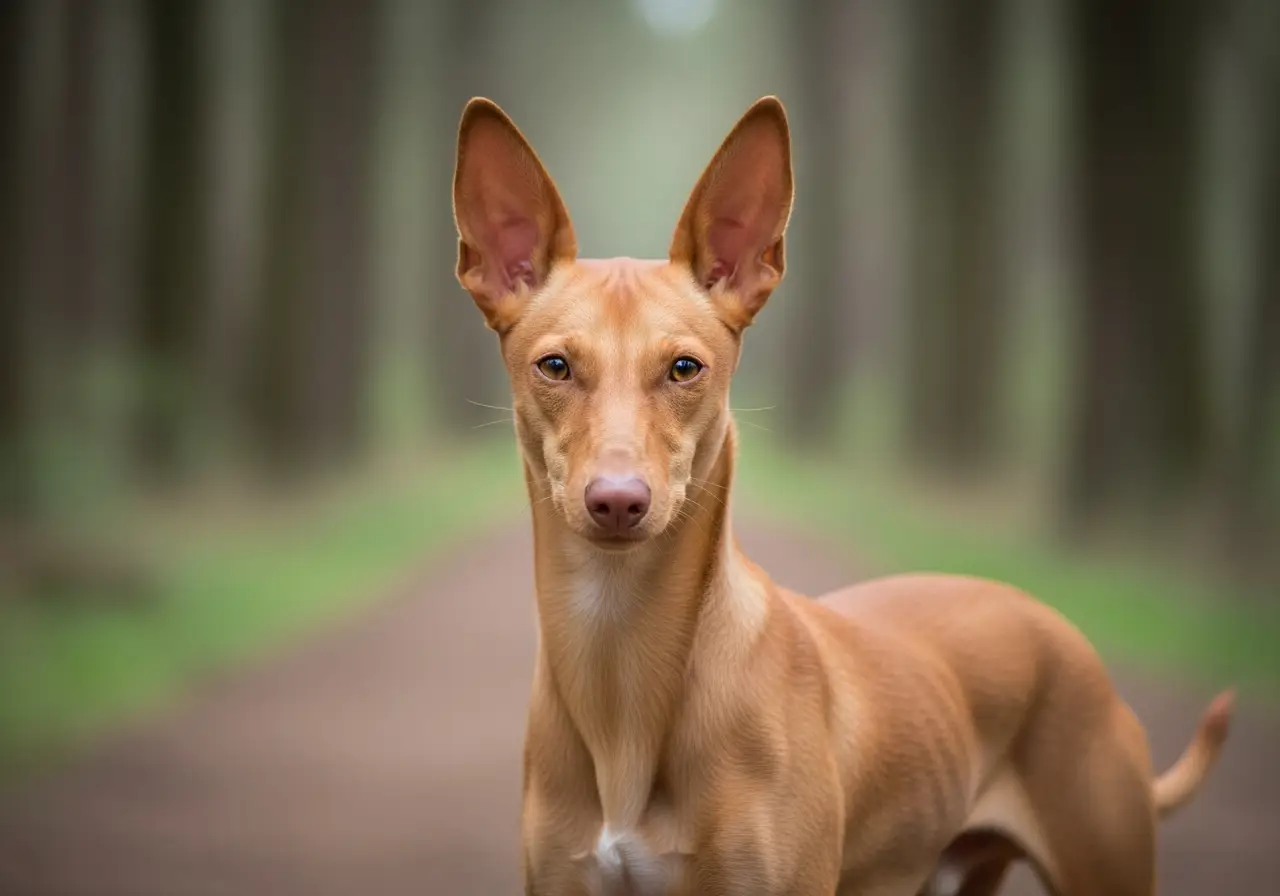
The Cirneco dell'Etna is one of Europe's oldest hunting dogs, slender, enduring and genetically programmed for independent hare hunting in volcanic terrain. It forms a close bond, but acts on its own judgement in the field. Anyone who can provide at least 90 minutes of active exercise daily, fenced running areas and experience in managing prey-driven dogs will find an exceptional companion in this breed.
02Introduction
What makes the Cirneco dell’Etna special
The Cirneco dell'Etna is a Sicilian primitive hunting dog, FCI Group 5, one of Europe's oldest dogs, extremely heat-tolerant, shoulder height 42–52 cm.
03Profile
Key facts and suitability
- Origin
- Italien (Sizilien)
- Original purpose
- Rabbit hunting on volcanic terrain at Mount Etna
- FCI
- No. 199 · Group 5 · Section 7
- height at the withers
- 42–52 cm
- Weight
- 8–12 kg
- Life expectancy
- 12–14 Years
- Coat type
- Short-haired
- Minimum exercise
- 60 min/day
- Puppy price
- 1'200–2'200 CHF
- Waiting period
- 12 months
- Sports
- Lure Coursing · Agility · Hunting
04Temperament
How the Cirneco dell’Etna shows up in everyday life
Morning exercise reveals what defines the Cirneco: As soon as something moves in the hedge, it is gone, not out of disobedience, but because its nervous system was designed precisely for this stimulus. This is not a gap in training; this is genetics.
At home, it behaves calmly and attentively. It seeks the closeness of its primary caregiver without being intrusive. Upon their return, it registers the arrival, greets briefly, and then returns to its observation post, often an elevated spot with a view towards the door or window.
**Internal axis (what the dog needs):** The need for social contact is in the medium range. The Cirneco requires reliable primary caregivers and regular interaction, but it is not a dog that demands constant enrichment. Mental work (nose work, search games, controlled prey drive substitute work) is part of the daily programme. The exercise requirement is high: A minimum of 90 minutes of active exercise per day is a basic prerequisite, not just a recommendation.
**External axis (how the dog reacts):** It shows itself as neutral to reserved towards strangers. It barks rarely but observes closely. This reserve is not a sign of insecurity, but corresponds to the nature of an independently working hunting dog. With well-socialised conspecifics, it is generally compatible. Small animals (cats, rabbits, birds) activate its prey drive regardless of familiarity or socialisation.
It can be left alone for up to four hours if the bond and workload are appropriate. Longer absences without preparation lead to restlessness.
05Needs
What this breed needs daily
The Cirneco dell'Etna needs at least 90 minutes of active exercise daily, not walks at a walking pace, but forms of movement that challenge its body and nose. Cross-country runs, nose work, search games, or controlled prey drive substitute work such as mantrailing or tracking correspond to its genetic profile.
Off-lead exercise is not an option for this breed, but a necessity, exclusively in secured, fenced areas. A standard garden fence with a height of 120 cm is insufficient; the Cirneco is an endurance jumper and climber.
Mental stimulation is equal in importance to physical exercise. A dog that is physically tired but mentally under-stimulated develops avoidance behaviour: excessive sniffing in the house, restlessness, vocalisations. Nose work, even in short units of 15 to 20 minutes, has been proven to be more tiring than pure running load.
The bond with its primary caregiver is close but not clingy. The Cirneco needs reliable structures in everyday life: fixed times, clear signals, consistent reactions. Arbitrary rule changes unsettle it more than other breeds because it is trained for independent decision-making and interprets inconsistency as a signal.
Social contacts with conspecifics are valuable but do not replace interaction with the owner. Group runs with other dogs can supplement the exercise quota, but they are no substitute for targeted enrichment.
Exercise
High
mental work
Medium
Social needs
Medium
training
Demanding
06Sport & Mental and Physical Stimulation
What sports the Cirneco dell’Etna is suited for
Realistic in terms of physiology and genetics – not every breed suits every sport.
Structurally and physiologically suitable: Suitable for mantrailing, dummy work and tracking · CaniCross / bikejoring possible.
07Quick Check
08Suitability
Who this breed is suitable for – and who it isn't
✓Matches
The Cirneco dell'Etna suits owners who can plan at least 90 minutes of active outdoor exercise daily, regardless of weather and season. A rural or suburban environment with access to fenced running areas is a prerequisite, not a bonus.
Experience with hunting-motivated dogs is helpful. Anyone who has already handled a dog with pronounced drive behaviour and knows that impulse control is a training goal that is never fully completed brings the right expectations.
Active individuals or couples with a flexible daily routine benefit from its independence: The Cirneco needs closeness but does not demand it permanently. Owners who wish to engage in nose work, mantrailing, or tracking will find a motivated partner in it.
Families with children from about 8 years old, who know how to handle the dog respectfully, are also suitable, provided that the prey drive is managed consistently and there are no small animals in the household. A supplementary dog training school with a drive-specific approach is recommended for the first two years.
×Doesn't match
The Cirneco dell'Etna does not suit owners who rely on reliable off-lead exercise in open terrain. Anyone without access to secured running areas underestimates a central housing requirement of this breed.
Households keeping a dog for the first time will quickly reach limits with the Cirneco, not because it is aggressive or difficult, but because its independent decision-making behaviour in a hunting context requires experience in drive management.
Anyone who confuses the external axis with the internal one (i.e. interprets its reserve towards strangers as general gentleness and concludes from this that it is an uncomplicated companion dog) will be surprised by its behaviour in open areas.
Households with small animals such as cats, rabbits, or birds are not a suitable environment without consistent, permanent management. People who are away from home for more than six hours daily and have no care solution do not meet the minimum requirements for bonding and workload. Urban owners without a garden or a nearby dog park with fencing should not choose this breed.
10Line reality
Show line, working line, breeder market
The Cirneco dell'Etna is bred worldwide in very small numbers. A pronounced line differentiation between working and show lines, as known for example in retrievers or herding dogs, does not exist for this breed in a comparable form.
Breeding is oriented towards FCI Standard No. 199 (dated 30.10.2016), which defines both exterior and character traits. Since the breed is still occasionally used for hunting in its home region of Sicily, the separation between working and show breeding is less sharp than in other breeds.
Practically relevant for prospective owners: Within the small breeding population, individual differences in drive behaviour and social compatibility can vary considerably. Therefore, looking at the working deployments and temperament tests of the parent dogs is more useful than categorising by lineage. Breeders who actively hunt with their dogs or engage in nose work generally provide more reliable indications of the expected drive profile than pure show successes.
11Health · Reality
What you need to plan for medically with your Cirneco dell’Etna
The Cirneco dell'Etna is considered one of the healthiest dog breeds in Europe. As a functionally bred working dog with a long history without intensive selective breeding for exterior traits, it exhibits significantly fewer breed-specific hereditary diseases than many modern pedigree or fashion breeds.
According to available data from breeding associations, the life expectancy is 12 to 14 years, with well-cared-for dogs receiving sufficient exercise and maintaining a normal body weight often reaching the upper end of this range.
Severe hereditary diseases such as hip dysplasia (HD) or elbow dysplasia (ED) have not been documented as widespread problems in this breed to date. Systematic population studies with published HD/ED rates are not available for the Cirneco to the same extent as they are for large breeds, due to the small breeding population.
Known sensitivities: The short, close-lying coat offers little protection against cold and wet conditions. Temperatures below 5 °C require a well-fitting dog jacket for longer periods outdoors. Overweight is a serious risk in this slender breed; the ribs should be palpable with light pressure. Just 1 to 2 kg of excess weight places disproportionate strain on joints and the cardiovascular system.
Preventive examinations: Annual veterinary check-up, dental status assessment from the 5th year of life, eye examination if abnormalities are noted. Timely veterinary investigation is indicated in cases of lameness, weight loss or decline in performance.
12Structured data
Health by the numbers
Prone to diseases
No known breed-specific hereditary diseases, extremely robust
Recommended health tests
No specific mandatory examinations
13Myths ↔ Reality
What is often said incorrectly about this breed
Five myths, five realities, five sources.
"The Cirneco is a sighthound and hunts exclusively by sight.
The Cirneco dell'Etna belongs to FCI Group 5 (primitive hunting dogs), not to the sighthound Group 10. It hunts primarily with its nose; according to the FCI standard, its sense of smell is its most reliable hunting tool. Sight and hearing complement the work but are not in the foreground.
"Its delicate appearance makes it a calm apartment dog.
The slender body structure deceives regarding the actual activity level. The Cirneco needs at least 90 minutes of active exercise daily as well as secure off-lead areas. Without sufficient stimulation, it develops restlessness and avoidance behaviour.
"As an old primitive breed, it is particularly easy to train.
Primitive breeds were selected over millennia for independent decision-making ability, not for cooperation with humans. The Cirneco learns quickly but acts according to its own judgment in hunting contexts. Monotonous repetitions lead to disinterest; a variable, consistent training approach is a prerequisite.
"The recall works reliably in open terrain after sufficient training.
With pronounced prey drive and high self-motivation, a reliable recall in open, unsecured terrain is not guaranteed even after intensive training. Fenced running areas are not a luxury but a safety requirement for this breed.
"The Cirneco gets along easily with small animals because it is not an aggressive dog.
Aggression and prey drive are two different behavioural levels. The Cirneco is generally tolerant towards humans and conspecifics, but reacts to movement stimuli from small animals with pronounced hunting behaviour. Keeping it with small animals requires consistent management.
14animal welfare
The animal welfare perspective
Breeder market, designer versions, animal shelter reality — what no one writes in the puppy ad.
The Cirneco dell'Etna is a rarity in Germany, Austria and Switzerland. Its limited distribution protects the breed from the fate that befalls many trendy breeds: backyard breeding, mass imports and structural market overload.
Backyard breeder market: Because demand is low and the breeding population is manageable, there is no significant backyard breeder market for the Cirneco in Central Europe. This could change if the breed gains popularity through social media attention. Interested parties offered puppies without pedigrees, without health tests of the parent dogs or at unusually low prices should question these offers critically.
Breeding and husbandry-related problems: The Cirneco is not a breed resulting from unethical breeding practices. Its body structure is functional, its airways are unrestricted, and births generally proceed without medical intervention. The biggest husbandry-related problem is structural in nature: prey drive is underestimated, off-lead opportunities are overestimated, and dogs end up being surrendered because expectations and reality diverge.
Adoption as an equally valid option: As the Cirneco rarely appears in traditional animal welfare shelters, specialised rescue organisations for primitive and Mediterranean breeds are the relevant point of contact. Dogs from rescue often come with a history, which requires experience, but offers a fully worthwhile alternative to a puppy. A dog from rescue is not a compromise; it is a conscious decision for a dog that already exists and needs a home.
Anyone interested in the Cirneco would do well to first contact the breed clubs, not only to search for puppies, but to gain a realistic picture of the breed.
15Costs · Transparency
What this breed realistically costs
A puppy from a reputable breeder affiliated with VDH or FCI costs between 1,200 and 2,000 EUR in Central Europe. Offers significantly below this, particularly without pedigrees or health certificates for the parent dogs, are a warning sign.
Ongoing annual costs (guidelines for a dog weighing approx. 10 kg): High-quality dry food or BARF costs between 400 and 700 CHF/EUR annually. Basic care (claws, ears, occasional bathing) is low-maintenance in the short-haired Cirneco and incurs hardly any external costs.
Veterinary costs: Annual preventive check-up including vaccination boosters costs between 80 and 180 EUR/CHF depending on the region. Unplanned treatments, injuries from hunting behaviour in the field are not uncommon and can quickly reach 300 to 800 EUR.
Dog liability insurance costs between 50 and 120 EUR/CHF annually depending on the provider and coverage limit, and is mandatory in several federal states. Health insurance for the dog is optional, but sensible to calculate for a breed with an active exercise profile: 300 to 600 EUR/CHF annually depending on the tariff and excess.
Total costs in the first year (including getting a dog, basic equipment, initial vaccinations, microchip, tax): realistically 2,500 to 4,000 EUR/CHF.
16Puppy search
What you need to consider when choosing a breeder
- Reputable breeders of the Cirneco dell'Etna are rare in Germany, Austria, and Switzerland.
- Long waiting times of a year or more are usual; this is not a warning signal, but a sign of a small, responsibly managed breeding population.
- Criteria for reputable breeding: Both parent dogs are tested for breed-specific health traits, the breeder is a member of a recognised association (e.g.
- VDH, SKG, ÖEKV or an FCI member association), and puppies leave the litter no earlier than eight weeks of age.
- A reputable breeder asks questions about your daily routine, living situation and experience with hunting dogs, and will decline a sale if the profile is not suitable.
- Adoption as an equally valid option: As the Cirneco rarely appears in animal welfare shelters in Central Europe, specialised rescue centres for primitive and Mediterranean breeds are the more realistic point of contact.
- Dogs surrendered due to underestimated prey drive require experienced owners, but offer a fully worthwhile alternative to a puppy.
- No specific breeder recommendations are provided here; current lists of breeding facilities are published by the official breed clubs.
FAQ
Frequently asked questions about the Cirneco dell’Etna
Is Cirneco dell’Etna suitable for beginners?
Cirneco dell’Etna is considered suitable for first-time dog owners.
Is Cirneco dell’Etna a family dog?
Cirneco dell’Etna is considered suitable for families with good socialisation and species-appropriate care.
How much exercise does Cirneco dell’Etna need?
At least around 60 minutes of exercise per day. As an active breed, more so — plus mental stimulation.
Does Cirneco dell’Etna suit an apartment?
With enough exercise and enrichment, Cirneco dell’Etna can also be kept in an apartment.
What is the size and weight of Cirneco dell’Etna?
Fully grown, Cirneco dell’Etna reaches about 42–52 cm at the withers and weighs around 8–12 kg.
What is the life expectancy of Cirneco dell’Etna?
The life expectancy of Cirneco dell’Etna is approximately 12–14 years.
Which diseases are common in Cirneco dell’Etna?
No known breed-specific hereditary diseases, extremely robust
17Breed clubs
Official breed clubs in DACH
19Related
Similar breeds – and their differences
You might also be interested in

Participate
Do you have a good photo of your Cirneco dell’Etna?
We are looking for expressive images for our breed profiles. Submit yours; the editorial team reviews every submission before publication.
Does this breed suit you?
Small, elegant Sicilian sighthound type. Very heat-resistant, sensitive to cold. Rare and healthy.