
01Summary
In a paragraph
If you only have 30 seconds.
The Chinook is one of the rarest dog breeds worldwide. It combines the endurance of a sled dog with an unusually close bond with humans for a northern breed. Anyone who plans 90 to 120 minutes of active exercise daily, provides structured guidance and enjoys sled dog sports or canicross will find in it a cooperative, robust companion. Anyone who does not meet these prerequisites will not do justice to its work motivation.
02Introduction
What makes the Chinook special
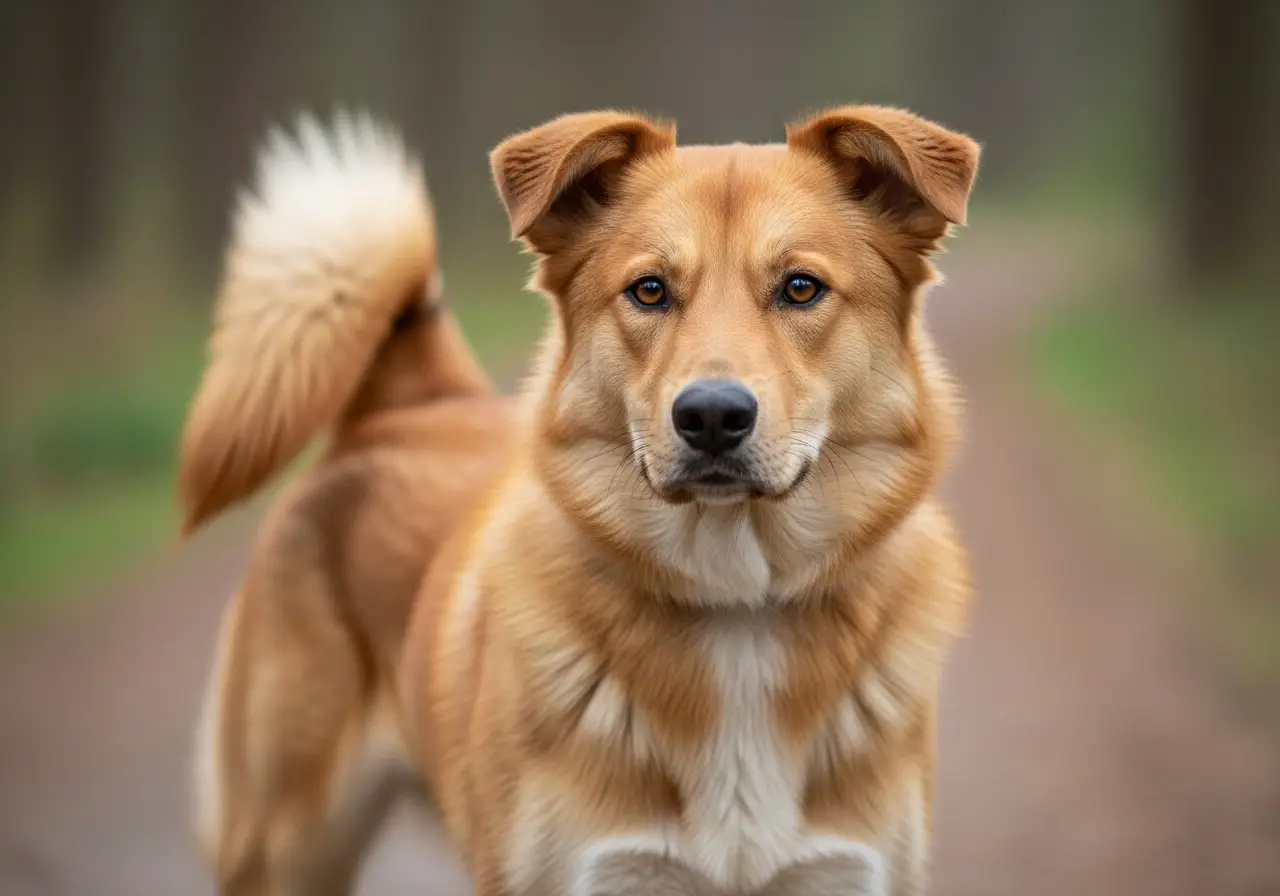
The Chinook is a very rare US sled dog, state dog of New Hampshire, gentle and family-friendly, withers height 56–69 cm.
03Profile
Key facts and suitability
- Origin
- USA
- Original purpose
- Freight sled dog and expedition companion
- height at the withers
- 56–69 cm
- Weight
- 25–41 kg
- Life expectancy
- 12–15 Years
- Coat type
- Doppel
- Minimum exercise
- 90 min/day
- Puppy price
- 1'500–2'500 CHF
- Waiting period
- 12 months
- Sports
- Sled dog sports · Canicross · Sled dog sports · Agility
04Temperament
How the Chinook shows up in everyday life
When returning home, the Chinook shows a clear but not overwhelming greeting. It seeks physical contact but does not impose itself. After a few minutes, it lies down within sight; it wants to be present, not clingy.
On the internal axis (i.e. what the dog needs from itself), there is a high need for social contact. The Chinook is oriented towards community with humans, not towards self-occupation. At the same time, it demands intensive daily exercise and literally pulls: Canicross, bikejöring or sledding correspond to its genetic profile. Mental work complements but does not replace physical stimulation.
On the external axis, i.e. how it reacts to stimuli, the Chinook shows an openness unusual for Nordic breeds. It generally meets strangers neutrally to friendly, without being intrusive. With other dogs, it is usually tolerant due to its sled dog background, provided socialisation has taken place early and consistently. The prey drive is moderate; it recedes behind work motivation but should not be ignored.
These two axes run largely parallel in the Chinook, making it predictable in everyday life, provided its exercise and social needs are met. A Chinook that is sufficiently stimulated daily is calm in the house, patient with children and cooperative in training. A Chinook that is under-stimulated finds its own occupation, and rarely to the owner’s delight.
05Needs
What this breed needs daily
The Chinook needs at least 90 to 120 minutes of active exercise daily, and this does not mean a leisurely walk. Sled dog sports, Canicross, bikejöring, extended hikes or structured running units correspond to its profile. Short walks are not sufficient to meet its exercise needs.
Mental stimulation complements physical work. Nose work, search games or structured obedience training keep its mind occupied. The Chinook learns cooperatively and shows enjoyment in tasks it solves together with humans. Monotonous repetitions without purpose exhaust it faster than challenging sequences.
The need for social contact is high. The Chinook requires regular, genuine contact with its primary caregiver, not just physical presence but active interaction. Long phases of isolation or being alone burden it. Anyone keeping it in a group with other dogs should ensure that socialisation has taken place early and positively.
A garden or access to extensive terrain is advantageous but no substitute for guided activity. Keeping in an apartment is possible, provided the daily exercise needs are met consistently and regardless of weather conditions.
Structured daily guidance is not optional but a basic prerequisite. The Chinook reacts sensitively to inconsistency, not with aggression but with uncertainty and decreasing willingness to cooperate. Clear rules, reliable routines and a calm, consistent leader form the basis for stable cohabitation.
Exercise
High
mental work
Medium
Social needs
High
training
Easy
06Sport & Mental and Physical Stimulation
What sports the Chinook is suited for
Realistic in terms of physiology and genetics – not every breed suits every sport.
Structurally and physiologically suitable: CaniCross / bikejoring possible.
07Quick Check
08Suitability
Who this breed is suitable for – and who it isn't
✓Matches
The Chinook suits owners who can integrate 90 to 120 minutes of active exercise into their daily routine, not as an occasional exception but as a fixed structure. Anyone actively practising Canicross, bikejöring, sledding or endurance hiking will find a motivated partner in it.
Families with children from around eight years of age are suitable, provided there is a plan for exercise and a clear daily structure. The Chinook tolerates bustle but needs opportunities to retreat and reliable rules.
Experienced first-time owners are conceivable, provided they assess its need for exercise realistically and are willing to use a dog training school. What matters is not experience with the breed, but the willingness to provide consistent daily guidance.
Rural or suburban environments with access to open spaces significantly facilitate keeping the dog. Households where at least one person works from home most of the time or has flexible working hours better meet its need for social contact than full-time out-of-home arrangements. Anyone who already has experience with sled dog sports or northern breeds will understand its work motivation correctly from the start.
×Doesn't match
The Chinook is not suitable for owners who are away from home for more than four hours a day and do not have a reliable plan for dog care. Its strong bond with people is incompatible with long, regular periods of separation.
Anyone who equates its balanced temperament with a low need for exercise fundamentally underestimates it. The calm demeanour of the Chinook is the result of sufficient mental and physical stimulation, not contentment with little activity. Households without access to sufficient space for movement or without a willingness to engage in weather-independent activity will quickly reach their limits.
Anyone looking for a dog that occupies itself or is satisfied with short walks is choosing the wrong breed. The Chinook needs guided, intensive activity, not just free running in the garden.
Owners who regard consistency and daily structure as optional will also face difficulties. The Chinook reacts to inconsistency with uncertainty, which manifests itself in undesirable behaviour. Anyone who additionally expects to find the breed spontaneously via a rescue organisation in the DACH region must revise their expectations: The Chinook is practically unavailable in the German-speaking area and requires a targeted, long-term search with possible import from the USA.
10Line reality
Show line, working line, breeder market
The Chinook does not have a pronounced line differentiation in the sense of working line versus show line, as exists for example with the Labrador Retriever or German Shepherd. The total population is too small to establish such divisions.
Within breeding, however, two informal focuses can be observed: breeders who actively engage in sled dog sports and select their dogs for endurance and pulling power, and breeders who place greater emphasis on temperament balance and suitability as a family dog. These differences are not formalised and are difficult to assess in individual cases without direct contact with the breeder and insight into the work of the parent animals.
As the breed is native to the USA and barely represented in the DACH region, regional breeding lines are completely absent. Interested parties should specifically ask about the sporting use of the parent animals when searching for a breeder and request to see health certificates. The small breeding base makes careful selection particularly important, not despite the rarity, but precisely because of it.
11Health · Reality
What you need to plan for medically with your Chinook
According to the AKC breed standard, the life expectancy of the Chinook is 12 to 15 years, a solid range for a medium to large dog, which however is influenced by the genetic starting conditions of the small breeding base.
Hip dysplasia (HD) is documented in the breed. According to the Orthopedic Foundation for Animals (OFA), evaluations from the Chinook breeding registry show an HD rate that reputable breeders try to control through mandatory X-ray examinations of the parent animals (OFA, status 2023). Interested parties should request HD certificates for both parent animals.
Epilepsy occurs in the breed and is considered genetically determined. Hormonal diseases, including hypothyroidism, are also described. The narrow breeding base from the 1960s has permanently restricted the gene pool, increasing the risk of recessive hereditary diseases.
Eye examinations (CAER certificate) and thyroid value screening are part of the recommended preventive examinations before breeding. Buyers should actively request these certificates.
Overweight is a real risk for the Chinook if its need for exercise is not met. A sufficiently stimulated Chinook generally maintains a stable weight; an under-exercised dog tends to become fat, which additionally stresses joints and metabolism.
Regular veterinary check-ups, at least once a year, are particularly recommended for this breed due to its genetic peculiarities.
12Structured data
Health by the numbers
Prone to diseases
Hip dysplasia, epileptic seizures, cryptorchidism
Recommended health tests
Hip X-ray
13Myths ↔ Reality
What is often said incorrectly about this breed
Five myths, five realities, five sources.
"The Chinook is like all sled dogs independent and difficult to handle.
The Chinook was selectively bred for willingness to cooperate, which distinguishes it from breeds such as the Siberian Husky or the Alaskan Malamute. It responds to clear, positive leadership and works actively with humans, rather than seeking its own path. This trait was Walden's stated breeding goal.
"A rare breed is automatically healthier because it has not been overbred.
The opposite may be true. The extreme bottleneck situation in the 1960s permanently restricted the genetic diversity of the Chinook. Hip dysplasia, hormonal disorders and epileptic seizures occur in the breed. Reputable breeders carry out health screenings to deliberately expand the gene pool.
“The Chinook is suitable as a calm house dog because it appears so balanced.
The balanced temperament of the Chinook only arises with sufficient stimulation. Without 90 to 120 minutes of active exercise and mental enrichment daily, it shows restlessness, destructive behaviour or excessive vocalisation. Its calm demeanour is the result of fulfilment, not of low needs.
“Because it is so people-oriented, it can be left alone for long periods without problems.
Strong human bonding and tolerance of being alone are mutually exclusive in the Chinook. Precisely because it seeks close proximity to its primary caregiver, it reacts with stress to long separation phases. Being alone must be trained step by step and consistently; more than four hours daily is a burden for most individuals.
“The Chinook is available in the German-speaking region via animal welfare organisations.
In the DACH region, the Chinook practically does not appear in animal shelters and rehoming platforms. Interested parties usually have to contact US breeders directly, plan for long waiting times and calculate import costs. A spontaneous acquisition is structurally excluded for this breed.
14animal welfare
The animal welfare perspective
Breeder market, designer versions, animal shelter reality — what no one writes in the puppy ad.
The Chinook is one of the rarest dog breeds worldwide. This rarity protects it from some problems of mass production but creates its own risks that interested parties should know about.
Backyard breeders and disreputable suppliers play hardly any role in this breed because demand in the DACH region is minimal and the breeding base in the USA is manageable. This does not mean, however, that all available puppies come from reputable breeding. Anyone who buys a Chinook via international online platforms or without direct contact with the breeder takes considerable risks regarding both health and temperament.
Designer versions or hybrid trends do not exist for the Chinook to any relevant extent. The breed is simply too unknown to become a trend product. This is one of the few advantages of its rarity.
Breeding and keeping-related problems with the Chinook arise mainly from a misjudgement of the need for exercise. A dog that requires 90 to 120 minutes of active stimulation daily and does not receive it will develop behavioural issues, not out of malice, but due to unfulfilled genetic basic needs. Owners who underestimate this will overwhelm themselves and the dog.
Adoption as an equivalent option: In the DACH region, the Chinook practically does not appear in animal shelters. Anyone wishing to take in a second-hand dog can research specialised US rescue organisations, such as the Chinook Owners Association Rescue. This requires patience, language skills and willingness to import, but is a legitimate and responsible alternative to searching for a puppy. Adult dogs have the advantage that their character and health status are already assessable.
15Costs · Transparency
What this breed realistically costs
A Chinook puppy from reputable US breeding costs between 1,500 and 2,500 USD. In addition, there are import costs for the DACH region: flight tickets, veterinary certificates, quarantine documentation and import formalities sum up to a further 800 to 1,500 EUR, depending on the place of origin and transport route. Anyone wishing to keep a Chinook in Germany, Austria or Switzerland must expect total acquisition costs of 3,000 to 5,000 EUR.
The annual living costs for a medium to large, active dog of this size are typically between 1,800 and 3,000 EUR. This includes high-quality food (approx. 600–1,000 EUR/year), grooming needs (low, as the coat is easy to care for), accessories and sports equipment for canicross or bikejoring.
Basic veterinary care (vaccinations, parasite prevention, annual check-up) costs between 300 and 600 EUR per year depending on the region. For a breed with documented health risks such as HD or epilepsy, treatment costs can quickly rise into the four-figure range. Pet insurance with surgery cover costs between 50 and 120 EUR monthly for a large dog and is a sensible safeguard for this breed.
16Puppy search
What you need to consider when choosing a breeder
- Finding a reputable Chinook breeder in the DACH region is structurally difficult; the breed is practically not represented here.
- The search usually leads to US-American breeders who are networked via the Chinook Owners Association (chinookowners.com).
- Reputable breeders provide health certificates for both parent animals: OFA hip evaluation, CAER eye examination and thyroid screening are the minimum standard.
- Anyone who does not present or cannot present these documents is disqualified as a supplier.
- A reputable breeder asks counter-questions regarding daily life, experience and living situation.
- Anyone who sells a puppy without asking questions is not acting in the interest of the dog.
- Waiting times of one to several years are not an exception for this breed, but the rule.
- Anyone who exerts pressure or insists on quick availability often ends up with disreputable suppliers.
- Rescuing an adult Chinook via rescue organisations in the USA is an equally valid alternative.
- Adult dogs allow a more realistic assessment of temperament and health.
- No named breeder recommendations; research via official breed clubs and direct contact with breeders is the most reliable approach.
FAQ
Frequently asked questions about the Chinook
Is Chinook suitable for beginners?
Chinook is considered suitable for first-time dog owners.
Is Chinook a family dog?
Chinook is considered suitable for families with good socialisation and species-appropriate care.
How much exercise does Chinook need?
At least around 90 minutes of exercise per day. As an active breed, more so — plus mental stimulation.
What is the size and weight of Chinook?
Fully grown, Chinook reaches about 56–69 cm at the withers and weighs around 25–41 kg.
What is the life expectancy of Chinook?
The life expectancy of Chinook is approximately 12–15 years.
Which diseases are common in Chinook?
Hip dysplasia, epileptic seizures, cryptorchidism
17Breed clubs
Official breed clubs in DACH
19Related
Similar breeds – and their differences
You might also be interested in
Participate
Do you have a good photo of your Chinook?
We are looking for expressive images for our breed profiles. Submit yours; the editorial team reviews every submission before publication.
Does this breed suit you?
Very rare US sled dog breed. Gentle in character. State dog of New Hampshire. Extremely difficult to obtain.