3 sourcesReviewed on February 24, 2022Responsible editor: Roger KleinText: Roger Klein
01Summary
In a paragraph
If you only have 30 seconds.
The Afghan Hound combines thousands of years of hunting history with a character that carries independence not as a flaw, but as its core essence. Its prey drive is genetically anchored, its activity needs are high, and its grooming is time-intensive. Anyone who views it as an elegant companion dog without special requirements will fail. Anyone who respects independence and provides physical and mental stimulation gains an extraordinary partner.
02Introduction
What makes the Afghan Hound special
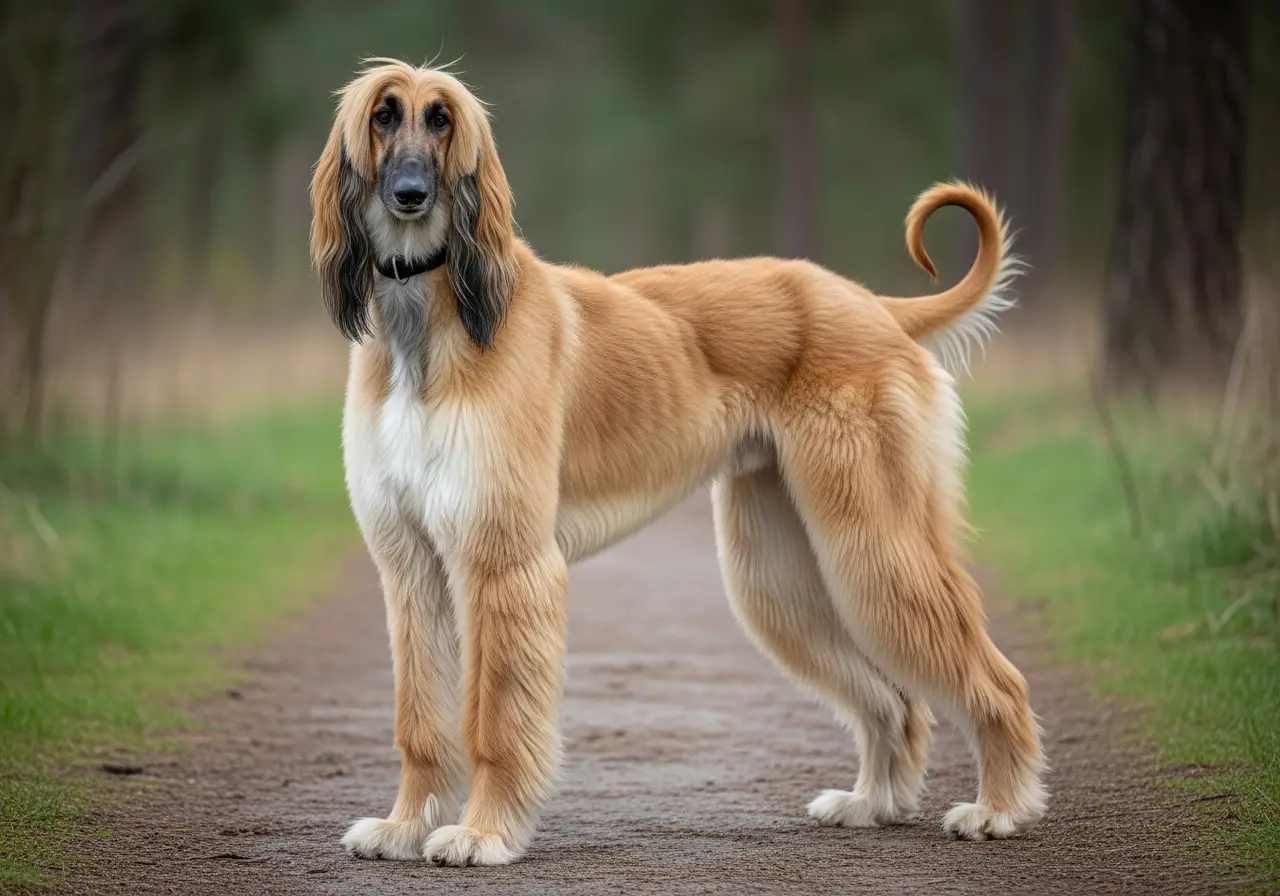
The Afghan Hound is an elegant hunting sighthound from Afghanistan, FCI Group 10, with a long silky coat and pronounced prey drive, standing 63–74 cm at the withers.
03Profile
Key facts and suitability
- Origin
- Afghanistan
- Original purpose
- Hunting large game, coursing
- FCI
- No. 228 · Group 10 · Section 1
- height at the withers
- 63–74 cm
- Weight
- 20–27 kg
- Life expectancy
- 12–14 Years
- Coat type
- Long-haired
- Minimum exercise
- 90 min/day
- Puppy price
- 1'500–3'000 CHF
- Waiting period
- 12 months
- Sports
- Lure Coursing · Racing · Agility
04Temperament
How the Afghan Hound shows up in everyday life
When you come home, the Afghan does not greet its owner with exuberant barking or jumping. It gets up, observes, and approaches in its own way. This reserve is not disinterest; it is core to its character. The bond with the primary caregiver is real but is not shown demonstratively.
Here, the two sides diverge significantly: the Afghan seeks closeness and orientation towards its primary caregiver; its need for social contact is present even if it expresses itself quietly. Towards strangers, it shows pronounced reserve. A visitor who immediately seeks contact will be ignored or avoided. This is not a fault in socialisation but breed-typical behaviour that the FCI standard describes as "dignified and reserved".
On a walk, the prey drive becomes the dominant force. A deer at the edge of the forest, a hare in the meadow, a fast-moving bicycle – movement stimuli trigger instinctive chasing. At this moment, the Afghan switches to hunting mode: it no longer hears, it does not respond to recall, it runs. Free running without secure fencing is therefore not an option but a serious safety risk.
In the apartment, it behaves calmly if its need for movement is met. It seeks a fixed resting place, observes events from a distance and participates when it deems it appropriate. Rough handling, loud confrontation or inconsistent leadership lead to withdrawal, not submission. The Afghan reacts to mood and atmosphere, not to commands alone.
05Needs
What this breed needs daily
The Afghan needs at least two hours of active exercise daily, a substantial portion of which must be genuine free running in secure terrain. Loose-leash walking alone does not meet its need for movement. Coursing, track racing or structured running on secure terrain are species-appropriate forms of stimulation that correspond to its genetic profile.
A property with a secure fence of at least 1.80 m in height significantly eases daily life. The Afghan is a sight hound with high sprint speed; a low fence or an open gate is enough to create a dangerous situation.
Mentally, it does not need classic obedience work in the sense of command drills. What challenges it is relationship work: consistent, calm leadership that respects independence while setting clear boundaries. Nose work and search games offer supplementary mental stimulation that it accepts if introduced without pressure.
Being left alone works if built up gradually. It should not exceed four hours daily on a permanent basis. The Afghan seeks the closeness of its primary caregiver; it is not a dog that can easily bridge the entire working day alone.
Grooming is an independent time factor: several times a week, the long, silky coat requires thorough brushing and combing. After runs in rough terrain, dirt, leaves and burrs collect in the coat. Anyone who underestimates this effort risks painful matting that can only be resolved by clipping.
Exercise
High
mental work
Medium
Social needs
Medium
training
Demanding
06Sport & Mental and Physical Stimulation
What sports the Afghan Hound is suited for
Realistic in terms of physiology and genetics. Not every breed suits every sport.
Structurally and physiologically suitable: Suitable for mantrailing, dummy work and tracking · CaniCross / bikejoring possible.
07Quick Check
08Suitability
Who this breed suits and who it doesn't
✓Matches
The Afghan suits owners with experience in handling independent dog breeds. Anyone who has already worked with sighthounds, Nordic breeds or other high-drive dogs brings a realistic expectation with them.
Specifically suitable are owners who can plan at least two hours of active exercise daily, part of which is secure free running or structured sighthound sports. A house with an enclosed property (fence height min. 1.80 m) is not a luxury but a safety prerequisite.
Anyone aiming for coursing, track racing or comparable dog sports will find a motivated partner in the Afghan. The breed suits sportily active individuals or couples who integrate their dog into daily life, not owners looking for a dog that occupies itself.
Families with children from about ten years old are suitable if the children are calm and respectful in their handling of the dog. The Afghan does not tolerate loud, unpredictable interactions. Visitors and strangers should give the dog time to initiate contact; anyone who understands this and can communicate it creates a functional environment.
Owners with a calm, clear demeanour and patience in training are at an advantage. Anyone who sees independence as a character strength and does not expect unconditional obedience will build a deep, loyal bond with this breed.
×Doesn't match
The Afghan Hound is not suitable for owners who are keeping a dog for the first time and do not attend a dog training school or seek experienced support. Its independent character and strongly pronounced prey drive regularly overwhelm first-time owners without prior knowledge.
Anyone who is away from home for eight hours or more daily and cannot organise reliable care should not choose this breed. The Afghan Hound tolerates limited periods of solitude; permanently being alone for more than four hours a day is not species-appropriate.
Owners who expect a dog with a reliable recall in open nature without a secure environment will be disappointed. The prey drive cannot be trained away; it is genetically anchored. Anyone without access to a securely enclosed exercise area cannot meet the activity needs of this breed.
Anyone who chooses the Afghan Hound for its appearance and underestimates the care effort risks matting and skin problems. The coat requires intensive grooming several times a week; this is not a recommendation, but a prerequisite.
Families with very young children or households with high visitor frequency and a noisy daily routine do not suit the sensitive, reserved nature of this breed. Anyone who expects the Afghan Hound to react openly and warmly towards strangers confuses its need for closeness to the family with sociability towards strangers, two things that are far apart in this breed.
09Related
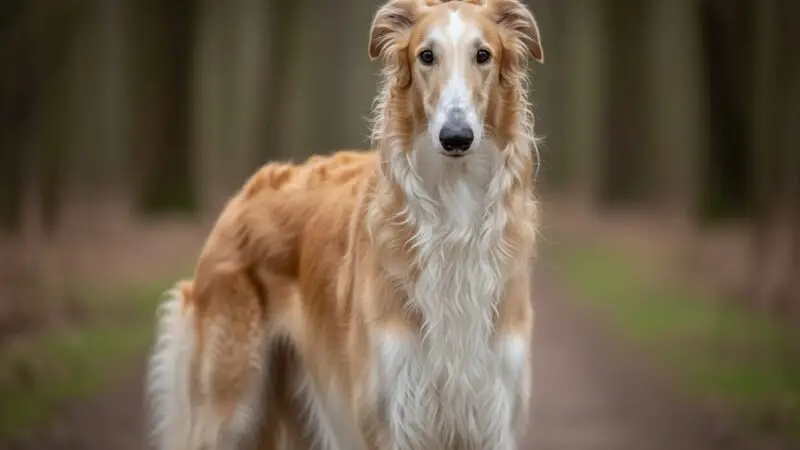
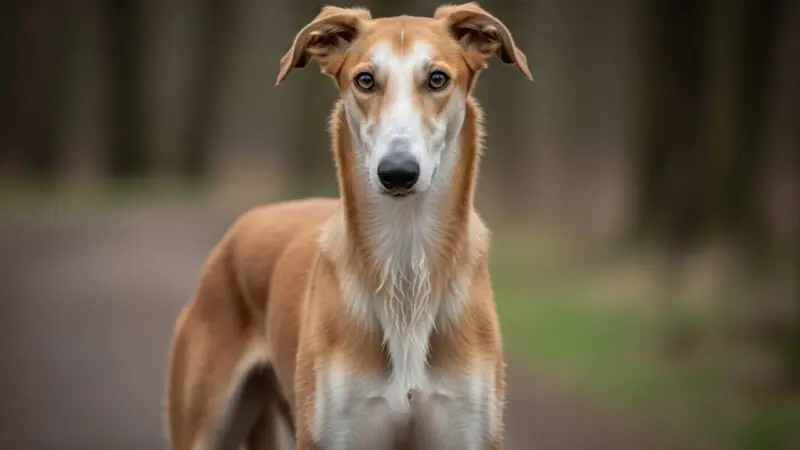
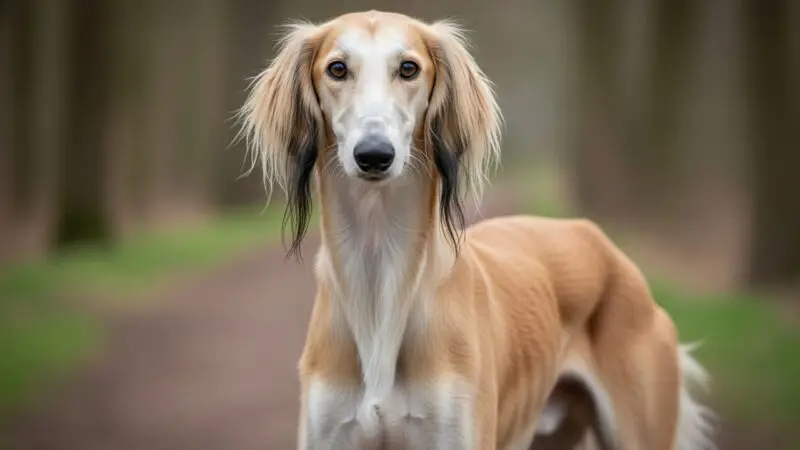
Similar breeds and how they differ
10Line reality
Show line, working line, breeder market
The Afghan Hound exists today primarily in two forms that have developed historically from its breeding history: the show type and the sport type, which is used in coursing and track racing.
The show type is based on the FCI standard in its aesthetic expression: maximum coat volume, pronounced head hair, harmonious proportions for the show ring. Breeders who focus on this type prioritise appearance and gait. The prey drive is present but is not systematically tested in breeding.
The sport type, active in coursing circles, often shows a slightly slimmer, more athletic appearance. The coat is often shorter or less luxuriously groomed because function takes precedence over looks. These dogs are regularly tested for their running performance and hunting instinct. Anyone looking for an Afghan for active sighthound sports will find a more suitable starting point in coursing-oriented breeding lines.
Historically, various regional types existed in Afghanistan itself, the mountain type with dense coat and the plain type with shorter hair. This differentiation has largely merged into modern Western breeding but continues to live on in the variation within the breed.
There is no formal working test in the FCI standard for the Afghan Hound. Coursing tests are organised by national associations and are not a prerequisite for breeding, but they are a valuable tool for assessing drive and endurance.
11Health · Reality
What you need to plan for medically with your Afghan Hound
The Afghan Hound is considered a comparatively robust breed with a life expectancy of approximately 12 to 14 years. Breed-specific diseases do exist, however, and should be known before purchase.
Hip dysplasia (HD) occurs in the breed but is less common than in large Molosser breeds. Reputable breeders X-ray the parent animals and disclose findings. Cataracts, a clouding of the eye lens, are documented in Afghan Hounds; eye examinations of breeding stock by a specialist vet are recommended. Heart problems are rarely reported but should be investigated by a vet if symptoms appear.
A central health issue for all sighthounds is anaesthesia sensitivity: Due to their low body fat percentage and altered liver metabolism, sighthounds break down certain anaesthetic agents, particularly barbiturates such as thiopental, more slowly. Modern inhalation anaesthetics and adapted protocols make procedures safe but require a vet with sighthound experience. Actively raise this point before every operation.
The long coat poses an underestimated health risk: mats reaching down to the skin cause skin irritation and inflammation. Regular grooming is therefore not only aesthetic but medically relevant.
Overweight is rarely a problem in this breed, as its slender build and high activity needs counteract it. Nevertheless, the weight of the parent animals and balanced feeding remain relevant factors for joint health.
12Structured data
Health by the numbers
Prone to diseases
Hip dysplasia, thyroid problems, cataracts, chylothorax
Recommended health tests
Hip X-rays, thyroid screening, eye examination
13Myths ↔ Reality
What is often said incorrectly about this breed
Five myths, five realities, five sources.
“The Afghan Hound is a calm lap dog that requires little exercise.
The Afghan Hound is a highly specialised hunting sighthound with pronounced exercise needs. Daily walks on a lead are not sufficient. The breed requires regular secure off-lead time or structured sighthound sports such as coursing. Anyone who underestimates this need risks behavioural problems due to under-stimulation.
“Because of its long coat, the Afghan Hound is a dog for the beauty-conscious, not for athletes.
The long, silky coat is a functional adaptation to the climate of the Afghan mountain regions, not purely an aesthetic feature. At the same time, it demands thorough grooming several times a week. The Afghan Hound is physically a high-performance athlete with top speeds comparable to those of other sighthounds.
“Because the Afghan Hound looks so calm, it is a good dog for first-time owners.
The dignified reserve of the Afghan Hound conceals its independent character. It makes decisions independently, cooperates selectively and reacts sensitively to pressure. Inexperienced owners regularly underestimate the training effort and the strongly pronounced prey drive, which counts as one of the most common reasons for surrendering this breed.
“The Afghan Hound is untrainable, it simply does not listen.
The Afghan Hound learns quickly but shows selective willingness to cooperate. It responds to relationship and motivation, not to pressure or repetition. Training based on trust and clear structure demonstrably yields results, even in recall, provided realistic expectations and safe conditions are present.
“Sighthounds must not be anaesthetised because of their physique.
Sighthounds, including the Afghan Hound, are more sensitive to certain anaesthetic agents due to their low body fat percentage and altered drug metabolism, particularly barbiturates. This does not mean that anaesthesia is ruled out in principle, but rather that a vet with sighthound experience and an adapted protocol is absolutely essential.
14animal welfare
The animal welfare perspective
Breeder market, designer versions, animal shelter reality: what no one writes in the puppy ad.
The Afghan Hound is among the breeds that end up in rehoming centres disproportionately often. The reason is mostly the same: the owner chose the elegance of the breed, not its character. Prey drive, activity needs, and independence were underestimated, and after months of feeling overwhelmed, the dog is handed in.
On the puppy market, there are offers that capitalise on the appearance of this breed: luxurious coat, aristocratic demeanour, rare colours. Some of these offers come from backyard breeding operations that cannot provide health tests for parent animals or breed club membership. The price is often lower than that of reputable breeders; the true cost appears later in vet bills and behavioural problems.
Designer variants of the Afghan Hound (e.g., crosses combining the coat with other traits) exist on the fringes of the market. They are not subject to any FCI standard or systematic health screening. Anyone acquiring such a cross does so without certainty regarding size, drive, and health.
Rehoming an adult Afghan is not a stopgap solution; it is an informed decision. Adult dogs show their character openly: prey drive strength, social behaviour, coat condition. Breed club rehoming centres and specialised animal welfare organisations support the handover and are available to answer questions. Those who take the time to get to know a rehomed Afghan often make a decision with more substance than on the puppy market.
Anyone buying a puppy takes responsibility for ensuring that this dog has a home for its entire life. For a breed with this relinquishment profile, this responsibility must be taken particularly seriously.
15Costs · Transparency
What this breed realistically costs
A puppy from a reputable breeder affiliated with the VDH or SKG usually costs between 1,500 and 2,500 EUR (or CHF). Offers significantly below this often come from backyard breeders without health tests. The lower purchase price is often more than offset by subsequent vet costs.
Annual living costs for a large breed like the Afghan are typically between 2,000 and 3,500 EUR, depending on food quality, care needs and health status. The coat requires either regular personal effort (brushing, combing several times a week) or professional grooming by a dog groomer; the latter costs between 80 and 150 EUR per session, depending on region and coat condition.
Vet costs for routine check-ups, vaccinations and parasite prevention amount to approximately 300 to 600 EUR annually. Possible additional costs include anaesthesia for procedures; here, a vet with sighthound experience is required, which limits the choice of practice.
Dog health insurance is recommended for this breed. Surgery-only policies cost between 30 and 80 EUR monthly, depending on provider and the dog’s age. Comprehensive policies are higher. Taking out a policy at puppy age secures lower premiums.
16Puppy search
What you need to consider when choosing a breeder
- A reputable breeder of Afghan Hounds is a member of a recognised breed club, in Switzerland for example the Afghan Hound Club Switzerland (AWCS), and in Germany a VDH-affiliated association.
- They present pedigrees, health certificates of the parent animals, and litter inspection protocols without being asked.
- On-site visits to the breeder are standard; anyone who only shows photos and delivers the puppy by courier is not a reputable contact.
- The mother of the litter should be visible on site.
- Questions about experience with anaesthesia protocols for sighthounds and breed-specific health examinations (eyes, hips) are justified and will be answered openly by reputable breeders.
- Waiting lists are common for this rare breed.
- Anyone who receives a puppy immediately without being asked questions should be sceptical.
- Rehoming an adult Afghan Hound through breed club rehoming services or animal welfare organisations is an equally valid option.
- Adult dogs show their character more clearly than puppies, especially for a breed whose character only fully develops over time.
- Afghan Hounds are handed in disproportionately often due to underestimated activity needs and prey drive.
- A rehomed dog with a known history can be a conscious, responsible choice.
FAQ
Frequently asked questions about the Afghan Hound
How much exercise does Afghan Hound need?
At least around 90 minutes of exercise per day. As an active breed, more so — plus mental stimulation.
What is the size and weight of Afghan Hound?
Fully grown, Afghan Hound reaches about 63–74 cm at the withers and weighs around 20–27 kg.
What is the life expectancy of Afghan Hound?
The life expectancy of Afghan Hound is approximately 12–14 years.
Which diseases are common in Afghan Hound?
Hip dysplasia, thyroid problems, cataracts, chylothorax
Participate
Do you have a good photo of your Afghan Hound?
We are looking for expressive images for our breed profiles. Submit yours; the editorial team reviews every submission before publication.
Does this breed suit you?
This sighthound needs plenty of exercise in securely fenced areas. It is not suitable for city living and unsuitable for first-time owners – its prey drive and independence require experience.