
01Summary
In a paragraph
If you only have 30 seconds.
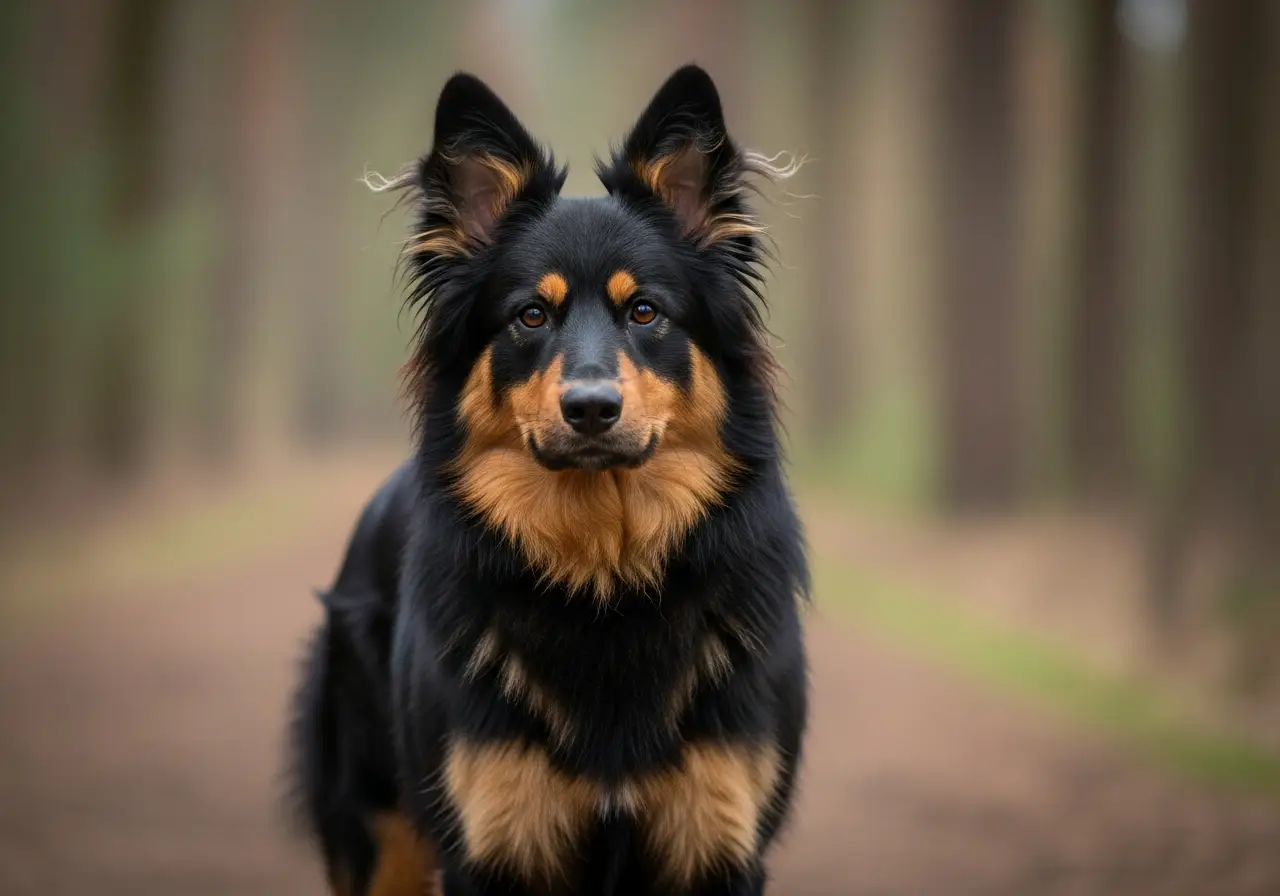
The Bohemian Shepherd (Chodský pes) is a medium-sized Czech herding dog with pronounced work orientation and a close bond to its primary caregiver. It requires at least 90 minutes of active exercise and structured mental work daily. Anyone who provides neither stimulation nor clear guidance will end up with a dog that seeks its own occupation, rarely to the joy of all parties involved. Life expectancy: 12 to 15 years.
02Introduction
What makes the Bohemian Shepherd (Chodenländer, Chodsky Pes) special
The Bohemian Shepherd (Chodský pes) is a rare Czech herding dog, FCI Group 1, similar to the German Shepherd, withers height 52–55 cm.
03Profile
Key facts and suitability
- Origin
- Tschechien
- Original purpose
- Border protection and sheep herding in Bohemia
- FCI
- No. 364 · Group 1 · Section 1
- height at the withers
- 52–55 cm
- Weight
- 20–30 kg
- Life expectancy
- 12–15 Years
- Coat type
- Long-haired
- Minimum exercise
- 90 min/day
- Puppy price
- 800–1'500 CHF
- Waiting period
- 9 months
- Sports
- Agility · Obedience · Scent work
04Temperament
How the Bohemian Shepherd (Chodenländer, Chodsky Pes) shows up in everyday life
When returning home, the Chodský pes greets its primary caregiver intensively, not loudly, but with clear physical presence. It follows through the apartment, positions itself within sight and registers every change in the daily routine. This close bond orientation is no coincidence but herding genetics: The dog was designed to keep its group in view.
Internally, what the dog needs: The need for social contact is high. Long phases alone are stressful for this breed; four hours should be considered the upper limit, and even then only after systematic training. The need for mental work is just as pronounced as the need for exercise. A walk without a task (without nose work, search games or training sequences) does not fully satisfy the hunger of this breed.
Externally, how the dog reacts: Towards strangers, the Chodský pes behaves in a waiting and watchful manner. It observes before allowing contact. This reserve is not a sign of insecurity but breed character. Anyone who expects the dog to warmly welcome every visitor immediately will be disappointed. With known people and well-socialised conspecifics, it shows itself as cooperative and balanced.
In everyday training, the Chodský pes learns quickly and reacts sensitively to body language and mood. Inconsistency in handling (sometimes strict, sometimes lenient) unsettles it. Excessive pressure promotes withdrawal rather than cooperation in sensitive lines. Positive reinforcement with clear structure best matches its learning profile. Obedience, Mantrailing, tracking work or search and rescue dog work cover its need for meaningful tasks.
05Needs
What this breed needs daily
The Chodský pes requires at least 90 minutes of active exercise daily, not as a casual walk but as structured activity with a task. Free running on secure terrain, fetching exercises, nose work or dog sports units cover this need better than pure leash walks.
Mental work is not an optional addition. The dog requires daily mental challenges: search games, training sequences, tracking work or structured obedience exercises. Anyone who omits this component risks displacement behaviour, digging, barking, destroying.
The need for social contact is high. The Chodský pes is designed for close bonding and tolerates isolation poorly. Being left alone must be built up early and systematically; four hours are considered a realistic maximum for a well-conditioned dog. Regular care by a familiar person is necessary during longer absences.
Keeping in an apartment is possible if exercise and enrichment are consistently secured. A garden facilitates everyday life but does not replace structured work. The breed requires a primary caregiver who enjoys regular training and is willing to lead the dog as a working partner, not as a companion dog that occupies itself.
Attending a dog training school with educational support from puppyhood is recommended, particularly for owners without prior experience with herding dogs. The breed’s sensitivity to inconsistency makes clear, reliable leadership a basic prerequisite.
Exercise
High
mental work
A lot
Social needs
High
training
Medium
06Sport & Mental and Physical Stimulation
What sports the Bohemian Shepherd (Chodenländer, Chodsky Pes) is suited for
Realistic in terms of physiology and genetics – not every breed suits every sport.
Structurally and physiologically suitable: Suitable for herding work, treibball and coursing · CaniCross / bikejoring possible.
07Quick Check
08Suitability
Who this breed is suitable for – and who it isn't
✓Matches
The Chodský pes suits owners who can and want to plan at least 90 minutes of active exercise plus structured mental work daily. Specifically: owners who engage in dog sports (obedience, mantrailing, tracking, search and rescue) or are willing to seek an entry into these activities.
Families with children from about eight years old are suitable if clear rules apply in the household and the children are involved in the training routine. It is important that at least one adult consistently takes on the leadership role.
First-time dog owners are an option if they involve an experienced dog training school from the start and bring a high willingness to train. The breed forgives learning errors as long as the basic structure remains reliable.
Active individuals or couples with a flexible daily routine and an interest in close human-dog cooperation fit the owner profile of this breed well. Anyone who wants to use the dog as a companion for hikes, bike tours, or outdoor activities will find an enduring partner, provided the basic training is in place.
×Doesn't match
The Chodský pes does not suit owners who are regularly away from home for eight hours or longer and cannot organise reliable care. The high need for social contact of this breed is incompatible with permanent isolation.
Anyone who expects the dog primarily to be a calm companion that occupies itself and demands little attention will be overwhelmed by the reality of this breed. The Chodský pes is not a dog that functions in the background.
Households with very young children under five years old and without prior experience with herding dogs should carefully weigh the decision. The herding instinct can manifest as undesirable driving and controlling behaviour towards small children if it is not channelled early on.
Anyone who confuses vigilance towards strangers with general openness and is looking for a sociable dog for visitor-intensive households makes the wrong choice with the Chodský pes. The reserved attitude towards unknown people is a breed characteristic, not a training error that can be trained away. Owners without the willingness for consistent, reliable guidance should consider another breed.
10Line reality
Show line, working line, breeder market
The Bohemian Shepherd is bred in a single breeding direction: as a versatile working dog with a working test according to FCI Standard No. 364. A split into show and working lines, as known for example with the German Shepherd or the Belgian Shepherd, does not currently exist in any relevant extent for this breed.
The breeding population is small and concentrated on a few breeding clubs, mainly in the Czech Republic. The breeding goal is a functional dog with stable nerves that can cope both in everyday life and in working dog activities. Health examinations of the parent animals, particularly X-ray findings for hip and elbow dysplasia, are standard in reputable breeding.
Since the breed is extremely rare in Germany, Austria and Switzerland, interested parties should carefully check the origin of a puppy. Imports from the Czech Republic are common; attention should be paid to the breeder’s membership in an FCI-recognised breeding club. Line differentiations within the breed are currently not a relevant purchasing criterion; more decisive is the transparency of the breeder regarding health tests and temperament assessments of the parent animals.
11Health · Reality
What you need to plan for medically with your Bohemian Shepherd (Chodenländer, Chodsky Pes)
The Chodský pes is considered a comparatively robust breed with a functional breeding focus. The life expectancy is between 12 and 15 years, a value that is realistic for medium-sized herding dogs of this size class.
Hip dysplasia (HD) and elbow dysplasia (ED) occur occasionally. Exact prevalence rates for this breed are not available in published studies due to the small breeding population. Reputable breeders examine the parent dogs radiologically and disclose the results; this should be requested before purchase. The Technical Commission on Animal Welfare (TVT) recommends HD and ED screening as a minimum standard for herding dogs of this size class.
Preventive examinations in everyday life include annual dental check-ups (herding dogs are prone to tartar), eye examinations from the third year of life, and regular ear checks, as the long coat can restrict ventilation. Vaccination protection and parasite prevention follow regional veterinary standards.
Overweight is rarely a primary problem in this active breed, but can arise from lack of exercise or incorrect feeding. A dog at ideal weight shows a palpable, not visible, rib structure. Weight control during the annual veterinary visit is advisable.
In cases of lameness, persistent fatigue, behavioural changes, or digestive problems, veterinary clarification without delay is necessary. Early diagnosis significantly improves the prognosis for orthopaedic diseases.
12Structured data
Health by the numbers
Prone to diseases
Hip dysplasia, generally robust breed
Recommended health tests
Hip X-ray
13Myths ↔ Reality
What is often said incorrectly about this breed
Five myths, five realities, five sources.
"The Bohemian Shepherd is a calmer, easier-to-care-for German Shepherd.
Visual similarity does not mean identical character. The Chodský pes is an independent herding dog with pronounced herding instinct, high need for mental work and strong bonding orientation. Anyone expecting a calmer everyday dog will be surprised by the working enthusiasm and exercise needs of this breed.
"A garden replaces daily enrichment.
A garden offers freedom of movement but does not replace structured stimulation. The Chodský pes requires mental challenges through training, tracking work or dog sports. An under-stimulated dog of this breed develops displacement activities (digging, barking, chewing) which are rarely desirable.
„The breed is particularly healthy due to its rarity.
Rarity does not automatically protect against hereditary diseases. In small breeding populations, there is a risk of inbreeding and limited genetic diversity. Hip and elbow dysplasia occur occasionally. Reputable breeders disclose X-ray findings of the parent animals; this should be requested before purchase.
„The Bohemian Shepherd is open and friendly towards all people.
The FCI standard describes the Chodský pes as attentive and watchful. Towards strangers, it shows a reserved, waiting attitude, a typical herding dog trait. This reserve is not a deficiency but breed character. It requires early, broad socialisation so that it does not turn into excessive mistrust.
„As a herding dog, it does not need dog sports; walking is sufficient.
According to the FCI standard, the Chodský pes is a versatile working dog with a working test. Its exercise requirement is at least 90 minutes daily, supplemented by mental stimulation. Pure walking covers neither the physical nor the cognitive needs of this breed.
14animal welfare
The animal welfare perspective
Breeder market, designer versions, animal shelter reality — what no one writes in the puppy ad.
The Bohemian Shepherd is one of the rarest FCI-recognised breeds in Germany, Austria and Switzerland. This rarity has a downside: the market is small, but not free from breeders who respond to increased interest without adhering to breeding standards.
Backyard breeder market: If you come across online offers with no waiting period, no requirement for the breeder to be a club member, and no health certificates for the parent dogs, you are operating in a grey area. The breed’s low level of recognition does not protect against dubious offers; on the contrary: interested parties with little prior information are more susceptible to making purchasing decisions without adequate checks.
Designer versions and trend risk: The Chodský pes is occasionally marketed as a “natural” or “original” shepherd dog. This framing is misleading. The breed was reconstructed in the 20th century and is not an untouched original type. Anyone buying a dog based on a romanticised origin narrative, without knowing the actual effort required for keeping it, is making a decision on a false basis.
Breeding- and husbandry-related problems: The small breeding population carries the risk of limited genetic diversity. Inbreeding coefficients should be actively requested from the breeder. Husbandry-related problems arise almost exclusively due to under-stimulation; a herding dog without a task develops behavioural problems that can end in surrender or rehoming.
Rehoming as an equally valid option: Animal welfare organisations rarely have the Chodský pes in their care. Breed-specific rescue networks for Czech herding dogs exist and represent a serious alternative. A dog from rehoming comes with a history, which requires patience and sometimes professional support, but is not an obstacle to a sustainable human-dog relationship.
15Costs · Transparency
What this breed realistically costs
A puppy from a reputable breeder with FCI papers, health certificates and club membership costs between 1,200 and 2,000 euros in Germany and Austria. Offers significantly below this should be critically examined; missing health tests for the parent dogs or insufficient socialisation of the puppy can cause considerably higher follow-up costs in the long term.
Ongoing annual costs: Food for a medium-sized active dog amounts to 600 to 1,000 euros, depending on quality and type of food. Care, as the long coat requires regular brushing and occasional professional trimming, adds up to 150 to 300 euros annually. Basic equipment (leash, collar, transport box, toys, sleeping area) is a one-off cost of 300 to 500 euros.
Veterinary costs: An annual routine check-up including vaccination boosters costs between 150 and 250 euros. Parasite prevention (ticks, worms) amounts to 80 to 150 euros per year. Pet insurance with solid coverage costs between 40 and 80 euros monthly for this breed, a sensible consideration given possible orthopaedic treatments. Dog training school for puppies and adolescent dogs: 200 to 500 euros for a basic course, depending on the provider and region.
16Puppy search
What you need to consider when choosing a breeder
- The Bohemian Shepherd is exceptionally rare in Germany, Austria and Switzerland.
- Waiting times of a year or more with a reputable breeder are not an exception; they are a sign that the breeder does not produce on demand.
- Reputable breeders are members of an FCI-recognised breeding club and disclose health records of the parent dogs: X-ray findings for hip dysplasia (HD) and elbow dysplasia (ED) are included.
- The puppy grows up in the apartment or house, not in a kennel without human contact.
- Inspections before purchase are a matter of course; a breeder who advises against this is a warning sign.
- Imports from the Czech Republic are common and can be reputable; membership in a club and the traceability of breeding documentation are decisive.
- Purchase prices significantly below the market average or offers without waiting times should be questioned critically.
- Placement via animal welfare organisations is unlikely for this rare breed, but not excluded.
- Breed-specific rescue organisations for Czech herding dogs can represent an equivalent option and should be included in the search.
- A dog from placement may require more settling-in time; this is not a disadvantage, but a different starting point.
FAQ
Frequently asked questions about the Bohemian Shepherd (Chodenländer, Chodsky Pes)
Is Bohemian Shepherd (Chodenländer, Chodsky Pes) suitable for beginners?
Bohemian Shepherd (Chodenländer, Chodsky Pes) is considered suitable for first-time dog owners.
Is Bohemian Shepherd (Chodenländer, Chodsky Pes) a family dog?
Bohemian Shepherd (Chodenländer, Chodsky Pes) is considered suitable for families with good socialisation and species-appropriate care.
How much exercise does Bohemian Shepherd (Chodenländer, Chodsky Pes) need?
At least around 90 minutes of exercise per day. As an active breed, more so — plus mental stimulation.
What is the size and weight of Bohemian Shepherd (Chodenländer, Chodsky Pes)?
Fully grown, Bohemian Shepherd (Chodenländer, Chodsky Pes) reaches about 52–55 cm at the withers and weighs around 20–30 kg.
What is the life expectancy of Bohemian Shepherd (Chodenländer, Chodsky Pes)?
The life expectancy of Bohemian Shepherd (Chodenländer, Chodsky Pes) is approximately 12–15 years.
Which diseases are common in Bohemian Shepherd (Chodenländer, Chodsky Pes)?
Hip dysplasia, generally robust breed
17Breed clubs
Official breed clubs in DACH
19Related
Similar breeds – and their differences
You might also be interested in
Participate
Do you have a good photo of your Bohemian Shepherd (Chodenländer, Chodsky Pes)?
We are looking for expressive images for our breed profiles. Submit yours; the editorial team reviews every submission before publication.
Does this breed suit you?
Rare Bohemian herding dog, similar to the German Shepherd. Robust and eager to learn. Hardly known in the D-A-CH region.