
01Summary
In a paragraph
If you only have 30 seconds.
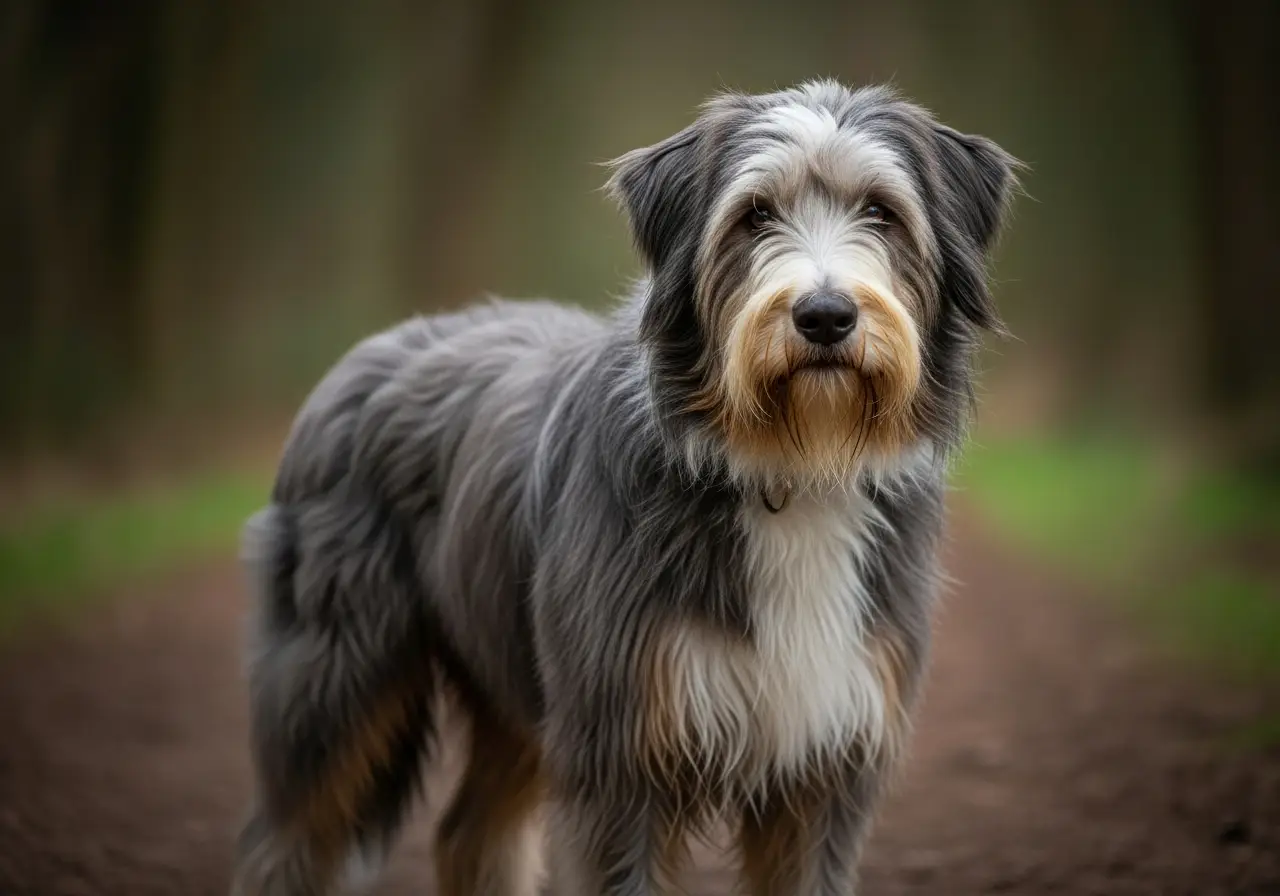
The Bearded Collie is a Scottish herding dog with a pronounced willingness to work, a high need for social contact and long fur that requires consistent care. Anyone who wants to do justice to it plans at least 90 minutes of active exercise daily, regular mental work and structured training. The cheerful appearance deceives about the actual effort involved; this dog demands commitment on all levels.
02Introduction
What makes the Bearded Collie special
The Bearded Collie is a Scottish herding dog, FCI Group 1, with a long, flowing coat and cheerful temperament, standing 51–56 cm at the withers.
03Profile
Key facts and suitability
- Origin
- Grossbritannien
- Original purpose
- Herding sheep in Scotland
- FCI
- No. 271 · Group 1 · Section 1
- height at the withers
- 51–56 cm
- Weight
- 18–27 kg
- Life expectancy
- 12–14 Years
- Coat type
- Long-haired
- Minimum exercise
- 90 min/day
- Puppy price
- 1'200–2'200 CHF
- Waiting period
- 9 months
- Sports
- Agility · Obedience · Herding work · Treibball
04Temperament
How the Bearded Collie shows up in everyday life
On the morning walk, the Bearded Collie shows its typical side: it scans the surroundings, reacts to movements, runs ahead and repeatedly comes back to seek contact with its primary caregiver. This alternation between independence and attachment orientation is no coincidence, but the result of centuries of selection for independent herding with simultaneous cooperation with the owner.
**Internal axis – what the dog needs:** The need for social contact is high. A Bearded Collie left alone for hours develops stress. It needs closeness, joint activities and regular training sessions. The need for mental work is equally pronounced: pure exercise without a mental task is not enough. Agility, obedience, treibball or nose work correspond to its profile. The exercise requirement is at least 90 minutes daily, distributed over several sessions.
**External axis – how the dog reacts:** Towards strangers, the Bearded Collie usually shows openness, occasionally also friendly reserve. It is not a dog that reacts with mistrust to unknown people; the FCI standard describes it as self-confident and without signs of nervousness. It generally gets along well with other dogs, provided socialisation has taken place early on and consistently.
**Important distinction:** A high need for social contact does not mean that the dog is amenable to every person. It bonds closely with its primary caregivers; this is a different quality than general sociability. Anyone who does not know this difference expects a dog that feels comfortable everywhere and with everyone. This only applies to the Bearded Collie to a limited extent.
05Needs
What this breed needs daily
The Bearded Collie needs at least 90 minutes of active exercise daily, not loose walks, but sessions with pace, changes of direction and tasks. Loose-leash walking alone is not enough. Free running on secure terrain, fetching exercises or dog sports complement the programme sensibly.
Mental stimulation is equivalent to physical exercise. The dog needs tasks that appeal to its work drive: nose work, search games, obedience training or agility. A training session of 20 to 30 minutes daily (structured, with a clear task) significantly reduces the potential for frustration.
Need for social contact: The Bearded Collie tolerates being alone only to a limited extent. Four hours are considered a guideline that must be built up gradually. Households in which the dog regularly stays alone for longer periods, without organising alternative care, structurally overwhelm it.
Grooming is part of everyday life: The long, dense coat requires thorough brushing several times a week to prevent matting. Knots form quickly behind the ears, in the armpits and on the hind legs. Anyone who neglects care risks skin problems under the matted coat. A professional groomer every eight to twelve weeks complements the home routine.
Training readiness: The dog reacts sensitively to moods and pressure. Positive reinforcement with clear structure achieves stable results. Inconsistency or overstimulation lead to nervousness and setbacks in sensitive lines.
Exercise
High
mental work
A lot
Social needs
High
training
Easy
06Sport & Mental and Physical Stimulation
What sports the Bearded Collie is suited for
Realistic in terms of physiology and genetics – not every breed suits every sport.
Structurally and physiologically suitable: Suitable for herding work, treibball and coursing · CaniCross / bikejoring possible.
07Quick Check
08Suitability
Who this breed is suitable for – and who it isn't
✓Matches
The Bearded Collie suits owners who can plan at least 90 minutes of active exercise daily, not as an occasional exception, but as a fixed part of everyday life. Anyone who enjoys dog sports, obedience or nose work will find a willing-to-learn partner with high motivation.
Suitable are households in which the dog does not stay alone for more than four hours daily. Families with children from about eight years of age, who are experienced in dealing with dogs, come into question, provided clear rules apply and sufficient time is available. Single people or couples with an active lifestyle and training readiness also fit the profile.
First-time owners are not fundamentally excluded, but need a supporting dog training school from the start and the willingness to continue their education continuously. Keeping in an apartment is possible if exercise and mental work are implemented consistently. A garden is not a must, but helpful.
Those who accept intensive grooming as part of daily life and are willing to set aside time for it several times a week will find in this breed an enduring, strongly bonded dog with a pronounced willingness to cooperate.
×Doesn't match
The Bearded Collie is not suitable for owners who are regularly away from home for more than four hours a day without having organised a reliable alternative care arrangement. Its high need for social contact is incompatible with long periods of solitude, both structurally and emotionally.
Households that restrict physical exercise to short walks or cannot plan time for regular training will be overwhelmed by this dog. Anyone who expects the dog to entertain itself in the garden fundamentally underestimates the breed's drive to work.
Anyone who regards grooming as an occasional task risks matting, skin problems and a dog that increasingly refuses care measures. Care is not an optional extra; it is part of the standard of keeping.
A common misunderstanding concerns the external axis: the Bearded Collie appears open and cheerful, which is occasionally mistaken for universal sociability. Anyone looking for a dog that behaves equally relaxed with every visitor and in every situation should clarify this misconception before purchasing. The close bond with the primary caregiver is a different quality from general sociability.
10Line reality
Show line, working line, breeder market
The Bearded Collie exists today in two recognisable lines, which differ in temperament, body structure and coat texture.
Show line: These dogs were selected for show standards, dense long coat, pronounced proportions, calmer temperament compared to the working line. They are more commonly found as companion dogs and are considered somewhat more accessible for owners without herding dog experience. The work drive is present but less pronounced.
Working line: Dogs from working lines were selected for drive, stamina and reaction speed. They show more pronounced herding behaviour, higher activity levels and stronger stimulus reactivity. For owners without experience with active herding dogs, they present a considerable challenge. In practice, they are frequently used in dog sports disciplines such as agility or obedience.
Practical consequence: Anyone acquiring a puppy should specifically ask the breeder about line affiliation and observe the parent dogs' behaviour. A puppy from a working line that ends up in a quiet household without a sports programme is highly likely to develop behavioural problems. Line affiliation is not a quality feature; it is an indication of the expected temperament profile.
11Health · Reality
What you need to plan for medically with your Bearded Collie
The Bearded Collie is considered a robust breed with a life expectancy of approximately 12 to 14 years. Serious breed-typical structural problems such as brachycephaly or extreme angulations are not known. Nevertheless, there are health risks that should be known before purchase.
Hip dysplasia (HD): HD occurs in the Bearded Collie but is less common than in large breeds. Reputable breeders X-ray parent animals and provide results. An examination of the parents according to the VDH/FCI scheme is standard; puppies without HD certificates for the parents should be questioned critically.
Autoimmune diseases: The Bearded Collie shows an increased predisposition to autoimmune diseases, including pemphigus foliaceus (a skin disease) and hypothyroidism. According to a study by the University of Bern (2014), Collies and related breeds belong to the groups with an increased autoimmune risk. Regular blood count checks from the fifth year of life are recommended.
Eye health: Progressive retinal atrophy (PRA) and cataracts occur occasionally. An eye examination of the parent animals by a specialist veterinary surgeon for ophthalmology is advisable.
Overweight: The Bearded Collie tends to become overweight with insufficient exercise and uncontrolled feeding, which puts strain on joints and the cardiovascular system. Body weight should be checked regularly.
Preventive care: Annual veterinary examination, dental check-up, parasite management and age-appropriate blood count checks from the seventh year of life form the basis of forward-looking healthcare.
12Structured data
Health by the numbers
Prone to diseases
Hip dysplasia, Addison's disease, pemphigus foliaceus, eye problems
Recommended health tests
Hip X-ray, eye examination, Addison screening
13Myths ↔ Reality
What is often said incorrectly about this breed
Five myths, five realities, five sources.
"The Bearded Collie is a low-maintenance family dog that occupies itself."
The Bearded Collie has a genetically anchored work drive that leads to undesirable behaviours without targeted stimulation, including barking, herding family members, or destructive behaviour. The long coat requires thorough care several times a week to prevent matting. Those who underestimate this effort often rehome the dog.
"Bearded Collies are suitable for any owner due to their cheerful nature."
The lively, outgoing nature of the Bearded Collie masks its actual demands. The breed requires structured training, clear guidance, and an environment with sufficient stimuli and tasks. Owners without experience with active herding dogs regularly underestimate the time and training effort involved.
"A large garden replaces daily enrichment."
A garden offers freedom of movement but does not replace structured stimulation. The Bearded Collie needs mental challenges through training, dog sports, or tasks involving the primary caregiver. Dogs left to their own devices in the garden often develop stereotypies or excessive barking.
"Bearded Collies are aggressive because they are herding dogs."
The FCI standard explicitly describes the Bearded Collie as a dog without signs of nervousness or aggressiveness. Towards strangers, it usually shows openness or friendly reserve. Aggressive behaviour is atypical for the breed and indicates socialisation deficits or incorrect living conditions.
"Show line and working line are identical in the Bearded Collie."
Show lines were selected for coat, proportions and show standards, working lines for drive, stamina and reaction speed. The differences in temperament and activity level are considerable. Anyone who acquires a dog from a working line and expects it to be a calm companion dog is highly likely to be overwhelmed.
14animal welfare
The animal welfare perspective
Breeder market, designer versions, animal shelter reality — what no one writes in the puppy ad.
The Bearded Collie regularly ends up in rehoming, not because it is a difficult dog, but because the actual effort is underestimated before purchase. Two factors dominate the reasons for surrender: intensive grooming and high need for occupation.
Backyard breeder market: Bearded Collies are occasionally offered via classifieds platforms and non-club-affiliated breeders. Puppies without health certificates for the parents, without socialisation in a family system and without pedigree entry are not uncommon on these channels. The lower purchase price deceives about the subsequent costs; behaviour therapy, veterinary costs and care effort usually exceed the savings from the purchase significantly.
Grooming as a keeping problem: Matted fur is not an aesthetic problem; it causes pain, skin irritation and inflammation. Dogs that have been kept for months without sufficient care must be completely shaved at the veterinary clinic. This condition is avoidable if the care effort is assessed realistically before purchase.
Lack of enrichment: Bearded Collies from working lines, kept in low-stimulation households without a training structure, often develop barking, herding family members, or separation anxiety. These behaviours are not character flaws; they are the logical consequence of keeping conditions that do not match the dog's genetic profile.
Adoption as an equal option: Breed protection organisations such as the Club für Britische Hütehunde e.V. regularly rehome Bearded Collies from surrender and emergency situations. These dogs are often already socialised, health-checked, and their personality is assessable. Anyone taking on an adult dog knows what to expect, an advantage over a puppy whose temperament is still developing. Adoption is not a compromise solution but an informed decision.
15Costs · Transparency
What this breed realistically costs
Getting a dog: A puppy from reputable club breeding costs between 1,500 and 2,200 euros or CHF in Germany and Switzerland. Offers significantly below this range usually come from non-club-affiliated breeding without complete health records; follow-up costs regularly exceed the savings.
Grooming: The home routine (brushing, combing) incurs no direct costs but ties up several hours per week. A professional groomer costs between 80 and 150 EUR per session, depending on the region and coat condition; with a recommended frequency of eight to twelve weeks, this amounts to 400 to 900 EUR annually.
Food: Quality food for a medium-sized dog of this size class costs between 60 and 120 EUR monthly, depending on the type of food and brand. Plan for 720 to 1,440 EUR annually.
Vet: Routine examinations, vaccinations, and parasite management cost approximately 300 to 500 EUR annually. In case of illnesses, particularly autoimmune diseases or HD treatment, costs can rise considerably.
Insurance: Pet health insurance costs between 40 and 100 EUR monthly, depending on the provider and scope of benefits. It is a sensible safeguard, especially for breeds with known health risks.
16Puppy search
What you need to consider when choosing a breeder
- A reputable breeder provides health certificates for both parent animals: hip dysplasia (HD) X-ray results, an eye examination by a specialist veterinary surgeon and, depending on line affiliation, further breed-specific tests.
- Puppies are handed over at the earliest at eight weeks of age, are microchipped, vaccinated and dewormed.
- A visit to the breeder before making a purchase decision is not an optional step; it is necessary.
- Anyone who cannot or may not see the mother dog should reconsider the purchase.
- The behaviour of the mother provides clues about the temperament to be expected from the puppies.
- Club-affiliated breeders of the Club für Britische Hütehunde e.V.
- or the Schweizerischen Bearded Collie Clubs SBCC are subject to breeding regulations that define minimum standards for health and keeping.
- This is not a guarantee of quality, but a starting point for research.
- Waiting lists are common with reputable breeders.
- Anyone who can buy a puppy immediately should check the origin particularly critically.
- Rehoming an adult Bearded Collie through breed protection organisations or the breeding club is an equally valid alternative.
- Adult dogs are assessable in their character, which significantly reduces the risk of a wrong decision.
FAQ
Frequently asked questions about the Bearded Collie
Is Bearded Collie suitable for beginners?
Bearded Collie is considered suitable for first-time dog owners.
Is Bearded Collie a family dog?
Bearded Collie is considered suitable for families with good socialisation and species-appropriate care.
How much exercise does Bearded Collie need?
At least around 90 minutes of exercise per day. As an active breed, more so — plus mental stimulation.
What is the size and weight of Bearded Collie?
Fully grown, Bearded Collie reaches about 51–56 cm at the withers and weighs around 18–27 kg.
What is the life expectancy of Bearded Collie?
The life expectancy of Bearded Collie is approximately 12–14 years.
Which diseases are common in Bearded Collie?
Hip dysplasia, Addison's disease, pemphigus foliaceus, eye problems
17Breed clubs
Official breed clubs in DACH
19Related
Similar breeds – and their differences
You might also be interested in

Participate
Do you have a good photo of your Bearded Collie?
We are looking for expressive images for our breed profiles. Submit yours; the editorial team reviews every submission before publication.
Does this breed suit you?
Lively, cheerful herding dog that needs daily exercise and enrichment. Very demanding coat care. Friendly and good with children.