
01Summary
In a paragraph
If you only have 30 seconds.
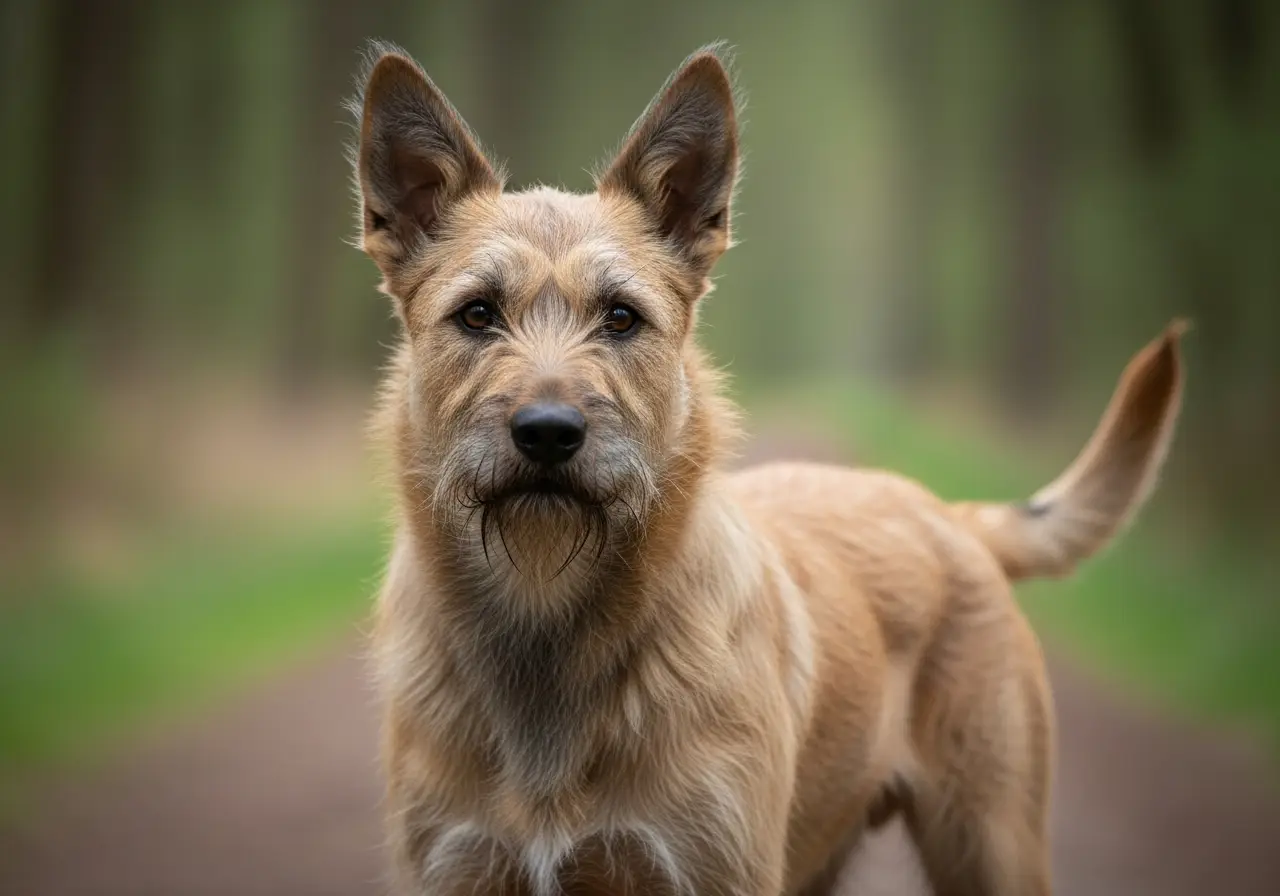
The Berger Picard is a robust French herding dog with a rough coat, pronounced independent thinking, and a close bond to its primary caregiver. Anyone keeping one must provide at least 90 minutes of active exercise, mental stimulation, and a clear, patient leadership structure daily. The breed is rare, demanding, and rewards consistent commitment with an exceptionally loyal companion.
02Introduction
What makes the Berger Picard special
The Berger Picard is a rough-coated French shepherd dog from the Picardy region, FCI Group 1, robust and keen to learn, with a withers height of 55–65 cm.
03Profile
Key facts and suitability
- Origin
- Frankreich
- Original purpose
- Herding sheep and cattle in Picardy
- FCI
- No. 176 · Group 1 · Sektion 1: Schäferhunde
- height at the withers
- 55–65 cm
- Weight
- 23–32 kg
- Life expectancy
- 12–14 Years
- Coat type
- Wire-haired
- Minimum exercise
- 90 min/day
- Puppy price
- 1'200–2'200 CHF
- Waiting period
- 9 months
- Sports
- Agility · Obedience · Herding work · Scent work
04Temperament
How the Berger Picard shows up in everyday life
The morning run shows what makes the Berger Picard special: it does not simply run alongside you, but observes, anticipates and reacts to every change of direction before you announce it. The herding instinct is not an abstract trait in the standard; it manifests itself in everyday life as constant attention to movements, positions and changes in the environment.
Internally, the Berger Picard requires intensive mental and physical stimulation every day. A walk is not enough. It needs tasks that challenge its cognitive abilities: structured training, nose work, flirt pole or herding work. Without this stimulation, it develops strategies for self-entertainment, mostly ones that owners do not appreciate.
Externally, it is reserved towards strangers. When an unknown person visits the household for the first time, it initially withdraws, observes from a distance and decides itself when to make contact. This process cannot be accelerated. Anyone who pressures it will receive withdrawal instead of approach.
These two poles, high need for social contact with the primary caregiver and reserve towards strangers, must not be confused. The Berger Picard is not a distant dog; it is a dog with a clear differentiation between "my people" and "everyone else". The bond with the primary caregiver is close and emotional; it registers moods, reacts to stress in the household and seeks closeness in calm moments.
With other dogs, it is compatible if socialised early and consistently. A certain controlling behaviour towards conspecifics remains typical of the breed.
05Needs
What this breed needs daily
The Berger Picard requires at least 90 minutes of active exercise daily, not as a relaxed walk, but as structured activity with running, changes of direction and tasks. Off-leash exercise in secure areas supplements this workload, but does not replace guided enrichment.
Mental stimulation is equal to physical stimulation. The dog requires daily training sessions that challenge its cognitive abilities. Suitable forms are obedience, agility, flirt pole, nose work or herding work. Pure repetition exercises without variation bore it quickly; it needs tasks with a genuine problem-solving element.
The need for social contact is high. The Berger Picard is not a dog that can easily spend many hours alone. A maximum of four hours of being left alone is considered the upper limit, which should only be reached after a long, patient training process. Anyone who regularly has longer absences requires a reliable care solution.
The bond with the primary caregiver is intense. It needs people who invest time in joint activities, not just for provision. Dog sports offer a structured form of this community and simultaneously utilise its willingness to work.
The coarse coat requires brushing two to three times a week as well as more intensive care twice a year during the moult. A garden is advantageous, but not a mandatory criterion; it is decisive that exercise and enrichment are actively organised daily, regardless of the living environment.
Exercise
High
mental work
A lot
Social needs
High
training
Medium
06Sport & Mental and Physical Stimulation
What sports the Berger Picard is suited for
Realistic in terms of physiology and genetics – not every breed suits every sport.
Structurally and physiologically suitable: Suitable for herding work, treibball and coursing · CaniCross / bikejoring possible.
07Quick Check
08Suitability
Who this breed is suitable for – and who it isn't
✓Matches
The Berger Picard suits owners who can devote at least 90 minutes daily to active exercise and additionally have time for structured training. Experience with dog sports or the willingness to attend a dog training school with herding dog expertise is a prerequisite.
Suitable are active individuals or couples with a regulated daily routine who provide the dog with a clear daily structure. Families with children from about eight years of age are an option if the children are trained in dealing with dogs and the dog has quiet retreat options.
Those living in rural or suburban areas with access to off-leash areas find more favourable conditions. Keeping in an apartment is possible if exercise and enrichment are actively ensured daily.
People with prior experience with herding dogs or other independently working breeds better understand how to contextualise the independent thinking of the Berger Picard. Anyone looking for a dog that reacts calmly to reserve towards strangers and does not require intensive visitor socialisation will find a suitable character in the Berger Picard. It is important to be willing to plan for waiting times of one to two years with reputable breeders.
×Doesn't match
The Berger Picard does not suit owners who are away from home for more than four hours daily and cannot organise reliable dog care. Its high need for social contact is incompatible with permanent isolation.
Anyone looking for an uncomplicated everyday dog that warmly greets strangers and reacts relaxed in every social context will be disappointed by the Berger Picard. Its reserve towards unknown people is not a lack of training, but breed character.
Households without dog experience who are guided by the rarity of the breed underestimate the effort. Rarity does not mean simplicity. Anyone who interprets independent thinking and self-reliance as disobedience will encounter resistance in training.
People with a very low activity level or no interest in structured dog sports do not provide the Berger Picard with sufficient mental and physical stimulation. A garden as the sole form of occupation is not enough.
Households with very young children under six years of age, where no quiet retreat area for the dog can be guaranteed, are also unsuitable. The Berger Picard reacts sensitively to noise and unrest and requires phases of rest as a fixed part of daily life.
10Line reality
Show line, working line, breeder market
The Berger Picard does not have a pronounced show-versus-working-line division, as exists for example with the Border Collie or the German Shepherd Dog. Breeding remained historically functionally oriented, and the small total population prevented strong divergence into specialised lines.
Within the breed, differences nevertheless exist: some breeders in France focus on herding work and dog sports, others on suitability as a companion dog with more stable social behaviour. These differences are not defined as formal lines, but are reflected in the selection of parent animals.
Buyers should specifically ask the breeder about the intended use of the parent animals: dogs from active working lines generally have a higher drive and require more intense stimulation. Dogs from companion dog lines can be somewhat more balanced in everyday life, without losing the fundamental character of the breed.
A distinction between "show type" and "working type" in the classical sense is not established for the Berger Picard. The FCI standard remains the binding framework for all breeding worldwide.
11Health · Reality
What you need to plan for medically with your Berger Picard
The Berger Picard is considered a robust breed with a life expectancy of 12 to 14 years. This range is based on information from the Club for French Shepherd Dogs and comparable medium-sized herding dog breeds.
Hip dysplasia (HD) occurs in the breed but is less common than in large dog breeds. Reputable breeders have both parent animals examined radiologically for HD and share the results openly. Buyers should request HD certificates for both parent animals; a breeder who does not provide these is not a reliable contact.
Progressive retinal atrophy (PRA) is a hereditary eye disease documented in the breed. It leads to progressive vision loss. Genetic tests for PRA are available; reputable breeders test their breeding animals accordingly. Status of available tests: Orthopedic Foundation for Animals (OFA) and comparable European programmes.
The rough coat does not tend towards skin problems as long as it is regularly groomed. Matting can lead to skin irritation if left untreated.
Overweight rarely poses a problem for sufficiently exercised individuals but can arise in inactive keeping conditions. Weight should be monitored regularly, as overweight exacerbates HD symptoms.
Preventive examinations: annual vet check-up, HD screening of parent animals before breeding, eye screening (PRA genetic test), dental check from the fifth year of life.
12Structured data
Health by the numbers
Prone to diseases
Hip dysplasia, progressive retinal atrophy
Recommended health tests
Hip X-ray, eye examination
13Myths ↔ Reality
What is often said incorrectly about this breed
Five myths, five realities, five sources.
“The Berger Picard is a low-maintenance dog because its coat looks so rustic.”
The rough, shaggy coat of the Berger Picard requires regular brushing to prevent matting. A heavier shedding period occurs twice a year. Although professional trimming is less necessary than for other breeds, no coat management is still not an option.
“As a herding dog, it is automatically obedient and easy to control.”
Herding dogs were bred over generations for independent decision-making, not for blind obedience. The Berger Picard makes its own decisions in case of doubt. This makes it demanding in training: it cooperates when it understands the task, not because it has to follow.
“Its reserve towards strangers disappears with sufficient socialisation.”
Reserve towards strangers is a breed-typical characteristic of the Berger Picard that is genetically anchored. Good socialisation prevents excessive shyness or aggression, but does not eliminate the basic caution. A Berger Picard that warmly greets strangers immediately is more the exception than the rule.
“The Berger Picard is a healthy breed without significant hereditary diseases.”
Although the Berger Picard is considered robust compared to many fashion dogs, hip dysplasia (HD) and progressive retinal atrophy (PRA) do occur in the breed. Reputable breeders have parent dogs tested for HD and eye diseases. Buyers should request corresponding health certificates.
“Because it is rare, it must be particularly valuable and uncomplicated.”
Rarity says nothing about keeping effort or character. The Berger Picard is rare because it was never marketed as a fashion dog, not because it is easy to keep. Its high need for exercise, mental stimulation and social contact remains regardless of the market price.
14animal welfare
The animal welfare perspective
Breeder market, designer versions, animal shelter reality — what no one writes in the puppy ad.
The Berger Picard is one of the rarest dog breeds in the German-speaking area. This rarity has a direct effect on the market: reputable breeders are scarce, waiting periods of one to two years are usual, and price pressure due to demand is noticeable.
Risks arise precisely in this environment. Anyone who does not accept a waiting period and searches online for quickly available puppies often ends up with breeders who offer dogs without health tests, without socialisation, and without pedigree registration. Offers from Eastern Europe with immediate availability and low prices frequently follow this pattern. The dog may be cheap, but the subsequent costs due to behavioural problems or hereditary diseases are not.
Designer versions of the Berger Picard hardly exist so far, as the breed is too little known. This could change if the breed gains attention again through media or social media, as observed in the USA in 2005 after the film "Because of Winn-Dixie". Increased demand without sufficient reputable breeders is the classic breeding ground for commercial breeding operations.
Breeding-related problems in the Berger Picard are less characterised by extreme morphology than by character selection: dogs from disreputable breeding often show exaggerated shyness, fear aggression, or lack of resilience, traits that stem from insufficient socialisation and incorrect selection of parent animals.
Animal welfare rehoming is a realistic but rare option for the Berger Picard. The breed rarely appears in German and Austrian animal shelters. Breed-specific rehoming centres or the Club for French Shepherd Dogs can help in the search for rehomed dogs. A rehomed dog with a known history is not a worse choice; it is a different one, often just as valuable.
15Costs · Transparency
What this breed realistically costs
A puppy from a reputable breeder with FCI papers, health tests, and socialisation costs between 1,500 and 2,200 euros in the German-speaking area. Offers significantly below this without documentation are a warning sign.
The annual living costs consist of: food (high-quality dry food or BARF) approx. 600–900 euros/year depending on body weight and food quality, grooming (brushing, occasional trimming) approx. 100–200 euros/year, basic equipment (leash, collar, transport box, sleeping area) one-off approx. 300–500 euros.
Average vet costs: routine check-up and vaccinations approx. 150–250 euros/year. In the event of illness or surgery, individual costs can quickly reach 1,000–3,000 euros. Dog health insurance for a medium-sized dog costs approx. 40–80 euros/month, depending on provider and scope of cover. A surgery-only policy (without full health insurance) is available from approx. 15–25 euros/month.
Dog sports and training: a reputable dog training school costs approx. 150–300 euros for a basic course. Those who regularly participate in dog sports should budget 200–500 euros/year for courses and club membership. Over the entire lifespan of 12–14 years, total costs realistically amount to 25,000–40,000 euros.
16Puppy search
What you need to consider when choosing a breeder
- Reputable breeders of the Berger Picard are affiliated with the Club for French Shepherd Dogs (CFH) and work according to the breeding guidelines of the VDH or FCI.
- A reputable breeder provides health certificates for both parent animals, at least an HD X-ray report and a PRA genetic test.
- They ask questions about the planned daily routine and the buyer's experience.
- Puppies leave the litter no earlier than eight weeks of age, are vaccinated, dewormed, and have been examined by a vet.
- Waiting periods of one to two years are normal for this rare breed.
- Anyone who obtains a puppy immediately should check the origin particularly critically.
- Adoption through animal welfare organisations or the breed club is an equally valid option.
- Rehomed dogs from private households or rescue animals from abroad with Berger Picard ancestry occasionally occur.
- The CFH can help in the search for rehomed dogs.
- No reputable recommendation of named breeders by platforms; the breeding association list of the CFH at cfh-net.de is the correct starting point.
- Purchase contracts should include a right of return and health guarantees.
FAQ
Frequently asked questions about the Berger Picard
Is Berger Picard suitable for beginners?
Berger Picard is considered suitable for first-time dog owners.
Is Berger Picard a family dog?
Berger Picard is considered suitable for families with good socialisation and species-appropriate care.
How much exercise does Berger Picard need?
At least around 90 minutes of exercise per day. As an active breed, more so — plus mental stimulation.
What is the size and weight of Berger Picard?
Fully grown, Berger Picard reaches about 55–65 cm at the withers and weighs around 23–32 kg.
What is the life expectancy of Berger Picard?
The life expectancy of Berger Picard is approximately 12–14 years.
Which diseases are common in Berger Picard?
Hip dysplasia, progressive retinal atrophy
17Breed clubs
Official breed clubs in DACH
19Related
Similar breeds – and their differences
You might also be interested in
Participate
Do you have a good photo of your Berger Picard?
We are looking for expressive images for our breed profiles. Submit yours; the editorial team reviews every submission before publication.
Does this breed suit you?
One of the oldest French shepherd dogs. Robust, keen to learn, good-natured. Rare in the D-A-CH region – but without excessive health problems.