4 sourcesReviewed on April 27, 2026Responsible editor: Roger KleinText: Roger Klein
01Summary
In a paragraph
If you only have 30 seconds.
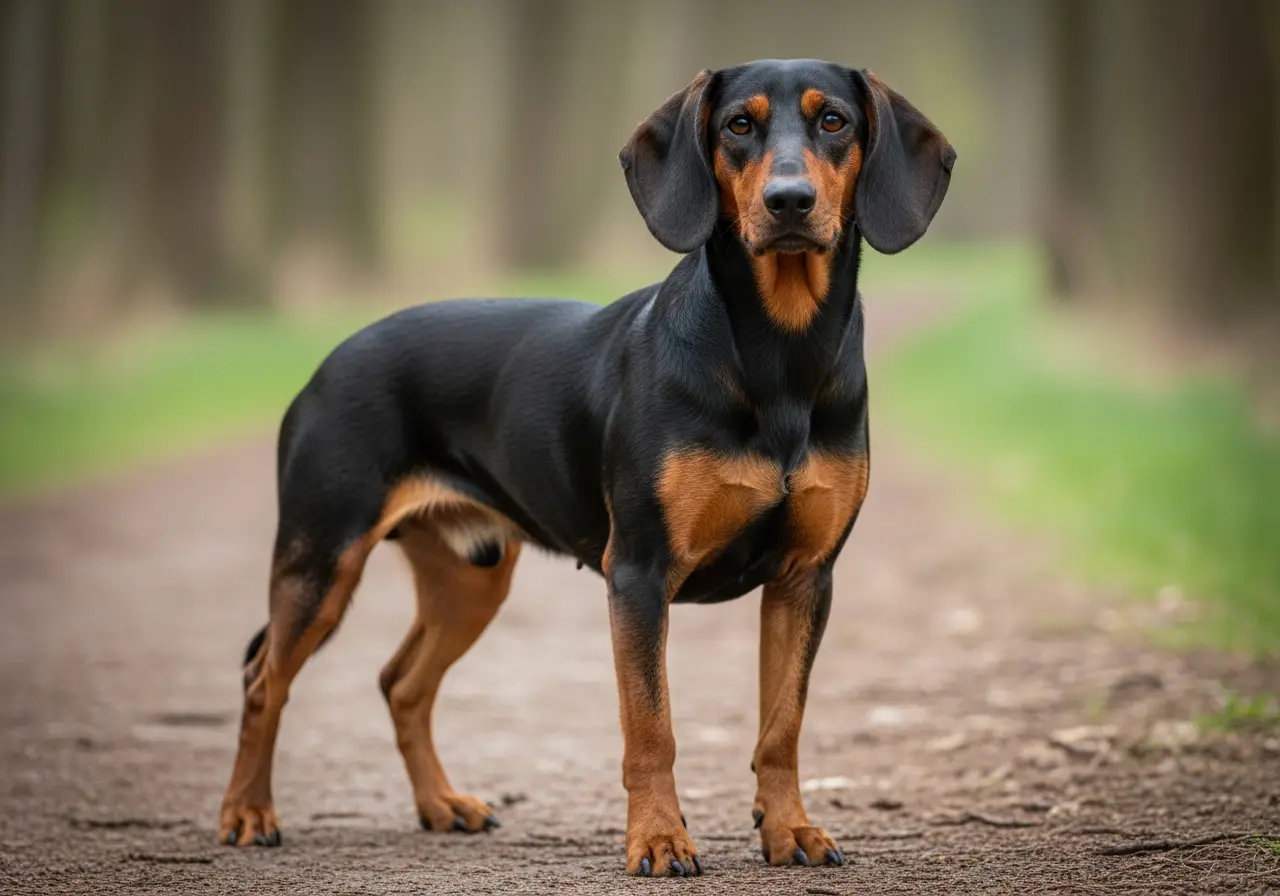
The Alpine Dachsbracke is an Austrian bloodhound bred for search work and scent trailing in alpine terrain. Its compact body conceals a tremendous desire to find and pronounced independence. Anyone who owns one needs a clear concept for hunting-related stimulation; without this foundation, it will exert its working drive on its own initiative.
02Introduction
What makes the Alpenländische Dachsbracke special
The Alpenländische Dachsbracke is an Austrian trailing hound, FCI Group 6, compact and robust, with a withers height of 34–42 cm.
03Profile
Key facts and suitability
- Origin
- Österreich
- Original purpose
- Hunting badgers and foxes, trailing hound
- FCI
- No. 254 · Group 6 · Section 2
- height at the withers
- 34–42 cm
- Weight
- 15–18 kg
- Life expectancy
- 12–14 Years
- Coat type
- Doppel
- Minimum exercise
- 90 min/day
- Puppy price
- 800–1'500 CHF
- Waiting period
- 9 months
- Sports
- Scent work · Mantrailing · Utility dog sports
04Temperament
How the Alpenländische Dachsbracke shows up in everyday life
At home, the Alpine Dachsbracke behaves calmly and evenly. After a sufficiently long morning walk, it settles down and sleeps; there is no restless pacing or constant demands for attention. However, this calmness is conditional: it only occurs if the workload has been met beforehand.
The picture changes on a walk. As soon as the nose picks up an interesting scent, the dog switches to a focused working mode. Environmental stimuli such as cyclists, joggers, or other dogs recede into the background. This state is not an obedience problem; it is the result of decades of selection for scent concentration.
At home, the breed requires high mental stimulation and plenty of exercise. The need for social contact is moderate: the bond with the primary caregiver is close and loyal, but the breed is not a dog that demands constant physical closeness.
Towards strangers, it shows a neutral to reserved attitude. This means: no aggressive behaviour, but also no exuberant greeting ritual. Visitors are registered and assessed, not ignored, but also not immediately accepted. Anyone who mistakes this reserve for shyness is mistaken. It is a calm self-assurance that stems from its working dog background.
With other dogs, it is generally tolerant, especially if socialisation took place in a hunting environment. Keeping small animals in the household should be viewed critically; the prey drive makes no exceptions for rabbits or cats without careful, long-term habituation.
05Needs
What this breed needs daily
The Alpine Dachsbracke requires at least 90 minutes of active exercise daily, not just as a simple walk, but with nose work as an integral part. Tracking, scent work, mantrailing, or structured search games in the terrain meet this requirement. Pure walks without search tasks are insufficient in the long term.
The need for mental work is high. This means: the dog needs regular cognitive challenges, not just physical exhaustion. Nose work combines both dimensions and is therefore the most effective form of occupation for this breed.
Being left alone is possible for up to four hours if the dog has been sufficiently stimulated beforehand. Longer periods without enrichment and companionship lead to restlessness and vocalisations. A fixed daily rhythm with clear activity and rest phases supports balance.
A rural environment with access to forest and terrain is a clear advantage. Keeping the dog in an apartment works if daily stimulation is consistently ensured; a garden alone does not replace structured enrichment.
Training requires patience and consistency. The dog learns quickly but works independently once it has picked up a scent. Recall training must be practised under realistic conditions, in secure areas, with established impulse control training. A supporting dog training school with experience in hunting breeds is recommended, especially in the first months.
Exercise
High
mental work
A lot
Social needs
Medium
training
Demanding
06Sport & Mental and Physical Stimulation
What sports the Alpenländische Dachsbracke is suited for
Realistic in terms of physiology and genetics. Not every breed suits every sport.
Structurally and physiologically suitable: no jumping sports (risk of slipped disc) · Suitable for mantrailing, dummy work and tracking · CaniCross / bikejoring possible.
07Quick Check
08Suitability
Who this breed suits and who it doesn't
✓Matches
The breed suits owners who are actively involved in hunting, practising blood tracking or search work, thereby enabling the dog to fulfil its genuine working purpose. Nature-oriented owners without a hunting licence are also suitable, provided they invest at least 90 minutes daily in structured nose work (scent trailing, mantrailing, terrain search) and live in a rural or semi-rural environment with access to forest and terrain.
Families with children from about eight years of age, who lead an active lifestyle with plenty of time outdoors, can live well with this breed, provided the children respect the dog’s calm, independent character and do not expect it to react playfully at all times.
Owners with experience in drive-strong or independently working dogs are clearly at an advantage. Anyone who has already owned a hunting dog, a terrier, or another hound breed understands the behavioural repertoire and can realistically assess what scent concentration means in everyday life.
A household with a regulated daily routine and the willingness to participate in dog sports or hunting trials offers optimal conditions. The breed gets along well with other dogs if socialisation is early and consistent.
×Doesn't match
The breed does not suit owners who expect a companion dog that runs freely at all times. Anyone who assumes the dog will reliably stay by their side in the forest once it has picked up a scent will be disappointed and endanger the animal.
Households that are regularly away from home for eight or more hours without a dog sitter should not choose this breed. The tolerance threshold for being left alone is about four hours, and only if there has been sufficient prior stimulation.
Anyone who equates the breed’s calm domestic nature with low stimulation needs fundamentally underestimates it. Its high need for exercise and mental work and its calmness at home are two different things; calmness is the result of stimulation, not its replacement.
City dwellers without regular access to terrain and without a concept for nose work will be overwhelmed by this breed. The same applies to owners who keep small animals such as rabbits or cats and have no experience with introducing drive-strong dogs.
Anyone looking for a socially open, friendly dog that enthusiastically greets visitors will not find the desired profile in the Alpine Dachsbracke; its reserve towards strangers is typical of the breed and not a training deficit.
09Related
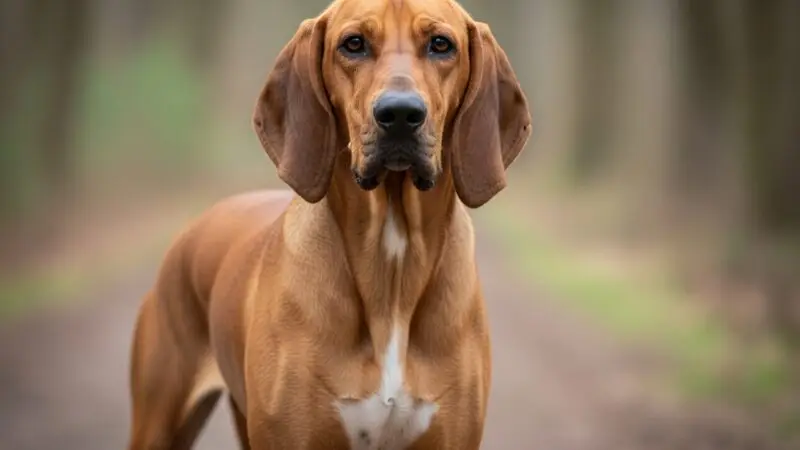
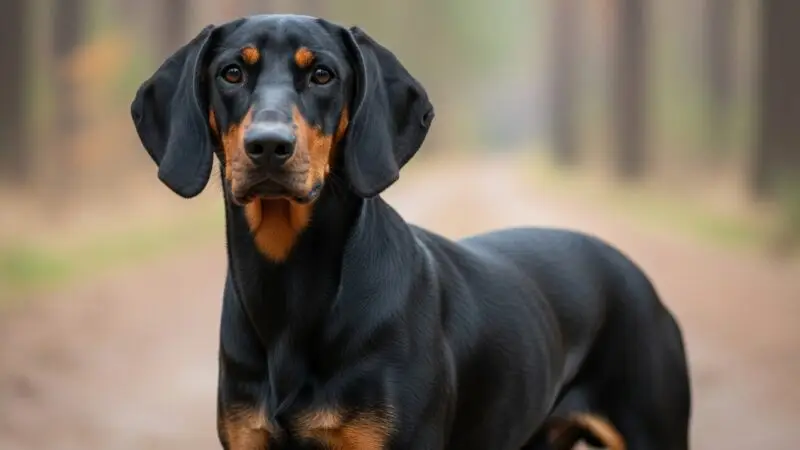
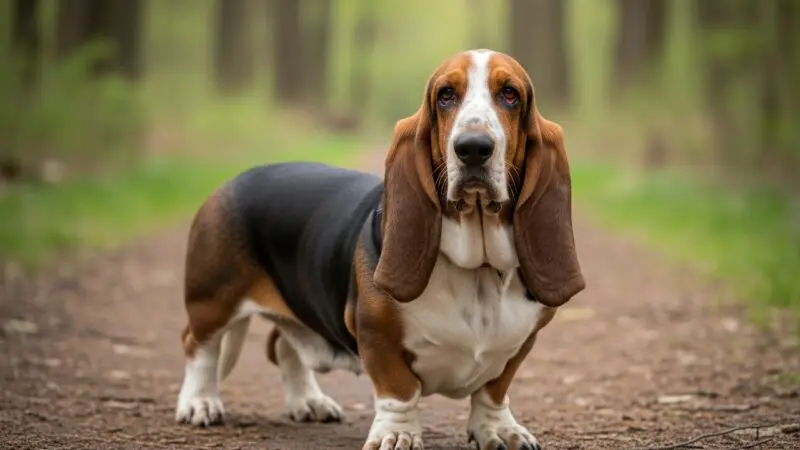
Similar breeds and how they differ
10Line reality
Show line, working line, breeder market
The Alpine Dachsbracke is bred almost exclusively in a single line: the working line. Show lines practically do not exist, as the breed never made the leap into conformation shows. This focus on performance is a quality feature; it means that breeding goals such as scent drive, endurance, vocalisation, and weather resistance have been consistently selected over generations.
Within the working line, there are regional differences. Austrian breeders, who work closely with the Austrian Bracken Club, place particular emphasis on scent tracking and trailing. In Germany, breeders align themselves with the Dachsbracke Association (Verein Dachsbracke e.V.) and hunting performance trials.
Anyone looking for a puppy should specifically ask about parent dogs that have completed working trials. Trial certificates (e.g., scent tracking test, utility dog test) are a reliable indicator of breed-typical traits. A breeder who cannot provide information on the performance trials of the parent dogs should be questioned critically.
The small population size makes inbreeding coefficients a relevant topic. Responsible breeders communicate this value openly and work with international partner breeders to maintain genetic diversity.
11Health · Reality
What you need to plan for medically with your Alpenländische Dachsbracke
The Alpine Dachsbracke is considered a robust breed with a life expectancy of 12 to 14 years. This range is solid for a medium-sized working dog and is closely linked to performance-oriented breeding, which has avoided fashionable exaggerations in body structure.
The greatest orthopaedic risk lies in the elongated body structure: disc problems (discopathy) are documented in low-slung breeds with extended backs. According to a review article by the Vetsuisse Faculty Bern, chondrodystrophic breeds show higher incidence rates for intervertebral disc herniation compared to normomorphic breeds. Concrete breed statistics for the Alpine Dachsbracke are not available on a large scale due to the small population.
Hip dysplasia (HD) occurs occasionally. Reputable breeders X-ray parent dogs and disclose HD findings. An HD certificate for the parent dogs (rating A or B according to the FCI scheme) should be requested when purchasing a puppy.
During the growth phase (up to around 12 months), appropriate exercise is important: no long stair runs, no high jumps, no intensive uphill training. These measures demonstrably reduce the risk of joint damage and stress on the discs.
The short, dense coat requires little maintenance; regular brushing is sufficient. After field work, you should check for ticks, as the breed often goes out in forested areas. A preventive examination by the vet once a year is recommended, and from the eighth year of life onwards, every six months.
12Structured data
Health by the numbers
Prone to diseases
Back problems (short legs, long back), ear problems
Recommended health tests
X-ray of the spine
13Myths ↔ Reality
What is often said incorrectly about this breed
Five myths, five realities, five sources.
Due to its size, the Alpine Dachsbracke is a low-maintenance companion dog for city living.
Body size does not indicate the need for stimulation. The breed was selected for endurance work in mountains and requires at least 90 minutes of exercise combined with active nose work daily. Pure city walks do not meet this requirement. Under-stimulated individuals develop behavioural issues such as excessive barking or destructive behaviour.
The pronounced prey drive can be completely eliminated through consistent training.
The prey drive of the Alpine Dachsbracke is genetically hard-wired and has been deliberately enhanced over generations. It can be channelled and managed through training, but not eliminated. As soon as the nose picks up a scent, the dog largely ignores environmental stimuli. A reliable recall in the wild requires consistent, long-term training under realistic conditions.
Because the breed is rare, puppies from any source are automatically bred responsibly.
Rarity does not protect against irresponsible breeding. Even with rare breeds, backyard breeders exist who skip health tests. Responsible breeders test parent dogs for hip dysplasia and spinal disc health, provide proof of working trials, and are members of a recognised breeding association. The small population size makes inbreeding coefficients a relevant topic that a responsible breeder communicates openly.
The Alpine Dachsbracke is only suitable for hunters.
Hunting use is not mandatory, but a clear concept for nose work is. Dog sports such as mantrailing, tracking, or scent work within dog sports clubs can also cover the workload without active hunting. What matters is that the owner takes the drive seriously and channels it in a structured way, not the hunting licence.
The long back of the breed is not a serious health issue.
The elongated body structure increases stress on the intervertebral discs, especially when using stairs, jumping, or navigating uneven terrain. Intervertebral disc problems (associated with chondrodystrophy) are documented in low-slung breeds. Adapted exercise is important during the growth phase. Veterinary examination for lameness or back pain should take place promptly.
14animal welfare
The animal welfare perspective
Breeder market, designer versions, animal shelter reality: what no one writes in the puppy ad.
The Alpine Dachsbracke is one of the rarer hunting dog breeds in Central Europe. Its small breeding population does not automatically protect it from irresponsible breeding. Backyard breeders who dispense with health tests and sell puppies without proof of testing for the parent animals also exist in this segment. The low awareness of the breed makes it more difficult for potential buyers to recognise differences in quality.
Designer versions or hybrid trends currently play no significant role with this breed. This is an advantage, but it does not mean that all offers are reputable. Anyone offering a puppy below market price without a pedigree entry, without introducing the parent animals and without health certificates is generally engaged in breeding without breeder responsibility.
The biggest problem related to keeping arises from underestimated prey drive in owners who are not involved in hunting. Dogs that are not sufficiently stimulated develop behavioural abnormalities, excessive barking, attempts to escape, and destructive behaviour. These animals then end up in animal welfare organisations, not because the breed is problematic, but because the living conditions were not suitable. Surrenders to animal welfare are rare, but they almost exclusively arise from this pattern.
Adopting from animal welfare organisations is also a viable option for this breed. Adult dogs from reputable rescue organisations have the advantage that their character and drive strength can already be assessed. Organisations such as the Austrian Hound Club or the Dachsbracke Association occasionally rehome surrendered dogs from hunting households. Anyone open to an adult dog will find competent contacts there.
15Costs · Transparency
What this breed realistically costs
A puppy from a reputable, association-affiliated breeder usually costs between 800 and 1,400 EUR. Offers significantly below this without a pedigree entry and health certificates signal a lack of breeder diligence.
The annual living costs are around 1,200 to 2,000 EUR. This includes food (high-quality dry food or raw feeding: approx. 600–900 EUR/year), grooming needs (low, approx. 50–100 EUR/year), accessories and replacements (approx. 150–200 EUR/year) as well as basic vaccinations and annual preventive care (approx. 200–350 EUR/year).
Vet costs for orthopaedic examinations (X-rays of hips/spine) can amount to 150–300 EUR as a one-off. In the case of a slipped disc, treatment costs of 1,500 to over 5,000 EUR are possible, depending on the severity and form of therapy.
Dog liability insurance costs 50–120 EUR/year depending on the provider and coverage sum and is mandatory in several federal states. Given the risk of disc problems in this breed, health insurance for the dog is a sensible consideration; annual premiums start at approx. 300 EUR, depending on age and tariff.
16Puppy search
What you need to consider when choosing a breeder
- A reputable breeder is affiliated with a recognised breeding association, in Germany the Verein Dachsbracke e.V., in Austria the Österreichische Brackenclub.
- Membership alone is no proof of quality, but it serves as an initial filter.
- The following points should be clarified during initial contact: Are hip dysplasia (HD) X-ray reports available for both parent dogs?
- Have the parent dogs completed working trials?
- Is the litter registered in the studbook?
- Can the puppy be viewed before handover, with its mother and in the rearing environment?
- A breeder who does not allow viewing, hands over puppies before the eighth week of life, or provides no information on health tests should not be chosen.
- Low prices without documentation are not a bargain; they signal a lack of breeding diligence.
- Adopting an adult dog from animal welfare organisations or from hunting households is an equally valid alternative.
- Adult dogs allow for a more realistic assessment of drive strength and character.
- The Verein Dachsbracke e.V.
- and the Österreichische Brackenclub are first points of contact for adoption enquiries.
- No specific breeder recommendations; the platform rundum.dog refers to the association search of the respective breeding clubs.
FAQ
Frequently asked questions about the Alpenländische Dachsbracke
Is Alpenländische Dachsbracke a family dog?
Alpenländische Dachsbracke is considered suitable for families with good socialisation and species-appropriate care.
How much exercise does Alpenländische Dachsbracke need?
At least around 90 minutes of exercise per day. As an active breed, more so — plus mental stimulation.
What is the size and weight of Alpenländische Dachsbracke?
Fully grown, Alpenländische Dachsbracke reaches about 34–42 cm at the withers and weighs around 15–18 kg.
What is the life expectancy of Alpenländische Dachsbracke?
The life expectancy of Alpenländische Dachsbracke is approximately 12–14 years.
Which diseases are common in Alpenländische Dachsbracke?
Back problems (short legs, long back), ear problems
Participate
Do you have a good photo of your Alpenländische Dachsbracke?
We are looking for expressive images for our breed profiles. Submit yours; the editorial team reviews every submission before publication.
Does this breed suit you?
Hunting-enthusiastic scent hound for active owners in rural areas. Robust mountain hound that needs daily exercise and nose work.