
01Summary
In a paragraph
If you only have 30 seconds.
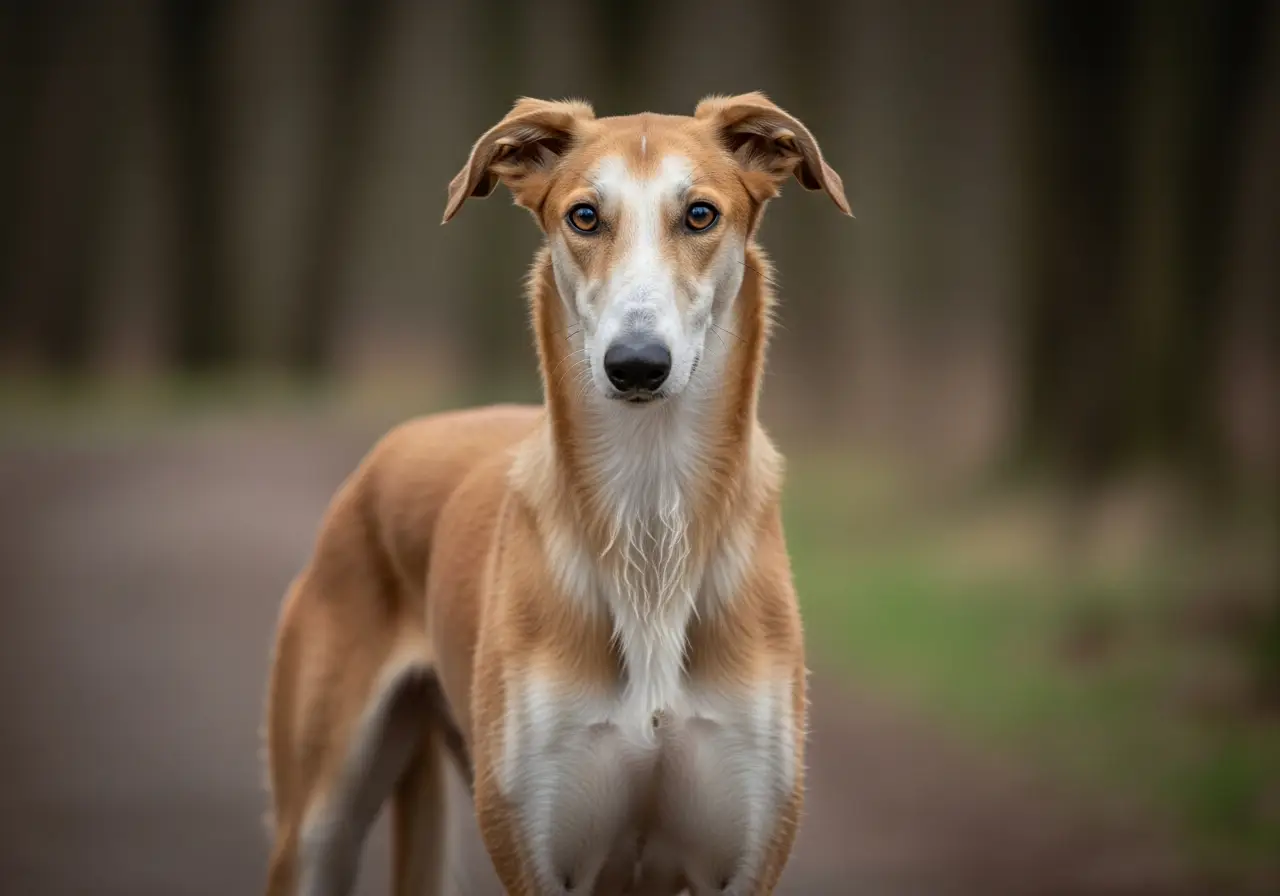
The Kazakh Tazy is a Central Asian sighthound that was selected over centuries for steppe hunting. Behind its slender silhouette lies a highly specialised sight hunter with a pronounced prey drive, great endurance, and an independence that requires experience in handling primitive breed types. Anyone who can offer at least 90 minutes of exercise daily plus secure sprinting terrain will find a dignified, calm companion in it.
02Introduction
What makes the Kazakh Tazy special
The Kazakh Tazy is a rare Kazakh sighthound, FCI Group 10, national symbol of Kazakhstan, bred for steppe hunting, withers height 58–72 cm.
03Profile
Key facts and suitability
- Origin
- Kasachstan
- Original purpose
- Sight hound hunting for hares, foxes and gazelles
- FCI
- No. 372 · Group 10 · Section 1
- height at the withers
- 58–72 cm
- Weight
- 18–30 kg
- Life expectancy
- 12–15 Years
- Coat type
- Short-haired
- Minimum exercise
- 120 min/day
- Puppy price
- 1'000–2'000 CHF
- Waiting period
- 12 months
- Sports
- Lure Coursing · Racing · Hunting
04Temperament
How the Kazakh Tazy shows up in everyday life
When you return home, the Kazakh Tazy shows a calm, dignified greeting—no exuberant jumping, but an attentive registration of your return. The bond with the primary caregiver is clearly perceptible, but it manifests more in quiet proximity than in active seeking of contact.
Internally, the Tazy requires intensive daily exercise with genuine sprint phases and mental enrichment that accounts for its visual hunting instinct. Its need for social contact is moderate; it appreciates the company of its primary caregiver but does not demand it permanently. Being left alone is possible for several hours if there is sufficient stimulation and a solid bond.
Externally, the Tazy reacts to strangers with marked reserve. This reticence is not a deficiency, but a breed-typical trait stemming from its nomadic working history. A dog that hunted independently on the steppe did not develop an affinity for unknown people. These two axes (high bonding intensity with familiar people, distance towards unknown people) must not be confused. A Tazy that follows its primary caregiver closely is therefore not automatically a sociable dog for visitors.
On a walk, the Tazy immediately switches to a focused hunting mode upon visual contact with moving objects. The reaction time is extremely short. Anyone who underestimates this moment will lose control of the leash or risk an uncontrolled chase. In secure terrain, however, it displays impressive elegance in motion and returns calmly after sprinting.
05Needs
What this breed needs daily
The Kazakh Tazy requires at least 90 minutes of active exercise daily, a significant portion of which should consist of free sprints on secure terrain. A fenced area with sufficient length, providing a running distance of at least 50 to 80 metres, is not a comfort option but a basic prerequisite for species-appropriate keeping.
Loose-leash walking on walks does not replace these sprint phases. The Tazy is an endurance hunter whose musculature and cardiovascular system are designed for peak exertion. Continuous walking without the opportunity to sprint only partially meets its exercise needs.
Mentally, the Tazy requires tasks that engage its sight-hunting instinct. Lure coursing, which involves chasing an artificial lure on a course, is the most obvious and species-appropriate form of mental stimulation. Scent games and nose work complement the programme but do not fully replace the hunting component.
Training requires consistency without pressure. The Tazy works attentively when the primary caregiver communicates calmly and clearly. Loud, hectic training sessions lead to withdrawal, not cooperation. Short, structured sessions with clear signals yield better results than long repetition sequences.
Social contact with other dogs is generally unproblematic if early socialisation has taken place, but it should be introduced under supervision. The Tazy is not a dog that spontaneously plays with conspecifics in a dog park; it observes first and makes its own decisions.
Exercise
Very high
mental work
Medium
Social needs
Medium
training
Demanding
06Sport & Mental and Physical Stimulation
What sports the Kazakh Tazy is suited for
Realistic in terms of physiology and genetics – not every breed suits every sport.
Structurally and physiologically suitable: Suitable for mantrailing, dummy work and tracking · CaniCross / bikejoring possible.
07Quick Check
08Suitability
Who this breed is suitable for – and who it isn't
✓Matches
The Kazakh Tazy suits owners with proven experience in handling sighthounds or other primitive, independently thinking breeds. Those who have already kept a sighthound and are familiar with managing its prey drive in everyday life bring the right foundation.
Suitable owners are those who can ensure at least 90 minutes of active exercise daily, part of which should be in fenced terrain with sufficient sprint length. Access to lure coursing offers or comparable activities is a clear advantage.
People with a calm, structured daily routine and the willingness to actively manage visitors and new situations will find a loyal companion in the Tazy. Its external reserve towards strangers requires the owner to plan social situations proactively; spontaneous visitors or unstructured encounters should remain the exception.
Households in rural areas or on the outskirts of cities with access to extensive, secure terrain are clearly at an advantage. Those who hunt as a leisure activity or are active in sighthound sports circles will find a partner with genuine functional depth in this breed.
×Doesn't match
The Kazakh Tazy does not suit first-time dog owners, regardless of how much research has been conducted beforehand. The combination of independence, prey drive, and reserve towards strangers requires experiential knowledge that cannot be replaced by books.
Anyone who expects to let the dog run freely after an adjustment period, without being permanently reliant on secure terrain, will remain permanently dissatisfied with this breed. The sight-hunting instinct does not disappear with age.
Urban households without realistic access to fenced exercise areas are structurally unsuitable, not because of the apartment size, but due to the lack of exercise opportunities. Anyone planning to keep the Tazy as a calm city dog because sighthounds are considered low-energy misunderstands both aspects: The Tazy is calm indoors because it receives sufficient exercise outdoors, not as a default state.
Families with very young children looking for an uncomplicated family dog should consider other breeds. The Tazy tolerates children when well socialised, but it is not a dog that actively seeks closeness to children or calmly accepts unpredictable interactions.
10Line reality
Show line, working line, breeder market
In Europe, the Kazakh Tazy exists almost exclusively as a working line. A differentiation between show and working lines, as established for many Western European breeds, hardly occurs with the Tazy; the breeding population is too small and too strongly focused on preserving the original function.
In Kazakhstan itself, distinctions are made between traditional working lines that were selected for steppe hunting of different prey species. However, these regional differences are hardly accessible to European prospective owners and play a subordinate role in the decision to keep the breed.
Relevant for prospective owners in the DACH region is the question of origin: dogs from Kazakh working lines with documented hunting performance bring a more pronounced drive than dogs from breeding programmes primarily aimed at preserving the gene pool. As the breed is not yet fully recognised by the FCI internationally, uniform studbook standards that would enable reliable line differentiation are lacking. Prospective owners should actively ask the breeder about the origin of the parent animals and their performance records.
11Health · Reality
What you need to plan for medically with your Kazakh Tazy
According to available breeder data, the life expectancy of the Kazakh Tazy is 12 to 15 years, a range typical for sighthounds of this size class. Systematic epidemiological studies on the breed do not yet exist due to the small breeding population.
As a functionally bred breed without pronounced selection for exterior extremes, the Tazy is considered comparatively robust. Nevertheless, breed-specific risks must be taken into account: sighthounds have a low body fat percentage and thin skin, making them more susceptible to injuries at high speeds. Abrasions, muscle strains, and toe injuries after sprinting on uneven terrain are the most common everyday injuries.
Heart problems, particularly cardiomyopathies, are generally known in sighthounds. No breed-specific prevalence figures are available for the Tazy; however, a basic cardiological examination of the parent animals is still recommended. Sighthounds also react more sensitively to certain anaesthetic agents (particularly barbiturates); this information must be communicated to the treating vet before every anaesthesia.
The risk of overweight is low in this breed, as the slender build and high need for exercise counteract fattening. Nevertheless, body weight should be checked regularly, as sighthounds can visually mask weight gain for a long time.
Preventive examinations should include annual general health checks, heart auscultation, and blood count monitoring in older animals.
12Structured data
Health by the numbers
Prone to diseases
No known breed-specific hereditary diseases, very robust
Recommended health tests
No specific mandatory examinations
13Myths ↔ Reality
What is often said incorrectly about this breed
Five myths, five realities, five sources.
Like all sighthounds, the Kazakh Tazy is a couch potato that requires little exercise.
Although sighthounds often rest intensively indoors, they require sufficient daily exercise and, above all, safe opportunities to sprint. The Tazy was selected for long hunting expeditions on the steppe and possesses an endurance that goes significantly beyond short bursts of speed. At least 90 minutes of active exercise per day are a basic requirement.
A sighthound with a strong prey drive can be reliably recalled through consistent training.
The Tazy’s visual hunting instinct is deeply rooted in its genetics and has been actively selected for over centuries. A completely reliable recall upon sight of prey is not realistically achievable with this breed. Off-leash exercise without secure enclosures poses a permanent safety risk.
Due to its calm nature, the Kazakh Tazy is a suitable dog for first-time owners.
The Tazy’s calmness indoors masks its complexity. Its independence, pronounced prey drive, and reserve towards strangers require owners with experience in handling primitive, independently thinking dogs. Inexperienced owners often underestimate the management effort required in everyday life.
The Tazy is an aggressive dog because it behaves reservedly towards strangers.
Reserve towards strangers is a breed-typical trait and not a sign of aggression. The Tazy generally does not show overtly aggressive reactions, but rather distance and restraint. This characteristic requires early and consistent socialisation so that the dog remains safely assessable in everyday life.
Because the Kazakh Tazy is so rare, it must be particularly healthy and robust.
Rarity alone is not an indicator of health. Small breeding populations carry the risk of inbreeding and limited genetic diversity. Prospective owners should actively ask breeders about health tests, pedigree documentation, and studbook data, rather than equating rarity with health.
14animal welfare
The animal welfare perspective
Breeder market, designer versions, animal shelter reality — what no one writes in the puppy ad.
The Kazakh Tazy is so rare in Europe that an organised backyard breeder market in the classical sense hardly exists. The risk lies less in mass breeding than in uncontrolled imports without proof of origin. Anyone who acquires a Tazy via classified ads without stud book documentation cannot assess the genetic origin, the health status of the parent animals, or the socialisation of the puppy. The rarity of the breed does not automatically protect against dubious offers; it merely makes verification more difficult.
Designer versions of the Tazy (e.g., crosses marketed under this name) are not yet a relevant phenomenon in the DACH region. This may change as the breed's popularity increases. Interested parties should consistently demand proof of pedigree.
Keeping-related problems with the Tazy arise almost exclusively from underestimating the need for exercise and the prey drive. A Tazy that receives insufficient exercise on a permanent basis or whose prey drive finds no safe outlet develops stress symptoms, which can manifest as restlessness, destructiveness, or excessive vocal behaviour. These problems are keeping-related and avoidable; they do not arise from a character deficit in the dog, but from a discrepancy between living conditions and genetic predisposition.
Rehoming an adult Tazy via animal welfare organisations or breed experts is a fully valid alternative to buying a puppy. Adult dogs already show their character clearly, which increases the compatibility between dog and owner. As the breed is rare in Europe, rehoming cases are scarce but not excluded. Sighthound clubs and specialised rescue centres are aware of the few cases that occur.
15Costs · Transparency
What this breed realistically costs
The acquisition price for a Kazakh Tazy puppy from reputable breeding is estimated at 1,500 to 3,000 EUR in Europe, depending on origin, breeding line, and availability. Offers significantly below this range without complete documentation are a warning signal.
Annual living costs consist of food (high-quality dry food or BARF for a dog of this size class: approx. 600–1,000 EUR/year), basic care (nail trimming, dental care, occasional grooming: approx. 100–200 EUR/year), as well as accessories and equipment.
Basic veterinary costs (annual vaccinations, parasite prophylaxis, annual health check) are approx. 300–500 EUR/year in the DACH region. Unforeseen treatment costs are added to this; for sighthounds, injuries from sprinting are a realistic scenario that can lead to costs of several hundred euros per incident.
Pet insurance is recommended. Monthly premiums for a dog of this size are approx. 40–80 CHF/EUR depending on the provider and scope of benefits. The total costs over the lifespan of a Tazy (12–15 years) can amount to 25,000–45,000 EUR, a realistic magnitude that should be factored in before getting a dog.
16Puppy search
What you need to consider when choosing a breeder
- The Kazakh Tazy is exceptionally rare in the DACH region.
- Waiting times of one year or more are realistic and should be factored in.
- Anyone who finds a puppy within a few weeks should scrutinise its origin particularly critically.
- Reputable breeders provide proof of pedigree, name the lineage of the parent dogs, and allow visits to the litter before handover.
- They ask questions about the living conditions and refuse to hand over puppies if the prerequisites are not met.
- Health examinations of the parent dogs, particularly cardiac checks and general vitality assessments, should be documented.
- Offers on general classifieds portals without pedigree documentation should be treated with great caution.
- The rarity of the breed makes it susceptible to dubious offers that use the name for marketing purposes without being able to prove the origin.
- Adopting an adult Tazy through rescue organisations or breed experts is an equally valid option.
- Adult dogs already show their character clearly, which facilitates assessing whether dog and owner are a good match.
- Contact with sighthound clubs in the DACH region can help in finding reputable sources.
FAQ
Frequently asked questions about the Kazakh Tazy
How much exercise does Kazakh Tazy need?
At least around 120 minutes of exercise per day. As an active breed, more so — plus mental stimulation.
What is the size and weight of Kazakh Tazy?
Fully grown, Kazakh Tazy reaches about 58–72 cm at the withers and weighs around 18–30 kg.
What is the life expectancy of Kazakh Tazy?
The life expectancy of Kazakh Tazy is approximately 12–15 years.
Which diseases are common in Kazakh Tazy?
No known breed-specific hereditary diseases, very robust
17Breed clubs
Official breed clubs in DACH
19Related
Similar breeds – and their differences
You might also be interested in

Participate
Do you have a good photo of your Kazakh Tazy?
We are looking for expressive images for our breed profiles. Submit yours; the editorial team reviews every submission before publication.
Does this breed suit you?
Rare Kazakh sighthound. National symbol of Kazakhstan. Very rare in Europe.