
Does your dog understand why you are scolding them? Myths, facts and effective training methods
Content
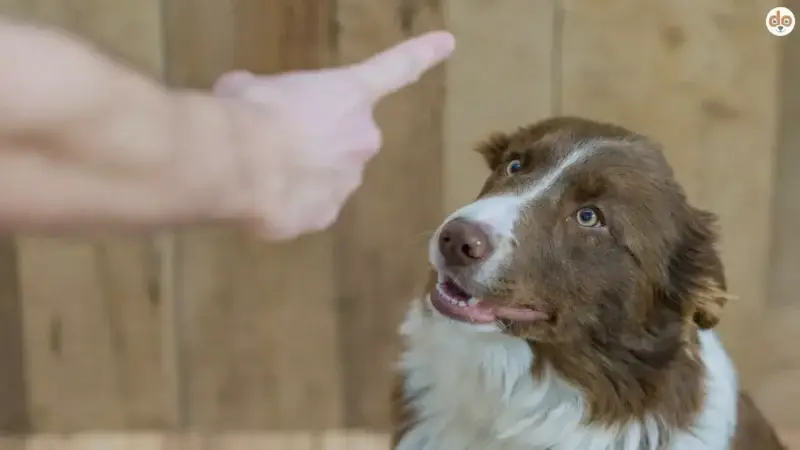
Many dog owners know this: You come home, the favourite shoe lies chewed up in the corner – and the dog is already shrinking into itself before you have even said a word. Head down, ears flat, gaze somewhere on the floor. “He knows exactly what he has done,” you think then. But is that really true?
Dogs and their memory: Can they remember “misbehaviour”?
Before you can assess that, it is worth taking a brief look at how dog memory actually works. It is namely more complicated – and in some respects more modest – than we often assume.
Short-term memory: Here is the decisive number: around 1–2 minutes. That is how long dogs can hold information in short-term memory according to existing research findings. So if you come home after a long day at work and find the chewed-up remote control, the causal chain is long gone for the dog. It has no idea what it is about. The owner’s reaction then simply comes out of nowhere.
Long-term memory: That is a different story. Dogs remember commands, familiar faces and places, and experiences that have been repeated well – especially when rewards were involved. Long-term memory is the basis of every training, and it works surprisingly reliably.
Episodic memory: Whether dogs really remember specific events – like we remember a particular afternoon – is controversial among researchers. Fugazza et al. (2016) found evidence that dogs can reproduce actions on demand, even if these were not directly trained. Nevertheless, it applies: This form of memory is probably significantly less pronounced in dogs than in humans.
Why dogs look “guilty” – Misunderstandings about dog behaviour
The downward glance, the flat ears, the ducking away – that looks like remorse to us. But it is very likely not. Alexandra Horowitz investigated this in a study in 2009 and came to a clear result: The “guilty” behaviour occurs regardless of whether the dog has actually done something wrong. It depends mainly on whether the owner appears annoyed.
Dogs sense your mood: Dogs are frighteningly precise in this regard. Tension, annoyance, quiet frustration – they perceive that before you even open your mouth. What follows is not a confession of guilt, but appeasement: The dog tries to defuse the conflict and protect itself. That is ancient social behaviour, not morality.
The look is not remorse: What looks like brooding over a past deed is appeasement in the moment. Whether dogs remember specific events is not answered by that – more on that below. If a dog returns after bolting and shows a lowered head – then it is reacting to your current attitude, not to the awareness of having broken the leash. The fear or confusion you see arises from the tension in the room, not from pangs of conscience.
How do dogs learn best?
Since dogs react so strongly to immediate feedback, every reaction – whether positive or negative – must follow the behaviour directly. If you delay it, it loses its effect. What works:
- Positive reinforcement: Reward immediately when the dog does the right thing. Treats, praise, a short game – as long as the reward comes directly. This way, the dog associates the behaviour with a good experience, and the probability increases that it will repeat it. Simple, but effective.
- Correction of behaviour: If you catch something undesirable in the act, a clear, calm command is enough – “No” or “Out”. No shouting, no threatening gestures. Loud or threatening only unsettles the dog, and that helps no one. The correction must follow the deed immediately, otherwise the train has left the station.
- Consistent training: What is forbidden today must also be forbidden tomorrow. If the dog is allowed to sit on the sofa – but only sometimes – it is simply confused. Clear, uniform rules give it orientation. That is not drilling, that is kindness.
Frequently asked questions
Does my dog understand why I am scolding them?
Not necessarily – and the more time passes between misbehaviour and reaction, the less so. The dog reacts to the mood in the moment. If the mishap happened a few minutes ago, the connection between its action and your reaction is very likely no longer there.
Why does my dog look “guilty” when I reprimand them?
Because it reads your body language and tone of voice, not because it feels remorse. Lowering the head, flattening the ears, avoiding eye contact – that is appeasement. The dog tries to calm you down and get rid of the conflict.
Can dogs remember their “mistakes”?
For immediate events, short-term memory lasts about 1–2 minutes. For significant, often repeated experiences – commands, familiar faces, good and bad experiences – dogs have a well-developed long-term memory. Do they regret specific “mistakes” or categorise them deliberately? That is not really their thing.
What is the best method to teach my dog correct behaviour?
Positive reinforcement, directly in the moment of correct behaviour. Avoid delayed punishment. Consistent training with clear instructions – then the dog knows where it stands.
How can I teach my dog not to do something if it doesn’t understand?
Offer alternatives instead of explaining. Is it constantly chewing on shoes? Put down toys, reward redirection. Set clear boundaries, bring patience – dogs learn through repetition and positive experiences, not through insight.
Myths and Facts
Myth: Dogs know exactly why they are being scolded.
Fact: The dog reacts to its owner’s mood in the here and now. It may show confusion or fear – but that does not mean it connects a past action with your current reaction. Especially if the misbehaviour happened a while ago.
Myth: A dog’s “guilty” look shows that it feels remorse.
Fact: Head down, ears back, looking away – we read this as remorse. Research findings (Horowitz, 2009) show, however: This behaviour is a reaction to your body language and tone of voice. Appeasement, not a confession of guilt.
Myth: Dogs do not remember their actions and live only in the here and now.
Fact: Not entirely true. Dogs have both short-term and long-term memory. They remember people, places, training routines, rewards. What they find difficult: categorising specific misbehaviour if the time gap is too large or the context is missing.
Myth: If a dog is punished immediately after misbehaving, it understands that it has done something wrong.
Fact: Even immediate punishment does not automatically lead to understanding. Dogs learn best through positive reinforcement and clear signals. Punishment often creates confusion and fear – especially if the connection to the specific action is not clear. Rewarding desired behaviour works better than punishing undesired behaviour.
Myth: Dogs that behave “guilty” must have been warned against bad deeds before.
Fact: No. The dog reacts to your body language and mood – if it has been scolded in a similar situation before, it can read your signals and react accordingly. Whether it actually knows that it has done something wrong is another question.
Conclusion
The dog’s “guilty” face is not a confession of guilt – it is appeasement. Period. The dog reacts to your mood, not to a memory of its misfortune from two hours ago. Whoever has truly internalised this trains differently: immediate feedback, clear rules, consistent reward of the right behaviour. This strengthens the bond – and saves both sides a lot of frustration.
- Horowitz, A. (2009): Disambiguating the 'guilty look': Salient prompts to a familiar dog behaviour. Behavioural Processes, 81(3), 447–452. Elsevier.
- Fugazza, C., Pogány, Á. & Miklósi, Á. (2016): Recall of Others' Actions after Incidental Encoding Reveals Episodic-like Memory in Dogs. Current Biology, 26(23), 3209–3213. Cell Press.
- Lind, J., Enquist, M. & Ghirlanda, S. (2015): Animal memory: A review of delayed matching-to-sample data. Behavioural Processes, 117, 52–58. Elsevier.
- Ziv, G. (2017): The effects of using aversive training methods in dogs – A review. Journal of Veterinary Behavior, 19, 50–60. Elsevier.
- Deldalle, S. & Gaunet, F. (2014): Effects of 2 training methods on stress-related behaviors of the dog and on the dog–owner relationship. Journal of Veterinary Behavior, 9(2), 58–65. (auch via PMC)
- Dog Aging Project – Functional assessments of short-term spatial memory in the Dog Aging Project. PMC / National Institutes of Health (2025).